
Molecular Medicine M.Sc.
Molecular medicine combines medicine with biology. Students combine theoretical knowledge from medicine with scientific skills from biology and other life sciences. General information (for interested applicants) can be found in the Program Finder (external link, opens in a new window).
Current information (such as internship offers for enrolled students) can be found here.
The programme is run in close cooperation between the Faculty of Medicine and the Faculties of Natural Sciences. The Master's programme is consecutive to the Bachelor's programme in Molecular Medicine (external link, opens in a new window).
Objective
The degree programme is located at the interface between medicine and biology. The aim of the programme is to train students to become qualified young scientists for the biomedical field, where technological progress poses major challenges. The programme combines theoretical knowledge from medicine with scientific skills from biology and other life sciences. After graduating from the Master's degree programme in molecular medicine, you can pursue a career in university research, industry and private laboratories, among others.
How is the degree programme structured?

A total of 120 credit points (CP or ECTS) and a maximum of 120 semester hours per week (SWS) are required to successfully complete the Master's degree programme. It is recommended to achieve 30 CP per semester.
As a rule, the Master's degree programme in molecular medicine must be completed in four semesters. In the second and third semesters in particular, the focus is on internships with individual supervision, which lead to a sound education in modern methods of biomedical research. The content of the Master's degree programme is implemented in the fourth semester in the form of a Master's thesis on a biomedical topic.
Compulsory module I:
good scientific practice, lecture
epidemiology, lecture
ethical and legal foundations of biomedical research, seminar
clinical research, seminar
biostatistics, lecture and exercise
genomics data analysis, compact course with exercise
Compulsory module II:
disease patterns and their molecular mechanisms, lecture
clinical chemistry, pathobiochemistry/physiology, lecture
molecular principles of clinical medicine, seminar
Compulsory module III:
laboratory practical
seminar on Internship
modern research directions and research areas (lecture series), seminar
methods courses, workshop with seminar
Constrained elective modules:
In the Master's degree programme, students choose from over 20 different constrained elective modules, selecting the six that correspond to their individual interests. Each constrained elective module consists of a four-week full-time internship in a scientific working group and accompanying courses. Further information can be found under "Internships".
Master's thesis:
At the end of the last constrained elective module, students begin the seven-month Master's thesis in a working group of their own choice. Supervision is usually provided by a university lecturer from the Faculty of Medicine or the Faculty of Biology and Preclinical Medicine.
Internships
Human genetics
Internships in the constrained elective module human genetics
Molecular epidemiology
Internships in the constrained elective module Molecular Epidemiology
Medical microbiology and virology
Internships in the constrained elective module Medical Microbiology & Virology
- AG Bauswein (external link, opens in a new window)
- AG Bülow (external link, opens in a new window)
- AG Gessner (external link, opens in a new window)
- AG Hiergeist (external link, opens in a new window)
- AG Cellar (external link, opens in a new window)
- AG Peterhoff (external link, opens in a new window)
- AG Schmidt (external link, opens in a new window)
- AG Wagner (external link, opens in a new window)
- AG Wenzel (external link, opens in a new window)
Infection immunology
Internships in the constrained elective module infection immunology
see microbiology
Lipidomics
Internships in the constrained elective module Lipidomics
Molecular hepatology
Internships in the constrained elective module Molecular Hepatology
Molecular oncology
Internships in the constrained elective module Molecular Oncology
- AG Brockhoff (external link, opens in a new window)
- AG Dietmair (external link, opens in a new window)
- AG Klein, Hosseini (external link, opens in a new window)
- AG Pukrop (external link, opens in a new window)
- AG Polzerhttp://www.ag-rehli.de/ (external link, opens in a new window)
- AG Rehli (external link, opens in a new window)
Immunology
Internships in the constrained elective module Immunology
- AG Abken (external link, opens in a new window)
- AG Beckhove, Stamova (external link, opens in a new window)
- AG Feuerer (external link, opens in a new window)
- AG Gattinoni (external link, opens in a new window)
- AG Ritter (external link, opens in a new window)
- AG Scheller (external link, opens in a new window)
- AG Christian Schmidl (external link, opens in a new window)
Molecular neurosciences
Internships in the constrained elective module Molecular Neuroscience
- AG Hau (external link, opens in a new window)
- AG Kerkhoff (external link, opens in a new window)
- AG Linker (external link, opens in a new window)
- AG Proescholdt (external link, opens in a new window)
- AG Riemenschneider (external link, opens in a new window)
- AG Wetzel (external link, opens in a new window)
Regenerative medicine
Internships in the constrained elective module Regenerative Medicine
Transplantation/tumour immunology
Transplantation/tumour immunology
- AG Drill (external link, opens in a new window)
- [Translate to English:] AG Edinger / Hoffmann (external link, opens in a new window)
- AG Eggenhofer (external link, opens in a new window)
- AG Geissler, Köhl (external link, opens in a new window)
- AG Holler, Ghimire (external link, opens in a new window)
- AG Kreutz (external link, opens in a new window)
- AG Mack (external link, opens in a new window)
- AG Mash (external link, opens in a new window)
- AG Renner-Sattler (external link, opens in a new window)
- AG Siska (external link, opens in a new window)
- AG Thomas (external link, opens in a new window)
- AG Wege / Brockhoff (external link, opens in a new window)
Cardiovascular research
Internships in the constrained elective module Cardiovascular Research
Molecular paediatrics
Internships in the constrained elective module Molecular Paediatrics
Lipid metabolism
Internships in the constrained elective module Molecular basics of lipid metabolism
Internships in the industry
Constrained elective module Industry module: Applied molecular medicine
RNA biochemistry
Internships of the constrained elective modules RNA biochemistry A and B
Molecular kidney and blood pressure research
Internships in the constrained elective module Kidney and blood pressure research
Pathology
Internships in the constrained elective module Diagnostic and Experimental Molecular Pathology
Patient-specific 3D tumour model
Internships in the constrained elective module Patient-specific 3D tumour model
Organoids
Internships in the constrained elective module Organoids
Molecular Infection Epidemiology
Internships in the constrained elective module Molecular Infection Epidemiology
Molecular signal transduction
Internships in the constrained elective module Molecular Signal Transduction
Immune medicine
Internships in the constrained elective module Immune Medicine
Implant infections
Internships in the constrained elective module Implant infections in trauma surgery/orthopedics
Reproductive Immunology
Internships in the constrained elective module Reproductive Immunology
Multimodal imaging
Internships in the constrained elective module Multimodal Imaging
further modules
further modules
Communicating and publishing in molecular medicine
Molecular therapeutic approaches to diseases
Bioinformatics
Specialisation module (extend to 8 weeks instead of 4 weeks)
and all laboratories on the MolMed Bachelor's degree programme
as well as many laboratories in Germany/abroad
Internships abroad
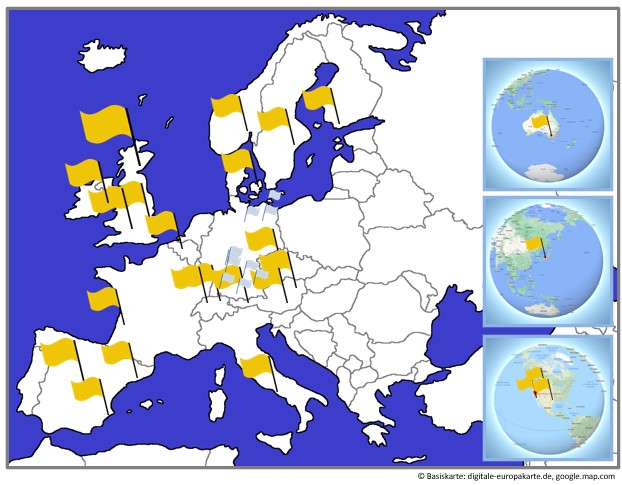
During the Master's degree programme, students have the opportunity to weave a stay of several weeks abroad, in industry or at other universities in Germany into their Study Plan in such a way that they do not have to enrol for an additional semester. Of course, the lecture-free period can be used for this, as well as individual free blocks in the 2nd & 3rd semester. Students are supported in financing and making contact.
You can find specific experience reports from other students online in GRIPS (external link, opens in a new window).
Student publications
Impressions from the study programme
[Photos to follow]
Examination regulations & module catalogue
Examination and study regulations (opens in a new window). (This PDF is not accessible)
Module catalogue (opens in a new window). (This PDF is not accessible)
The catalogue with course catalogue numbers for lecturers is available on GRIPS (external link, opens in a new window)
Semester plans on GRIPS (external link, opens in a new window)
Complete course catalogues (external link, opens in a new window)
Contact
For organisational questions regarding application, course registration or dates, please contact:
Study programme organisation
Christina Kolbeck
Tel. 0941 944-38814
master.molmed[at]ukr.de
Office at the University Hospital:
ZMK building, room 4.110
The examination board is responsible for the decisions like applications and exams:
Examination board
Prof Dr Peter Hau, NeuroOncology (chair)
Prof Dr Barbara Schmidt, Virology (deputy chair)
Prof Dr Gunter Meister, Biochemistry
Prof Dr Richard Warth, Medical Cell Biology