

Internationalization
Information for students
ERASMUS and Overseas Information Sessions for UR Students
You can find information and dates at: Link to UR International
Student testimonials
You can find student experience reports under ‘EUROPA Exchange Programme Experience Reports 2023/24’ in GRIPS (external link, opens in a new window)
Recognition of academic achievements and examination results from abroad,
explained step by step: Link to UR International / Recognition of academic achievements
Double Degree Master Programme in Education
Two countries, two universities, one shared vision: The Finnish-German Master Programme in Education combines international study experiences with excellence in empirical research in Educational Science.
Benefit from intercultural perspectives and gain the qualifications needed for a career in a globally connected professional environment. Are you interested in a Master’s degree in Educational Science?
Testimonials – Regensburg students abroad
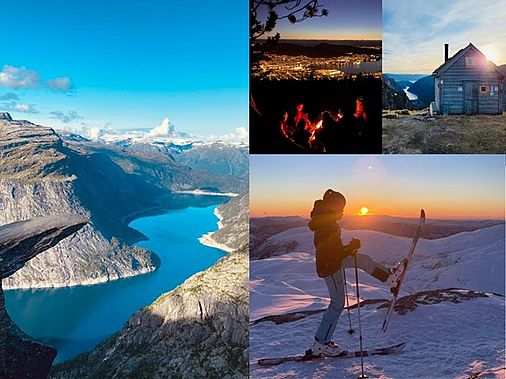
“There’s no such thing as bad weather, only bad clothing.”
I didn’t just hear this saying in Norway – I lived it. And I did so in Bergen, the unofficial rainy capital of Europe. But if you don’t let the weather put you off, you’ll be rewarded with an experience that couldn’t have started any wetter or ended any more beautifully.
During my semester abroad in Bergen, I fell head over heels in love with the country, the people and the natural surroundings – (though perhaps not necessarily with the food, unless you’re into sheep’s head or whale meat). What began as a semester quickly turned into a sort of long-term relationship: After my first stay, I returned twice more for several months at a time – first for a research laboratory in a sports psychology research group, and later to write my bachelor's thesis as part of an intercultural project in collaboration with the University of Bergen. And: I’ll be back. That’s for sure.
Norway is a paradise – especially for sports enthusiasts like me. Hiking, skiing, ski touring, climbing, kayaking: everything right on your doorstep, between the sea and the mountains, lakes and fjords. The natural scenery is simply breathtaking. (Even if it’s occasionally veiled by a mist of rain. But when the sun comes out, it feels like something out of a picture book.
Norwegians are often seen as a bit reserved – and in a way, that’s true. But once you’ve made a Norwegian friend, you’ve made a friend for life. The language was surprisingly quick to learn – not that far removed from German – and a great way to really connect with the locals.
University was also a real enriching experience: the teaching methods were completely different to those in Germany. Much freer, more independent, more project-based – perfect if you like to work on your own initiative. My internship and my bachelor's thesis were incredibly exciting from an academic perspective: I was able to conduct research independently, develop concepts and collect data – and felt I was gaining a real insight into academic work, not just the theory.
Anyone in the mood for a party-filled semester should be warned, though: Beer isn’t cheap here (think: fairground prices in the supermarket), and the wild nightlife is more likely to be found on hiking trails than in clubs (though the Norwegians are actually very good at partying, provided you’ve got the necessary spare change). On the other hand, it never gets boring – and you learn to dance even in the rain.
And what about the darkness, I’m always asked. Bergen is so far south that the days in winter aren’t actually as short as you might think. And in return, the summer is almost endless – and light until midnight.
My verdict? Not only did I learn a new language and further my professional development, but I also had the time of my life. For me, it was one of the best decisions of my life, and one I can 100 per cent recommend to everyone!
Lea F.

“The city has more to offer than many a country”
Even before I started my psychology degree, I knew I wanted to go abroad during my time at university. When else do you get the chance to leave your home country for a considerable period of time? A semester abroad gives you a real opportunity to get to know a country – and by ‘get to know’, I mean living there: experiencing the customs, making local friends, celebrating local festivals and getting a real feel for a place where you haven’t just spent 10 days on holiday, but where you’ve actually lived for a semester.
Hong Kong is a brilliant destination for a study abroad programme. The city has more to offer than many a country: coastline, nightlife, mountains, a bustling metropolis, beaches – everything a student studying abroad could wish for is packed into one place. The street food stall in the financial district, which is frequented not only by people but also by cockroaches and serves some of the tastiest food in the city, the club in the skyscraper, which offers a view over the rooftops of Hong Kong whilst you’re out on the town, and the small, traditional temple right on the beach that you hiked to so you could go surfing – all these things epitomise the Hong Kong way of life. And all these things ensure that you never get bored in the city (and if you do, there’s an airport from which you can fly to Japan for a mere 80€).
But of course, your studies mustn’t be neglected either. At Lingnan University, there’s a fairly wide range of courses for psychology students – though I’d say, subjectively speaking, that the focus is on applied and organisational psychology. The lecturers are extremely dedicated and welcome discussions in seminars and lectures. Hong Kongers themselves sometimes need a little time to warm to a Westerner – but if you approach people in a friendly manner, that’s not a problem either. As is the case with most study abroad programmes, alongside a few local contacts, you’ll find yourself interacting more with other international students. It’s absolutely fascinating to exchange ideas and make friends with people of all different nationalities. Generally speaking, cultural exchange is very much encouraged at Lingnan and is supported by the university, for example through a buddy programme.
Immersing yourself in a culture as foreign as the Chinese one might seem daunting at first glance. But that’s precisely the appeal of this adventure: getting a feel for Hong Kong’s unique situation by living there – even if your English lets you down at times and you have to resort to using your hands and feet.
Saskia H.
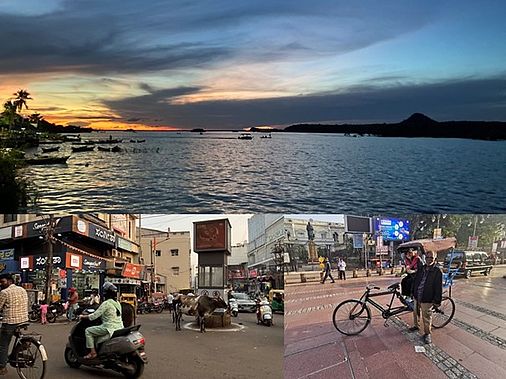
Around the World Through Research – Exploring Cultural Comparisons
When, as a bachelor’s student, I set off on my first cross-cultural research project, I felt a bit as though I’d fallen through the wardrobe and ended up in Narnia. I’d packed my bags and set off for Nigeria – without much of an idea of what awaited me beyond the other airport. And so began my adventure in cross-cultural research, during which I had the opportunity to investigate the extent to which mothers in Nigeria, Brazil and India interact with their children in different ways, and how this relates to early childhood development.
At each of these locations, I had the opportunity to work with the local research teams, train our data collectors and organise and carry out the data collection together with them. Through this project, I not only learnt an incredible amount about international collaboration, project management and, at times, crisis management, but also made many wonderful memories. During my time in Brazil, I even learnt Portuguese. To find children deep in the Amazon, we combed through the rainforest; we whizzed through Ibadan on okadas (Nigerian motorbikes); and we travelled along the Rio Tapajós by boat. I was able to experience each context in a unique way because I came into direct contact with the locals and learnt a great deal about their view of the world, their problems, and the sources of their identity and inspiration.
Whether it was freshly caught fish, açaí and delicious rainforest fruits I’d never tasted before, masala chai, chapati and the wonderfully spicy cuisine of India, or jollof rice and amala ewedu in Nigeria – the local cuisine never failed to impress me.
All in all, it wasn’t always easy travelling abroad and living apart from family and friends for long periods. Nevertheless, I can only recommend this adventure – taking the leap into the unknown – to everyone. You learn an incredible amount about yourself and gain experiences that will last a lifetime. Besides, FaceTime is a real game-changer.
In conclusion, I can only say: I’ve discovered my Narnia on the other side of the wardrobe – and I’m sure that everyone can find theirs, if only they have the courage to walk through the door.
Anna F.
Testimonials – Visiting Students in Regensburg
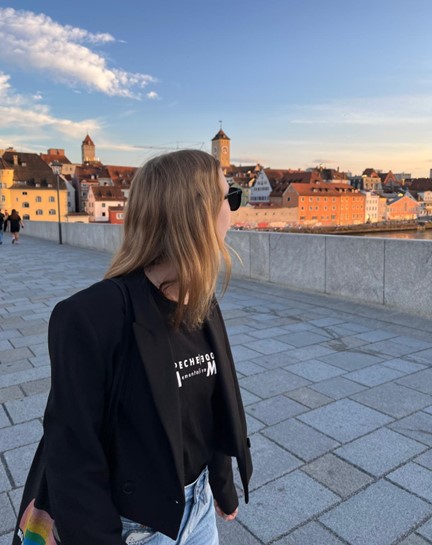
Before coming to Regensburg, I honestly didn’t have very high expectations. A small city in Bavaria sounded rather quiet. But after just a few days, I realised: Regensburg is anything but boring. The old town, with its narrow alleys, colourful houses and countless cafés, looks like something straight out of a storybook, and life really happens outdoors – in beer gardens, along the Danube, or on the famous Stone Bridge.
What I loved most about Regensburg is the blend of history and youthful energy. You walk past buildings that have stood there for centuries and, just a few steps later, you’re sitting by the river having a picnic with students from all over the world. In summer, the atmosphere is incredibly relaxed. And if you fancy exploring: Munich, Nuremberg, Prague, or even the Alps are just a short trip away – perfect for weekend adventures.
Studying at the University of Regensburg was also a great experience. The courses are well organised, many are taught in English, and the lecturers are approachable and helpful. Of course, I didn’t just study – I also made friends from all over the world through projects and group work. The orientation programme was particularly helpful – it made it so easy to sort out all the formalities at the start of my stay.
Of course, an Erasmus experience wouldn’t be complete without a bit of nightlife: Regensburg doesn’t have huge clubs, but you can find plenty of cosy bars, student parties and the legendary ‘Dult’ – a traditional fair that you absolutely must experience.
My conclusion? Regensburg stole my heart. I didn’t just get to know a new country; I also made new friends and created memories I’ll cherish forever. Spending my summer semester there was one of the best decisions of my time at university, and I can’t recommend it highly enough to everyone!
Julia, Psychology student – Poland
Internationalisation Strategy
Here you will find the Faculty of Human Sciences’ internationalisation strategy (opens in a new window). (This PDF is not accessible), which was adopted by the faculty board on 18 January 2023.
Further information on the University of Regensburg’s internationalisation strategy is available here.