

Research Concept of the Graduate Research Training Program
Metropolises concentrate meanings. In the pre-modern era—mostly by drawing on metropolitan models—they present themselves through a wide variety of media as places of exceptional urbanity, centrality, and historicity. Their self-perceptions and how they are perceived by others as metropolises—from which they derive their current claims to prestige and authority—are grounded in empirical experiences that can be described as the material foundation of the premodern concept of the metropolis: their size and beauty, the reach of their elites’ political-economic networks, the volume of long-distance trade and migration flows, the diversity of social groups, the density of communication, the status of their churches and places of worship, the presence of rulers, or their long and illustrious history.
The linguistic, iconographic, performative, or material representations of metropolitanism do not merely reflect and interpret the specific experiential world of a particular city. At the same time, they reinforce the growth dynamics inherent in the process of metropolization and, not least, contribute to the codification of a contemporary set of values defining the urban way of life. The claim to metropolitan status is a cultural construct rooted in metropolitan reality that has manifold repercussions on the urban world as a whole.
This research perspective not only offers a clearer understanding of what constituted a metropolis in the premodern era and provides a basis for discussion within modern metropolitan studies, but also opens up a broad, innovative, and transdisciplinary program for researching cultural, socioeconomic, political, religious, and technological dynamics in premodern cities. The implications of premodern metropolitanity outlined here help to embed the individual studies of specific factors or short time periods—which dominate urban research—into a longue durée and a complex network of metropolitan processes, into which historical experiences, contemporary meanings, and visionary designs can be incorporated.
What is premodern metropolitanism?
What made a European city a metropolis in the pre-industrial era? To address the first and central research question of the research framework developed here, various theoretical approaches must be considered. Based on the classic definition of a city by the American urban sociologist Louis Wirth, who defines cities “as a relatively large, densely populated, and permanent settlement of socially heterogeneous individuals,” demographic, spatial, and social processes unfold with great dynamism in metropolises. If one disregards purely quantitative definitions of metropolises—such as the criterion of a city with a population of one million—since they do not do justice to the demographic developments of earlier eras, various qualitative characteristics—with differing emphases—are the focus of modern urban research:
- the concentration of central functions, particularly as a political center (capital city; see Jansen/Roeck 2002), as an internationally significant commercial and financial hub, or as a cultural center;
- high social mobility and diversity, observable, for example, in socio-professional specialization, religious and cultural pluralism, or increased social conflicts;
- high innovation potential, fueled by knowledge and cultural transfers, the institutionalization of education and science, and the complex urban planning demands placed on the infrastructure of rapidly growing cities;
- an increased population density, manifested in the maximization of built-up areas and building heights in the city center and in the extensive urbanization of the surrounding areas (suburbanization); and
- a metropolitan claim to prominence that is actively promoted both internally and externally, i.e., one that influences the identity of residents as well as external perceptions.
The field of research opened up by premodern metropolitanity requires a critical reexamination and modification of existing theoretical frameworks in metropolitan studies and modern urban sociology regarding the metropolis and metropolitanity on two levels. On the one hand, the criteria mentioned above are certainly relevant to the dynamic demographic, spatial, social, political, and other processes in the premodern era, though only in ways that differ significantly from the modern era and must therefore be specifically defined. For example, the criterion of metropolitan claims to authority raises fruitful questions regarding identity formation and perception in premodern metropolises. However, in antiquity, the Middle Ages, and the early modern period—according to Reif’s definition—the agents of the modern “metropolitan discourse” or urban “symbol and image politics” are largely absent. The Regensburg research network offers insights here with a focus on liturgical representations of medieval metropolises (H. Buchinger), the significance and dissemination of iconographic representations in Italian medieval metropolises (A. Dietl), and the city-related literary and theatrical scene in early modern London (A.-J. Zwierlein), the Regensburg research network offers several innovative approaches to the question of metropolitan discourses (see also Research Areas).
On the other hand, the proposed Research Training Group aims to develop its own concepts and criteria for premodern metropolitanism. This concerns, for example, the functions and forms of transmetropolitan communication. What effects do the cultural, technological, or political-social achievements of major metropolises have on their peer group within the European (and possibly pan-European) sphere? How do communication and knowledge transfer occur in this context? Research from Regensburg on urban competition and urban models in antiquity (D. Steuernagel) or on intermetropolitan law in the early modern period (M. Löhnig) points in this direction. “Inter-metropolitan law” is understood here as an overarching law of the network of various metropolises, characterized by the emergence of rules that are observed in the participating centers regardless of location. Metropolises can also be characterized as style-defining centers of liturgical development that led to the formation of the major rite families of Christian liturgy. As determining factors, not only the realpolitik claims to authority of capital city liturgies (such as those of Rome and Byzantium, but also Alexandria, etc.) but also metaphorical references can be identified. The historicity of metropolises would be another area of focus that differs from previous approaches in metropolitan studies: As part of a research program titled “Pre-Modern Metropolitanism,” a comparative and transdisciplinary inquiry is being conducted into the agents, fields, and forms of history-related discourse within and about the metropolis. This criterion is by no means subordinate solely to the metropolitan claim to legitimacy outlined above, but has its own distinct implications for the assertion of claims to power, for the status of social groups, or for the shaping of metropolitan space, as demonstrated, for example, by the Regensburg focus on late antique cemeteries as social spaces (A. Merkt).
What conceptual possibilities does the use of the concept of the metropolis offer for a transdisciplinary research program focused on pre-modern Europe? The concept of pre-modern metropolis allows us to examine the distinctive characteristics and transformations in both the historical appearance and the normative significance of individual metropolises, as well as to draw structural comparisons with other eras and non-European cultures. To date, no attempt has been made to analyze the longue durée of major urban centers using a theory-driven and nuanced approach. The participating scholars from the University of Regensburg offer a broad spectrum of their own research focuses—both diachronically and across disciplines—ranging from ancient centers (D. Steuernagel, A. Merkt, H. Buchinger, supplemented by the two associated researchers B. Edelmann-Singer and T. Saile) to medieval urbanization processes (J. Oberste, A. Dietl, H. Buchinger, M. Selig, M. Spoerer) and early modern metropolization (A.-J. Zwierlein, M. Spoerer, M. Löhnig). In line with the applicants’ research priorities, the major urban centers in Europe—the “metropolises” in the sense of quantitatively oriented metropolitan studies—serve as a heuristic starting point, as they generate the strongest and often earliest socially relevant potential for change. It is here that the pressure for change—driven by demographic expansion, migration, and supra-local interdependence, coupled with the simultaneous dissolution of traditional social structures and norms—is felt most acutely. Here, the need for new forms of political and social organization to manage an anonymous mass that no longer functions according to the rules of face-to-face communication becomes apparent, as do new instruments of economic governance that meet the needs and new possibilities of transnational trade relations, and innovative urban planning solutions that respond to the growing population as well as to the representational needs of political and economic elites. However, the focus here is decidedly not on the concept of the European city established in historical science and historical geography—which, based on M. Weber’s typology of cities, emphasizes small-scale structures, mixed-use development, and self-organization—but rather on conducting a nuanced analysis of specific historical and cultural conditions for urbanization and metropolization processes along the lines of the research perspectives outlined.
The multi-perspective, cross-epochal, and transdisciplinary approach offered by the Regensburg research program “Metropolity in the Pre-Modern Era” thus occupies an important intersection in cultural studies urban research by situating the undeniable relevance of today’s megacities as “centers of decision-making, governance, and control in the global (and national) economy and politics” into a long-term historical context. The conceptual term “metropolitanity” is particularly well-suited to a transdisciplinary research design. It shifts the focus from individual urban cases to the conditions, manifestations, and consequences of the processes through which cities rose to become leading and influential urban centers on an international scale. This research question simultaneously generates synchronic and diachronic comparative paradigms as well as a necessary understanding of the mutability and diversity of the conditions of metropolitan processes. Opportunities for transdisciplinary networking, as already demonstrated in the applicants’ publications, are present in the metropolitan research pursued here within each of the research fields outlined below.
Despite its widespread use, “metropolis” appears to be an analytical category that has been defined too vaguely and insufficiently in historical research to date. The heterogeneous use of the source term “metropolis” / “metropole,” particularly in ancient and medieval texts, continues to give rise to general reservations regarding the applicability of the metropolis paradigm in the premodern era or to semantic narrowing, for example, to the function of a capital city. Such reservations are exacerbated by the definitional thicket of modern-era Metropolitan Studies, which are far from a uniform definition of the metropolis. In our view, however, abandoning this research perspective would squander the opportunity to analyze the complex interplay of various factors of an economic, cultural, social, political, religious-cultic, as well as legal, technical, and topographical nature, which was responsible for the international influence of the most significant urban centers and which imparted the decisive patterns and norms to the urbanization process within its respective temporal and cultural context.
Profile of the Research Training Group
Urban cultures are shaped by metropolitan models. As early as the first “urban revolution” in pre-Christian Asia, a few major centers such as Çatal Hüyük, Uruk, and Ur set the standards for the design and perception of urban lifestyles. But what is the basis for the particular impact of such “reference points” in the urbanization process? The research program outlined here specifically examines the time- and culture-specific conditions for the constitution and diversity of meanings of metropolises. How are metropolitan surpluses of meaning generated in the premodern era, and what internal and external effects do they produce?
To this day, demographic dynamics and size appear to be fundamental factors in all definitions of a metropolis; however, an analysis of the causes of dynamic urban growth points to specific conditions of metropolitanism that have not been sufficiently clarified for the pre-modern era. This analysis brings social, political, economic, and cultural factors into focus: As “world cities,” metropolises simultaneously amplify both the opportunities and challenges of socialization in a given era and culture. As precedents of urbanization, they most clearly manifest the city’s specific “internal logic,” although metropolises in Europe—and especially in the pre-modern era—must always be regarded as exceptional cases.
At the same time, major cities are complex historical entities with a long history shaped by economic cycles and disasters, a history that plays a significant role in the identity formation of their inhabitants. Of the 15 largest cities in Latin Europe at the beginning of the 16th century, led by Paris and Naples, 100% belonged to the group of former Roman civitates. Around 1800, the proportion of Roman-founded cities still stood at 60%. As early as 1500, London was already among the few cities with more than 50,000 inhabitants and rose in the 17th century to become the most populous metropolis in Europe and—for a long time—in the world. Metropolitanism describes structures of long duration that are characterized—at least in the case of successful metropolises that maintain their status over long periods—by a great capacity for adaptation and constant innovation. In this sense, metropolises are permeated by “spaces of memory” that, as objectifications of cultural memory (e.g., in literature, architecture, rituals, monuments, museums), offer identities grounded in historical experiences and interpretations. Despite diverse efforts by the historical sciences to study premodern cities, the longue durée of the European metropolis remains an unresolved problem in research.
As part of the Regensburg Research Training Group, the constitutive conditions and cultural consequences of premodern metropolitanism in Europe will be examined in an innovative, multidisciplinary manner for the first time. This approach does not, by any means, focus on a homogeneous, continuously evolving concept of metropolitanism from the ancient polis to the preindustrial royal capital, nor does it limit itself to the special case of Latin Europe. Rather, the proposed research is particularly attuned to the discontinuities and cultural specificities of individual eras and regions, as well as to comparisons across Europe and beyond the threshold of industrialization, thanks to the cross-epochal and transdisciplinary design of the joint research program.
The inclusion of prehistory and early history among the associated researchers (T. Saile) allows graduate students to gain insights into the theories and methods of early historical urbanization, thereby providing them with important comparative frameworks. Through a critical engagement with the theoretical frameworks of modern metropolitan studies—whose expertise is ensured both by the group of associated scholars (M. Walter-Rogg) and through a cooperation agreement with the Georg Simmel Center for Metropolitan Research (Berlin)—a distinct concept of metropolitanism is developed here, focused on the following questions: What made a European city a metropolis in the pre-industrial era? How did different eras and cultures construct metropolitan claims to significance? What mechanisms of institutionalization and change are at work in the process of metropolization (metropolis formation)? And what functional and symbolic meanings do metropolises acquire in the urbanization process?
This set of questions defines an innovative and broad field of research that encompasses all aspects of urban life and function, including the processes of both external and internal urbanization. The applicants offer a multidisciplinary approach to this, encompassing not only historical and archaeological urban studies but also specific research fields such as language and literature, art and architecture, law and economics, liturgy and the church. With the interdisciplinary medieval studies center “Forum Mittelalter” and the thematic network “Urban Centers and European Culture in the Pre-Modern Era,” founded in 2011, the University of Regensburg is home to two recognized centers of excellence on the pre-modern city, where the applicants conduct highly acclaimed research across an outstanding range of disciplines and with a long-standing focus on transdisciplinary urban studies. The implementation of the research program outlined here is based in particular on Regensburg’s long-standing research on the specifics of urban communication, representation, and spaces in the pre-modern era.
This opens up an exceptionally wide range of mentoring and training opportunities for graduate students. Since 2006, the academic and international networking of Regensburg’s research has been continuously expanded through annual international conferences and doctoral colloquia on transdisciplinary urban studies; within the framework of the proposed research training group, this international dimension will be further strengthened by inviting international graduate students and visiting lecturers.
The research program “Metropolitanism in the Pre-Modern Era” is particularly well-suited for a Research Training Group, as it offers strong connections to research areas across many disciplines while remaining highly open to new methodological and thematic approaches. The supervision and training concept is primarily designed to connect a group of outstanding doctoral candidates from all participating disciplines—both with one another and with the participating Regensburg scholars and distinguished external experts—so that they can discuss their dissertations in a stimulating and high-caliber academic environment and successfully complete them within a set timeframe. In addition to intensive collaboration with the applicants and scholars of the Regensburg research network “Urban Centers and European Culture in the Pre-Modern Era,” early participation of the doctoral candidates in national and international collaborations is encouraged and supported. Institutional partnerships exist with the Institute for Comparative Urban History in Münster, the Georg Simmel Center for Metropolitan Research, and the HKFZ Trier.
Metropolitan Claims to Authority
Identity, Representation, Historicity
In 1682, the Parisian scholar Alexandre Le Maître attributed the dominant role of Paris and London among the cities of the world to three factors: both were the centers of major empires in which, first, the ruler’s throne; second, the most important markets and financial institutions; and third, “the glory, valor, and strength of a country” were united. The historical argument of a glorious past corresponds in its assessment to the current balance of power in Europe and overseas. In doing so, Le Maître identifies a criterion that is overlooked in many modern definitions of a metropolis: in this sense, metropolitanity is constituted by a strongly developed sense of self-awareness among cities and the elites that shape them, a sense of belonging to a special community from whose size, power, and history current political or cultural claims can be derived. Such expressions of self can be found in foundational city histories and founding myths just as much as in architectural presentations or acts of governance. In this sense, metropolises are inherently consciously designed spaces of memory in which identity-forming narratives are presented and interpreted.
As early as 1984, G. Dragon contrasted the Byzantine imperial capital of Constantinople with a “Constantinople imaginaire,” a construct drawn from late antique and early medieval texts, as well as monuments and architecture, that asserts the city’s claim to significance within the history of salvation. The metropolis’s potential for change is evident not least in the multifaceted literary and cultural discourses about it, which are not only affirmative and future-oriented but also satirical, negative, and nostalgic; the processual nature of the metropolitan is particularly evident here. A specific form of self-referentiality is the actual or virtual exchange with undisputed metropolitan models. This transmetropolitan discourse is also evident in the self-stylization of ancient or medieval cities as “Roma nova” or in solemnly staged relic transfers, for example from Alexandria to Venice (Mark) or from Milan to Cologne (Three Kings). The alignment of local liturgies with supra-local binding patterns and their dissemination also conveys statements about the validity and transformation of the metropolitan status of urban centers.
How can we identify the vehicles and media of such self-referential discourses in the premodern era? Ancient and medieval historiography contains a wealth of self-attributions and external descriptions of the most significant urban centers. The genre of city praise stands out in particular, in which authors narratively process the current achievements and historical significance of their hometown. While such texts are by no means limited to large cities or metropolises, they generally adopt their argumentative patterns and themes from metropolitan models. From a church-historical perspective, late-antique sermons, letters, and inscriptions in particular offer numerous examples of metropolitan claims to authority that employ various figures of argumentation (foundation by an apostle; apostle’s tomb; repository of significant relics; political significance). With the emergence of city chronicles in the late Middle Ages, the textual basis and narrative patterns of identity-forming self-representations expanded; in the case of cities with long-standing traditions such as Rome, Cologne, Milan, or Paris, these certainly included affirmative statements regarding their metropolitan claims to prestige (cf., for example, the *Mirabilia Urbis Romae*, c. 1140, the chronicle of the Cologne town clerk Gottfried Hagen, 1260, the panegyric “De magnalibus urbis Mediolani” by the Milanese patrician Bonvesin de la Riva, 1288, or the “Tractatus de laudibus parisius” by the Parisian magister Jean de Jandun, c. 1320). However, in smaller and medium-sized cities, chronicles increasingly took a critical look at the leadership claims and displays of power of large, supra-regional centers. Similarly, archaeological and art-historical research on the urban structure and design of both public and private spaces in the city reflects discourses on claims to prestige, identity, competition, and role models. Research on Milan during the Roman Empire suggests that metropolitan claims to prestige could be expressed not only through the imitation of the Roman model, but also through deliberate differentiation and a self-assured redefinition of urban, sacral-topographical, or liturgical standards. Conversely, the observation of urban-architectural patterns and models allows archaeological research to make valid statements about urban hierarchies and metropolitan structures in Hellenistic Greece. From this research perspective, external and internal urbanization are closely intertwined, i.e., the planning and design of the city’s urban-architectural structure as well as the development of an urban self-confidence—mostly driven by the elites—and of forms of discourse in which the wealth of historical meanings converges.
Using London—the “first metropolis and cosmopolitan city of the modern era”—as an example, we can analyze a sophisticated literary and theatrical scene in the early modern period, in which urban identity, as well as neighborhood- or group-specific identities, are negotiated just as much as critical or satirical subverting of the historical discourse upheld by elites. The aspirations for representation, as well as the guiding and exemplary role that characterize metropolitanism, are generated and expressed in a continuous discursive exchange between internal and external perspectives. The function of the metropolis as a “point of reference” for others must be viewed in the context of early modern England not only within a national and European framework, but also on a global scale: Here, the historical semantics of metropolitanism are actualized in the self-image of a society expanding outward—as a trading nation and colonial power—and, conversely, through external perspectives brought into the metropolis by the overseas movement of people and goods. The self-referentiality of early modern metropolises, which experienced an explosive increase in population across Europe in the 16th century (see Knittler 2002: 216), thus also involves a constant discursive self-transcendence, as centralizing and diversifying forces are in a constant interplay here. The complexity and pressure for change in metropolitan living conditions generate a density of legal, economic, political, religious, and cultural discourses, whose multilateral interactions in turn reveal and foster contrasts and potential for transformation. Studies of early modern metropolitan discourses based on city chronicles, legal texts, antiquarian, pictorial, and cartographic sources, as well as literary, theatrical, and—last but not least—liturgical and extra-liturgical ritual representations, reveal this interweaving of perspectives alongside their mutual relativization and commentary.
Of particular significance here are the intermedial, self-reflexive, and metafictional elements within these complex interconnections of discourse: Processes of translating and recoding narratives about the metropolis from one medium or form of representation into another—that is, processes of “remediation”—always produce ambivalences and ironies as well—such as when, for example, early modern acting companies, themselves a genuinely urban phenomenon, stage both the centralization and diversification of the metropolis. This allows Reif’s formulation of the “abundance of meanings,” which coalesces into “imaginary worlds” in metropolitan discourses, to be expanded—for the early modern period, for instance—to include a characteristic dynamization and temporalization of such imaginaries: Here, claims, ambitions, and mythologizations are paired with an explicit awareness of their own historicity, of the processual nature of the metropolitan. A preeminent unifying figure, serving as a focal point both internally and externally for the civil-religious communities of medieval Italy, was the city saint—a figure who could be shaped hagiographically and pictorially to meet current needs and who embodied the city’s sense of identity and historical continuity, even across actual breaks in continuity and catastrophes in the history of the diocese and the city. In other context-specific occasions as well, such as the collective commemoration of battle anniversaries, the supra-regional propagation of images and cults of specific saints served as a focal point for the formation of a territorial, cross-group, metropolitan identity with aspects that legitimized and stabilized rule. The Regensburg research program “Premodern Metropolitanism” places an initial focus on the constitution of metropolitan claims to authority and, consequently, on the structure, agents, and media of metropolitan and transmetropolitan discourses. To this end, several of the participating disciplines offer their own research, in particular Classical Archaeology, Art History, History, Liturgy, and English Literature.
Metropolitan areas
Centrality, Boundaries, Interconnections
The research area “Metropolitan Spaces” adopts a thematic and methodological approach that has been widely discussed in cultural studies and historical research over the past decades. At two conferences attended by Regensburg-based applicants alongside international colleagues, the significance of spatial analysis for the study of premodern cities was evaluated. For the study of premodern metropolitanism, the spatial perspective offers, on the one hand, a variety of themes that contribute to refining the metropolitan paradigm: in particular, centrality and density are spatial categories well-suited to identifying and representing metropolitan processes. On the other hand, spatial analysis is highly valued as a methodological tool in all participating and related disciplines and is thus particularly well-suited for addressing interdisciplinary questions and conducting transdisciplinary research. As outlined above, a central research question of the proposed Research Training Group is the essential significance of metropolises as functional and symbolic governing entities in the urbanization process. Spaces—whether the structures within the metropolitan interior, the interconnections with the surrounding region, or with other metropolises and cities in the supraregional area (city networks, transmetropolitan interconnections)—provide privileged access to this central question.
In the competition among major cities for national and international prestige, the design of urban space as a medium of representation and a multifunctional entity plays a central role. The urban planning and architectural-artistic design of political-social spheres of power and religious-cultic centers, of socio-professional subunits, markets, fortifications, and streets possess both pragmatic and symbolic significance, as the applicants recently demonstrated at an international conference on premodern urban planning. The external appearance of the metropolitan center strives for distinctiveness, yet also seeks supraregional or “international” legibility in order to participate in transmetropolitan comparisons and rivalries, in which the appearances of cities as a whole or individual elements thereof are highlighted and evaluated both quantitatively and qualitatively. “The city is a relational network of interactions between its inhabitants and the appropriated topography; architecture, as the sum of all built structures, is its visible frame of reference. Architecture shapes and organizes the internal structure of social systems and is, at the same time, their result.” Given its size, dynamic migration patterns, and diverse cultural influences, the metropolitan area should not be defined as a homogeneous entity, but rather, in principle, as a space of conflict featuring fragmented surfaces onto which social claims to recognition and realities are projected. A clear indicator for assessing the gradations of cultural influence and economic attractiveness of urban centers—from metropolises down to small regional centers—can be gleaned from the inscriptions of Italian artists in the Middle Ages for the highly specialized production sector of architecture, sculpture, and arts and crafts: Within the framework of historical migration research, the place names associated with artists’ pseudonyms—those of their workshop locations—allow us to map, in a very concrete geographical sense, the varying radii of horizontal artisan mobility, the regional and supra-regional boundaries of sales markets, and thus the degree of cultural and artistic dominance; The records of targeted naturalizations of artisans shed light on the close connection between immigration, population, and tax policies, as well as between the establishment of trades, economic development, and planned urban expansions among the competing municipalities of medieval Italy.
In this context, the physical urban space must be examined in relation to other spatial configurations. As social constructs, spatial structures serve as central media of symbolic communication—for instance, in the storage of memory or the symbolization of power. Spaces can be imbued with social, political, legal, religious, or economic semantics of the most diverse nature. Since spatial orders are often highly permanent, vivid, and publicly visible, they are particularly well-suited for the normative construction of political, religious, or cultural codes. In the metropolitan space, various semiotic systems overlap in close proximity; their spatial configuration, arrangement, and transformation are expressions of power relations, group interests, and identities, and thus of a balancing rationality. Metropolitan spaces are staged, and in line with the applicants’ shared research interests, the set of questions—concerning the media, themes, and agents of such stagings; their public perception, mutability, and controversy; and, not least, their internal and external impact and degree of normative binding force—offers a broad methodological and thematic field for the study of premodern metropolitanity. All disciplines involved in the research initiative analyze, from their respective professional perspectives, the role that space plays in the specific social dynamics of metropolitan life. This concerns—on the one hand—the “physical” spaces of the city and their legal, social, economic, and architectural configuration; but also the constitution of “symbolic” spaces, for example in the ritual of processions or in the iconographic occupation of public spaces, through which the orderly management of metropolitan life is achieved.
As early as the 2nd and 3rd centuries CE, with the establishment of the monepiscopate—that is, the concentration of socio-religious leadership functions in a single person—a specific form of urban religious rule began to take shape, which then, from the time of Constantine onward, also assumed political functions through legislation and the decline of municipal administration (bishops as civil judges, enforcers of imperial laws, defensores civitatis, and patres pauperum). The church’s leadership now simultaneously formed a new social elite, which increasingly—especially in Gaul and Northern Italy—was also drawn from the old elites. This offers a broad field for comparative research on the claims to authority and the practical activities of individual bishops. The centralizing tendencies at the local level were accompanied by the formation and strengthening of supraregional centers of church organization: the metropolitan sees. The hierarchy among episcopal cities remains inadequately understood in many respects. Studies on the resolution of conflicts (e.g., the removal of bishops), on processes of institutionalization (e.g., the establishment of regularly convening provincial synods), or on symbolic acts (e.g., episcopal consecrations or the transfer of relics) could expand our knowledge and understanding of the practical, symbolic, and ideal factors that come into play in translocal processes of order. In the pre-modern era, the construct of the urban legal space—symbolized by the city wall—plays a far greater role than it does in the modern era. The historicity of the metropolis, which has already been highlighted as significant for the constitution of pre-modern metropolitanism, can also be fruitfully examined through the lens of spatial analysis: Von der Höh speaks of the “city as a space of memory.” Based on the concept of “lieux de mémoire,” Aleida Assmann defines “places of memory” as enduring focal points in physical and symbolic space that create an “aura of the past.” Such “places of memory” permeate metropolitan and transmetropolitan discourse. The destruction of Constantinople in 1453 is such a place of memory, one that had far-reaching consequences for the formulation of European metropolitan identity in the early modern period. The prominence and endowment of physical places of memory in the metropolitan space—such as the prominence of relics in the cathedral of a major medieval metropolis—were intended to justify the metropolitan claim to prestige. Research in the participating fields and disciplines is jointly focused on such processes.
Centrality research is of paramount importance for the incorporation of spatial analytical questions into the “Pre-modern Metropolitanism” research program. Recent approaches in metropolitan studies view metropolises as “the decision-making, steering, and control centers of the global economy and (in most cases simultaneously) of politics”; Bronger advocates “functional dominance” as the most important criterion for defining a metropolis, by which he means “overcentralization and overconcentration of the most important functions in all spheres of life.” For the early modern period, Knittler posits a “multifunctional concept of the metropolis in which elements of administration, economy, society, and culture are combined.” Metropolises—referring to Christaller’s influential 1933 study—are the “highest-ranking central places in the hierarchy” that “exercise a supraregional spatial function due to their surplus of significance and function.” The new “Handbook of Cultural Centers of the Early Modern Period” specifically examines the “cultural pull and influence” of larger royal capitals in particular, which are constituted by spatial networks of relationships with the surrounding region and with other cities and royal capitals: “A ‘cultural center’ is to be understood as a place that, through a series of factors, becomes a pole of attraction in the cultural sphere and which, at the same time, possesses a specific, heightened influence, each with varying reach and varying power to structure the cultural sphere.”
The research program presented here takes an innovative and pioneering look at the long-term changes in the factors that generate political, economic, cultural, and religious centrality. As part of the training of the graduate students working on the pre-modern period within the planned research training group, the findings and methods of early historical proto-urbanization—whose significance was emphasized by E. Soja (2000)—are already being incorporated by the associate representative for prehistory and early history (T. Saile): For instance, excavations are currently underway with the participation of T. Saile at a group of large settlements of the Tripolje culture (4th millennium BCE) in western Ukraine, which cover over 400 hectares and consist of nearly 2,000 buildings arranged in concentric circles. Fortified settlements of exceptional significance also exist from the Bronze Age (2nd millennium BCE). Notable are the sometimes densely populated castle complexes of varying sizes, which exhibit a spatial separation of crafts, trade, rule (“acropolis”), and worship. These centralization processes reached a peak during the Iron Age. In particular, the “princely seats” of the Hallstatt period have often been discussed in light of early urbanization trends originating in the south. For some time now, research in ancient history and medieval studies has also drawn on the centrality paradigm. To identify urban hierarchies—which serve as a conceptual framework for the discourse outlined above regarding metropolitan claims to authority, since this discourse is fueled by the distinction between metropolises and non-metropolises—the focus on “central-locality structures” has become established. For example, in 1997, R. Haensch analyzed the central role of provincial capitals in the Roman Empire; at the SFB 235 in Trier, the concept of the “central-locality structure” was applied, with a theoretical foundation, to the historical urban landscape between the Meuse and the Rhine.
From the transdisciplinary perspective adopted by the proposed Research Training Group, the question of which media and agents construct centrality holds innovative potential: For antiquity, the fundamental importance of religious institutions for the constitution of urban centrality has already been examined. In our context, this question is extended to the communicative mechanisms through which central control mechanisms were generated and propagated in the premodern era. To this end, in addition to the analysis of political and economic institutions (imperial, royal, or princely residences, metropolitan or episcopal sees, supraregional markets or stock exchanges, etc.)—the “centers of decision-making” in the aforementioned sense—research may focus on the medial representation of centrality in the visual arts, language, literature, theater, architecture, liturgy, historiography, hagiography, etc., or the communicative networks that shape the discourse on centrality within the city and between cities. In the context of the Regensburg research, there are fruitful approaches to this topic, such as those concerning urban language practices and their significance for the linguistic development of the surrounding region (M. Selig), late antique synods of bishops as venues for negotiating urban hierarchies (A. Merkt), the dynamics of the development, spread, and transformation of urban rites (H. Buchinger), or on economic central functions (M. Spoerer). Even in antiquity, metropolises were already primary centers of international and intercontinental long-distance trade, both due to their consumption needs and their potential for exchange and innovation. In the late Middle Ages and early modern period, metropolitan status corresponded to the scope of commercial, political, and cultural networks; thus, many metropolises became agents of a “proto-globalization,” in which premodern perceptions of space also underwent a fundamental transformation.
Interconnections and boundaries characterize the concept of metropolitanity developed here on various levels: In the genesis and historical development of metropolises, the architectural and topographical design (and redesign) of the city center is of crucial importance (outer urbanization), since this is where the most important functional elements are typically concentrated within a limited space: seats of power, cultural and religious centers, and markets. In the course of the demographic expansion characteristic of metropolises, the city center experiences a densification of the architectural-topographical ensemble, while at the same time the urban periphery becomes more deeply integrated into the metropolis’s topographical, political, economic, and social structures (suburbanization). In addition to the immediate surrounding area, which is generally dominated by the metropolis in political and legal terms as well, metropolises exert a dominant influence on cities and landscapes across a large supraregional area through the central institutions and significance concentrated there. From this perspective, a metropolis is defined as the leading city of a country or—according to Bronger—at least as a regional center that provides services to the inhabitants of the surrounding countryside and “dominates activities within its sphere of influence as a market, an information hub, and a focal point of political organization”; it is not uncommon for the liturgy of a capital city to spread even beyond its cultural sphere (as in the case of Rome) and, in the case of Constantinople (as the Byzantine rite), across linguistic boundaries. The research by Morley 1996 (on Rome and Italy), Aerts/Clark 1990 (on European metropolises and their hinterlands), and Beier/Finlay 1986 (on London and England) shows that premodern metropolises developed highly differentiated forms of interconnection and control with or within large regions. Furthermore, metropolises engage in exchange and competition with other urban centers and metropolises within an international and global framework. The significance of these transmetropolitan interconnections—in mental as well as political, economic, and cultural terms—has already been highlighted.
The demarcation and blurring of boundaries within the metropolis are made tangible through A.-J. Zwierlein's research on early modern London as discursively negotiable 'mental mappings' of metropolitan space. Diversity and centrality, external boundaries and internal interconnections of pre-modern metropolises, their groups and institutions are realized not least in liturgical ritual. Above all, the typical station liturgy and various processions shape the "urban character of Christian worship"; however, the study of urban liturgical books and processional objects is often still in its early stages. Research desiderata that could be addressed in potential dissertations range from comprehensive studies of liturgical festivals, which were generally accompanied by urban processions (such as Quadragesima and Easter Octave), to representative case studies of medieval metropolises whose urban space was defined by different, often competing institutions (bishop and cathedral, cathedral chapter, monastic monasteries and various collegiate churches of both sexes, and increasingly, in the late Middle Ages, also confraternities, etc.); the detailed study of individual cities could be supplemented by comparative perspectives.
Metropolises as the theatrum mundi
Diversity, mobility, innovation, conflicts
Metropolitan societies have been global societies since ancient times, uniting diverse religions, cultures and languages through their international appeal and influence. In 2008, an exhibition on ancient Babylon – which was shown successively in the three European metropolises of London, Paris and Berlin – highlighted the origins of the concept of the globalised city. The dual impetus of innovation and discipline, cultural plurality and social conflict, is a hallmark of metropolitan life. Schwentker speaks of the ‘Janus-faced nature of most megacities – as an urban centre of economic and social modernisation on the one hand, and as a chaotic and cruel Moloch, characterised by poverty, crime and fragmentation, on the other’. With regard to the pre-modern era, the aim is to clarify the specific conditions and forms of social mobility, innovation processes, social discipline and conflict resolution. At the level of political governance, this raises questions concerning the specificity of metropolitan ‘urban rule’, the demands for participation made by metropolitan society, and the strategies of legitimation and representation employed by the social elites. Whilst pre-modern Europe was generally characterised by authoritarian, monocratic or oligarchic forms of government, large cities served from an early stage as ‘laboratories’ for new forms of political socialisation. Recent studies on Paris, for example, show that even in the capital – which was completely co-opted and dominated by the French monarchy, and where no municipal decision-making bodies modelled on those of northern Italy could be established during the Middle Ages – the participation of the social and economic elites in city government was indispensable. The subtle mechanisms of this ‘non-legitimate rule’ exercised by the heads of the Parisian merchants’ guild and their assessors – who, in the late Middle Ages and early modern period, navigated the tension between, on the one hand, the integration and control of an ever-growing and diverse Parisian urban population by the ruling powers, and, on the other hand, the public display of modesty and subordination to royal authority over the city – would provide a worthwhile case study for a transdisciplinary project within the framework of the proposed Research Training Group, involving postgraduate researchers from the fields of medieval urban history (prosopography of the Prévôts des marchands), medieval and early modern legal history (jurisdictional complexity of the Parisian courts and their relationship with the king) and art and architectural history (Representations of the Prévôts des marchands in the urban landscape of Paris) would be involved. The subtle mechanisms of this ‘illegitimate rule’ exercised by the heads of the Parisian merchants’ guild and their assessors – who, in the late Middle Ages and early modern period, found themselves caught between, on the one hand, the integration and control of an ever-growing and diverse urban population of Paris by the ruling authorities, and, on the other hand, the public display of modesty and submission to royal authority over the city – would provide a worthwhile case study for a transdisciplinary project within the framework of the proposed Research Training Group, involving postgraduate researchers from the fields of medieval urban history (prosopography of the Prévôts des marchands), medieval and early modern legal history (the jurisdictional complexity of the Parisian courts and their relationship to the king) and art and architectural history (representations of the Prévôts des marchands in the urban space of Paris).
The innovative potential of metropolitan societies, which is highlighted in many definitions of the term ‘metropolis’, is to be systematically linked, within the proposed Research Training Group, to the social, media-related and technological conditions of the pre-modern era that gave rise to transculturalism, migration and social mobility. The major urban centres offered the best media-related and institutional conditions for the supra-local standardisation of social practices. It was here that various repositories and institutions of knowledge were concentrated; it was here that different social and linguistic cultures came into contact. Moreover, a comparatively higher degree of social and spatial mobility fostered both the willingness and the necessity for innovation in these metropolises. Social, economic and intellectual mobilities are closely interrelated in the major urban centres of the pre-modern era. It is precisely the early forms of ‘globalised’ economic structures, observable in intercontinental long-distance trade during the late Middle Ages and early modern period, that highlight the importance of major international trading centres. In the European and Mediterranean regions, there are in many cases continuities with Greco-Roman port cities (D. Steuernagel). Driven by demographic movements and, in part, by processes of political centralisation, metropolitan cities developed a momentum of their own in terms of economic, social and cultural transactions: ‘Metropolitan cities became megawatt transmitters of new ideas, manners, fashions, leisure activities, patterns of consumption, and new forms of social interaction...’ (Aerts/Clark 1990).
Starting points for this are provided by a wide range of research on cultural transfer and historical migration studies, as well as the volume recently published by the applicants, *Die bewegte Stadt. Mobilität und Innovation in vormodernen Großstädten* (Oberste/Ehrich 2015). An interest in migration, transculturality, social mobility and innovation unites all the disciplines involved in this proposal. From the perspectives of legal and economic history, as well as literary, art, linguistic and ecclesiastical history, the opportunities and challenges posed by the transfer of people and knowledge raise new questions regarding pre-modern urbanity and metropolitan life: in the pre-modern era, social mobility was subject to strict legal and social rules. Nevertheless, it was indispensable to the social system. What role did the urban way of life and the example set by the great urban centres play in reshaping the rules of social mobility? What factors determined the opportunities and limitations of social mobility in cities? Is there a link between mobility, migration and urban innovation? Furthermore, the city functions as an integrative yet also differentiating system. At what point and in what form do social or political control mechanisms come into play to regulate innovation? Beyond the demographic dependence of cities on a continuous inflow of new residents – a point repeatedly emphasised by historians and sociologists – this study aims to highlight the essential importance of cultural regeneration through migration and its institutional regulations. In this context, we therefore seek to examine the cultural conditions necessary for successful processes of information exchange and adaptation in pre-modern cities.
This line of inquiry can be further expanded to include studies on the construction of gender or the topography of extended family groups in the pre-modern era. Dynamic spatial and social mobility inevitably led to the dissolution of traditional family structures. The adoption of ascetic and celibate lifestyles by members of the urban upper classes, particularly in the case of women, was interpreted by late antique authors as an attack on the traditional image of the family and has been inscribed by some female historians into the history of women’s emancipation. With regard to medieval Paris, comparisons with the rural surroundings in the late Middle Ages have shown that households in the French metropolis were significantly smaller and considerably less settled than in peasant society. Gender studies, in particular, have also drawn attention to the significance of pre-modern urban society for the expansion of women’s scope for action in social, economic, legal and political terms. Christine de Pizan’s *Livre de la Cité des dames* (c. 1405) explores not only the cultural and social potential for innovation inherent in urban life, but also the heightened defences against demands for participation from marginalised groups. Christine’s entire body of work is shaped by the social experiences, mental frameworks and cultural riches of the two metropolises, Venice and Paris. Seen in this light, it seems no coincidence that the only documented women’s guilds emerged in Cologne, the largest and most economically significant centre in the German-speaking world.
From a legal-historical perspective, such observations can be described and examined as normative change. Normative change and legal innovation in pre-modern metropolises can be regarded as an area requiring further research. Within the framework of the research programme described here, the process of the reception of learned law could be examined, focusing not on the well-known substantive aspects, but rather on reception as a cultural process that initially takes place in certain leading cities, thereby underscoring their special status as metropolises. On the basis of what considerations, by what means, through which individuals and via what kinds of processes did these metropolises adopt learned law and make it the foundation of their early modern municipal law? In which areas did they resist such adoption? In this context, the law as studied is a prerequisite for the emergence of a sophisticated culture of municipal law that can transcend the law as received; this can be observed in particular in the fields of modern commercial law and modern commercial jurisdiction. The existence of a highly developed commercial law and a professionalised commercial judiciary is just as important for the effective resolution of disputes as it is for the city’s status as a metropolis (cf. the DFG project ‘The Nuremberg Commercial Judiciary: Commercial Judicial Opinions in the Early Modern Period’, University of Würzburg).
It is particularly in the economic sphere that the link between mobility and innovation processes in pre-modern metropolises is most strikingly evident. It was here that both political and economic power were concentrated, driven not least by the financial needs of the metropolis itself. Metropolitan claims to prestige consumed enormous resources, be it the military activities of city-states or imperial cities, or the high costs of urban infrastructure and ceremonial displays. The question here is how these were financed – through taxation or credit, for example from merchant houses or early banking institutions. Which institutions or groups of people determined the city’s needs and ensured they were met? Who met these needs, and at what cost? Furthermore, due to their central role for the surrounding region and hinterland, demand accumulated in metropolises for luxury goods and, increasingly, mass-consumption goods from overseas (spices, coffee, tea, sugar, chocolate, tobacco, cotton textiles, etc.). Morley (‘Metropolis and Hinterland’, 2002) has examined this aspect in relation to the city of Rome during the late Republic and early Imperial period, describing the profound adaptation of the Italic economy to the needs and commercial structures of the metropolis. Both within the metropolis and in trade with the regions exporting these products, entirely new opportunities for earning a living arose at all levels of society. Both vertical and horizontal mobility were therefore far greater in metropolises than in smaller urban centres or, indeed, in rural areas. One might ask, for example, about new occupations, and which groups took them up and why. The high concentration of supply and demand in metropolitan centres consequently also led to increased innovation. In the financial sector, for instance, cities such as Amsterdam and London created new institutions and instruments (modern stock exchanges, shares), thereby leaving behind the late medieval models of northern Italy. Who drove the development of these financial innovations, what were their motives, and what obstacles did they have to overcome? Through what channels (and against what resistance) did these innovations spread to other European trading centres?
Metropolises are characterised not least by the concentration of power structures, by significant potential for conflict, and by innovative conflict-resolution strategies. Whether as an ancient provincial centre, a medieval royal seat or an early modern residence of a princely court – the centralisation of political, administrative and legal structures in individual cities generally constituted a decisive locational advantage in the pre-modern era within the process of urbanisation, contributing to the establishment of hierarchies within regional, national or ‘international’ networks of cities. In metropolitan centres of antiquity, and then increasingly in the late Middle Ages and the early modern period, explosive demographic growth – coupled with the political instrumentalisation of the broad urban population (such as the plebs in urban Rome) and the competing claims to participation made by their elites – spurred the search for practices to maintain public order and prevent conflicts. The fragmentation of the metropolitan population into districts, judicial districts, ecclesiastical parishes, neighbourhoods and so on, in turn gives rise to symbolic and pragmatic forms of centralised authority (e.g. royal appellate jurisdiction in the late medieval Parisian legal sphere) and unifying events (e.g. public assemblies) that correspond to the metropolis’s self-image as a whole. Innovations and diversity, as described above as hallmarks of metropolitan law, also give rise to an increased potential for conflict: metropolises are invariably places where different laws and jurisdictions compete with one another for jurisdiction, above all ecclesiastical and secular law and their respective courts, but also different tiers of secular law and different secular courts. These conditions of jurisdictional complexity or hybridity have for far too long been overlooked by modern (legal) historical scholarship, which naturally presupposes the existence of regulations devised according to rational criteria, which do not recognise such competing legal jurisdictions. How was this competition experienced in major cities? Were major cities able to eliminate this jurisdictional complexity through the centralisation of law and the administration of justice, and if so, how?

Metropolitan Communication
Density and Diversity
Key areas of study in pre-modern metropolitanism include the communicative and institutional densification of metropolitan society, as well as the resulting dynamics of political, economic, legal and cultural activity. It was first in the major metropolises that new demands for social regulation made it necessary to overhaul the older mode of ‘face-to-face communication’ (R. Schlögl). At the same time, the pre-modern metropolis is the social space in which new forms of public face-to-face communication emerge (sermons, theatre, new forms of political participation, etc.) and in which the written formation of literary and/or religiously oriented ‘discourse communities’ takes on new dimensions, unimagined until the advent of printing. What is therefore characteristic of communication in pre-modern metropolises is precisely the tension between, on the one hand, their social, cultural, religious and linguistic heterogeneity and the possibilities for pluralisation inherent therein, and, on the other hand, the potentials for centralisation and rationalisation opened up by the increased ‘density’ of political, religious and economic functional elites in the metropolises.
In urban sociology and metropolitan studies, density / densification is a much-discussed category. Whilst E. Durkheim spoke of ‘material density’ as ‘observable urbanisation’, M. Löw extends the concept of density in urban sociology to include symbolic and material forms and practices: ‘Density is the organising principle according to which the urban world is specifically structured, both symbolically and materially’ (Löw 2011). For pre-modern metropolitanism, symbolic practices of communication in particular prove to be a fruitful field of investigation. The ‘dense’ network in metropolises, which encompasses all spheres of life, gives rise to specific forms of communication, specific forms of socialisation and specific forms of identity construction, the totality of which defines metropolitan culture. Within the metropolis’s densely interconnected communicative space, this perspective focuses in particular on those communication processes that play a part in the construction of ‘symbolic orders’ and thus contribute significantly to the establishment of institutional stability.
It is precisely the dynamics of demographic and social processes in metropolitan areas that give rise to forms of communication which address the distinction between ‘the self’ and ‘the other’ and the associated processes of inclusion and exclusion. This can be illustrated by the example of necropolitics in late antique metropolitan areas, a topic addressed by A. Merkt, one of the applicants: In late antiquity, on the one hand, suburban cemeteries took on a new function as public spaces, ‘eccentric’ places and ‘heterotopes’ (Foucault), where claims to religious and political legitimacy were manifested through building projects (basilicas, pilgrims’ hostels, etc.), rituals (processions, pilgrim circuits and the like) and a new form of mass communication (sermons and readings before hundreds, and in some places thousands, of listeners). On the other hand, relics are increasingly being mobilised to underline the religious and political status of cities and to define their relationship with one another. This topic lends itself to a multitude of individual studies dealing with specific genres of source material (for example, tomb inscriptions that articulate an affiliation with political and religious poleis; sermons delivered on martyrs’ feast days; correspondence regarding the exchange of relics), transmetropolitan discourses (e.g. correspondence between Rome and Constantinople concerning the relics of the Apostles as status symbols) or religio-political symbolic acts (e.g. the anti-Jewish instrumentalisation of the relics of Saint Stephen; the repurposing of necropolises to demarcate areas from those of different faiths). In particular, Ramsay MacMullan’s (2009) thesis on what he terms the ‘second church’ should also be examined through case studies; according to which the Christian masses would have gathered regularly in suburban cemeteries and, until around 400, would have been largely beyond the control of the clergy and the urban upper classes; the bishops would then have sought to counteract this ‘centrifugal force’ (Peter Brown) of devotional practices centred on the dead through various measures. Cross-references to other fields of research may emerge with regard to the role of the bishops (centralisation of authority), the emergence of metropolitan liturgies, and the integration of a suburban area characterised by particular cultural, social, architectural and economic dynamics.
Increased heterogeneity and the associated experience of otherness can also be observed with regard to the linguistic communities represented in the metropolises. For medieval and early modern commercial metropolises, the presence of alloglot population groups is a defining feature. A trading city such as Cologne or Venice is inconceivable without the presence – whether temporary or permanent – of non-local or foreign merchants. University cities such as Bologna or Paris are also multilingual spaces par excellence. At first glance, this may be obscured by the medieval and early modern dominance of Latin amongst religious and legal elites. However, Serge Lusignan’s research on medieval Paris demonstrates the extent to which vernacular multilingualism—which lies ‘behind’ the common Latin lingua franca—was a defining feature not only of the city but also of the university community. Further factors contributing to the linguistic heterogeneity of pre-modern metropolises include religious minorities such as Jewish communities, specialised craftsmen who were present in the major cities only seasonally, the fact that the metropolitan population could only be replenished through a constant influx from the surrounding hinterland, and, as in the case of Rome or Constantinople, the exchange of populations between the metropolises. This phenomenon of the (im)migration of large sections of the metropolitan population has finally received attention in historical linguistics in recent years. Recent research into the linguistic history of Paris, Rome or Venice shows that the traditional paradigms of historical linguistics – that is, the paradigm of (urban) dialectal continuity – are doomed to failure from the outset. Pre-modern cities, too, can be likened to islands in the sea; they are social spaces that are in much closer contact with one another than with their immediate territorial surroundings, and they exhibit their own distinct internal social dynamics, which confer upon them a special significance in the history of language. Terms such as koineisation, language mixing or language equilibrium can at least hint at the direction in which this reorientation—linked to a shift away from familiar notions of (linguistic) space—is heading: Language contact and processes of accommodation and equilibrium become evident as essential conditions for linguistic development within metropolitan ‘melting pots’, as does the internal hierarchy of urban spaces in terms of their role as models and their influence. It is becoming apparent that, particularly in the field of linguistic history, modern metropolitan studies – with their differentiation and refinement of social spatial categories – can be put to fruitful use.
The density and diversity of communicative spaces – constituted by the various communication participants, social groups and institutions, each with their own interests, constructions of identity and needs for representation – are among the distinctive hallmarks of metropolitan society. This diversity generates an ‘openness’ and dynamism in social action: variability and innovativeness are enhanced by the presence of alternative forms of interpretation and action; conversely, however, strategies of integration, selection and exclusion also become increasingly necessary. A particularly characteristic feature of the metropolis is the superimposition of a wide variety of symbolic orders. This is elaborated in more detail, for example, in Regensburg-based studies on the artistic representation of the city’s patron saint in the urban space of the metropolis of Milan and other Italian cities. The metropolitan communicative space is thus characterised by the density and diversity of social figurations, the reflexive appropriation, demarcation and stabilisation of which generate a rationality and dynamic of representations and normative frameworks that are specific to the metropolitan communicative community. This heightened communicative and cultural dynamism leads, on the one hand, to a sharper definitional demarcation of the pre-modern metropolis from other forms of governance and society and, on the other hand, to an increased influence on the latter. Given the only weakly developed institutional structures of territorial and manorial rule in Latin Europe—particularly between Late Antiquity and the High Middle Ages—whose communicative potential is primarily shaped by customary law at local and regional levels, urban centres are also assuming increasing importance for the exercise of territorial rule and its economic, administrative and cultural-representational requirements.
In the description of metropolises, an interdependence thus becomes apparent between population size and processes of accumulation on the one hand, and topographical, institutional and communicative concentrations on the other, within which the local specificity of the individual community is symbolically condensed and made accessible to interpretative analysis. In this vein, the participating researcher A.-J. Zwierlein contributes the research focus on economic discourses in early modern London. Further preliminary studies from the Regensburg group of applicants deal with the ‘dense’ communicative practices in pre-modern metropolises: These include, for example, ‘jurisdictional complexity’ and rivalries within the judicial systems of pre-modern metropolises (M. Löhnig). Legal complexity and its discursive management also form the focus of a further research strand, which examines the multitude and significance of monastic institutions in the process of urbanisation in medieval Paris (J. Oberste). Fundamental to this is the observation that, until the end of the Ancien Régime, the urban space of Paris was divided amongst various ecclesiastical and secular landlords, and that royal authority over the city could, in many areas, establish a unifying bond only in name. Within this complex context, both the essential structures of urbanisation and long-term conflicts over the affiliation of spaces and their inhabitants to the various jurisdictions emerged as early as the High Middle Ages. Cross-connections can also be drawn from this area of research to the research priorities ‘Metropolitan Spaces’ and ‘Metropolises as theatrum mundi’: In particular, the role of the major Parisian urban monasteries (St Martin-des-Champs, Sainte Geneviève, St Germain-des-Prés, etc.), which, until the end of the Ancien Régime, asserted veritable ‘district lordships’ in the expanding neighbourhoods surrounding their monasteries – complete with high jurisdiction, tax sovereignty and control over urban planning – has so far been little studied. Future doctoral projects could, for example, examine the extensive, largely unpublished Parisian historical record to clarify the processes of negotiation that took place between ecclesiastical landowners and the monarchy. Furthermore, the socio-cultural structure of ‘ecclesiastical’ city districts could be compared with that of secularly dominated areas of the city, which were located in particular on the Île-de-la-Cité and near the market halls. There is also great potential in applying the Parisian case to other major French and European urban centres. How did noble urban rule, bourgeois claims to participation and monastic autonomy balance each other out in expanding economic centres such as Poitiers, Toulouse, Amiens, Milan, Florence, Cologne, Regensburg, Strasbourg and others? Are differences between (regulated) collegiate clergy and exempt monastic orders apparent here (cf. Noizet 2003 on Tours)? What role does the monarchy – or, increasingly in the late Middle Ages, the territorial lord – play in steering processes of metropolisation?
The complexity inherent in medieval and early modern metropolises, arising from the coexistence of different functional elites and the traditions of discourse they upheld, is also relevant to linguistic research. The metropolis is the social space par excellence in which economic, legal, religious and literary discourses come into direct contact with one another and, through this interaction, develop new forms of communicative interaction, new strategies of textualisation and new linguistic practices. In the Western European Middle Ages, this development initially took place only within the Latin or Arabic ‘languages of distance’. It was not until the mid-13th century that the vernaculars were also drawn into this development, interestingly with very marked regional differences. In the Italian cities, for example, the continuity of notarial institutions since late antiquity virtually ‘prevented’ the expansion of the volgari. A similar trend is evident in the Mozarabic cities, such as Toledo, where an intensive and already firmly established practice of drawing up documents in Arabic continued long after the Reconquista. In Italy, it is also clearly evident that it was only the shift in dominance towards new social classes – in this case, the emerging merchant class – that paved the way for a written practice in the vernacular, rather than in the more distant languages of Latin or Arabic. In northern France and Flanders, too, the city played a decisive role as a social space for new economic structures. The ‘révolution de l’écrit’ – the rapidly increasing use of the vernacular in legal documents – was set in motion by the fact that urban merchants were increasingly acquiring landholdings and developing a new form of written documentation for these transactions. The communicative density of the city becomes truly decisive when, in a further stage of the expansion of vernaculars as written languages, the various domains of writing are unified. Once again, the merchant class is pivotal, because it is here that groups of producers and recipients develop whose written cultural competence in the vernacular relates equally to account books (as producers), town records (as both producers and recipients), deeds (as recipients) and literary or religious texts (as recipients). The various manifestations of such cross-domain competence, the productive engagement with the differing distribution of reading and writing skills, and the formation of collective reception structures (reading aloud, book lending, etc.), the productive handling of multilingualism and the intensive circulation of codices between major cities, and finally the practices of mass literacy based on the new medium of leaflets, are now well known; however, they are still far from having been sufficiently studied empirically to allow even a rough assessment of the dynamics of this urban literacy in the pre-modern era.
Global Cities in the Pre-modern Era
In the context of current shifts in the discourse on ‘globalisation’, the perspectives on global cities in the pre-modern era developed here are groundbreaking. From Zygmunt Bauman’s observations on the opposition between ‘globe’ and ‘place’ in the glocalisation model (Bauman 1998) to the consideration of both the possibilities and limitations of transregional mobility in revised models of globalisation (see Graw/Schielke 2012: 19), the reciprocal interconnection between the global and local, decentralised locations is a key feature of current discussions within cultural studies and Area Studies. From a historical perspective, this also includes observations on tendencies towards demarcation in zones of cultural contact, which, as historically documented and reconstructible phenomena, coexist alongside processes of cultural transfer. This gives rise – much as in the comparison of the pre-modern metropolitanity examined in the GRK with contemporary metropolitan studies, urban planning and modern urban sociology – to opportunities for a fruitful exchange between the decentralised phenomena of metropolitanity observed in a series of individual projects in the pre-modern period and more recent theoretical approaches in this field (for example, the claim to ‘metropolitanity’ as a structural pattern shaping urban society is also evident in smaller, decentralised cities in antiquity and the early modern period).
Even in antiquity, metropolitan societies were global societies, characterised by international appeal and influence, in which diverse religions, cultures and languages, as well as socio-professional and ethnic groups, were united. In 2008, an exhibition at the Pergamon Museum on the history and mythology of ancient Babylon highlighted the origins of the idea of the globalised city (Wullen 2008). Within the disciplines of classical studies and medieval studies, the trend towards identifying early tendencies towards globalisation is the subject of heated debate (cf. Fried 2014). By now, there is scarcely an era or advanced civilisation that has not been examined and re-evaluated from a globalisation perspective. Instances of ‘globalisation’ in the plural (Osterhammel 2011) have been identified in the Sumerian Empire, which had extended its trade networks as far as the Indus; in the Hellenistic and, later, Roman expansion into the Mediterranean world and the Near and Middle East (Truschnegg 2013, Pitts/Versluys 2015 and, critically, Leppin 2017). Thus, from the 3rd century BC onwards, ancient Alexandria served as a centre for the preservation and promotion of all kinds of scholarship and its findings, which were gathered from across the entire Mediterranean world; this was made possible in particular by the convergence of a multitude of trade routes at the city’s seaports and inland ports. However, these routes extended not only across the Mediterranean, but also via the Nile and the Red Sea to India and China. In particular, ‘Eurasian Late Antiquity’ has recently been examined from a globalisation perspective (see Di Cosmo 2018; Preiser-Kappeler 2018; on the associated debates: Humphries 2017). The American historian V. Hansen has even declared the turn of the first millennium to be the birth of globalisation, an era which, at least from a European perspective, has not hitherto been particularly notable for its expansive or innovative drive (Hansen 2020).
Precisely when one takes a critical view of the applicability of the modern model of globalisation to antiquity and the Middle Ages – given the absence of supranational institutions or technologies – the relevance of pre-modern metropolises in this regard comes into focus: We proceed from the assumption that ancient and medieval metropolises, too, provided decisive cultural, technological and economic impetus to their respective eras and cultures; indeed, that in the pre-industrial era, the conditions for global thinking and action could only be created within the multinational and multicultural societies of major metropolises.
The study of pre-modern metropolitanity can also contribute to understanding processes and phenomena in smaller urban centres when these seek to find their place within metropolitan networks, or when the regional and trans-regional urban network—in constant competition for increased significance—aligns itself as a hierarchical construct with metropolitan models.
Historically, the Greek poleis, the Roman imperial residences and provincial centres with their diverse links to Rome, and the ‘bonnes villes’ subject to the king in late medieval absolutist France also reveal diverse facets of this field of research. In the pre-modern era, a global network of metropolises is inconceivable without strong regional relationships of exchange and hegemonic rule.
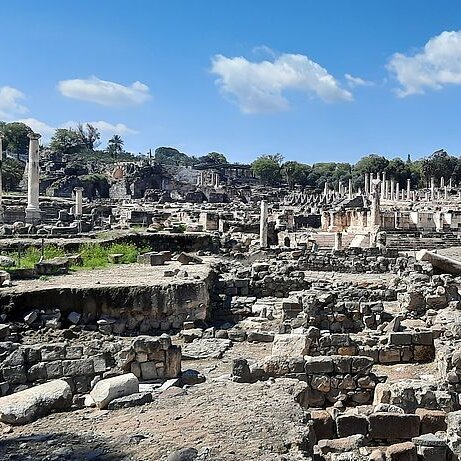
 Foto: UR/Markus Deli
The metropolitan area’s ecological footprint
In 1351, under the shadow of the Great Plague, King John II of France issued the first major ordinance on cleanliness and hygiene in Paris, which contained detailed regulations on the management of wastewater, the disposal of refuse, the keeping of animals, agricultural and environmentally harmful activities, as well as on their monitoring and the imposition of penalties (Oberste 2018: 174). The doctoral thesis projects on security of supply and economic risks in ancient Rome and in Regensburg during the late medieval and early modern periods (Projects Nos. 11, 12) also address the negative consequences – or, in the terminology of recent environmental history, the ‘ecological footprint’ (Hoffmann 2008; Sonnlechner 2010) – of the pre-modern process of metropolisation. These observations correlate with recent archaeological studies on prehistoric and ancient agriculture in Greece. According to these studies, there have been several phases of deforestation and catastrophic soil erosion over the past 8,000 years, which researchers have linked to the consequences of urbanisation and urban consumption patterns (Van Andel et al. 1990). The Chicago School of Human Ecology had already presented research on the relationship between the built urban environment and social behaviour, and on the social consequences of urban resource consumption and environmental pollution; this research is now being revisited in environmental psychology and modern metropolitan studies (Häußermann/Siebel 2013).
It is only in recent times that environmental history has also turned its attention to the ecological consequences of pre-modern urbanisation (cf. Schliephake 2020). In June 2020, members of the GRK discussed with W. Scheidel, Stanford, his theories on the ecological conditions underlying the decline of Rome in late antiquity and its long-term consequences in Europe (Scheidel 2019). More recently, contemporary urbanisation research has also embraced the environmental-historical perspective for long-term studies (Schott 2014). What is interesting here for the paradigm of metropolitanism is that cities are associated both with environmental problems as centres of consumption and energy use, and with ‘innovative problem-solving expertise’ as centres playing a pioneering role in matters of technology, infrastructure or healthcare (Schott 2014: 12–22).
Pre-modern metropolises as spaces of conflict and opportunity
The dual impetus of innovation and discipline, cultural plurality and social conflict, is a timeless characteristic of metropolitan life. Schwentker (2006, 15) speaks of the ‘Janus-faced nature of most megacities’ and of ‘economic and social modernisation on the one hand’ and of the ‘chaotic and cruel Moloch, characterised by poverty, crime and fragmentation on the other’. Within the field of literary discourse, these ‘negative’ aspects of metropolitan life also give rise, for example, to satirical reflections on metropolitan claims to prestige in early modern London drama, as well as struggles for prestige within the educational system of late London Humanism – which some observers consider to be becoming too inclusive. Often, these phenomena can only be grasped within literary discourse; for instance, when the social conflicts and economic tensions surrounding control of metropolitan public space in imperial Rome are shifted into the political discourse concerning the good or bad ruler, and are then played out through the metaphors of the old Republic, thereby becoming historicised. The study of political crisis discourses can therefore, in many cases, also be interpreted as an aspect of metropolitan discourses.
The immense migratory movements that formed the basis of the rapid growth of most metropolises go hand in hand with the dissolution of traditional village-like social structures in city districts, streets and neighbourhoods. Rising crime was one of the inevitable consequences of the process of metropolisation. In Paris, heavy immigration from the second half of the 13th century onwards led to intensive normative and policing efforts on the part of the relevant authorities. Yet, according to the relevant study by B. Geremek, the expanding city offered excellent opportunities not only for traders but also for criminals: ‘Vigilance was inevitably less strict and less effective, and life in the great metropolis provided greater possibilities for profit, as well as more opportunities for crime’ (Geremek 1987: 7; cf. Brendecke 2018). In this field, collaboration is planned with the new SFB 1369 ‘Cultures of Vigilance. Transformations – Spaces – Techniques’ (LMU Munich) is planned, in particular with sub-project B03 ‘The Use of the Senses: Vigilance in Early Modern Cities’ (A. Brendecke), in which the vulnerability of pre-modern metropolises (Augsburg, Florence, Seville) is examined in conjunction with the intensification and regulation of sensory perceptions.
Metropolises are therefore characterised simultaneously by the accumulation of power structures, by considerable potential for conflict, and by innovative conflict-resolution strategies (cf. Hochmuth/Rau 2006 and, most recently, Priebs 2011). Whether as an ancient provincial centre, a medieval royal seat or an early modern residence of a princely court – the centralisation of political, administrative and legal structures in individual cities generally constituted a decisive locational advantage in the pre-modern era within the process of urbanisation, contributing to the establishment of hierarchies within regional, national or ‘international’ urban networks, which were often also reflected in ecclesiastical structures (Merkt 2019). In metropolitan centres of antiquity and, to an even greater extent, of the late Middle Ages and the early modern period, explosive demographic growth – coupled with the political instrumentalisation of the broad urban population (such as the plebs of urban Rome) and the competing claims to participation made by their elites – spurred the search for practices to maintain public order and prevent conflicts (for further regulation of security structures, see Kelly 2013; on the practice of municipal law, see B. Frenz 2003; on practices of peacemaking, see Gonthier 1992; on crime, see Schwerhoff 1991). The fragmentation of the large metropolitan population in legal and political practice into districts, judicial districts, ecclesiastical parishes, neighbourhoods and the like, on the other hand, gives rise to symbolic and pragmatic forms of centralised rule (e.g. royal appellate jurisdiction in the late medieval Parisian legal sphere) and unifying events (e.g. public assemblies) that correspond to the metropolis’s self-image as a whole. However, the metropolitan legal system also gives rise to an increased potential for conflict: metropolises are invariably places where different legal systems and jurisdictions compete with one another for jurisdiction, particularly ecclesiastical and secular law and their respective courts, but also different tiers of secular law and various secular courts. These conditions of jurisdictional complexity or hybridity have for far too long been overlooked by modern legal history. How was this competition experienced in metropolitan centres? Were metropolitan centres able to eliminate this jurisdictional complexity through the centralisation of law and the administration of justice, and if so, how? (cf. Donlan/Heirbaut 2015).
In an overview of qualitative definitions proposed by Metropolitan Studies that claim relevance for the 19th–21st centuries, Reif highlights increased social agency as the fifth and final criterion: ‘Owing to their sheer size and high density, metropolises create more opportunities for action and ways of life for both individuals and groups; more opportunities for social constitution and for minorities to gain societal acceptance; and more—and genuinely metropolitan—opportunities for success as well as failure, for inclusion as well as exclusion, and for innovation as well as traditional ties’ (Reif 2006: 2f.). This criterion appears to correlate clearly with modern experiences of, and needs for, individual freedoms and opportunities for self-realisation. In a recent article in the weekly newspaper *Die Zeit*, the author refers to the social group of ‘culturally educated city-dwellers’, who are concerned with ‘self-fulfilment, non-conformism and individuality’ (R. Pausch, *Die Zeit* 28/2020: 7). Nevertheless, we encounter this metropolitan space of possibility as early as in a text on Paris from the late Middle Ages. Around 1320, the philosopher Jean de Jandun was expelled from Paris. From exile, he dedicated a lengthy eulogy to Paris, culminating in the beautiful sentence that only as a resident of Paris does one have an existence in the absolute sense; elsewhere, at best, a limited (Opinor te confiteri quod esse Parisius est esse simpliciter; esse alibi non nisi secundum quid) [Jean de Jandun, *Tractatus de laudibus Parisius*, Paris 1867: 74].
The scholar is likely alluding here to Ovid’s *Epistulae ex Ponto*, in particular 1, 8, 20–40. Here, the poet, exiled to the Black Sea, laments that he has been excluded from the urbanae commoda vitae, from the ‘places of the magnificent city’—specifically the markets, temples, marble-clad theatres, the Field of Mars and the splendid gardens—in short, from the ‘delights of the great city’. There is no doubt that this is an exception and that the medieval author, in this praise, was referring to the opportunities for intellectual development offered by the university city of Paris. On the other hand, as early as a century earlier, in Cardinal Jacques de Vitry’s famous description of Paris, we encounter the ambivalence of the metropolis’s ‘attractions’ and ways of life, when Jacques praises his former alma mater for its unrivalled theological research, but at the same time critically notes that in many halls of learning, prostitutes and innkeepers had taken up residence, waiting for their clientele (Jacques de Vitry, *Historia occidentalis*, Fribourg 1972: 92). The idea of the metropolis as a space of heightened possibilities can therefore hardly be regarded – any more than the other points in Reif’s catalogue of metropolitan characteristics – as a defining feature of modernity.
This becomes particularly clear in the shaping of women’s life stories. In antiquity, the urban space was the only place where women could pursue opportunities beyond the roles intended for them. This can be understood very plausibly in the context of cult: the impulses emanating from the empresses of the 1st century AD – they became priestesses (flaminicae) in the cult of the deified emperors in Rome – opened up new opportunities for self-representation and an enhancement of family prestige through female family members, both for the women of the imperial household themselves and – following their example – for the women of the provincial elite in the cities of the empire. Points of departure for research include, for example, priestesses in the major cities of the province of Asia, who were integrated into male systems of rank and honour or were related to religious and political office-holders in various provinces, thereby also revealing transprovincial family structures (cf. Hemelrijk/Woolf 2013; Edelmann-Singer 2014; ibid. 2016).
Furthermore, research has long highlighted the employment opportunities and professional activities of patrician women and female artisans in medieval and early modern towns. The four women’s guilds in Cologne are regarded as a model and exceptional case, which can be explained by the significance of Cologne’s cloth production and the scale of the associated trade networks of Cologne merchants (cf. Athenas 2016). However, even without the organisational power of their own guilds, women in urban or metropolitan areas emerged as successful traders, entrepreneurs, money changers, goldsmiths and in many other trades, as a recent study on Pisa impressively highlights (Duval 2018). In the lists of the Paris poll tax (‘Livres de la taille de Paris’), which have been preserved from the years 1296 to 1313, the proportion of working and tax-paying women amounts to around 10 per cent (Roux 1996 and, more recently for the early modern period, Castres 2020). Local research from many European regions confirms this impression that, despite generally strict moral standards and restrictions, women in large cities were more able to deviate from conventional life paths characterised by domestic or monastic seclusion, whether as independent entrepreneurs, Beguines or artists (for examples from Florence, see De la Roncière 1990: 274–284).
Since discourses on social norms react to such ‘deviations’, it is certainly possible to identify a contemporary awareness of the consequences or ‘dangers’ of the metropolitan sphere of possibility: In the second half of the 13th century, the Dominican Master General Humbert de Romanis left behind a collection of model sermons *ad status*, i.e. addressed to the various estates and groups of contemporary society. Within this broad socio-professional framework, a group of sermons aimed at an urban audience stands out; these, in turn, are divided into the chivalric and merchant upper classes, the artisan middle classes and the poor lower classes. It is only among the upper classes that the wives of wealthy merchants are explicitly addressed; in Humbert’s framework, they are assigned responsibility for the home and children, as well as for almsgiving and care for the poor in the public sphere (Oberste 2002). Church representatives, and in particular the mendicant orders closely associated with the urban elites, unsurprisingly assigned women their traditional roles within the family, society and the Church. Similarly, many municipal charters also laid down social restrictions within the canon of the ‘honourable wife’ (as detailed for Hamburg by Rogge 1998), whilst literary texts were certainly able to embrace and expand upon the urban spheres of possibility.
Christine de Pizan’s *Livre de la Cité des dames* (c. 1405) plays not only with the cultural and social potential for innovation inherent in urban life, but also with its heightened defence mechanisms against the demands for participation made by marginalised groups (most recently Delogu 2014). Christine’s entire body of work is shaped by the social experiences, mental structures and cultural riches of the two metropolises, Venice and Paris (see Bourassa’s doctoral thesis, 2014). In early modern London, issues of professional agency and gender relations were also addressed in the theatre (see Howard 2007).