

Publications
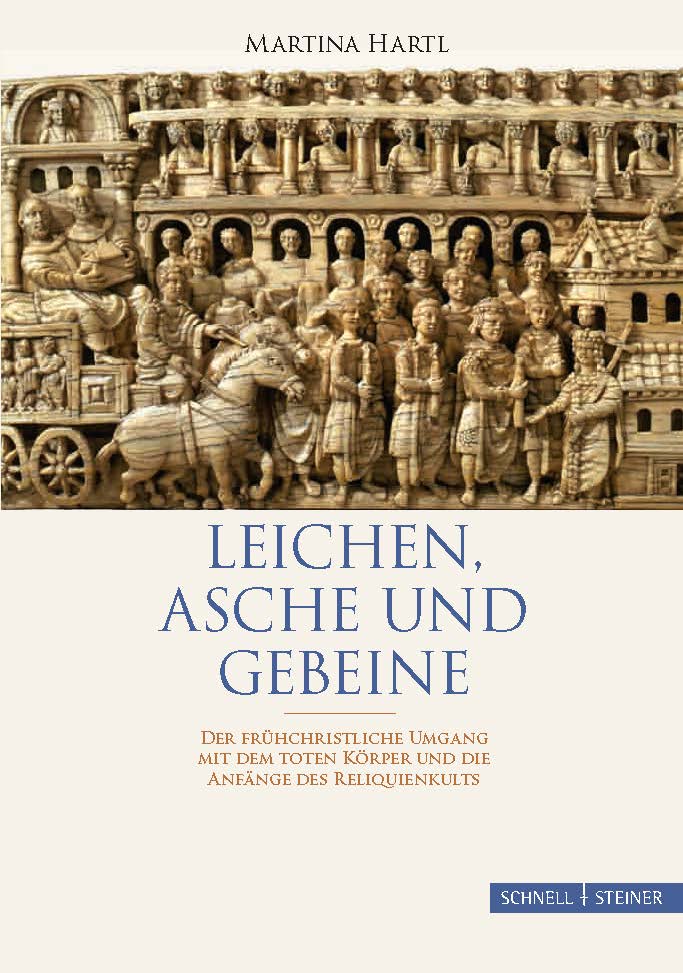
Martina Hartl
Corpses, ashes and bones. The early Christian treatment of the dead body and the beginnings of the cult of relics
(Handbook on the history of death in early Christianity and its environment, Volume 3)
Regensburg: Schnell & Steiner 2018
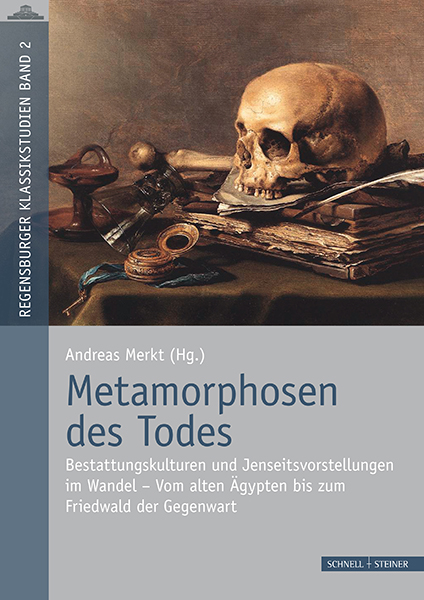
Andreas Merkt (ed.)
Metamorphoses of death. Funeral cultures and concepts of the afterlife through the ages - from ancient Egypt to the cemetery forest of the present day
(Regensburg studies in classical antiquity and its heritage 2)
Regensburg: Schnell & Steiner 2016
Joseph Verheyden/Andreas Merkt/Tobias Nicklas (eds.)
"If Christ has not been raised ..." Studies on the Reception of the Resurrection Stories and the Belief in the Resurrection in the Early Church
(Novum Testamentum et Orbis Antiquus / Studies on the Environment of the New Testament 115)
Göttingen: Vandenhoeck & Ruprecht 2016
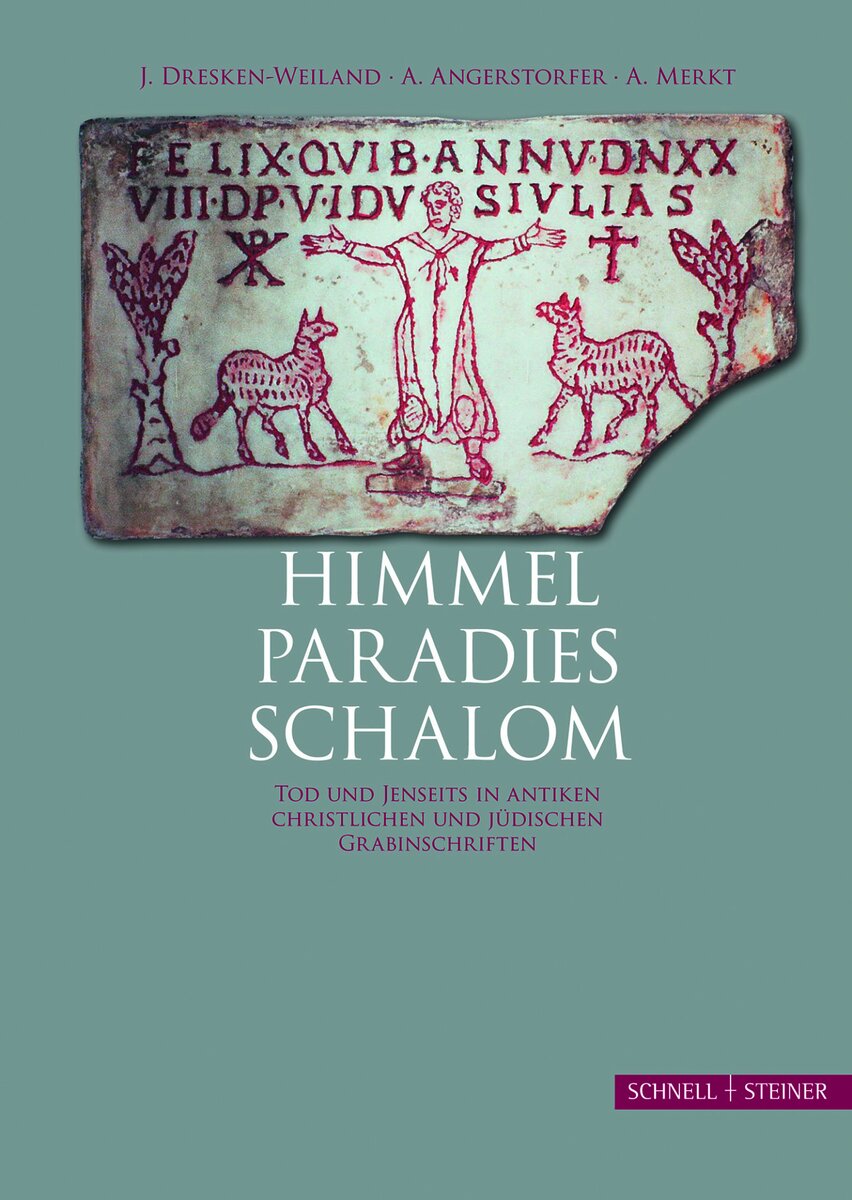
Jutta Dresken-Weiland/Andreas Angerstorfer/Andreas Merkt
Heaven - Paradise - Shalom. Death and the afterlife in Christian and Jewish funerary inscriptions of antiquity
(Handbook on the history of death in early Christianity and its environment, Volume 1)
Regensburg: Schnell & Steiner 2012
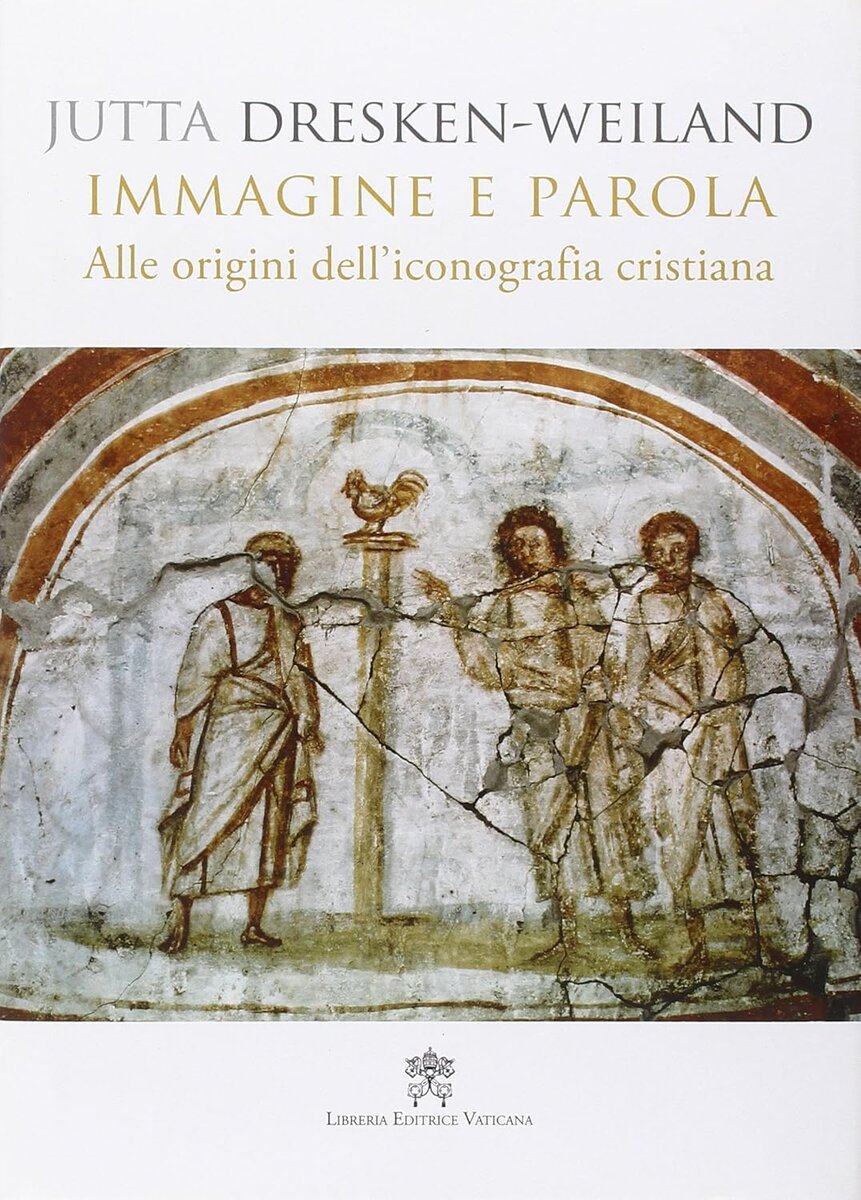
Jutta Dresken-Weiland
Immagine e parola. Alle origini dell'iconografia cristiana
(= Italian translation of "Image, tomb and word")
Città del Vaticano: Libreria Editrice Vaticana 2012
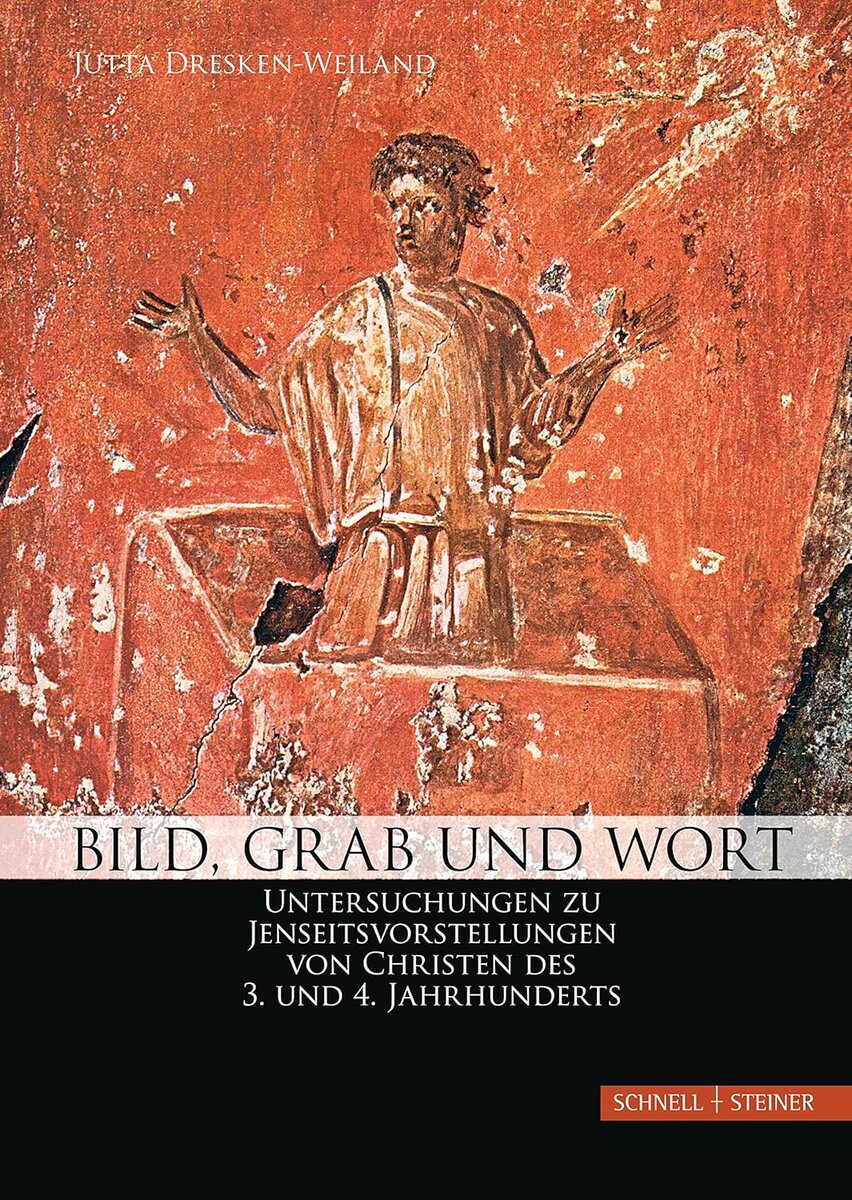
Jutta Dresken-Weiland
Image, tomb and word. Studies on the concept of the afterlife of 3rd and 4th century Christians
(Handbook on the history of death in early Christianity and its environment, vol. 2)
Regensburg: Schnell & Steiner 2010
Completed projects
The Christian burial law in the Latin West (2nd-8th century)DFG projectedited by Tatjana Bink |
The Christianisation of the Roman world is a central theme of research into late antiquity and the history of the church in antiquity. According to the self-image of the early Christians, belief in the resurrection was an essential feature of their religion. With regard to late antiquity, the question therefore arises in particular: did the Christian message of resurrection also change attitudes towards death and ideas of a post-mortem life in the course of Christianisation? To date, there have been a number of works that deal with eschatology in patristic literature. In contrast, the Christian funerary law of late antiquity has not yet been comprehensively analysed in this respect. This research gap will be closed by the project.
To this end, the synodal resolutions, decretals, charters, above all testaments, books of penance, other literary texts and inscriptions and, finally, the various Germanic works of law will be systematically analysed for the first time to address this issue.
This research project is expected to provide information on a broad spectrum of legal and social-historical topics, as well as those relating to the history of mentality and liturgy. The clarification of the numerous individual problems associated with this (from the right to open graves to the ecclesiastical status of gravediggers) can then ultimately also contribute to answering such fundamental questions of church, theology and intellectual history as: What ideas of death and the afterlife underlie the respective burial laws? What is the practical, lived thanatology and eschatology, so to speak, that is expressed in the regulations on burial and commemoration of the dead? From this sepulchral-historical perspective, what can be said about the relationship between Christianity and non-Christian antiquity?
Corpses - Skeletons - Relics. The dead body in greek Christian popular literature of late antiquity
DFG project
edited by Martina Hartl
The travelling exhibition "Body Worlds" by the anatomist von Hagen has recently raised the question of how to deal with the bodies of deceased people, whether they should be shown or even put on display, and if so, in what way.
The controversy is old. In the fourth century, Bishop Athanasius of Alexandria had to deal with a bizarre custom. Some Egyptians, including Christians, used to keep the mummies of their deceased relatives in their homes. Athanasius rejected this and demanded a proper burial of the bodies. Other ancient theologians also made the same judgement. In doing so, they were in line with the general opinion of their time: in the ancient Mediterranean world, it was widely regarded as a sacred duty to bury the dead. The corpse was only visible and touchable for the brief period of the rites of passage that concluded with the burial. Permanent displays of corpses and body parts, on the other hand, usually served to desecrate the dead or to deter the living.
While in antiquity the positively connoted material presence of the dead, as encountered in Egypt, was still a special custom, the medieval and Byzantine world was characterised by the omnipresence of bodily relics. Apparently, a change took place here in the assessment of the visibility and touchability of dead bodies and body parts.
Where outside Egypt can representations and exhibitions of body relics be found for the first time in Christian literature and art? How did this change in attitude towards the dead body come about? The project "Corpses - Skeletons - Relics" sets out on a search for clues.
In particular, the (Greek-language Christian) "popular media" of late antiquity will be analysed: the apocrypha, hagiographic literature, sermons, funerary inscriptions and pictorial representations. The aim is to analyse the way in which the dead body is mentioned here. It is not only about the dead body in its real presence, but also in its symbolic representation, as it can be assumed that there is an interaction between dealing with the real dead body on the one hand and the use of corresponding symbols and metaphors on the other.
The project also promises to shed light on further questions: What influence did Christian Egypt exert on the expression of piety and mentality of the other regions of the Mediterranean world in late antiquity? What differences can be seen in the individual regions of the eastern Mediterranean world? What is the relationship between theological theory and religious practice? Is there a connection between the "defeat of the (living) body", as stated by Jacques LeGoff, and the triumph of the dead body in late antiquity and the early Middle Ages?
The project is part of the overarching project "Metamorphoses of Death", which is being worked on in Regensburg in several DFG projects, among others, and whose interim results can be read in several monographs, most recently J. Dresken-Weiland, Bild, Grab und Wort, 2010 and dies./A. Angerstorfer/A. Merkt, Shalom, Heaven, Paradise, 2011.
Mors secundum epigrammata christiana antiqua. Ideas of death and the afterlife as reflected in Christian epigraphs
DFG project
Dresken-Weiland, Jutta/Angerstorfer (external link, opens in a new window), Andreas/Merkt, Andreas (external link, opens in a new window), Heaven - Paradise - Shalom. Tod und Jenseits in christlichen und jüdischen Grabinschriften der Antike, Regensburg: Schnell & Steiner 2012.
This book presents Greek, Hebrew and Latin funerary inscriptions with a German translation and a scholarly commentary that places the respective text in its ancient context and explains its special features. Where possible, an illustration of the inscription bearer is included. Different people from different social classes and centuries speak in the face of death and express many facets of hope for the afterlife. The Christian texts consistently depict a friendly and peaceful afterlife in which the dead have communion with God. The Jewish inscriptions emphasise the assurance of undisturbed rest in the grave with the wish "Shalom" or "in peace be his/her sleep". The inscriptions in the catacombs of Beth She'arim in Israel express hope for the afterlife more frequently than the texts from Italy, in line with the rabbinical discussion as to whether there is a resurrection of the dead in the diaspora.
How did Christians and Jews formulate their ideas about death and the afterlife? How do they express their hopes and how do they imagine being with God? This collection of Christian and Jewish epitaphs shows us people from the 3rd to 7th centuries who express their hope that not everything ends with death, but that a new life begins.
(Text: Website of the publishing house Schnell & Steiner) (external link, opens in a new window)
These tables were analysed in the DFG-funded project "MECA - Mors secundum epigrammata christiana antiqua. Conceptions of death and the afterlife as reflected in Christian funerary inscriptions" by Jutta Dresken-Weiland. The publications resulting from this project are listed above.
The statements on the afterlife in funerary inscriptions were compiled in tables according to region. Formulations that merely offer "in pace" or "dormit in pace" are not listed due to their frequency. They are arranged alphabetically by place of discovery or storage, with dating suggestions and brief comments on the context.
Due to the diversity of concepts of the afterlife and statements on dealing with death, which cannot be represented in their complexity by database searches, we would like to make these tables available here for further research. When citing, please refer to the superordinate project "Metamorphoses of Death" at the chair or provide the link under which the tables are available:
MECA Table Africa (opens in a new window). (This PDF is not accessible); MECA Table Egypt (opens in a new window). (This PDF is not accessible); MECA Table Balkan Peninsula (opens in a new window). (This PDF is not accessible); MECA Table Gaul (opens in a new window). (This PDF is not accessible); MECA Table Italy (opens in a new window). (This PDF is not accessible); MECA Table Rome (opens in a new window). (This PDF is not accessible); MECA Table Spain (opens in a new window). (This PDF is not accessible)
Conferences
New research on early Christian cemeteries
On 19 and 20 April 2013, the conference of the research cluster Urban Centres and European Culture in the Pre-Modern Era took place in the rooms of the "Altes Finanzamt" with the participation of the Chair of Ancient Church History and Patrology.
- Conference poster (PDF)
- Conference programme (PDF)
- Press release (Website)

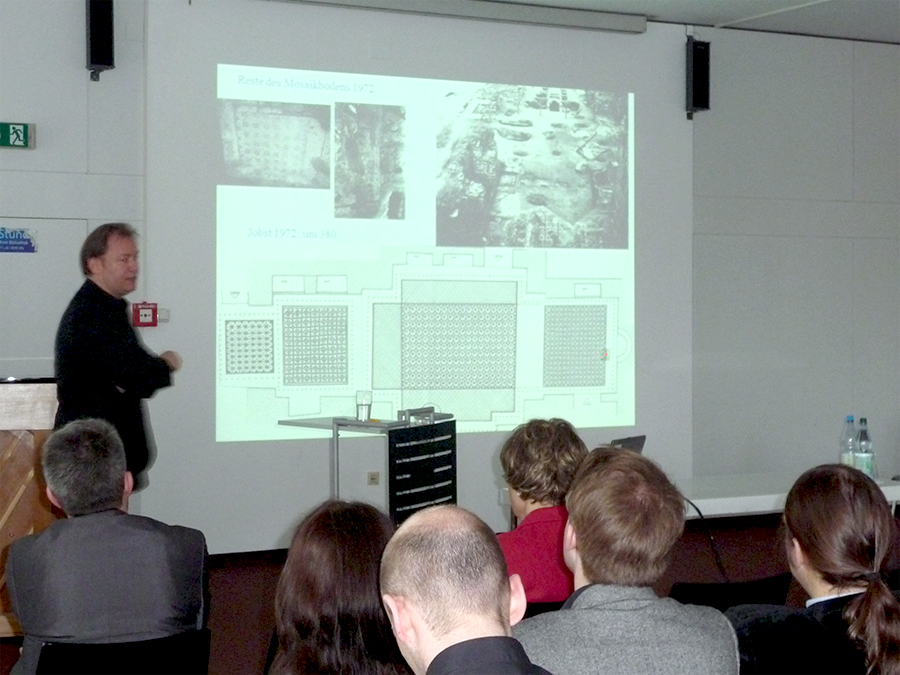
"If Christ has not been raised ...": The Reception of the Resurrection Stories and the Belief in the Resurrection in the Early Church
From 10 to 12 October 2012, a conference was held in Leuven on the reception of the resurrection stories and the belief in the resurrection in the early church: "If Christ has not been raised...": The Reception of the Resurrection Stories and the Belief in the Resurrection in the Early Church.
Programme (PDF) (opens in a new window). (This PDF is not accessible)