


Research

How do people act, make decisions and manage their everyday lives? And what happens when these abilities are impaired by neurological diseases? Our team pursues a translational approach: findings from experimental studies are translated into diagnostic methods, training programmes and psychotheraputic interventions. An important building block for this is the Psychotheraputic University Outpatient Clinic for Clinical Neuropsychology, which was established in 2025. Research, teaching and care are closely interlinked here. Even as a healthy person, you can support our research through your active participation: Study participation for healthy participants.

Research interests

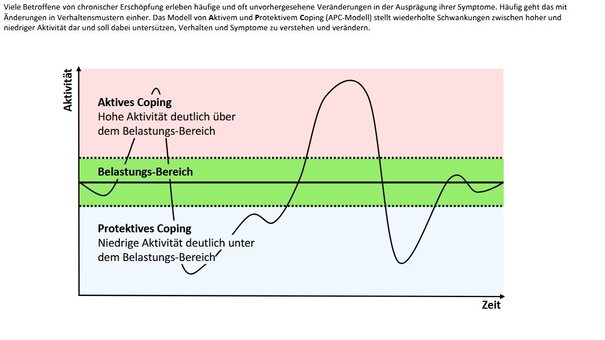
  • Fatigue and reduced resilience

    Reduced resilience and chronic fatigue have a lasting impact on the quality of life of many sufferers and are still poorly understood. ....

  • Interaction with objects and tool use

    Conventional vs. digital objects: How ageing on the one hand and brain damage on the other bring about impairments in the use of objects and tools..

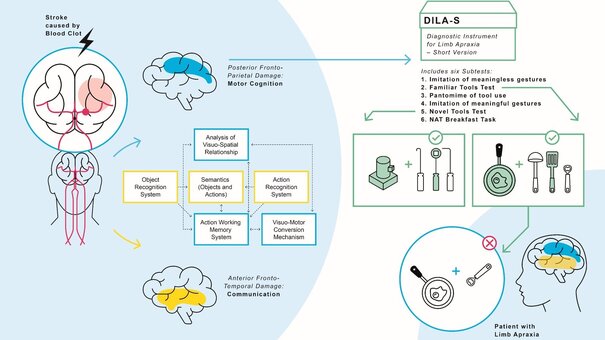
    We use the Diagnostic Instrument for Limb Apraxia (DILA-S) to examine neurological patients. Patients with left hemispheric stroke or dementia often show apraxic symptoms. Apraxia is a very heterogeneous disorder and can impair the imitation of hand positions, the execution of gestures and/or the use of tools. For example, we were able to show that damage in different regions of the brain is associated with problems in handling unfamiliar tools versus familiar, everyday tools.
  • Perception of illness

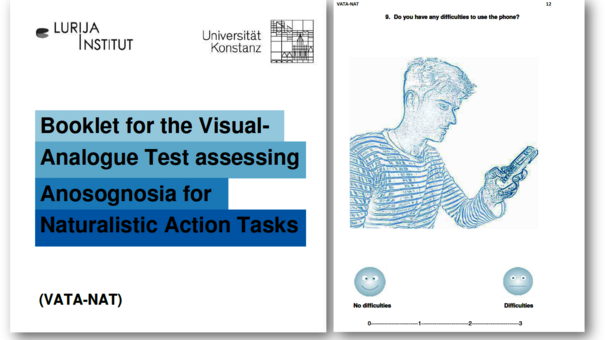
    Anosognosia - for example following brain damage - involves a lack of awareness of an existing impairment. This poses a particular challenge in the therapy process and can impair independence and safety in everyday life....

  • Motor-cognitive decision-making performance

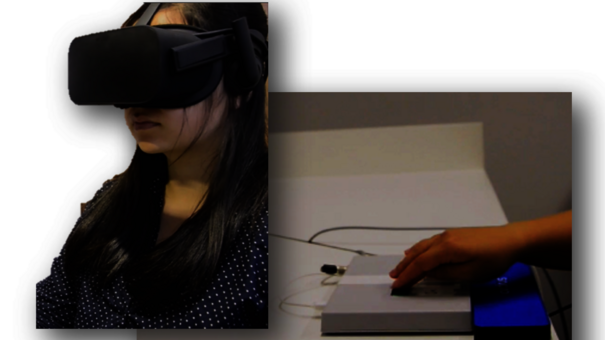
    Affordance-based decision-making describes the ability of people to immediately recognise possible courses of action in their environment and react appropriately to them - for example, knowing when a road can be crossed....

Fatigue and reduced resilience

Reduced resilience and chronic fatigue have a lasting impact on the quality of life of many sufferers and are still poorly understood. ....

Interaction with objects and tool use

Conventional vs. digital objects: How ageing on the one hand and brain damage on the other bring about impairments in the use of objects and tools..

We use the Diagnostic Instrument for Limb Apraxia (DILA-S) to examine neurological patients. Patients with left hemispheric stroke or dementia often show apraxic symptoms. Apraxia is a very heterogeneous disorder and can impair the imitation of hand positions, the execution of gestures and/or the use of tools. For example, we were able to show that damage in different regions of the brain is associated with problems in handling unfamiliar tools versus familiar, everyday tools.

Perception of illness

Anosognosia - for example following brain damage - involves a lack of awareness of an existing impairment. This poses a particular challenge in the therapy process and can impair independence and safety in everyday life....

Motor-cognitive decision-making performance

Affordance-based decision-making describes the ability of people to immediately recognise possible courses of action in their environment and react appropriately to them - for example, knowing when a road can be crossed....

Laboratories

  • Laboratory: Decision-making performance

    PT 4.01.22

  • Laboratory stress & movement

    PT 4.01.20

  • Laboratory hand-object interaction

    PT 4.01.19

Laboratory: Decision-making performance

PT 4.01.22

Laboratory stress & movement

PT 4.01.20

Laboratory hand-object interaction

PT 4.01.19

Your opportunity to actively participate in the study

Would you like to support our research and participate as a healthy volunteer actively? Here you can find out how to do so….

We develop diagnostics and training for patients with underlying neurological conditions. In order to be able to categorise what is still within the healthy range, it is very important to have comparative data from healthy people without underlying psychiatric or neurological illnesses.

We are therefore constantly looking for healthy participants aged 18 to 90 years for our studies at our Chair of Clinical Neuropsychology & Neuropsychological Psychotherapy at the University of Regensburg.

Our studies usually include questionnaires or tasks in which you have to act, decide or make judgements.

Remuneration: €10 per hour (depending on the work involved),

For psychology students: see active studies in Sona for test subject hours (registration via Sona)

Would you like to support our students in their final thesis and contribute to neuropsychological research at the same time? Then register at

np-lab​(at)​ur.de (opens your email program)

or by telephone at +49 941 943 3809

and please provide the following information:

  • Year of birth,
  • Handedness,
  • Gender,
  • Availability,
  • Contact details.

Link to this Webpage: https://go.ur.de/studien-np (external link, opens in a new window)

Materials

  • Diagnostics

    We develop neuropsychological procedures and approaches for the assessment of everyday skills..

  • Therapy

    The therapeutic approaches we have developed are based on behavioural and neuropsychological considerations..

Diagnostics

We develop neuropsychological procedures and approaches for the assessment of everyday skills..

Therapy

The therapeutic approaches we have developed are based on behavioural and neuropsychological considerations..

To top