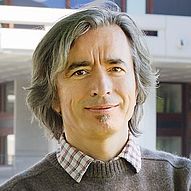


Person
Akademischer Rat (in Vertretung von Dr. Andreea Kaltenbrunner, Lehrstuhl für Geschichte Südost- und Osteuropa)
Koordinator des Bachelorstudiengangs Südosteuropastudien
Für mein Profil (auf Englisch) siehe hier oder meinen ORCID.
Petru Negură ist Soziologe und Historiker mit Schwerpunkten in Nationalismusforschung, Bildungs- und Sozialpolitik sowie der Sozialgeschichte Osteuropas und des postsowjetischen Raums. Er promovierte 2007 an der École des Hautes Études en Sciences Sociales (EHESS), Paris, mit einer Arbeit zur Kultur- und Nationspolitik in der sowjetischen Moldau.
Seine Forschung befasst sich insbesondere mit Nation-Building, alltäglicher Ethnizität, sozialen Repräsentationen von Krieg und Gewalt sowie mit Marginalität und Wohlfahrtspolitiken. Er war Research Fellow am Aleksanteri Institute in Helsinki (2023) und am Leibniz-Insitit für Ost- und Südosteuropaforschung (IOS) im Rahmen eines Alexander-von-Humboldt-Stipendiums (2020-2023). 2025 war er Social Expert im EU-geförderten Projekt VCA4D - Analysis of the Maize and Sunflower Value Chains in Moldova. Zudem ist er Mitglied des Editorial Boards der Zeitschrift PLURAL - History, Culture, Society.
Seit April 2025 ist er Akademischer Rat am Lehrstuhl für Geschichte Südost- und Osteuropas (in Vertretung von Dr. Andreea Kaltenbrunner) und koordiniert zugleich den BA-Studiengang Südosteuropastudien. Parallel dazu ist er seit 2018 Researcher am Institut für Rechts- Politik- und Sozialforschung der Moldauer Staatsuniversität.
Ausbildung
- 2007 - Doktorat in Soziologie, EHESS Paris
- 2000 - Master in Soziologie, EHESS Paris
- 1996 - MA Französische Literatur, Universität Iaşi
- 1995 - MA Französisch und Italienisch, Universität Iaşi
Funktionen
- 04/2025 - heute: Akademischer Rat und Koordinator des BA-Studiengangs Südosteuropastudien in Vertretung, Universität Regensburg
- 09/2018 - heute (Teilzeit): Wissenschaftlicher Mitarbeiter, Moldova State University
- 01/2025 - 12/2025: National Social Expert, VCA4D-Projekt (EU & Agrinatura)
- 04/2023 - 09/2023: Research Associate, IOS Regensburg
- 10/2020 - 03/2023: Research Fellow (Georg Forster Programm), Alexander-von-Humboldt-Stiftung, IOS Regensburg
- 10/2023 - 12/2023: Research Fellow, Aleksanteri Institute, Helsinki
- 09/2017 - 09/2021: Associate Professor, ULIM Chișinău
Forschung
Forschungsschwerpunkte
- Nations- und Staatsbildungsprozesse in den rumänische, polnischen und sowjetischen Grenzregionen (Alltagsgeschichte, Bildung, Kirche, Armee)
- Sozialpolitik und Marginalität im spät- und postsowjetischen Raum (insbesondere Wohnungslosigkeit)
- Soziale Repräsentationen von Krieg und Frieden in Osteuropa (mit Schwerpunkt Republik Moldau)
- Geschichtssoziologie, Nationalismusforschung und Alltagsethnizität
Forschung
Aktuell widme ich mich drei größeren Forschungsprojekten, die thematisch meine Schwerpunkte in der Geschichtssoziologie, Sozialpolitik und den sozialen Repräsentationen verbinden:
Projekt 1: "Popular Responses to Nation-Building in the Interwar Romanian, Polish and Soviet Borderlands"
Dieses Forschungsprojekt untersucht, wie ländliche Bevölkerungsgruppen in den Grenzregionen der Zwischenkriegszeit auf nationale Integrations- und Staatsbildungsprogramme reagierten - vor allem im Bereich der Schule, der kirchlichen Institutionen und des Militärs. Im Mittelpunkt stehen Formen der Aneignung, Anpassung und alltäglichen Verweigerung, die das Verhältnis zwischen Staat und Bevölkerung im 20. Jahrhundert nachhaltig geprägt haben.
Projekt 2: "Assistance and Control: Homelessness and Social Policy in Soviet and Post-Soviet Moldova"
Das Projekt analysiert sozialpolitische Maßnahmen gegenüber wohnungslosen Menschen in der späten Sowjetunion und im postsowjetischen Moldau. Es beleuchtet die Spannung zwischen sozialer unterstützung, administrativer Kontrolle und repressiven Praktiken sowie die Erfahrungen der Betroffenen in städtischen Räumen.
Projekt 3: "Ambivalente Einstellungen: Soziale Repräsentationen von Krieg und Frieden in der Republik Moldau"
Diese laufende Studie erforscht, wie Bewohner*innen der Republik Moldau den Krieg in der Ukraine wahrnehmen und deuten. Im Fokus stehen ambivalente Haltungen, emotionale Reaktionen und gesellschaftliche Spaltungen im Kontext geopolitischer Unsicherheit.
Alle drei Forschungsschwerpunkte haben zu Veröffentlichungen in anerkannten Fachzeitschriften und Sammelbänden geführt (siehe Publikationen).
Publikationen
Hier sind meine wichtigsten Veröffentlichungen, insbesondere für den Zeitraum 2019-2025:
Monographien
- Petru Negură, Nici eroi, nici trădători: Scriitorii moldoveni și puterea sovietică în epoca stalinistă (Chișinău: Cartier, 2014).
-
Petru Negură, Ni héros, ni traîtres: Les écrivains moldaves face au pouvoir soviétique sous Staline (Paris: L’Harmattan, 2009).
Sammelbände und Herausgeberschaften
- Petru Negură, Andrei Cușco und Svetlana Suveica (Hg.), Nationalism from Below in the East European and Soviet Borderlands: Popular Responses to Nation-Building, 1918–1940 (London: Bloomsbury, 2025).
- Petru Negură, Andrei Cușco und Svetlana Suveica (Hg.), Nationalism from Below in the East European and Soviet Borderlands: Popular Responses to Nation-Building, 1918-1940 (London: Bloomsbury, 2025).
- Petru Negură und Svetlana Suveica (Hg.), Everyday Nationalism and Popular Mobilization in Moldova in the Late Soviet Times and the Post-Soviet Transition, Special Issue, Comparative Southewast European Studies 71, Nr. 4 (Dezember 2023).
- Petru Negură und Andrei Cușco (Hg.), Public Education in Romania and Moldova, 19th-20th Centuries: Modernization, Political Mobilization, and Nation-Building, Special Issue, Plural. History, Culture, Society 9, Nr. 1 (2021)
- Petru Negură, Julien Danero iglesias und Đorđe Tomić (Hg.), "Moldavie: Une transformation hésitante", Special Issue, Revue d'Études comparatives Est-Ouest (RECEO), Juni 2015.
- Petru Negură und Diana Dumitru (Hg.), "Moldova: A Borderland's Fluid History", Special Issue, Euxeinos: Governance and Culture in the Black Sea Region (Universität St. Gallen), 2014.
Artikel und Kapitel in Soziologie
- Petru Negură und Lilian Negura, “Beyond Polarisation: Understanding Moldovans’ Social Representation of the War in Ukraine,” Europe-Asia Studies (erscheint 2026).
- Petru Negură, “Assistance, Stigma, and Control of the Homeless in (post-)Soviet Moldova.” In De Gruyter Handbook of Eurasian Societies, hg. v. Charlie Walker, Jeremy Morris, Eleanor Bindman, Oleg Golubchikov, Agnieszka Kubal, Meri Kulmala und Gavin Slade (Berlin: De Gruyter-Brill, erscheint 2025).
- Petru Negură und Lilian Negura, “Ambivalente Einstellungen: Moldovas Gesellschaft und Russlands Krieg in der Ukraine,” Osteuropa Nr. 5 (2025): 145–53. https://doi.org/10.35998/oe-2025-047.
- Petru Negură, “Im Schatten des Kriegs: Ängste und Hoffnungen in der Republik Moldau,” Religion & Gesellschaft in Ost und West 52, Nr. 7–8 (2024): 22–25. https://rgow.eu/zeitschrift/2024/7/im-schatten-des-kriegs-aengste-und-hoffnungen-in-der-republik-moldau.
- Petru Negură, “What Do Moldovans Think of and How Do They Talk about the Russian Aggression against Ukraine? Prolegomena for Qualitative Inquiry,” Comparative Southeast European Studies 71, Nr. 2 (2023): 237–51. https://doi.org/10.1515/soeu-2023-0028.
- Petru Negură, “Work, Subsistence and Distress of the Homeless in Moldova.” In Informality, Labour Mobility and Precariousness: Supplementing the State for the Invisible and the Vulnerable, hg. v. Abel Polese, 343–69. London: Palgrave Macmillan, 2022. https://doi.org/10.1007/978-3-030-82499-0_14.
- Petru Negură, Lucia Gașper und Mihai Potoroacă, “Institutional Trust and Citizen Support for the Government Socioeconomic Policy in the Early Phase of the Covid-19 Pandemic in the Republic of Moldova,” Calitatea Vieții33, Nr. 1 (2022): 2–21. https://doi.org/10.46841/RCV.2022.01.01.
- Petru Negură, Lucia Gașper und Mihai Potoroacă, “Trust in Institutions, Social Solidarity, and the Perception of Social Cohesion in the Republic of Moldova in the Early Phase of the COVID-19 Pandemic,” Comparative Southeast European Studies 69, Nr. 4 (2021): 453–81. https://doi.org/10.1515/soeu-2021-0034.
- Petru Negură, “Homelessness in a Post-Soviet City: Weak Social Support and Institutional Alienation,” The British Journal of Social Work 50, Nr. 6 (2020): 1031–48. https://doi.org/10.1093/bjsw/bcz091.
- Petru Negură, “The State Policy towards the Homeless in Moldova between the ‘Left Hand’ and the ‘Right Hand’: The Case of Chișinău Shelter,” Südosteuropa: Journal of Politics and Society 67, Nr. 2 (2019): 175–95. https://doi.org/10.1515/soeu-2019-0013.
Artikel und Kapitel in Geschichte
- Negură, Petru, Andrei Cuşco und Svetlana Suveica. 2025. “Introduction: Popular Responses to Nation-Building in the Soviet and East European Borderlands, 1900–40.” In Nationalism From Below in the East European and Soviet Borderlands, hg. v. Petru Negură, Andrei Cuşco und Svetlana Suveica, 1–18. London: Bloomsbury Academic. https://doi.org/10.5040/9781350443778.ch-I.
- Negură, Petru. 2025. “Dodging the Nation: Peasant Responses to Schooling and Nation-Building in the Interwar Romanian, Polish, and Soviet Borderlands.” In Nationalism From Below in the East European and Soviet Borderlands, hg. v. Petru Negură, Andrei Cuşco und Svetlana Suveica, 209–32. London: Bloomsbury Academic. https://doi.org/10.5040/9781350443778.ch-10.
- Petru Negură und Svetlana Suveica, “Everyday Ethnicity and Popular Responses to Nation-Building Projects in Moldova After 1989,” Comparative Southeast European Studies 71, Nr. 4 (2023): 465–87. https://doi.org/10.1515/soeu-2023-0047.
- Petru Negură, “School Discipline, Corporal Punishment, and State Formation in the Romanian and Soviet Borderlands (1918–1940),” Jahrbücher für Geschichte Osteuropas 70, Nr. 3–4 (2022): 430–62. https://doi.org/10.25162/JGO-2022-0010.
- Petru Negură, “Moldova’s Thirty-Year Search for Independence,” Current History 120, Nr. 828 (2021): 268–73. https://doi.org/10.1525/curh.2021.120.828.268.
- Petru Negură, “Nation-Building and Mass Schooling of Ethnic Minorities on the Romanian and Soviet Peripheries (1918–1940): A Comparative Study of Bessarabia and Transnistria,” National Identities 23, Nr. 4 (2021): 433–54. https://doi.org/10.1080/14608944.2021.1873931.
- Petru Negură und Andrei Cușco, “Public Education in Romania and Moldova, 19th–20th Centuries: Modernization, Political Mobilization, and Nation-Building,” Plural. History, Culture, Society 9, Nr. 1 (2021): 5–10. https://doi.org/10.37710/plural.v9i1_1.
- Petru Negură, “Compulsory Primary Education and State Building in Rural Bessarabia (1918–1940),” Journal of Romanian Studies 2, Nr. 1 (2020): 35–58. https://doi.org/10.3828/jrns.2020.2.1.03.
- Irina Livezeanu und Petru Negură, “Borderlands, Provinces, and Regionalisms in East Central Europe.” In Regionalism and Modern Europe: Identity Construction and Movements from 1890 to the Present Day, hg. v. Eric Storm und Xosé M. Núñez Seixas, 251–70. London: Bloomsbury, 2019.
- Petru Negură, “The First Moldovan Students in Romania (1990–19991): Informal Traders or Agents of Change?” In Governance beyond the Law: The Immoral, the Illegal, the Criminal, hg. v. Abel Polese, Alessandra Russo und Francesco Strazzari, 291–308. London: Palgrave Macmillan, 2019. https://doi.org/10.1007/978-3-030-05039-9_15.
Buchrezensionen
- Petru Negură, Rezension zu Les Provinces du temps: Frontières fantômes et expériences de l’histoire, von Béatrice von Hirschhausen (Paris: Éditions de la Maison des sciences de l’homme, 2023), Comparative Southeast European Studies 73, Nr. 2 (2025): 246–48. https://doi.org/10.1515/soeu-2025-0022.
- Petru Negură, Rezension zu Peripheries at the Centre: Borderland Schooling in Interwar Europe, National Identities 25, Nr. 3 (2023): 296–98. https://doi.org/10.1080/14608944.2022.2132718.
- Petru Negură, Rezension zu Science of the Child in Late Imperial and Early Soviet Russia, von Andy Byford (Oxford: Oxford University Press, 2020), Jahrbücher für Geschichte Osteuropas 70, Nr. 1–2 (2022): 236–39. https://biblioscout.net/article/99.140005/jgo202201023601.
- Petru Negură, Rezension zu A History of Education in Modern Russia: Aims, Ways, Outcomes, von Wayne Dowler (Toronto: University of Toronto Press, 2021), Jahrbücher für Geschichte Osteuropas 70, Nr. 1–2 (2022): 239–41. https://biblioscout.net/article/99.140005/jgo202201023901.
- Petru Negură, Rezension zu Sociologia proastei guvernări în România interbelică, von Bogdan Bucur (Bukarest: RAO, 2019), Journal of Romanian Studies 4, Nr. 1 (2022): 135–45. https://doi.org/10.3828/romanian.2022.9.
- Petru Negură, Rezension zu Le grand tournant de la société moldave: “Intellectuels” et capital social dans la transformation post-socialiste, von Dorina Roșca (Paris: Presses de l’Inalco, 2019), Plural. History, Culture, Society 9, Nr. 1 (2021): 213–16. https://doi.org/10.37710/plural.v9i1_11.
- Petru Negură, Rezension zu The Space of Boredom: Homelessness in the Slowing Global Order, von Bruce O’Neill (Durham, NC: Duke University Press, 2017), Journal of Romanian Studies 1, Nr. 1 (2019): 135–37.
Lehre
Wintersemester 2025/26
- Wissenschaftliche Arbeitstechniken und Methoden in Geschichtswissenschaft, Linguistik und Anthropologie, Proseminar
- Everyday Nationalism & Nation-Building in Eastern and Southeastern Europe, Proseminar
Vergangene Lehrveranstaltungen
Universität Regensburg (seit 2025)
- Everyday Nationalism & Nation-Building in Eastern and Southeastern Europe, Hauptseminar (SoSe 2025, SeeFField-Projekt)
- Wissenschaftliche Arbeitstechniken und Methoden in Geschichtswissenschaft, Linguistik und Anthropologie, Proseminar (WiSe 2025/26, Vertretungsprofessur)
- Nationalismus und alltägliche Ethnizität in Ost- und Südosteuropa, Proseminar (WiSe 2025/26, Vertretungsprofessur)
- Programmkoordination BA Südosteuropastudien (seit WiSe 2025)
Free International University of Moldova (ULIM), Chișinău (2017-2021)
- Sociology with Oppressed People, Seminar (BA)
- Research Methodology in Sociology, Seminar (BA/MA)
- Sociology of Groups, Seminar (BA)
- Betreuung von Bachelor- und Masterarbeiten
Staatliche Pädagogische Universität "Ion Creangă“, Chișinău (2009-2017)
- History of Education and Nationalism in the USSR and Romania, Seminar
- Quality of Life Studies, Seminar
- Research Methodology in Sociology, Seminar
- Betreuung von Abschlussarbeiten
École Doctorale Francophone en Sciences Sociales, Bukarest (2010-2020, Gastdozent)
- The Case Study as an Interdisciplinary Research Strategy in History and the Social Sciences, PhD-Seminar
- The Biographical Method in Social Research, PhD-Seminar
- Content Analysis Using NVivo Software, PhD-Seminar
- Betreuung von Promotionsprojekten
Weitere Aktivitäten
Weitere Aktivitäten (Auswahl)
Seit 2016 - Mitglied des Herausgeber*innenrats
PLURAL. History, Culture, Society (Chișinău, Scopus-Journal)
- Begutachtung und Betreuung eingereichter Manuskripte im eigenen Fachgebiet; Koordination von Peer-Review-Prozessen und Mitherausgabe von Sonderheften.
2013-2020 - Mitherausgeber und Autor
Platzforma.md - unabhängige Plattform für soziale und menschenrechtliche Themen
- Redaktionelle Mitarbeit und Veröffentlichung eigener Beiträge; Mitbetreuung von über 500 Artikeln von rund 100 Autor*innen (eigene Beiträge: 30).
2023-2024 - Review Panel Member
European Cooperation in Science and Technology (COST), Brüssel
- Prüfung, Bewertung und Qualitätssicherung von Projektanträgen; Mitwirkung an der Finalisierung von Consensus Evaluation Reports (CERs)
2016-2019 - Board Member
Society for Romanian Studies (SRS), Washington, D.C.
- Entwicklung akademischer Projekte; Mitorganisation der internationalen SRS-Konferenz (Juni 2018); redaktionelle Betreuung der Website und Aufbau eines Mentoring-Programms.
Seit 2011 - Direktor
Plural Forum for Interdisciplinary Studies (NGO), Chișinău
- Leitung und Umsetzung sozialwissenschaftlicher Forschungs- und Beratungsprojekte mit einem Team von acht Mitarbeiter*innen; Zusammenarbeit mit internationalen Partnern und Regierungsinstitutionen. https://forumplural.blogspot.com