

About the Projekt
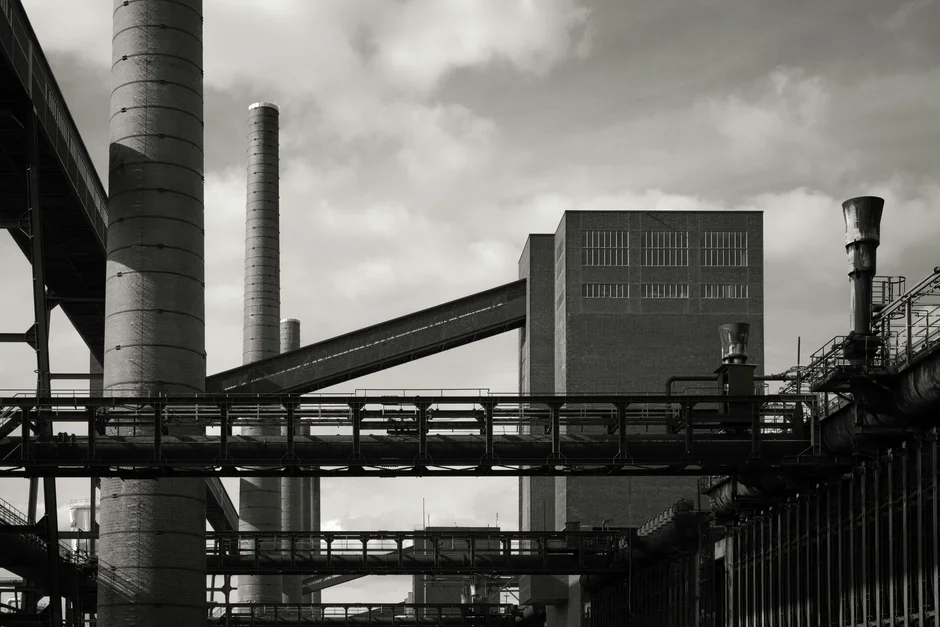
The project comparatively examines how industrial heritage emerged in East Germany and Poland during the political, economic and social transformation since 1989/90, and how it has been shaped up to the present day. Central to the project is the question of how industrial heritage emerged under the conditions of systemic change, and what continuities existed with socialist practices of heritage preservation. The project pursues two overarching aims: it critically interrogates the epistemology of industrial heritage research, which has so far been strongly shaped by Western European perspectives, and it expands memory research on the transformation period, which has often been focused dichotomously on dictatorship versus everyday life. The dimension of industrial heritage not only offers new and so far underresearched perspectives on the practices of saving, collecting and exhibiting the remnants of an only seemingly "unwanted past", it also fosters a historicisation of the post-1989 transformation period.
Funded through the DFG-NCN Weave-Unisono scheme, the project brings together five sub-projects from Germany and Poland that combine two levels of analysis: an actor-centred, bottom-up perspective on local initiatives (sub-projects 1 and 2) and a top-down perspective on large-scale, politically framed processes of heritagisation (sub-projects 3 to 5). The three analytical categories of agency, spatiality and temporality structure the sub-projects.
● Sub-project 1 (Juliane Tomann, University of Regensburg) examines bottom-up commemorative initiatives at three East German museum sites (Dresden/Robotron, Brandenburg an der Havel, Merseburg) and investigates the commemorative agency of former industrial workers, with particular attention to gender.
● Sub-project 2 (Joanna Wawrzyniak/Magdalena Banaszkiewicz, University of Warsaw) uses the case studies of the Wedel chocolate factory and the Warsaw steelworks to analyse how local commemorative practices developed over three decades following privatisation by international corporations.
● Sub-project 3 (Jan Kellershohn, State Office for Heritage Management and Archaeology Saxony-Anhalt) examines cultural-political conflicts over industrial heritage as a source of regional identity-building in Saxony-Anhalt.
● Sub-project 4 (Torsten Meyer, Deutsches Bergbau-Museum Bochum) compares large-scale forms of industrial heritage monumentalism in lignite mining (the Central German Lignite Road, IBA Fürst-Pückler-Land) with the West German model in the Ruhr area, taking into account the transfers between West and East and vice versa.
● Sub-project 5 (Magdalena Banaszkiewicz, Jagiellonian University in Kraków) focuses on the Industrial Monuments Route of the Silesian Voivodeship and investigates how these heritage practices and narratives both reflect and shape local, regional and European identities and power relations.
The project will officially start on 1 February 2027 and will run for 36 months.