
Lecturer (until 31 March 2025)
CV
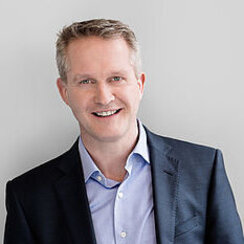
Oliver Gnad is co-founder and managing partner of the "Bureau für Zeitgeschehen", an application-orientated think tank based in Berlin and Frankfurt am Main. He specialises in strategy development and risk consulting using strategic foresight and scenario planning methods.
Oliver Gnad is a partner in the political consulting agency Berlin Global Advisors, a non-resident fellow of the German Marshall Fund of the United States, a fellow of the Dahrendorf Forum and a senior consultant for the European business of Globalytica Ltd, a Washington-based strategy consultancy. From 2008 to 2016, he headed GIZ AgenZ in Berlin, an in-house agency of the Deutsche Gesellschaft für Internationale Zusammenarbeit (GIZ), responsible for public affairs issues and strategic business development. Prior to that, Oliver Gnad spent five years as Programme Director for International Affairs and Global Governance at the ZEIT-Stiftung Ebelin und Gerd Bucerius in Hamburg. He holds a doctorate in history and political science and is the author of numerous books and articles on foreign and security policy and sustainable development issues. He has been teaching structured analysis techniques at the Hertie School of Governance in Berlin since 2015.
Bureau für Zeitgeschehen (BfZ) GmbH
The Bureau für Zeitgeschehen is a Berlin-based think-and-do tank. Using methods of strategic foresight and scenario planning, the Bureau für Zeitgeschehen navigates its partners and clients through the terra incognita of an increasingly complex world. It sensitises clients to the key factors of fundamental change, dynamics and complexity. We identify stumbling blocks, open up new perspectives and thus realise untapped potential. So that decisions become sustainable and robust for the future. The Bureau für Zeitgeschehen works closely with think tanks from the USA, Russia, Asia and the African continent. Its clients come from both the public and private sectors. It specialises in foreign, security and development policy issues, climate, energy and raw materials security as well as digitalisation, automation and artificial intelligence.