Direkt zum Inhalt


Forschungsprojekte der Wissenschaftsgeschichte

The Astronomers' Chair

Project by Prof. Dr. Omar W. Nasim

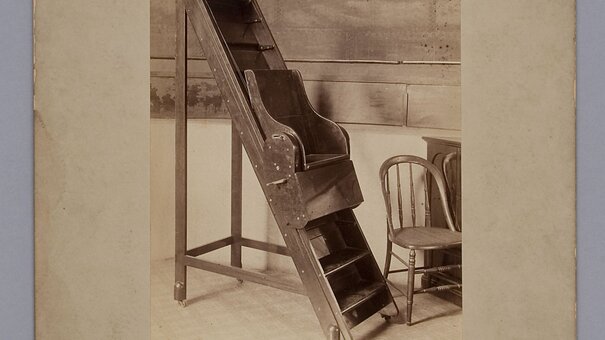
The project offers the first cultural history of the chair’s role in the history of science. It does so by honing in on the astronomer’s observing chair: a task-specific mechanical chair designed—especially between 1820 and 1880—for telescopic observations. In order to explain the observing chair’s widespread appeal and presence in nineteenth-century representations of astronomy, I disentangle the relevant visual culture that informed European audiences in how they interpreted images of chairs more generally. By using the work of furniture and design historians, who have decoded the normative place of the ordinary chair and postures in the bourgeois home, this project provides an interpretative framework for the social and cultural significance of representations of observing chairs in Germany, France, but particularly in Great Britain and the United States.  Broaching a variety of different themes and subjects related to nineteenth-century visual cultures, the project casts a fresh glance at race and gender, furniture and science, posture and knowledge, historicity and modernity, labour and professionalization, Self and how the Other found its way into how astronomers sat, where they sat, and how seat furniture was designed for them. The work directly engages with racial-, gender-, colonial-, and nineteenth-century studies as well as issues around the epistemological, visual, and moral significance of the seated postures in the history of science, technology and design. This interdisciplinary project discloses and tracks a number of essential threads that constituted the significance of the astronomers’ observing chair as a cultural symbol of modernity.

Publications:

The Astronomer's Chair: A Visual and Cultural History (MIT Press, forthcoming)

Presentations:

“The Astronomers’ Chair,” at the Copenhagen Planetarium, Oct. 3, 2019

Keynote Address to the 14th Biennial History of Astronomy Workshop at the University of Notre Dame, June 19-23, 2019

“The Astronomer’s Chair: The Moral Economy of Sitting,” Colloquium for the History of Knowledge, Humboldt University Berlin, April 25, 2018

“The Astronomer’s Chair: Moral Economy of Sitting in Science, 1750-1900,” Workshop: vom Schreibtisch, LMU (Munich), December 14, 2017

Astronomy's Glass Archive

Project by Prof. Dr. Omar W. Nasim

Mercator Fellow: Professor Kelley Wilder (Director, Photographic History Research Centre, De Montfort University, UK).

Start: Jan. 15, 2021

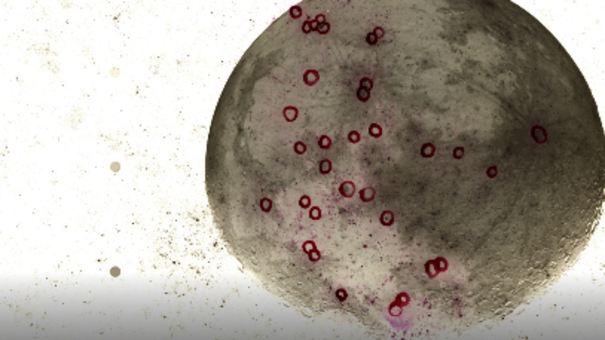
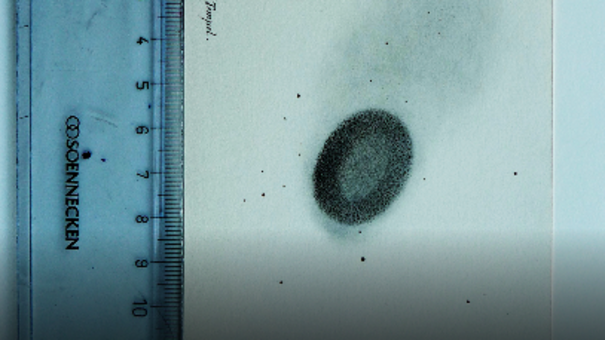
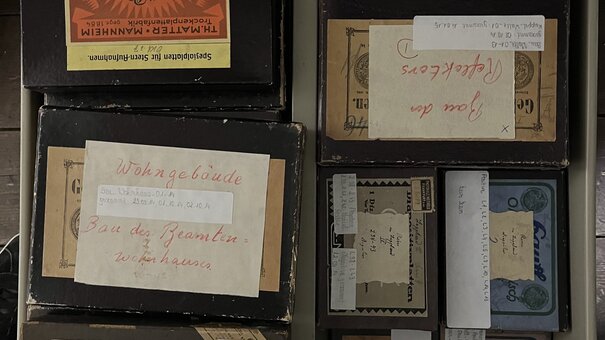
Our project combines photographic history and history of science to interrogate the role and importance of photographic materials and practices in shaping and re-configuring astronomy in the era of glass plate photography. Aside from paper catalogues of stars, the routine work with and on glass plates left a trail of marks, notes, and labels made or fixed directly on the plates. These traces, together with industrial information about plate manufacture and supply, photographic emulsions and pre-exposure treatments are important indicators of the performance of astronomical knowledge-making through glass plate photography. Our research moves beyond contemporary scholarship’s reliance on photography in print by revealing how it was used by scientists in their painstaking, day-to-day practices and techniques, and how standards were established for manufacture and use of glass plate photography in astronomy and further afield. In both cases the materiality of photography will be central. We aim to show that the “information” contained on these glass objects extends beyond the image. They index large transnational markets in photographic raw and finished materials; issues of storage, preservation, maintenance; and global networks of observatories consolidating scientific practices. Based on extensive archival research at collections in Germany, UK, USA, and the Netherlands, we detail the emergence of epistemic cultures at the observatory that remediated and implicated new spaces, labor, technologies, and personnel. In addition to the ecological and ontological implications of these cultures for the history of photography and science, the migration of photographs through global systems involved the imperial, colonial, and postcolonial dimensions that will be taken seriously in this calculus of transnational networks.

See also Photography in the History of Observation and see also the new DFG Project Website (externer Link, öffnet neues Fenster)

Team Members:

Prof. Dr. Omar W. Nasim - Principal Investigator

Prof. Dr. Kelley Wilder - DFG Mercator Fellow

Dr. Buket Altinoba - Project Affiliate

Dr. Chaokang Tai - Postdoctoral Researcher

Katharina Bick - Doctoral Student and Researcher

Ornamental Mind

Project by Prof. Dr. Omar W. Nasim

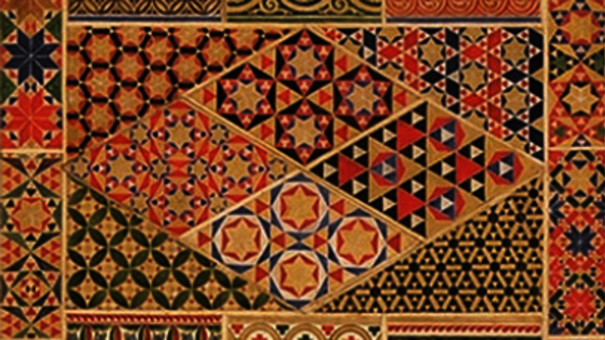
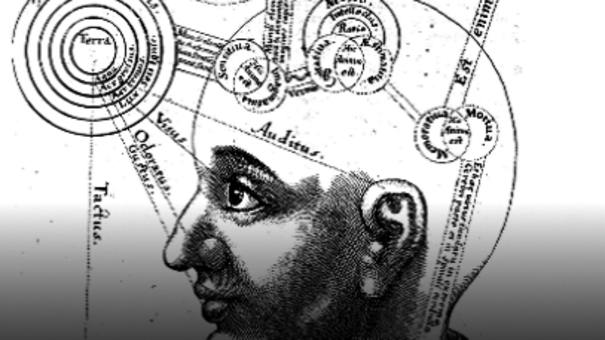
This project aims to unearth and clarify a set of historical, cultural, and epistemic conditions that overlapped between an early nineteenth century discourse on the ornamental arts, and the late nineteenth century use of visual, paper tools in the human and mental sciences. Throughout its history, psychology has used different means to access its subject matter. In the 16th century the soul was studied by way of anatomy. In the 18th century philological and hermeneutical methods were used to access the mind through text. By the end of the 19th century many psychological and human sciences began to use visual images to access and assess the workings of the human mind. Broadly accepted and widely dispersed, many of these visual, paper tools (e.g., Mach bands, Hermann grids, Necker cubes, Zoellner illusion, etc.) continue to be used and remain persuasive today. This interdisciplinary project provides a historical, cultural and conceptual landscape by which to understand the shift from the text to the image in the mental and human sciences. To properly understand the shift the project investigates the theories of the ornamental and decorative arts. After all, when we search elsewhere for well-developed and operational overlaps between mind and image we inevitably find it in an extensive discourse around the ornament that dominated the long nineteenth-century. This novel interaction will reconfigure historical and cultural, intellectual and epistemological landscapes between these disparate sectors, and has the potential to transform our understanding of this formative period in the history of several sciences.


Presentations:

“Ornament and the Mind Sciences: A History of Lines, Flatness, and Race,” Kunsthistorische Objektwissenschaft, LMU (Munich), November 20, 2017

“The Ornamental Mind,” at the Oberseminar Perspektiven der Wissenschaftsgeschichte, LMU (Munich), July 6, 2017

“The Ornamental Mind: Ornamental and the Mind Sciences” at the Chair for the History of Science, University of Regensburg, May 18, 2016

Seminar on the Ornamental Mind, Visual Studies Program, University of Pennsylvania, April 16, 2015

The Mexican Axolotl

Project by Dr. Christian Reiss

Laboratory animals have been an integral part of biomedical research since the 19th century. Epistemologically, they serve as models for fundamental processes of life or stand in for humans. On a practical level, they are part of the experimental systems set up to investigate objects in the laboratory. But they are also co-inhabitants of these spaces and have multiple and complex relations with the people working there.

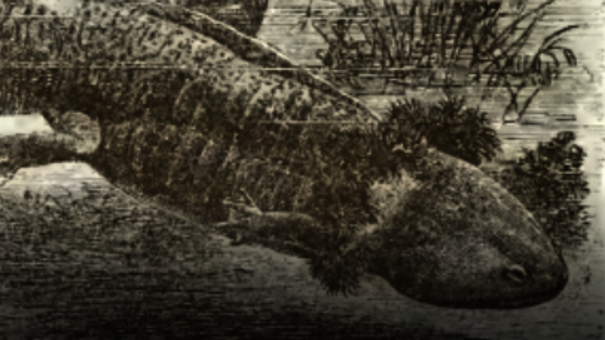
The Mexican axolotl (Ambystoma mexicanum) is one such laboratory animal. Its history offers a unique opportunity for a long-term history of a species’ way into the laboratory. The project brings together a focus on the practices of animal keeping and laboratory research with approaches from human-animal studies. The result is a long durée perspective of the species’ history from the first reports in the earliest natural history books on the Americas from the 17th century, to the first preserved specimens collected by Alexander von Humboldt around 1800 until the arrival and proliferation of the first living axolotls across Europe in the second half of the 19th century.

This project is interested in the history of these different constellations and historical processes that connect them. It specifically looks into the spread of the living axolotls across Europe from 1864 onwards. Using approaches from history of science and landscape ecology, it tracks the establishment of a European axolotl population. This mapping is the basis to understand the ways in which developments in the sciences and the emerging aquarium hobby in popular culture facilitated this spread and how the easy availability of axolotls affected scientific practices.

Related projects

Aquariums and the History of the Laboratory in the Life Sciences
Julius Schaxel and the History of Developmental and Theoretical Biology


Publications

Reiß, Christian (2020): Der Axolotl. Ein Labortier im Heimaquarium, 1864-1914, Göttingen: Wallstein.

Reiß, Christian; Uwe Hoßfeld und Lennart Olsson (2016): Der mexikanische Axolotl als Labortier im Wandel der Zeit, BIOspektrum 22(6), S. 660-661.

Reiß, Christian; Lennart Olsson und Uwe Hoßfeld (2015): The History of the Oldest Self-Sustaining Laboratory Animal: 150 Years of Axolotl Research, Journal of Experimental Zoology 324(5), S. 393-404.

Reiß, Christian; Uwe Hoßfeld und Lennart Olsson (2014): Zwischen Labor und Aquarium oder: Wie ein Amphib die Welt eroberte. 150 Jahre Axolotl, Biologie in unserer Zeit 44, S. 188-195.

Reiß, Christian (2014): August Weismanns frühe Evolutionsforschung: Experiment und Theorie im künstlichen Naturraum, Rudolstädter naturhistorische Schriften 20, S. 11–29.

Reiß, Christian (2012): Gateway, Instrument, Environment: The Aquarium as a Hybrid Space between Animal Fancying and Experimental Zoology, NTM Zeitschrift für Geschichte der Wissenschaften, Technik und Medizin 24, S. 309–336.

Reiß, Christian (2012): Wie die Zoologie das Füttern lernte. Die Ernährung von Tieren in der Zoologie im 19. Jahrhundert, Berichte zur Wissenschaftsgeschichte 35, S. 286–299.

Reiß, Christian (2011): Axolotl, in: Abteilung III des Max-Planck-Instituts für Wissenschaftsgeschichte (Hrsg.): Eine Naturgeschichte für das 21. Jahrhundert. Zu Ehren von Hans-Jörg Rheinberger, Berlin: Eigenverlag, S. 132–134.

Research Network Know-In

Project by Dr. Carmen Dexl und Dr. Christian Reiß

This CITAS-funded research network “Knowledge Infrastructures: Circulation, Transfer and Translation of Knowledge across Borders” (short: KNOW-IN) explores the interconnections between infrastructures and knowledge production and the processes of circulation, transfer, and translation they facilitate across and beyond borders. We bring together scholars from multiple disciplinary and institutional backgrounds to build on a set of case studies from a broad variety of historical and cultural contexts to put Area Studies and Science and Technology Studies into a productive conversation.

How do infrastructures create connections that enable the generation, circulation, translation, and dissemination of various forms of knowledge across cultural, regional, or national borders? And conversely, how do these (emerging) forms of knowledge contribute to the construction, stabilization and maintenance of infrastructures? How exactly do infrastructures manifest, for instance as institutions or institutional webs, agents, gatekeepers, routes, and other structures of transfer, translation, and circulation? What role do they play for knowledge production by enabling the transmission of cultural goods and objects, material, people, or ideas, thus creating spaces for inter- and transnational collaborations and alliances or zones for intercultural and intellectual exchange? This is the central set of questions our transdisciplinary network focuses on in its collective research.

www.uni-regensburg.de/citas/english/know-in-network/index.html

Related projects

What is Biology? Human Nature, Interdisciplinarity and the Sciences of Life, ca. 1945-1956
Forestry Research, Pest Control, Infrastructure Management and the Most Fundamental Science of All – the History of German Ecology, 1900-1963
The Mexican Axolotl and the Early History of Laboratory Animals, 1600-today

Drawing in the History of Observation

Project by Dr. Omar W. Nasim

Handmade drawings by scientists are among the most ubiquitous forms of visual representation in the history of science. They have been used to diagram thoughts, visualize possibilities, and illustrate scientific texts. My interest however has centered on the ways sketching-making techniques have been used in conjunction with scientific observation. By a close historical and archival investigation of handmade drawings made of deep sky objects in the notebooks of nineteenth-century astronomers, I show that mutable and repeated drawings actually contributed to the observational work of the astronomer at the telescope--drawings honed the senses. This has meant that instead of examining published prints of drawings, I turn to unpublished, preliminary sketches that not only feature the tentative nature of astronomical data-formation but the materiality of pencil, paper, and gesture. I have called these “working images” and have contextualized them into the procedures of ordered paperwork. Thus, taken from behind the scenes of scientific work, we begin to see the intensity of observational practices and the ways in which handmade drawings made real contributions to our understanding of difficult astronomical objects such as the nebulae and star clusters.

Publications

Observing by Hand Sketching the Nebulae in the Nineteenth Century (Chicago: University of Chicago Press, 2013)

•    Winner of the History of Science Society’s Pfizer Book Prize for outstanding scholarly book in the field for last three years, 2016
•    Winner of the Choice Magazine: CHOICE Outstanding Academic Title Awards

“Extending the Gaze: The Temporality of Astronomical Paperwork,” in Science in Context, 2013, 26: 247-277.

Rheinsprung 11: Zur Händigkeit der Zeichnung, co-edited with Hana Gründler, Toni Hildebrandt and Wolfram Pichler, Virtual Issue No. 3, 2012.

“On Scribbles in Space,” in Über Kritzeln: Graphismen zwischen Schrift, Bild, Text und Zeichen, eds. Christian Driesen, et. Al (Zürich/Berlin: Diaphanes, 2012) pp. 71-90.

“Observing by Hand,” in Rheinsprung 11: "Zur Händigkeit der Zeichnung," eds. Hana Gründler, Toni Hildebrandt, Omar Nasim, and Wolfram Pichler, Virtual Issue, 2012, 66-74.

“Zeichnen als Mittel der ‘Familiarisation’ zur Erkundung der Nebel im Lord Rosse-projekt,” in Notieren, Skizzieren. Schreiben und Zeichnen als Verfahren des Entwurfs, eds. Karin Krauthausen and Omar Nasim (Zürich/Berlin: Diaphanes, 2010) pp. 159-88.

“Observation, Working-Images, and Procedure: the ‘Great Spiral’ in Lord Rosse’s Astronomical Record Books and Beyond,” in British Journal for the History of Science, 2010, 43: 353-389.

“On Seeing an Image of a Spiral Nebula: From Whewell to Flammarion,” in Nuncius: Journal of the History of Science, 2009, 24:393-414.

“Beobachtungen mit der Hand: Astronomische Nebelskizzen im 19. Jahrhundert,” in Daten sichern: Schreiben und Zeichnen als Verfahren der Aufzeichnung, ed. Christoph Hoffmann (Zürich/Berlin: Diaphanes Verlag, 2008) pp. 21-46.

“Observations, Descriptions, and Drawings of Nebulae: A Sketch,” in Max Planck Institute for History of Science Pre-Print Series. No. 345, Berlin: 2008.

Aquariums

Project by Dr. Christian Reiß


The laboratory is the iconic space of science in general and scientific research with its experimental systems in particular. As the most eminent place for the production of scientific knowledge, the investigation of epistemic things and the production of technical objects, the laboratory has been in the focus of historians, philosophers and anthropologists of science.

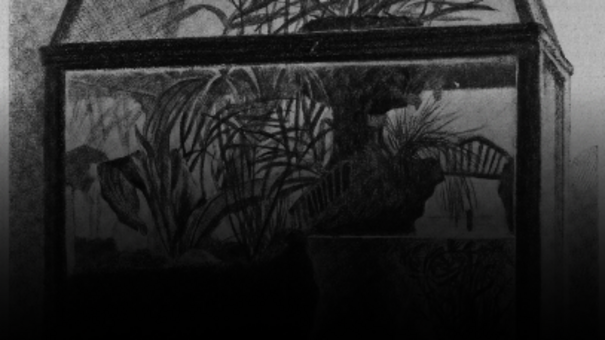
This project presents a history of the laboratory in German zoology in the second half of the 19th century. In contrast to physics and chemistry, but also to physiology and anatomy, the laboratory in zoology was as much focused on providing what was considered to be natural living conditions for the animals as it was built for scientific research. Interested in questions of evolution, development and heredity, the zoological laboratory is fundamentally sensitive to the relation between organism and environment and essentially thought to provide conditions for undisturbed development and behaviour of the species under investigation. Thus, I argue, the laboratory in zoology is as much related to the zoological and botanical garden as it is to the laboratories in physics and chemistry.

Combining spatial approaches to the history of science with a focus on scientific practices and human-animal relation, the laboratory in the life sciences is conceptualized as a techno-natural assemblage. It is viewed as a research space as much as it is understood as a space inhabited by human and non-human actors, which all contribute to its co-construction of a hybrid space between nature and technology.

Related projects

The Mexican Axolotl and the Early History of Laboratory Animals, 1600-today
Julius Schaxel and the History of Developmental and Theoretical Biology
Cinematographic Methods in the History of Embryology

Publications

Reiß, Christian (2020): Der Axolotl. Ein Labortier im Heimaquarium, 1864-1914, Göttingen: Wallstein.

Reiß, Christian (2017): The Biologische Versuchsanstalt as a Techno-natural Assemblage: Artificial Environments, Animal Husbandry, and the Challenges of Experimental Biology, in: Müller, Gerd B. (Hrsg.): Vivarium. Experimental, Quantitative, and Theoretical Biology at Vienna’s Biologische Versuchsanstalt, Boston: MIT Press, S. 115–132.

Reiß, Christian und Mareike Vennen (2014): Muddy Waters. Das Aquarium als Experimentalraum (proto)ökologischen Wissens, 1850-1877, in: Espahangizi, Kijan und Barbara Orland (Hrsg.): Stoffe in Bewegung. Beiträge zu einer Wissenschaftsgeschichte der materiellen Welt, Berlin: Diaphanes, S. 121–142.

Reiß, Christian (2012): Gateway, Instrument, Environment: The Aquarium as a Hybrid Space between Animal Fancying and Experimental Zoology, NTM Zeitschrift für Geschichte der Wissenschaften, Technik und Medizin 24, S. 309–336.

Reiß, Christian (2012): Wie die Zoologie das Füttern lernte. Die Ernährung von Tieren in der Zoologie im 19. Jahrhundert, Berichte zur Wissenschaftsgeschichte 35, S. 286–299.

What is Biology?

Project by Dr. Christian Reiß (Habilitation)

The Besatzungszeit (1945-1949) and the early Bundesrepublik were characterized and also profoundly formed by a “Diskussionslust” (Nina Verheyen), a desire for debate unprecedented in German culture of the 19th and 20th century. Before the background of national socialism, it comes as a surprise to find especially biologists engaged in these intellectual debates. After 1945, the question both within and outside Germany was how to recover German society and how to reinvent German culture after national socialism – reeducation, to use a contemporary term. Two central topics therein were the status of (academic) knowledge and human nature as a basis for the new democratic society.

This project uses the following book series and journals to investigate the involvement of biologists and the engagement with biological topics in these discussions:

“Rowohlts Deutsche Enzyklopädie” (rde, 1956-ca. 1986)

“Studium generale: Zeitschrift für die Einheit der Wissenschaften im Zusammenhang ihrer Begriffsbildungen und Forschungsmethoden“ (1948-1971)

“Universitas: Zeitschrift für Wissenschaft, Kunst und Kultur” (1946-today)

“Merkur. Deutsche Zeitschrift für europäischen Denken“ (1947-today)

Related projects

Forestry Research, Pest Control, Infrastructure Management and the most Fundamental Science of all – the History of German Ecology, 1900-1963

Research Network KNOW-IN: Knowledge Infrastructures: Circulation, Transfer and Translation of Knowledge across Borders

Techniques and Practices

Project by Prof. Dr. Omar W. Nasim

By focusing on routine, everyday practices and techniques in the history of science, the research under this head disclose the materials, sites, gestures, postures, and performances that have been essential to scientific work. Paperwork and handwork, for instance, are vital for understanding the labor of many sciences, even in those where we might least expect it, such as astrophotography. Turning to ordinary practices also reveals techniques that may also be overlooked, such as all those things actively made invisible in the process of scientific visualization; a process usually dubbed making visible. Through such investigations of the mundane and material, the project recasts the moral economies of scientific personae and virtues, so important to scientific work, as embodied in actions and tools; it localizes scientific work only to ask after the strategies, often standardized, then used to transcend those particulars; it focuses on the transformation, by mundane means, of material things into objects useful to science; it makes visible what typically is not; and it locates the epistemological impact of the senses not by its immediacy but rather its mediation through layers of routine. Often rationalized and cropped out of published accounts, understanding these backstage practices and techniques of scientific work helps us to appreciate science in action, as technologies of the body that are delimited by self and history, society and culture. At a time when automation is taking over what it means to do science, particularly by means of computer algorithms and artificial intelligence, the attention paid to human labor and handwork in the sciences and their history becomes all the more important to emphasize and understand.

Publications

Notieren, Skizzieren. Schreiben und Zeichnen als Verfahren des Entwurfs, co-edited with Karin Krauthausen (Zürich/Berlin: Diaphanes, 2010)

“Making Invisible: The Other Side of Scientific Visualization,” in Re-Thinking Visualization: a multidisciplinary attempt at the concept, eds. by Erna Fiorentini and James Elkins (Berlin: LIT Verlag, 2019, in press).

“Observatorium,” in Handbuch Wissenschaftsgeschichte, eds. M. Sommer, C. Reinhardt, and S. Müller-Wille (Stuttgart: Metzler Lexikon-Verlag, 2017) pp. 180-92.

“Papiertechniken im Labor. Interview mit Hans-Jörg Rheinberger,” in Notieren, Skizzieren. Schreiben und Zeichnen als Verfahren des Entwurfs, eds. Karin Krauthausen and Omar Nasim (Zürich/Berlin: Diaphanes, 2010) pp. 139-58.

History of Science and Philosophy

Project by Prof. Dr. Omar W. Nasim

The research under this head deal with both the methodological and historical questions about the relationship between science and philosophy. On the one hand, there is the question of how the history of science is supposed to relate to philosophical problems. I have argued that employing close historical analysis can itself disclose philosophical clarity with regard to scientific concepts. In particular it can reveal the historical a priori fundamental to the emergence of a concept in science at one particular historical moment rather than another. On the other hand, there is a history of how philosophers articulated their relationship to the natural sciences. Studying these articulations in historical and cultural contexts are important ways to chart the centuries long dance between philosophy and the study of nature, whether that take the form of natural philosophy in the seventeenth-century or in the form of scientific philosophies of the twentieth-century. One interesting consequence of both these investigations--the methodological and historical--is the realization that what may have been a philosophical question or problem at one time, becomes a scientific one at another. In fact, philosophical problems and the methods used to solve them have a history. The projects under this head seek to unravel these histories.

Publications

Bertrand Russell and the Edwardian Philosophers: Constructing the World (Palgrave MacMillan, 2008)

•    Winner of the Bertrand Russell Society’s Award for Best Book on Russell, 2009

Emergence of Analytic Philosophy and a Controversy at the Aristotelian Society, 1900-1916, Guest editor of special issue of the Proceedings of the Aristotelian Society, Virtual Issue, No. 2, 2014.

“Introduction: Emergence of Analytic Philosophy and a Controversy at the Aristotelian Society, 1900-1916,” in Proceedings of the Aristotelian Society, ed. Omar W. Nasim, virtual issue, No. 2, 2014, pp. 10-30.

“Was ist historische Epistemologie?” in Nach Feierabend, eds. M. Hagner and C. Hirschi, (Zürich/Berlin: Diaphanes, 2013) pp. 123-144.

“The Spaces of Knowledge: Bertrand Russell, Logical Construction, and the Classification of the Sciences,” in British Journal for the History of Philosophy, 2012, 20: 1163-1182.

“Explaining G.F. Stout’s Reaction to Russell’s ‘On Denoting’,” in Russell vs. Meinong: the Legacy of "On Denoting”, eds. Nicholas Griffin and Dale Jacquette (London: Routledge Press, 2009) pp.101-112.

“Bertrand Russell's July 1915 Letter on Sense-Data,” in Bertrand Russell Society Quarterly, May-November, 2009, 142-144:35-38.

Photography in the History of Observation

Project by Prof. Dr. Omar W. Nasim

This project combines photographic history and history of science and technology to interrogate the role and importance of photographic materials and practices in shaping and re-configuring astronomy in the era of glass plate photography. Aside from paper catalogues of stars, the routine work with and on these plates left a trail of marks, notes, and labels made or fixed directly on the plates. These traces, marks and labels, together with industrial information about plate manufacture, photographic emulsions and pre-exposure treatments are important indicators of the performance of astronomical knowledge-making through glass plate photography. They also represent traces of large multinational markets in photographic raw and finished materials and its insertion into scientific practice. The hybridity of photography is accentuated in order to challenge the standard accounts of its media-specificity. This means photography is combined with drawing, plaster-making, and other more traditional media in the routine handwork with photography at the observatory, for instance. Photography is intermedial. This new research moves beyond contemporary scholarship by revealing a view of how photography was used by scientists in their day-to-day practices, and how standards were established for manufacture and use of glass plate photography in astronomy and more widely; and in both cases the materiality of photography will be central. We aim to show that the “information” contained on these glass objects extends beyond the image.

Current:

See also the Astronomy's Glass Archive


Publications:

“Photography and Hybrid Images in the History of Astronomical Practice,” in Hybrid Photography: Intermedial Practice in Science and Humanities, eds. Stefanie Klamm, Sara Hillnhüter and Friedrich Tietjen, (Bloomsbury Press, 2020, in press).

“Handling the Heavens: Things and the Photo-Objects of Astronomy,” in Photo-Objects: On the Materiality of Photographs and Photo-archives in the Humanities and Sciences, ed. Costanza Caraffa, et. al. (Berlin: EOA, 2019, in press).

"The Labour of Handwork in Astronomy: Between Drawing and Photography in Anton Pannekoek," in Anton Pannekoek: Ways of Viewing Science and Society, eds. Chaokang Tai, Bart van der Steen, and Jeroen van Dongen (Amsterdam: Amsterdam University Press, 2019) pp. 251-286.

“James Nasmyth on the Moon; Or on Becoming a Lunar Being Without the Lunacy,” in Selene’s Two Faces: From 17th Century Drawings to Spacecraft Imaging, ed. Carmen Pérez González. (Brill, 2018) pp. 147-187.

“Astrophotograpfie und John Herschels ‚Skelette“ in Zeigen und/oder Beweisen?: Die Fotografie als Kulturtechnik und Medium des Wissens, ed. Herta Wolf (Berlin: Akademie Verlag’s Series: Studies in Theory and History of Photography, 2016) pp. 157-78.

“The ‘Landmark’ and ‘Groundwork’ of Stars: John Herschel, Photography and the Drawing of Nebulae,” in Studies in the History and Philosophy of Science, 2011, 42: 67-84.

Distribution and use of photographic lantern slides to popularise astronomy in German-speaking countries between around 1850 and 1950

PhD project by Torsten Bendl

After the Langenheim brothers had invented the photographic glass plate slide in 1850, they signalled the start of a new form of knowledge dissemination. Now it was possible to demonstrate photographs to a larger audience at once, as they could now be projected onto a large screen. With the photographic slides, also the magic lantern underwent a change in meaning. While it had primarily been a means of entertainment since its invention in the 17th century, it was now used primarily as a teaching aid.

These changes led to the development of a new industry for the popularisation of science, i.e. the dissemination of scientific knowledge to a non-specialist audience. From the 1870s, companies in the photographic industry, such as the Berlin manufacturer of cameras Romain Talbot, projection technology, above all Liesegang, and publishers such as Benzinger and Seemann, recognised the potential of slides as teaching aids and produced and distributed their own series. In Liesegang's case, the company even went so far as to produce its own series of photographs, the so-called ‘Dodeka series’, and accompanied them with lecture texts so that the slides could be presented in a closed format and without the lecturers' prior knowledge.

The project examines the path a photograph took from being taken to being used as a slide in a popularising lecture. This is traced using the case study of astronomy. Astronomy is particularly suitable as it is a science in which the visual impression plays a particularly strong role. Planets, interstellar nebulae and galaxies can only be seen in their full splendour through a telescope. This means that you are dependent on having access to such an instrument. In addition, visual astronomy only works at night when the sky is clear. With photography, astronomical objects became accessible regardless of time and weather and could turn day into night when projected in the lecture theatre. The emergence of dozens of public observatories in German-speaking countries from the late 1880s also shows how much interest there was among the population.

On the other hand, astrophotography is a technique that could only be carried out by very few people until well after the Second World War. The equipment was expensive, the process was time-consuming and required a great deal of precision. For this reason, it is particularly easy to trace who the authors of the photographs are, so that the entire process from the photograph to its use can be followed. Overall, the project addresses the following questions: How does photography lead to a new infrastructure in the popularisation of science and astronomy? Which new actors were created in the process? What effect did photography have on the dissemination of knowledge? What path did the astrophotography take from the astronomer to the lecture theatre?

Sources for the project will be the holdings of Max Wolf at the University of Heidelberg, the estates of the companies involved (especially Liesegang in the depot of the Düsseldorf Film Museum) and the holdings of various public observatories and adult education centres in German-speaking countries. Karl Stöckl's estate at the University of Regensburg and his collection of glass plate slides, which are currently being digitised by the MMZ, also play an important role.

This project is funded by the Hans-Böckler-Stiftung.

Photography in German Astronomical Expeditions, c. 1871-1918

PhD project by Katharina Bick

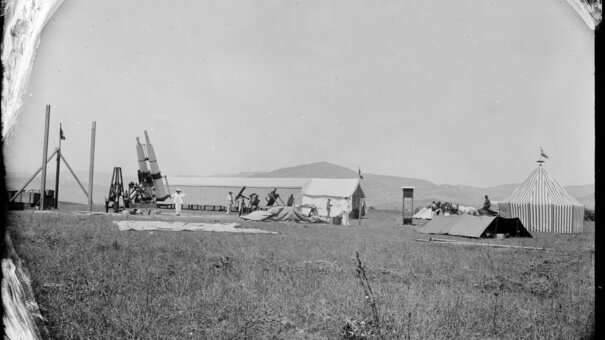
The gradual introduction of photography to astronomy in the late 19th and early 20th century fundamentally changed the working practices in observatories. The DFG-funded project “Astronomy’s Glass Archive: Photographic Practices at the Observatory, 1850-1950” examines this development. Astronomical photography, however, was not only practiced at the observatory, but also in the field, by astronomers who were on expedition. In my doctoral project, which is part of the DFG-project, I will examine how German astronomers took photography abroad when they conducted expeditions for the observation of total solar eclipses or a transit of Venus.1

My focus lies on the practices and materials of astronomical glass-plate photography under field conditions: How were materials for photography produced or chosen and bought by expedition staff? How did astronomers decide on the technical specifics of the photographic process? How did they create, in their temporary camps, the environment necessary for photographic work to yield satisfying results? How did they transport all the necessary equipment to their destinations and set their camps up? What photographic processes exactly did they use, and how were exposure and development of the plates organised? What happened after the return of the expeditions, when the work of measuring and analysing the plates started?

My study is based on astrophotographic expeditions conducted by German institutions during the time of the German Empire, 1871 to 1918. These are solar eclipse expeditions carried out by the observatories in Hamburg, Göttingen and Potsdam, and the centrally organised expeditions for the observation of the transit of Venus 1874. From these expeditions, published reports, rich archival sources, and in some cases photographic plates survive.

Besides reconstructing the technicalities of astrophotographic work, this study will provide insights into the connection of scientific work and colonialism/imperialism. It will show how resources and infrastructures connected to European colonialism/imperialism were essential for the daily work of the expeditions, and highlight transimperial connections. My project also tries to map the distribution of agency between the astronomers trying to impose their will on the technology of photography, and the photographic material posing certain restrictions. In addition, I will show that photographic work continued long after the images were developed: Plates were measured; the data obtained was mathematically analysed and the results were presented in the form of tables, charts or descriptions in written words, while reproductions of photographic images play a remarkably small role in the publications.

FOOTNOTE/EXPLANATION:

1 Solar eclipses have a narrow path of totality, from where the outer parts of the solar atmosphere become visible. A transit of Venus happens when Venus overtakes the Earth in its orbit and passes close to the line of sight between Earth and Sun, becoming visible as a small black dot in front of the Sun. Observations from different locations can be combined to determine the distance between Sun and Earth in absolute numbers. 

See also the DFG Project

nach oben