


2026 - 47th KLGH (Conference of Teachers of Education for the Mentally Handicapped at Academic Universities in German-speaking Countries)
From 4 - 6 June 2026, our department will be hosting the KLGH (Conference of Teachers of Education for the Mentally Handicapped at Academic Universities in German-speaking Countries) for the first time.
Here (opens in a new window). (This PDF is not accessible) you can find the preliminary programme overview.
2025 - Symposium G: Adaptive skills for people with intellectual disabilities
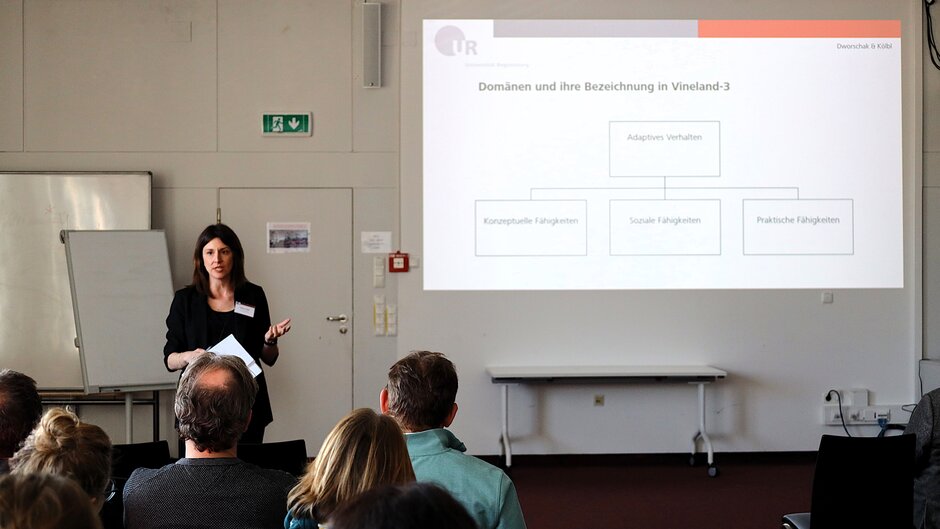
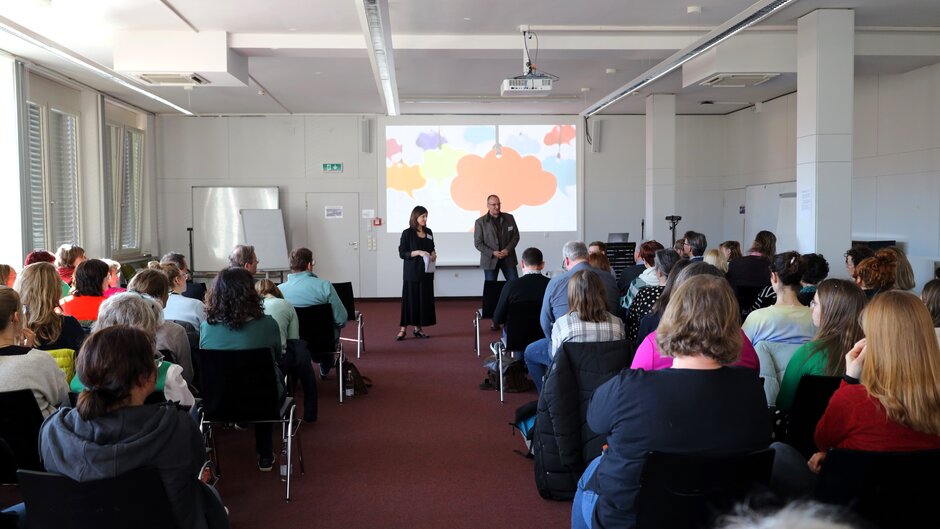
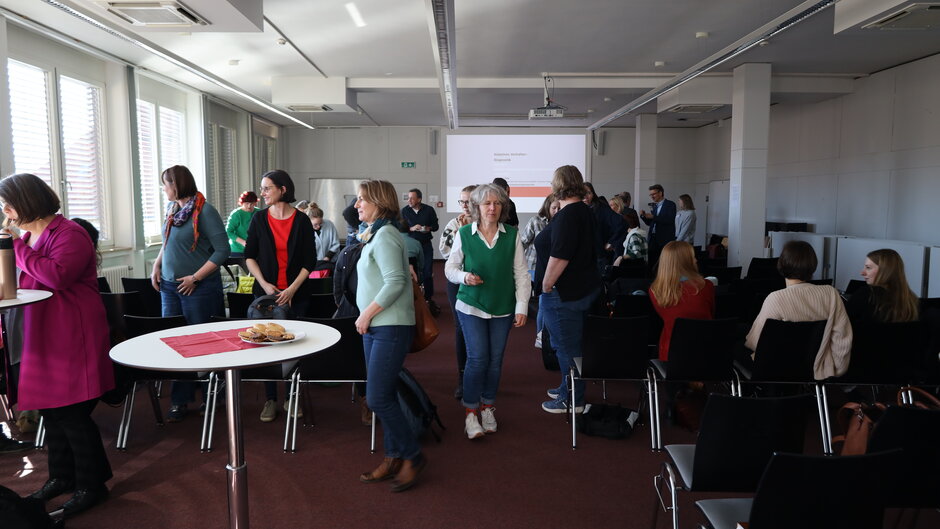
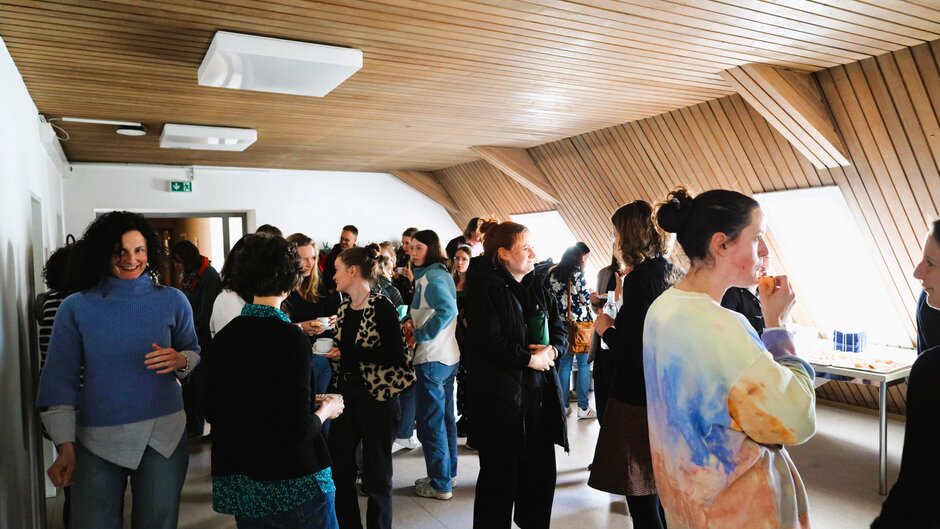

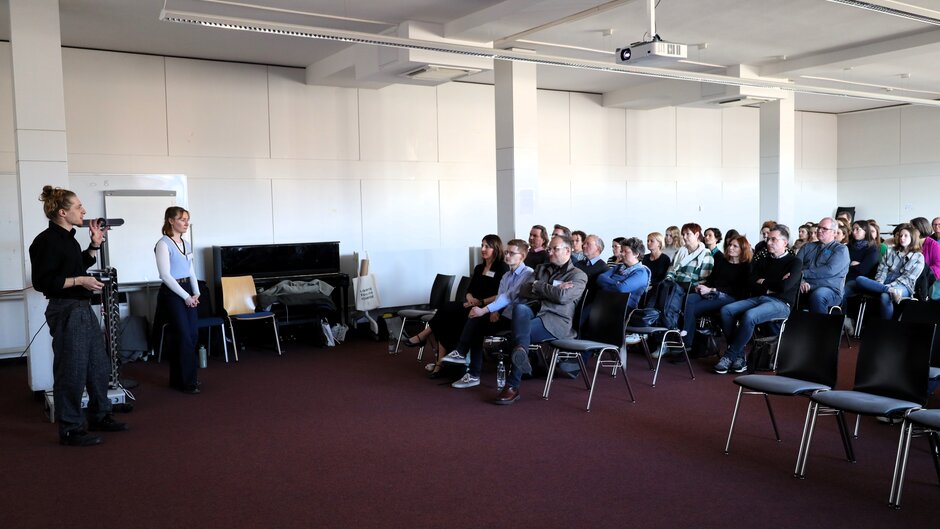
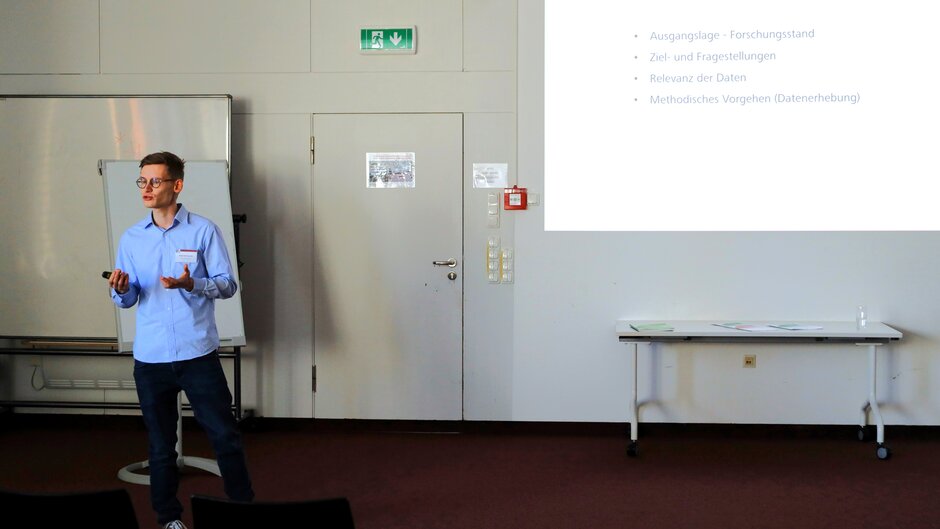
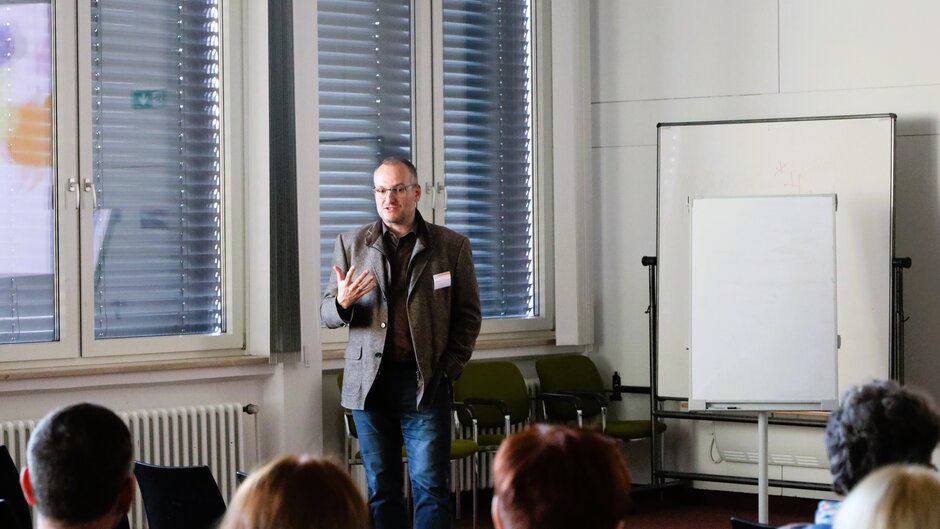
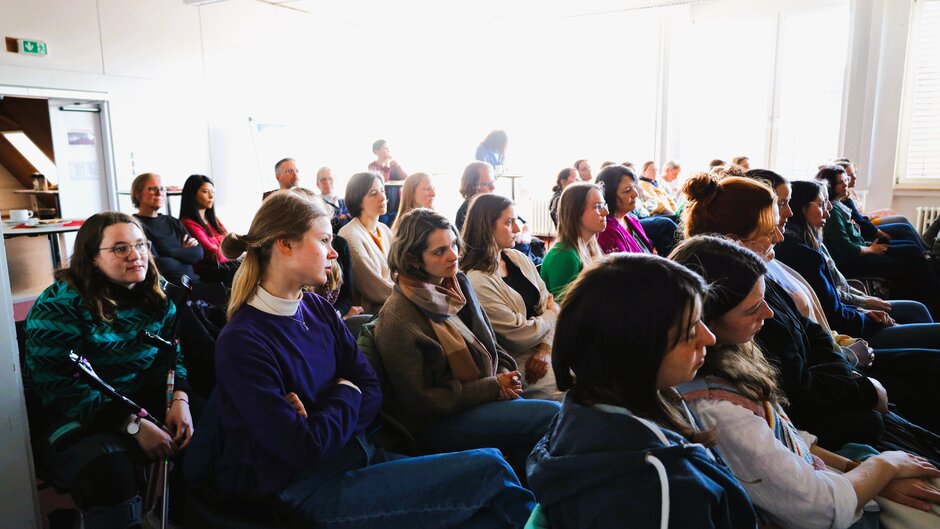
Our biennial "Fachtag G" (symposium on pedagogy for intellectual disabilities), which focuses on various topics from our department, was dedicated to the topic of "Adaptive skills for intellectual disabilities" in 2025. 70 teachers, seminar rectors and government representatives from Lower Bavaria and the Upper Palatinate accepted our department's invitation and came to the UR on 18 March 2025.
Prof Wolfgang Dworschak opened the symposium with a presentation on the importance of adaptive skills in the context of intellectual disabilities. Referring to our current research project AKo (external link, opens in a new window), he then presented empirical findings on the adaptive skills of pupils with a focus on intellectual development together with Dr Sabine Kölbl.
Dr Kölbl gave the interested specialist audience more in-depth insights into the topic in her subsequent presentation "Diagnostics of adaptive behaviour".
In his presentation, Paul Herrmans provided information about his dissertation project on the connection between intelligence and adaptive behaviour and then, together with Prof. Dworschak and Dr Kölbl, took a look at future fields of research and practice in the context of adaptive skills.
Students of pedagogy with intellectual disabilities also had their say at the symposium. Friederike Domke and Quentin Uzman presented a student project in the context of research-based learning, in which pupils with intellectual disabilities are asked which adaptive skills they would like to acquire.
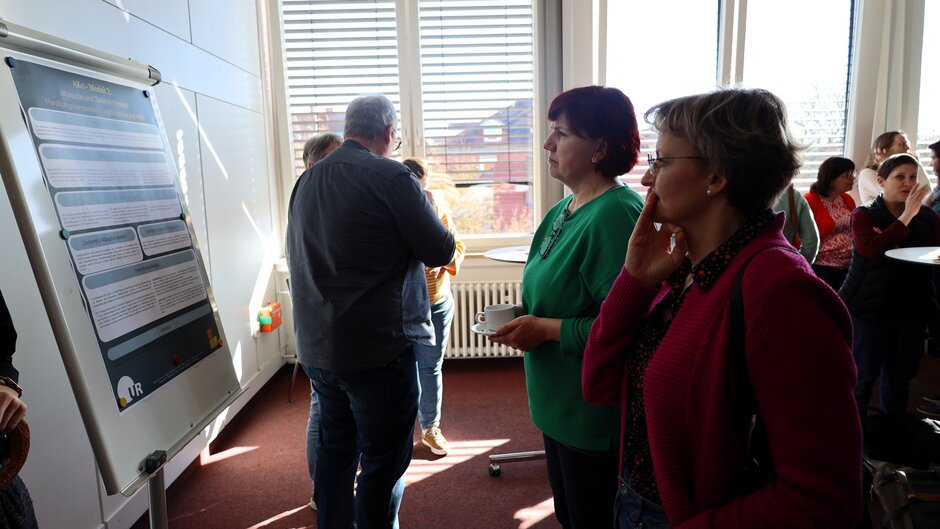
The break, which included food and drink as well as a poster presentation on the AKo project, and the Q&A session at the end of the lecture series provided space for professional discussions and personal dialogue.
2024 - Pool models in school support
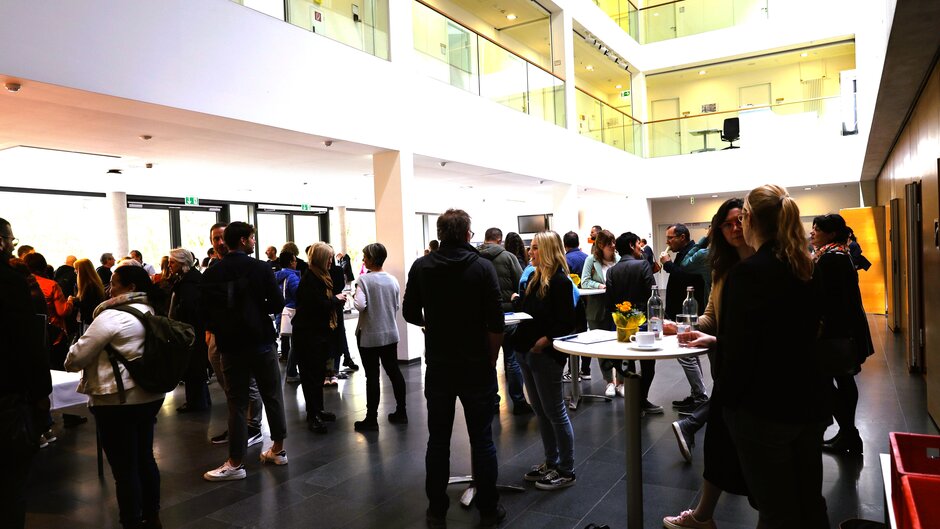
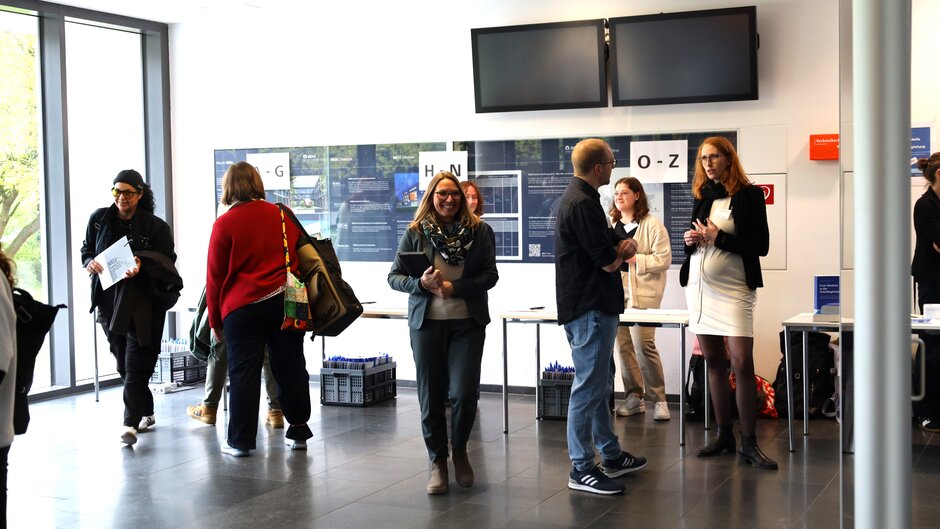
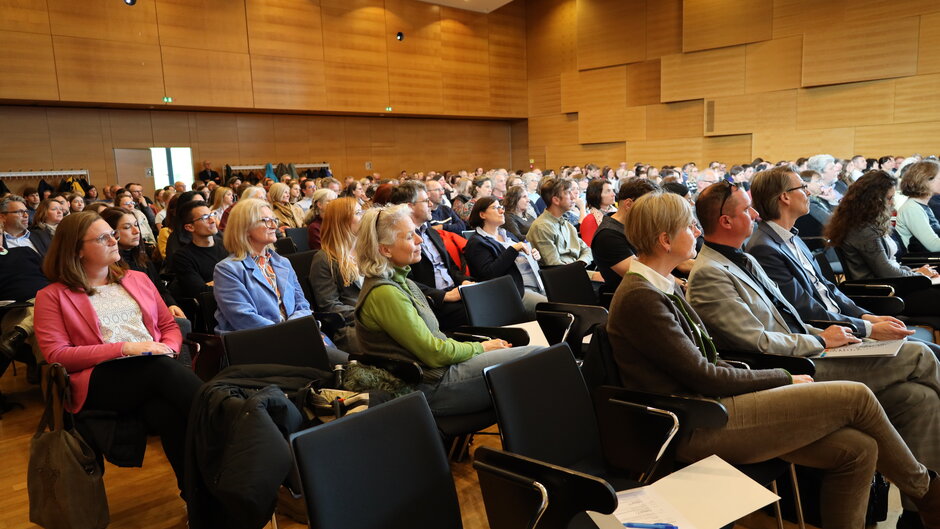
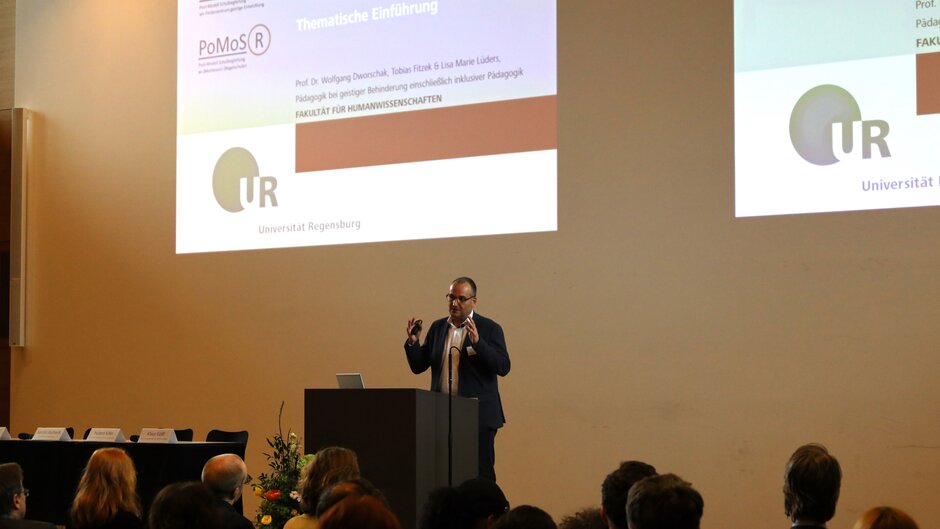
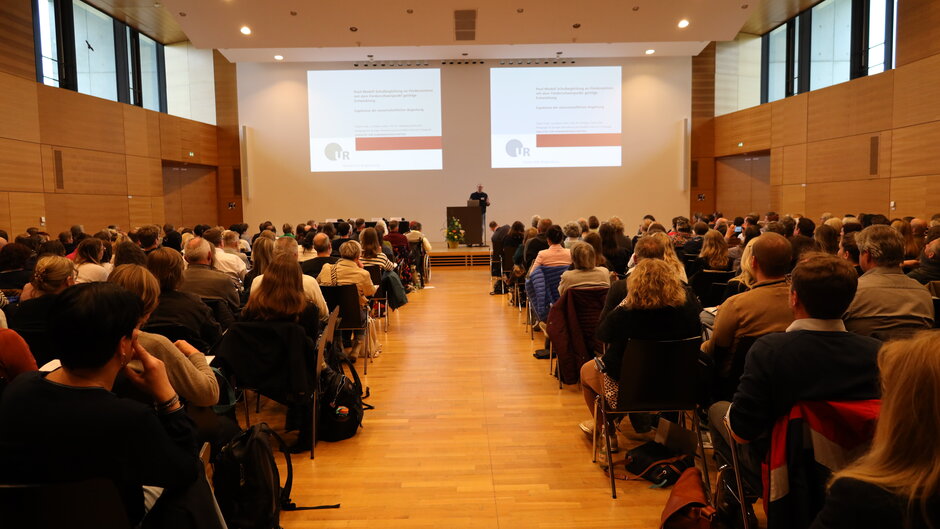
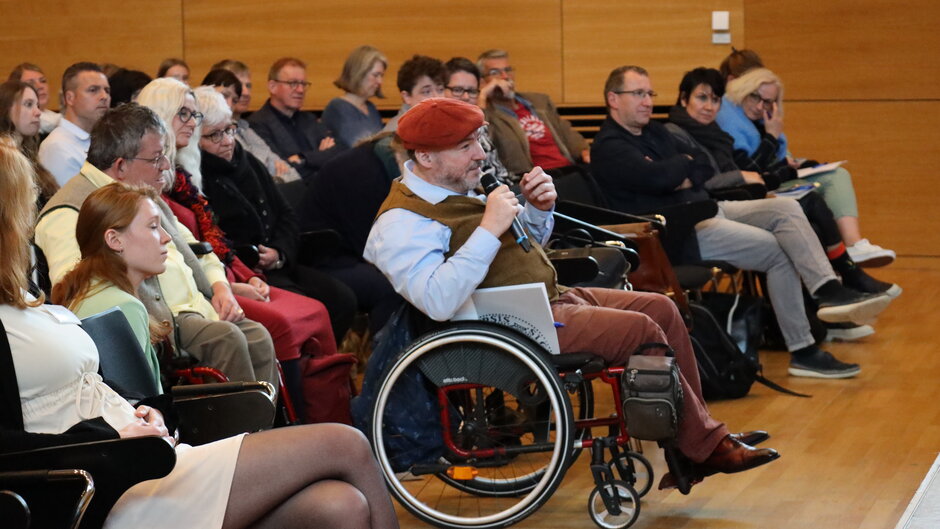
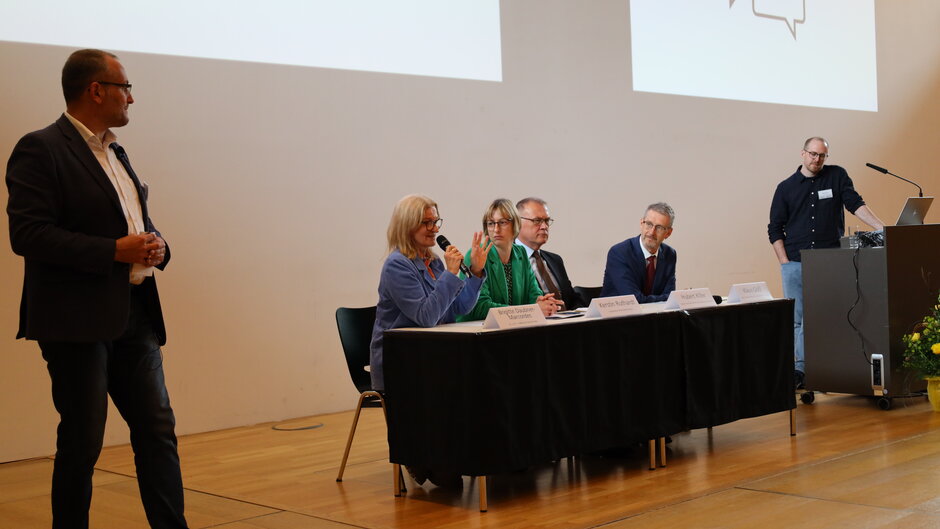
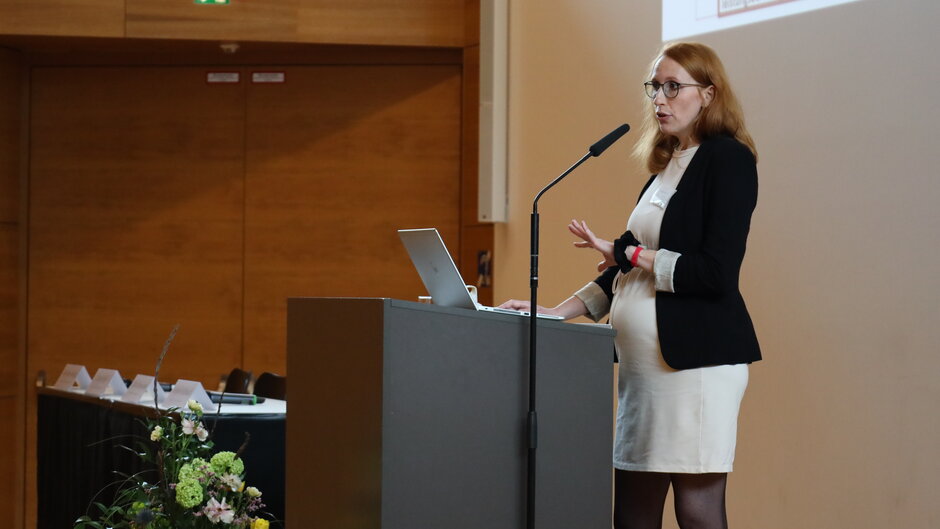
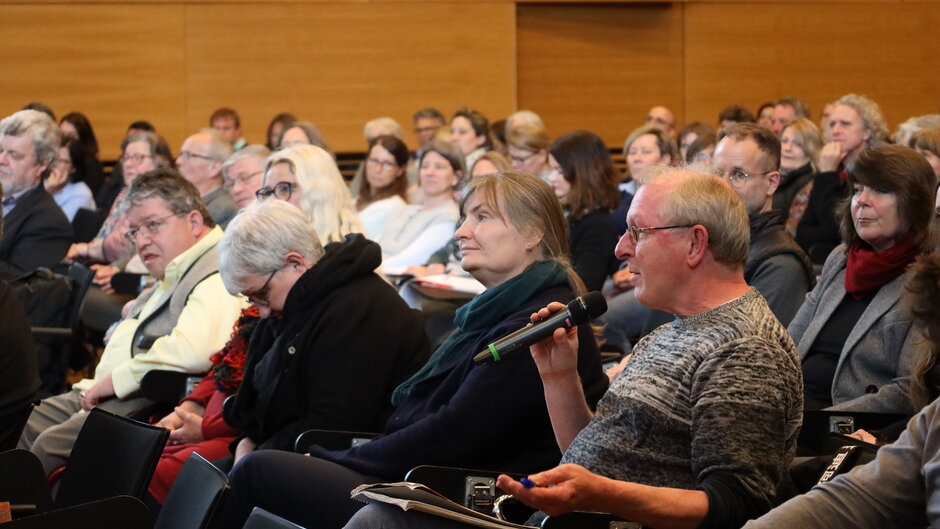

The 'Pool Models in School Support' (PoMoS) symposium on 17 April 2024 provided information (external link, opens in a new window) on the key results of the PoMoS-F and PoMoS-R research projects and was aimed at schools, school and employment providers, associations, politicians and school and social administrations.
School support is still a relatively new phenomenon in the context of supporting children and young people with disabilities in the field of education. However, the almost 7,000 school escorts deployed in Bavaria in 2019 make it clear that this support resource is now of great importance in terms of participation in education and inclusive education.
Focus on a pool solution instead of 1:1 allocation thanks to the Federal Participation Act
Traditional school support is basically designed as an individual measure in which 1 school support is assigned to exactly 1 entitled pupil. In addition to opportunities for individual support, this rigid 1:1 assignment also harbours risks, especially with regard to stigmatisation processes and cooperation between school support and school. With the Federal Participation Act, it is now expressly possible to provide the necessary assistance and support for several beneficiaries together (Section 112 SGB IX), which means that the individual measure of school support can be transferred to so-called pool solutions. This means that school escorts are no longer "assigned" to just one pupil at a time, but can provide their support in everyday school life to several children and young people entitled to benefits.
PoMoS pilot project
In the 2019/20 school year, two pilot projects (external link, opens in a new window) were launched in the administrative district of Middle Franconia for pool solutions (external link, opens in a new window) in the area of school support at three support centres with a focus on intellectual development and two Montessori regular schools. The project team members Lisa Marie Lüders (external link, opens in a new window) and Tobias Fitzek (external link, opens in a new window), who together with Prof Dworschak had scientifically monitored the pilot project for five years, presented the results at the symposium.
The results of the scientific monitoring show that pool models cannot solve all the systemic problems of the parallel coexistence of integration assistance and school. However, pool models can mitigate many problems and contribute to a better implementation of school support in the school system overall. The overall satisfaction of teachers, pupils, employers and funding organisations has been high over the entire duration of the project. There is also a high level of acceptance among parents.
In a subsequent panel discussion, Prof Dworschak, Tobias Fitzek and Lisa Marie Lüders as well as Klaus Gößl (StMUK), Hubert Killer (StMUK), Kerstin Ruthhardt (Social Department District of Middle Franconia), Otto Schammann (Youth Welfare Office Erlangen-Höchstadt), Riki Meier-Müller (Montessori School Nuremberg), Karin Reif (Montessori-Pädagogik Erlangen e. V.) and Brigitte Daubi (Montessori Pedagogy Erlangen e. V.) took part.V.) and Brigitte Daubner-Marcordes (Clara and Dr Isaak Hallemann School) answered questions from the audience.
2023 - Symposium G: Practical phase
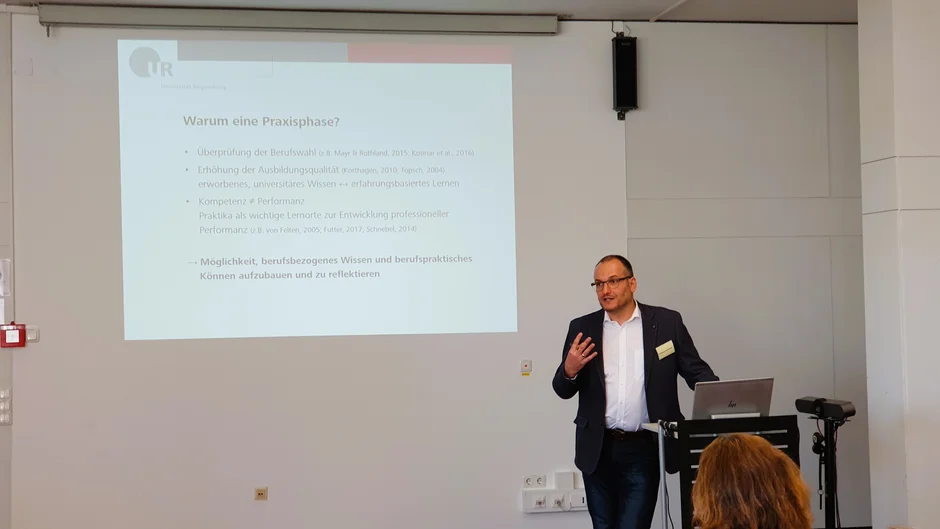
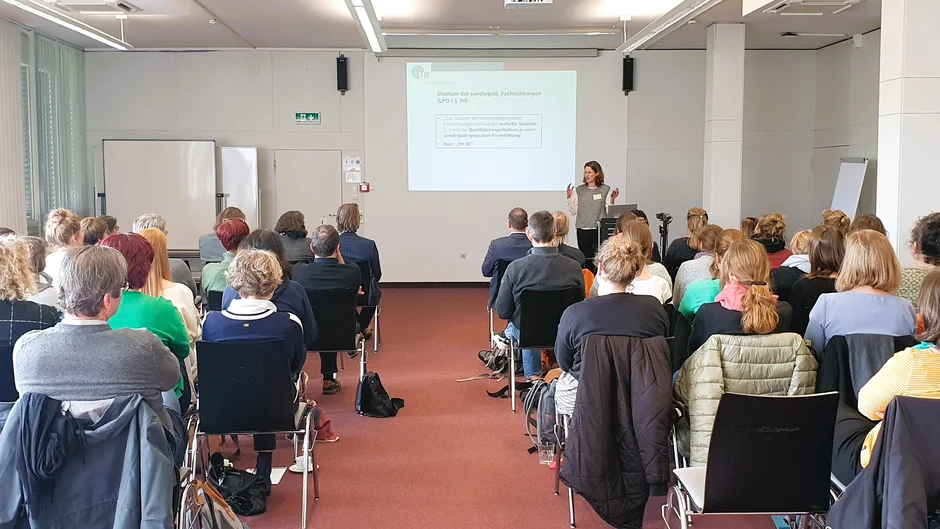
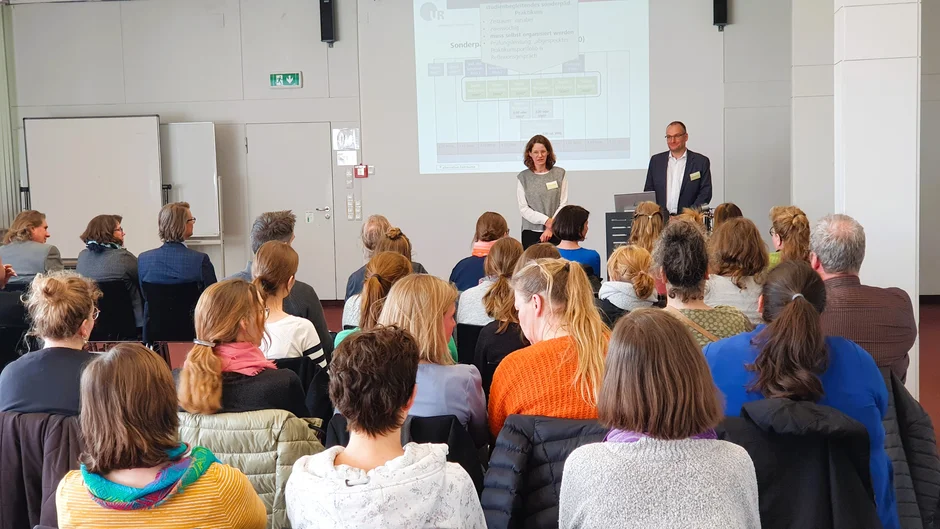
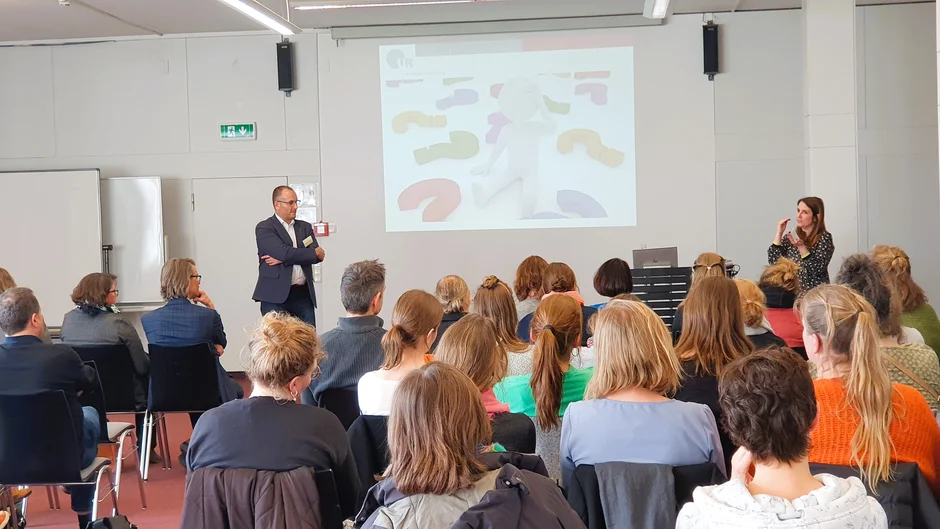
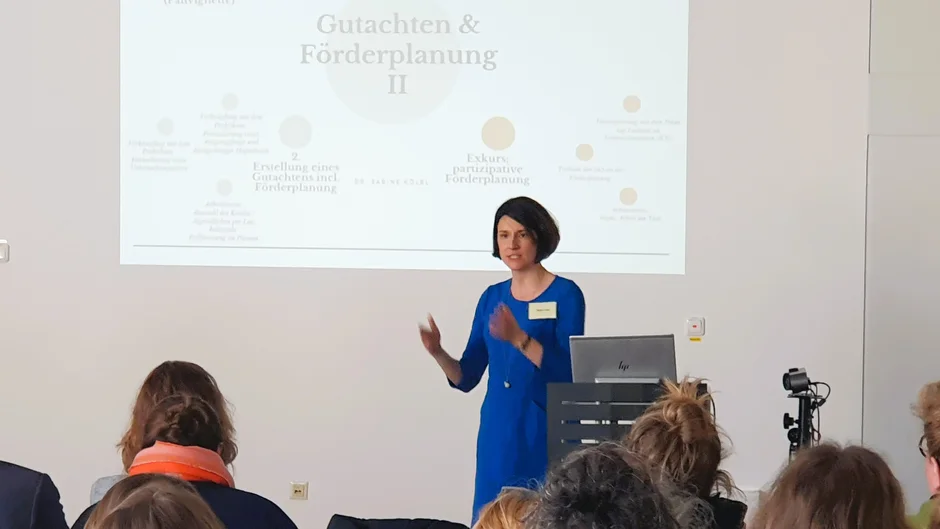
Every two years, the Chair of Pedagogy for Intellectual Disabilities including Inclusive Pedagogy organises a 'Fachtag G' (Specialist Day on Pedagogy for Intellectual Disabilities), which focuses on various topics. The symposium took place for the first time on 28 March 2023.
As the first cohort of students started their special education Internships in autumn 2023, the topic chosen was 'Practical phase in the study of pedagogy with intellectual disabilities'. Interested teachers from all over Lower Bavaria and the Upper Palatinate as well as seminar rectors and government representatives accepted the invitation to find out (external link, opens in a new window) about the scope, importance and organisation of special education internships.
Prof Dr Wolfgang Dworschak opened the symposium with a presentation on the importance of the practical phase in the study of pedagogy for people with intellectual disabilities. After an overview of the internships by Katja Zimmermann, the Head of the Internship Office, Dr Julia Steinbach, provided information on formal and organisational aspects of the internships. In the second part of the event, Dr Sabine Kölbl gave the teachers an insight into the assessment and support plan preparation that takes place as part of the special educational internships. Finally, Katja Zimmermann presented the concept for lesson planning, implementation and reflection as part of the special educational internships.
There was also plenty of room for open professional and personal dialogue, which was gladly and extensively used.