Project by Prof. Dr Omar W. Nasim
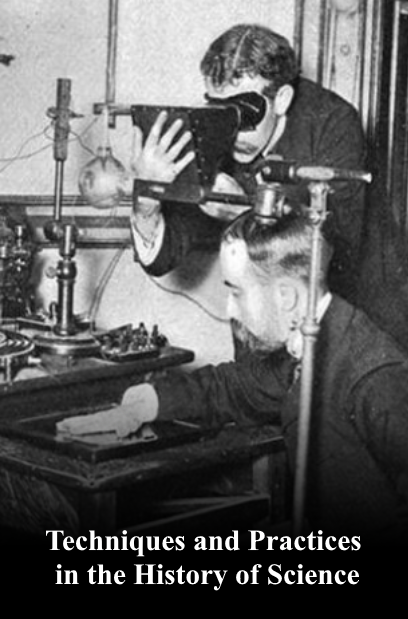
By focusing on routine, everyday practices and techniques in the history of science, the research under this heading reveals the materials, sites, gestures, postures and performances that have been essential to scientific work. Paperwork and manual labour, for instance, are vital for understanding the labour involved in many scientific disciplines, even in those where we might least expect it, such as astrophotography. Turning to ordinary practices also reveals techniques that may otherwise be overlooked, such as all those elements actively rendered invisible in the process of scientific visualisation – a process usually referred to as ‘making visible’. Through such investigations of the mundane and material, the project recasts the moral economies of scientific personae and virtues—so important to scientific work—as embodied in actions and tools; it situates scientific work solely to examine the strategies, often standardised, subsequently employed to transcend those particularities; it focuses on the transformation, by mundane means, of material things into objects useful to science; it makes visible what is typically not; and it locates the epistemological impact of the senses not through its immediacy but rather through its mediation via layers of routine. Often rationalised away and omitted from published accounts, understanding these behind-the-scenes practices and techniques of scientific work helps us to appreciate science in action, as technologies of the body that are defined by the self and history, society and culture. At a time when automation is reshaping the very nature of scientific practice, particularly through computer algorithms and artificial intelligence, it becomes all the more important to emphasise and understand the role of human labour and manual work in the sciences and their history.
Publications:
Noting, Sketching. Writing and Drawing as Methods of Design, co-edited with Karin Krauthausen (Zurich/Berlin: Diaphanes, 2010)
“Making Invisible: The Other Side of Scientific Visualisation,” in *Re-Thinking Visualisation: a multidisciplinary attempt at the concept*, eds. Erna Fiorentini and James Elkins (Berlin: LIT Verlag, 2019, in press).
“Observatory,” in Handbook of the History of Science, eds. M. Sommer, C. Reinhardt, and S. Müller-Wille (Stuttgart: Metzler Lexikon-Verlag, 2017) pp. 180–92.
“Paper Techniques in the Laboratory. Interview with Hans-Jörg Rheinberger,” in Noting, Sketching. Writing and Drawing as Methods of Design, eds. Karin Krauthausen and Omar Nasim (Zurich/Berlin: Diaphanes, 2010) pp. 139–58.