AI support for drafting medical reports
As part of the practical seminar, students developed a web application to assist with the drafting of digital medical reports in collaboration with PD Dr Alexander Dejaco (external link, opens in a new window) from Regensburg University Hospital. The aim of the project is to reduce the administrative burden of documentation in day-to-day clinical practice whilst improving the traceability of medical information.
The practical seminar focused on the design and implementation of an intuitive interface and a practical workflow. The application supports the structured creation of medical reports, documents changes transparently and enables statements to be linked directly to the underlying documents and data sources. In addition, AI-supported assistance functions are available which can retrieve information from the available data and display the relevant supporting documents.
During the development phase, only synthetic or anonymised data was used. However, the technical architecture already takes into account the requirements for potential future use with real clinical data, whilst complying with applicable data protection and security regulations.
Digitising historical leaflets from the University of Regensburg
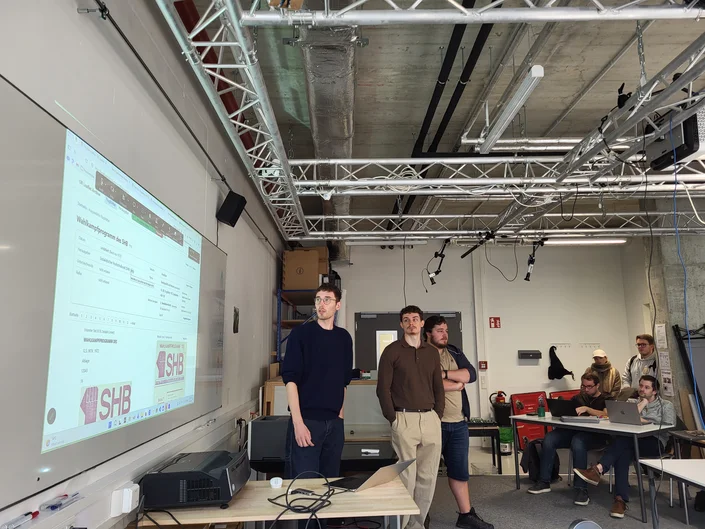
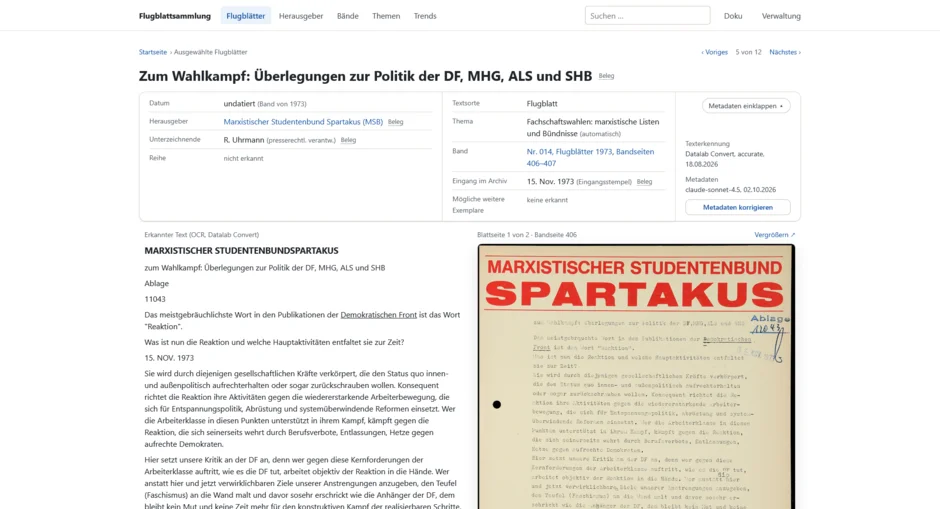
Together with Dr Andreas Becker (external link, opens in a new window), Head of the University Archives at the University of Regensburg, students worked on the digital cataloguing of an extensive collection of leaflets held by the archives. As part of the project, the years 1967 to 1973 were initially processed and analysed.
The pipeline developed processes a total of 4,464 scanned pages comprising 1,927 individual leaflets. In addition to optical character recognition (OCR), methods were developed for separating individual leaflets, generating metadata, identifying duplicates and classifying the content by theme.
The processed data is made available via a specially developed web application. This enables users to search the collection, view automatically generated metadata and directly compare individual leaflets and different versions of the same documents. The technical foundation for the public operation of the platform was fully established during the project, meaning that the application can be made publicly available at any time in the future.
From idea to published indie game
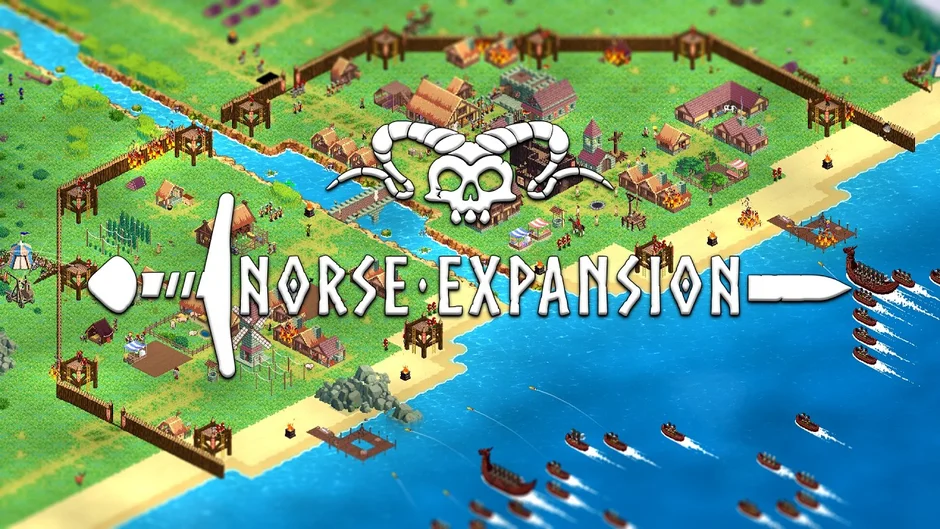
The‘Norse Expansion’ (external link, opens in a new window) project originally emerged as part of a Bachelor’s project and was subsequently developed continuously over several years. The practical seminar focused on the final steps prior to the game’s release. In addition to the technical development of the game, this included, in particular, topics such as quality assurance, publication on Google Play, monetisation and the organisational requirements for setting up a business.
The work involved not only game development itself, but also economic and legal issues. To this end, discussions and consultations took place with external partners, for example on start-up processes, insurance and other business-related framework conditions. The project thus highlights the challenges that must be taken into account when transforming a student project idea into a published product.
The game is now available on Google Play and has already been downloaded more than 42,000 times.
Augmented reality supports pupils’ learning
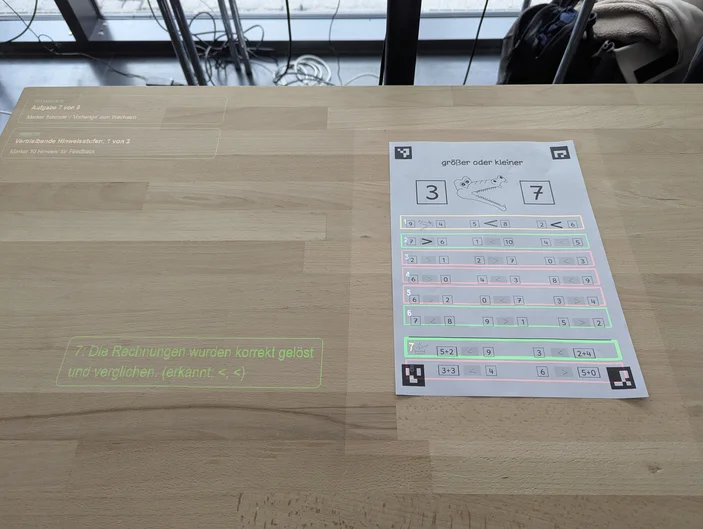
In the ‘Projected Augmented Reality Tabletops in School Settings’ project, students developed an interactive learning system for everyday school life. Pupils work on worksheets on a table, whilst a projector displays personalised feedback directly next to or on top of the tasks they are working on. Once a worksheet has been scanned, an AI analyses the answers, compares them with model answers and generates feedback tailored to the specific task. Factors such as subject, year group, desired level of detail and current support needs are taken into account. Rather than providing solutions straight away, learners receive step-by-step guidance to help them work through the tasks independently.
The development took place in close consultation with teachers and was continuously refined based on feedback from the STEM Labs (external link, opens in a new window) and “Tag der digitalen Lehre” (external link, opens in a new window). In addition, a platform was created through which teachers can provide and exchange worksheets and associated model answers. The technical requirements for the future use of this library were established during the project. The project demonstrates how AI and augmented reality can be used to promote personalised learning and to ease the burden on teachers when supporting pupils.
Virtual courtroom training with AI witnesses
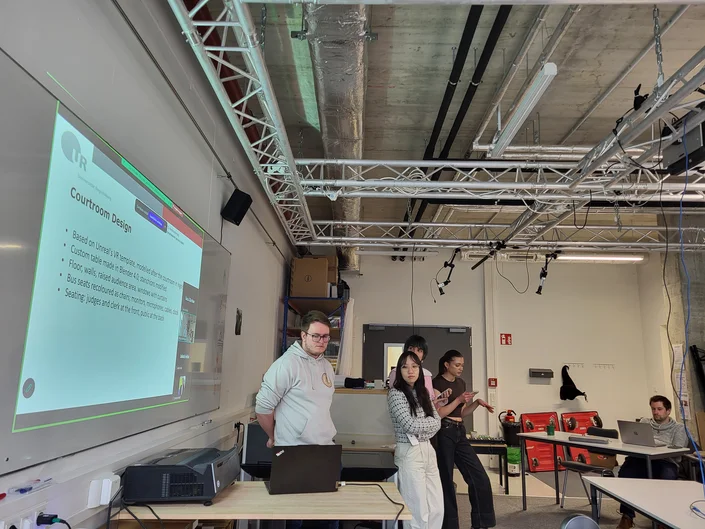
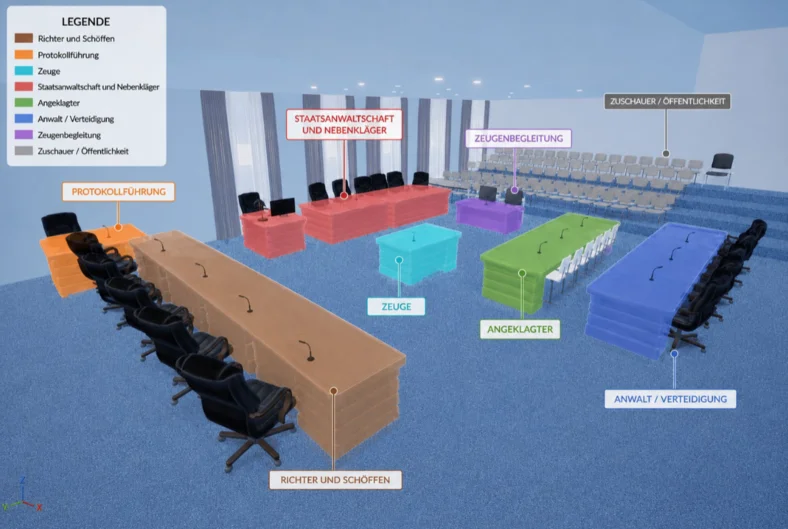
In the ‘Virtual Courtroom: AI-assisted Witness Questioning’ project, students developed a virtual reality prototype for legal education and training. The application is based on the Unreal Engine’s VR template and is spatially modelled on the courtroom of the Ingolstadt Regional Court.
An excerpt from the NSU trial – one of the most extensive criminal proceedings in post-war German history – serves as a case study. Based on publicly available trial documents and witness statements, several AI-supported witness roles were developed, representing different perspectives and levels of knowledge.
Users take on the role of a judge and can freely question the virtual witnesses. The open-ended voice interaction leads to different conversation paths depending on the questions asked. The project investigates how virtual reality and generative AI can be used to create realistic training and learning scenarios in a legal context.
Digital platform for students in halls of residence
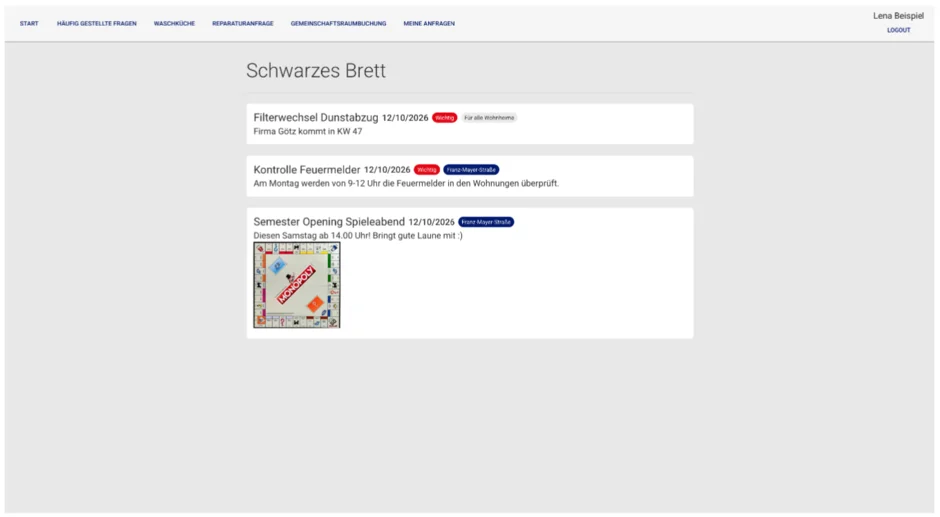
In collaboration with the Studierendenwerk Niederbayern/Oberpfalz (STWNO) (external link, opens in a new window), a concept for a central halls of residence platform was developed. The aim of the project was to simplify the day-to-day lives of residents and the halls of residence administration, and to consolidate frequently used processes in one place.
The development was based on interviews with various stakeholders, including the halls of residence administration, faculty management, the IT department and residents. The requirements identified from these interviews were incorporated into the design of a platform that supports both organisational and communicative tasks in day-to-day life in the halls of residence. The planned functions include, amongst other things, repair requests, a ticketing system for communicating with the administration, digital files, room bookings and the loan of communal items.
The project demonstrates how user-centred development can lead to digital solutions that improve communication between the administration and residents and make administrative processes more efficient.
Modular system for VR-based exposure therapy
Together with Dr Theresa Wechsler (external link, opens in a new window), students developed a modular system for VR-based exposure therapies. The aim of the project was to create a flexible framework that would allow different therapy scenarios to be easily created and adapted.
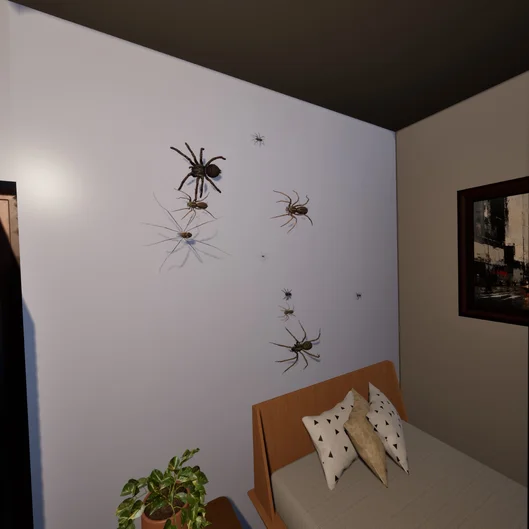
As part of the project, a VR application for the treatment of arachnophobia (fear of spiders) was developed as an example. Particular attention was paid to the realistic representation of the spiders in terms of appearance, movement and interaction possibilities. The requirements for the system were identified through expert interviews and subsequently integrated into the modular system.
An evaluation involving psychology students yielded positive results: in particular, the user interface was perceived as clear, self-explanatory and intuitive. The realism of the virtual spiders and their behaviour were also highlighted positively by the participants. The foundation developed in the practical seminar is currently being further expanded in the research seminar and is intended to enable the straightforward creation of further therapeutic scenarios for various phobias in the future.
Research, Practice and Social Relevance
The diversity of the resulting projects illustrates the broad spectrum of media informatics at the University of Regensburg. From artificial intelligence and data analysis, through software development and game development, to virtual reality, the students were able to apply and deepen their knowledge by tackling practical problems.
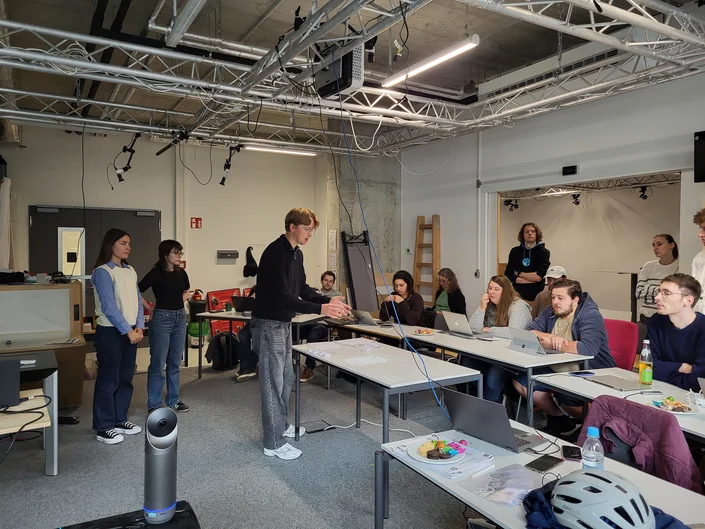
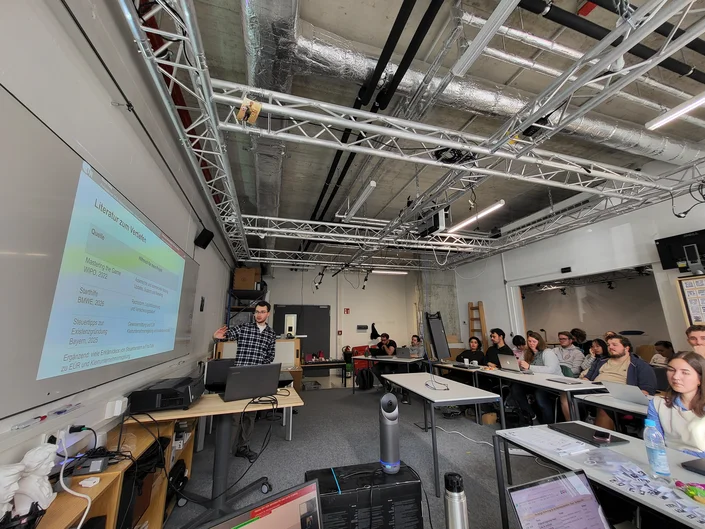
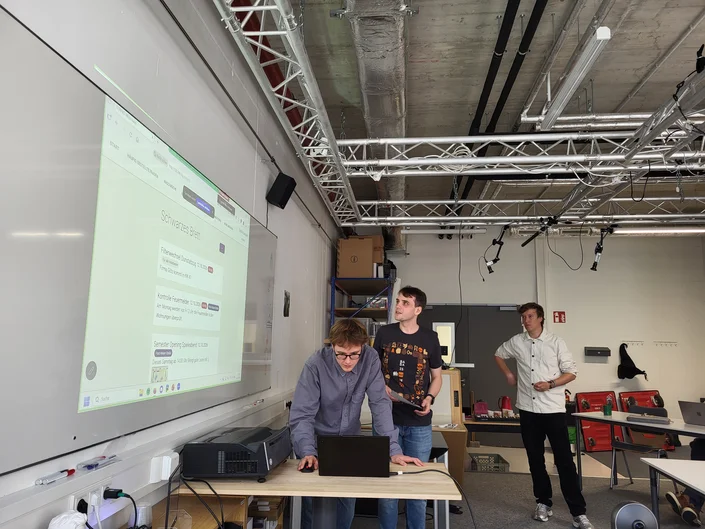
The practical seminar was supervised by Prof. Dr Christian Wolff, Jakob Fehle and Niklas Donhauser. We would like to extend our special thanks to all project partners for their trusting collaboration, as well as to the students for their great commitment and the successful implementation of the diverse projects. The results impressively demonstrate how innovative ideas can emerge through the collaboration of teaching, research and practice.