
Research focus RNA Biology
The following research groups are linked to the focus area :
Dr. Astrid Bruckmann
- Important information: Our group aims at providing state-of-the-art mass spectrometric methods which are tailored to the project specific requirements of our collaboration partners within the RCB and beyond. We are particularly focusing our interest on quantitative proteomics, interactomics (RNA-and protein proximity labeling workflows), cross-link (XL)-MS methods, analysis of post-translational modifications as well as nascent proteomics.
Further info of
Dr. Astrid Bruckmann
Prof. Dr. Neva Caliskan
- Important information: Neva Caliskan's research group investigates the role of RNA molecules in non-canonical translation events that can influence the interaction between host and pathogen. Their goal is to shed light on therapeutic RNA-protein complexes as new targets in the fight against infections.
Prof. Dr. Thomas Dresselhaus
- Important information: We are studying gene regulatory networks during plant germline and seed development, fertilization mechanisms, also under environmental stress.
Further info of
Prof. Dr.
Thomas Dresselhaus

Prof. Dr. Klaus Grasser
- Important information: We study how RNAPII transcript elongation and co-transcriptional processes in the chromatin context impact development and stress responses in plants
Further info of
Prof. Dr. Klaus Grasser
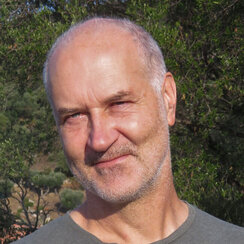
Prof. Dr. Joachim Griesenbeck
- Important information: Through our research, we aim to gain a better understanding of chromatin structure and the regulation of eukaryotic gene transcription.
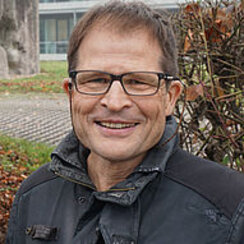
Prof. Dr. Dina Grohmann
-
Important information: Heterogeneity is a fundamental property in biology. We strive to identify and describe biological heterogeneity and diversity on the organismic and molecular level and aim to understand how biological heterogeneity drives the function of molecular machineries.
On the organismic level, we are committed to expand our understanding of microbial diversity on our planet. Having isolated more than 1.000 archaeal strains from all over the world over the last three decades, we are especially intrigued by organisms from the third domain of life, Archaea, and are home of the Archaea Centre Regensburg. In addition, we also look on the evolutionary journey of fundamental biological machineries and molecular processes that are present in all living cells. Here, we focus on processes along the gene expression pathway including the regulation of gene expression at the transcriptional (transcription factors and transcription machinery) and posttranscriptional level (RNA processing, RNA-guided interference and archaeal Sm like proteins) as well as prokaryotic defence system (CRISPR-Cas and prokaroytic Argonaute).
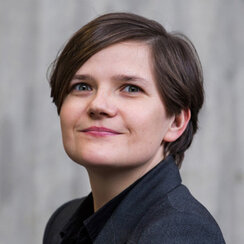
Prof. Dr. Aline Koch
- Important information: We study how regulatory non-coding and coding RNAs can be used as "sprayable RNAs" to improve the agricultural value of crops
Further info of
Prof. Dr.
Aline Koch
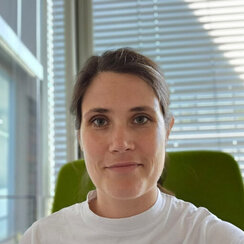
Prof. Dr. Gernot Längst
- Important information: The packaging of eukaryotic DNA into chromatin presents an overriding regulatory layer to all DNA dependent processes, like transcription or replication.
Further info of
Prof. Dr.
Gernot Längst
Prof. Dr. Gunter Meister
- Important information: Cellular Biochemistry and Biophysics
Further info of
Prof. Dr.
Gunter Meister
Dr. Nina Ripin
- Important information: We use interdisciplinary strategies to investigate the properties, biological functions, and disease relevance of stress-induced ribonucleoprotein (RNP) granules. Our research focuses on the role of RNA and its interactions with RNA chaperones—such as DEAD-box helicases and RNA-modifying enzymes—in shaping the integrated stress response.
Further info of
Dr. Nina Ripin
Prof. Dr. Till Rudack
- Important information: Our goal is to gain cross-scale, time-resolved atomic insights into the structure, dynamics and function of molecular machines with biomedical or biotechnological relevance. To this end, we develop and apply computational strategies that combine different methods from bioinformatics, theoretical biophysics and quantum chemistry.
Dr. Timo Schlemmer
-
Important information: Our research focus is dedicated to the development and production of innovative RNA-based crop protection agents based on circular RNAs. Our goal is to develop sustainable alternatives to chemically synthetic pesticides and to bring them to market in the future.
Further info of
Dr. Timo Schlemmer
Prof. Dr. Remco Sprangers
- Important information: The primary scientific goal of our research is to understand the relationship between protein motions and protein function
Further info of
Prof. Dr.
Remco Sprangers