
Main research areas
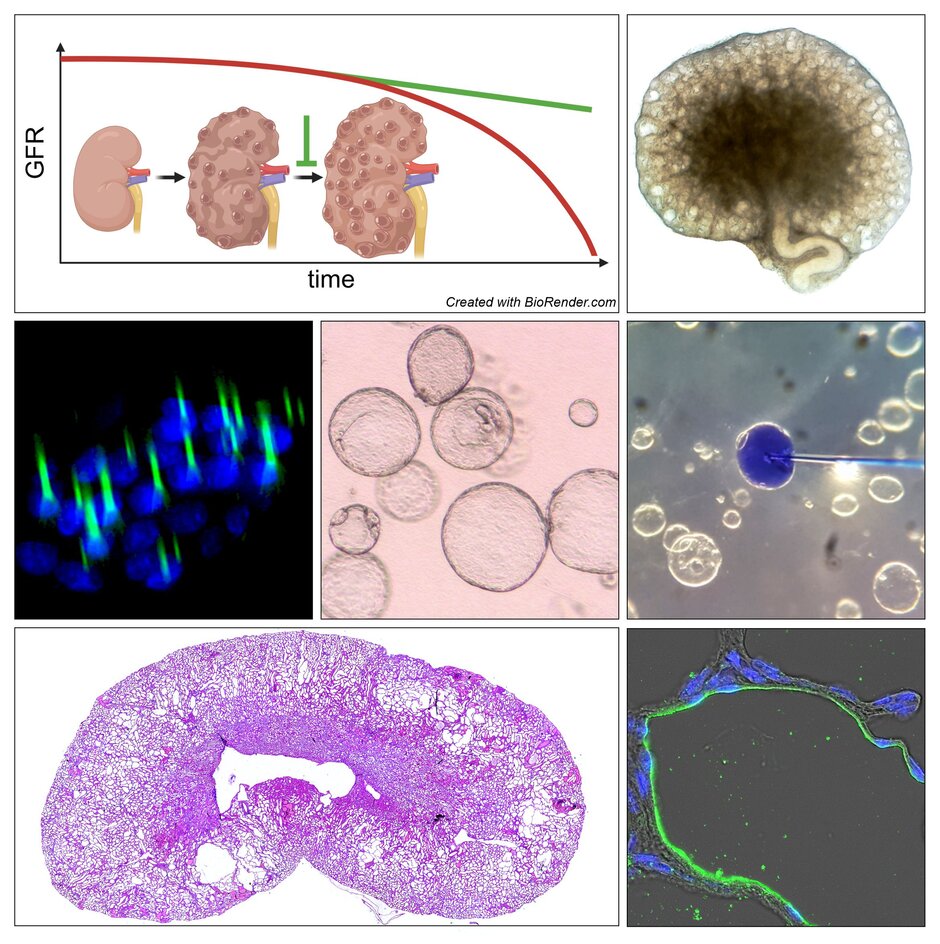
In our group, we are mainly concerned with the mechanisms of cyst growth in polycystic kidneys. There are a variety of polycystic kidney diseases, many of which are congenital. The most common form is the autosomal dominant polycystic kidney disease ADPKD. It affects around one in a thousand of the population and leads to the appearance of a large number of fluid-filled cavities (cysts) in both kidneys. These cysts grow continuously over a period of years, displacing healthy kidney tissue, which often leads to a loss of kidney function. The secretion of chloride and the transport of fluid through the cyst epithelium into the cyst interior contribute significantly to the increase in size of the cysts. We are investigating which proteins as well as milieu-dependent factors play a role in cyst growth. Our long-term goal is to develop strategies to inhibit cyst growth and maintain kidney function.
The role of hypoxia
Cyst growth leads to hypoxia in the polycystic kidney. This leads to the expression of the hypoxia-inducible factor HIF-1α in the cyst epithelium, which leads to an increase in cyst growth. We want to understand which signalling pathways HIF-1α uses to drive cyst growth.
The role of anoctamins
Chloride secretion into the cyst interior occurs via luminal expressed chloride channels. Here, we identified the Ca2+-activated chloride channel anoctamin 1 (ANO1; TMEM16A), which plays a crucial role in cyst growth. We are investigating pharmacological approaches to inhibit chloride secretion.
The role of purinergic receptors
The activation of Ca2+-dependent chloride channels often occurs after stimulation of purinergic receptors by extracellular ATP. We analyse the influence of purinergic receptors on cyst growth.