A Culture of Sustainability in Higher Education – Knowledge Transfer

Higher Education Institutions in Society – Real-World Experiments in Transformative Learning and Research Processes for a Culture of Sustainability at Higher Education Institutions – Transfer Phase (KuNaH-T)

The collaborative project “Universities in Society—Real-World Experiments in Transformative Learning and Research Processes for a Culture of Sustainability at Universities” (KuNaH), funded by the Federal Ministry of Research, Technology, and Space (BMFTR), is entering its second funding phase and is now focused on the transfer of results (KuNaH-T).

During the first project phase (2022–2025), a conceptual understanding of a culture of sustainability at universities was developed both theoretically and empirically, and potential pathways toward sustainability were explored. In addition, so-called “real-world experiments” were conducted with various stakeholder groups at the five participating universities.

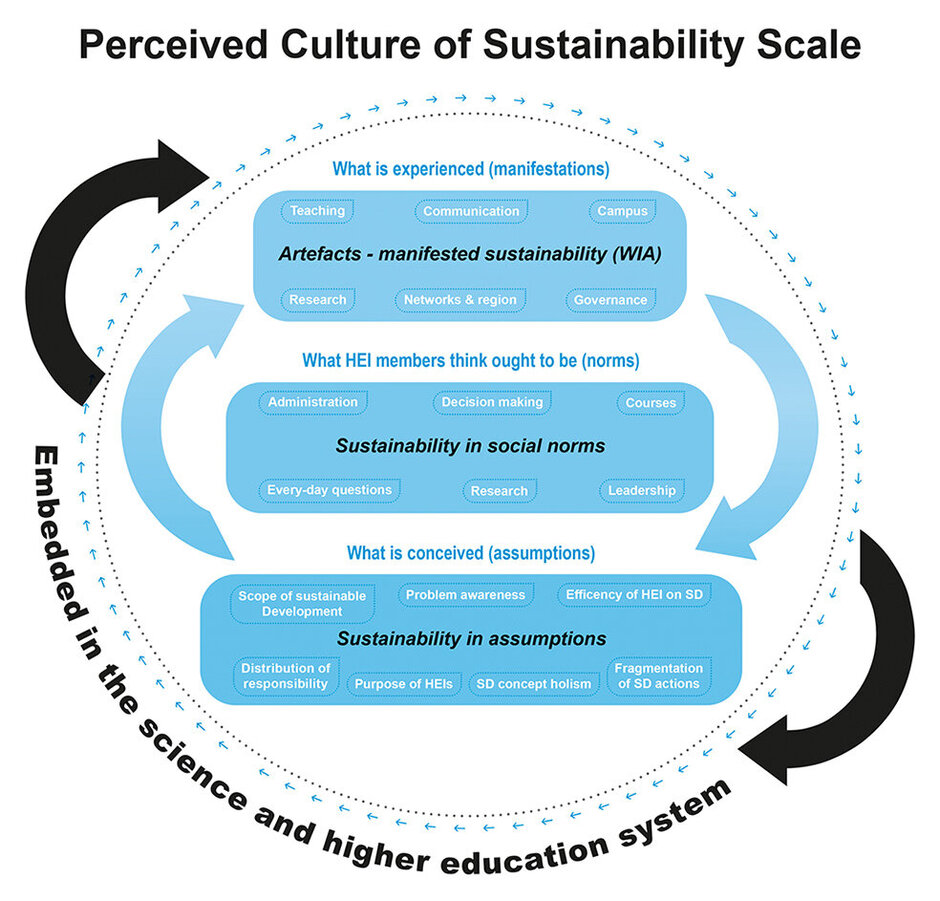
A culture of sustainability is understood as the active practice of sustainability as it relates to formal and informal processes in the areas of basic assumptions, goals, regulatory systems, and systemic frameworks. This underlying conceptual framework was developed on an empirical basis through a systematic literature review.

During the transfer phase (2026–2027), these results and tools will be institutionalized at the participating universities and made available to other universities. Five transfer modules are planned; these modules complement one another and provide a portfolio of information, materials, consulting, training, support, measures, and recommendations for action that can be tailored to the specific needs of each university, ensuring that organizational change processes toward sustainability are successful. Staff at the University of Regensburg will develop a self-assessment tool for cultures of sustainability.
The consortium consists of the Eberhard Karls University of Tübingen, the Eberswalde University for Sustainable Development, Leuphana University Lüneburg, the Karlsruhe Institute of Technology, and the University of Regensburg.

Tobias Mohr is a project team member.

To top