

Physics - Research - Working groups - Computational Condensed Matter Theory Chair

Computational Condensed Matter Theory

Condensed matter comprises more or less everything we see. To a very large extent, its properties result from the interplay of quantum mechanics and the Coulomb interaction between nuclei and electrons. This interplay keeps producing stunning phenomena many of which are still to be understood. To achieve this understanding is the goal we are striving at. To this and we combine computational means with analytic arguments. Our current emphasis is on transport and dynamics.

Ultrafast Dynamics

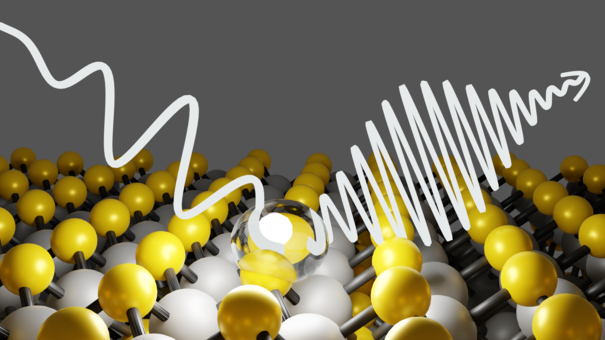
Recent progress in laser technology made it possible to generate ultra-short laser pulses on the femtosecond timescale with high intensity. Dynamics of electrons in solids irradiated by such pulses are theoretically and computationally investigated in the group.

Quantum Critical Phenomena

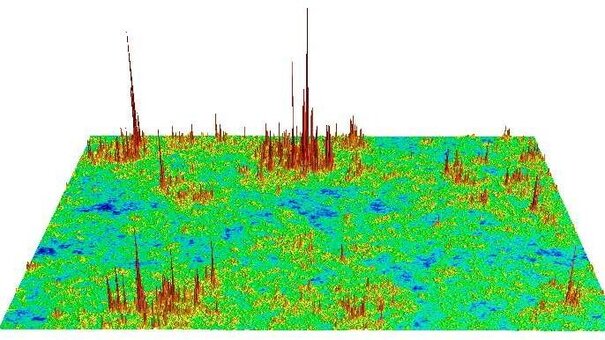
The Anderson transition is a kind of metal-to-insulator transition that can occur in a metallic material, if the concentration of impurities exceeds a critical threshold. Our research focuses on the aspects of multifractality and critical fixed points in the transition.

Molecular Electronics

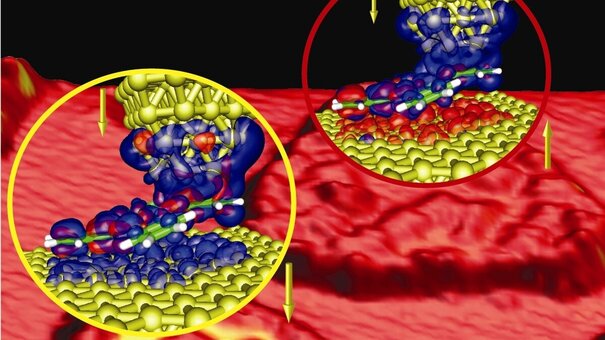
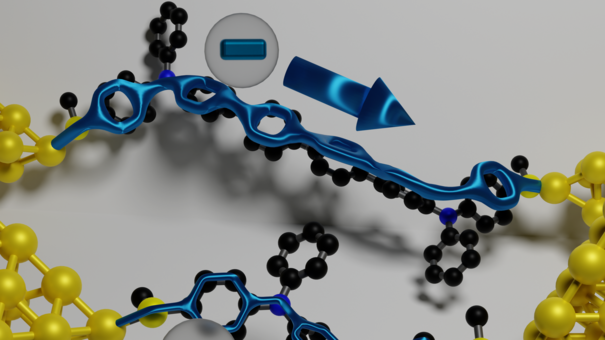
Molecular electronics is a field where Chemistry, Surface and Condensed Matter experts collaborate in order to understand processes at interfaces in and out of equilibrium. Activities in our group include both method development and analysis of experiments on molecular or atomic transport.

News and Highlights
A guide to the capabilities of the open-source CP2K program (external link, opens in a new window)

The CP2K community provides a user-oriented introduction of quantum-mechanical simulations with CP2K, including our recent developments for computing band structures and optical properties of molecules and materials. Many thanks to Thomas Kühne (CASUS & TU Dresden) for coordinating this effort.


Journal of Physical Chemistry B 130, 1237 (2026) (external link, opens in a new window) (selected as Editor's Choice)

Probe of Broken Time-Reversal Symmetry (TRS) with Third Harmonics (external link, opens in a new window)

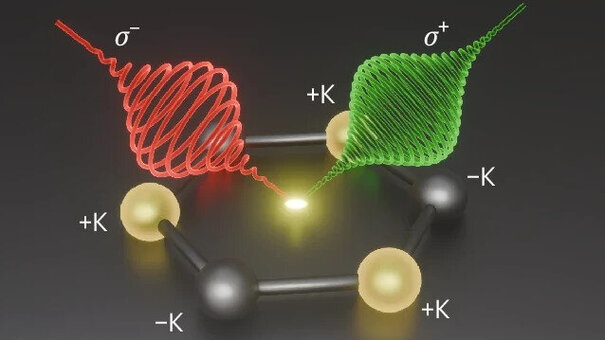
We use third-harmonic Faraday rotation to probe whether TRS is preserved or broken in a crystal: zero rotation shows preserved TRS, non-zero rotation broken TRS (measurements by the group of Giancarlo Soavi, Uni Jena). Our analytical model reveals the microscopic mechanism causing Faraday rotation and shows its dependence on material parameters.


Nature Photonics 20, 186 (2026) (external link, opens in a new window)

Band structure calculations on a laptop (external link, opens in a new window)

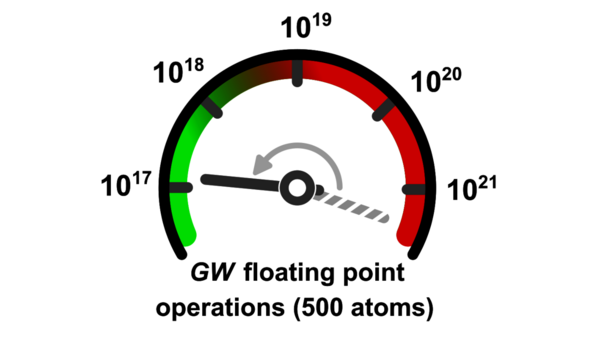
The GW approximation is the state-of-the-art Green’s-function method for calculating band structures beyond density-functional theory. We developed an atomic-orbital GW algorithm that enables band structure calculations of 2D crystals on a laptop, available open-source in CP2K and orders of magnitude faster than conventional plane-wave GW algorithms.


Physical Review B 112, 205130 (2025) (external link, opens in a new window) (selected as Editor's Suggestion)

Ultrafast Probe of Broken Time-Reversal Symmetry (external link, opens in a new window)

Symmetries are a fundamental constituent of condensed matter physics. Led by Giancarlo Soavi (Uni Jena), we have developed an ultrafast optical method to detect broken time-reversal symmetry (TRS), i.e. differences of the band structure between +k and -k in the BZ. Our theory reveals the mechanism of TRS breaking and its detection!


Article: Nat. Photonics 19, 300 (2025) (external link, opens in a new window)

Near-field optical tunneling emission (NOTE) microscopy (external link, opens in a new window)

Ever imagined capturing chemical reactions with atomic resolution on video? We take a step closer to this vision with ultrafast NOTE microscopy, developed by the group of Rupert Huber. Our real-time TDDFT simulations confirm the mechanism of NOTE microscopy!


Article: Nature 629, 329 (2024) (external link, opens in a new window)

LDOS on ultrafast time scales (external link, opens in a new window)

What is the probability of finding an electron with energy E in a material at position r at time t? It is the time-resolved local density of states (LDOS) ρ(r,E,t) which can be measured by the groups of Rupert Huber and Jascha Repp! Our theory explains ultrafast variations of ρ(r,E,t) by phonons and image charge effects.


Article: Nat. Photonics 18, 595 (2024) (external link, opens in a new window)

Accelerating electronic band structure calculations by a factor > 10000 (external link, opens in a new window)

Interested in calculating the electronic band structure with GW? Check out how to reduce the computation time by 4 (!) orders of magnitude! Suited for 2D materials & moiré structures, available open-source in the CP2K code.


Article:J. Chem. Theory Comput. 20, 2202 (2024) (external link, opens in a new window)


CP2K inputs available at cp2k.org

Humboldt award for Prof. Latha Venkataraman, Columbia University (external link, opens in a new window)

We congratulate Prof. Latha Venkataraman of Columbia University for being awarded a Humboldt Research Award by the Alexander von Humboldt Foundation (AvH).  With this prestigious award, the AvH recognizes her groundbreaking work in molecular electronics. The award enables her to spend a year at the Faculty of Physics at the University of Regensburg (UR), where she will continue her research into the electrical conductivity of individual molecules in close collaboration with Regensburg working groups. (20. Nov. 2023)

Prof. Evers elected into the DFG college of condensed matter physics (external link, opens in a new window)

Prof. Ferdinand Evers has been elected as a member of the DFG specialist college of physics as one of the four German representatives of condensed matter theory. (15. Dec. 2023)

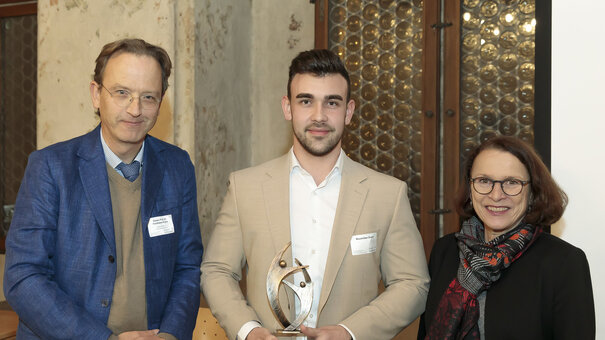
Brigitta and Oskar Braumandl prize for Max Graml (external link, opens in a new window)

Congratulations to Max Graml for receiving the research prize of the Brigitta and Oskar Braumandl Foundation! The award recognizes Max's outstanding contributions to advancing our understanding of high-harmonic spectra. The prize has been awarded during a ceremony in the historic city hall by Gertrud Maltz-Schwarzfischer, Mayor of Regensburg.


Article: Mittelbayerische, 13 November 2023 (external link, opens in a new window).

Improved understanding of high-harmonic spectra (external link, opens in a new window)

For high-harmonic generation, an intense laser pulse is targeted on a substrate producing high-frequency radiation. We derive a transparent analytical formula that describes the relation between laser pulse parameters and peak positions in the high-harmonic spectrum.


Article: Phys. Rev. B 107, 054306 (2023) (external link, opens in a new window) (selected as Editor's Suggestion)

Funding within the Emmy Noether Programme (external link, opens in a new window)

We are very happy to receive funding within the Emmy Noether Programme of the DFG. In the project, we will analyze ultrafast exciton dynamics using first-principles simulations.


Link to the project in gepris (external link, opens in a new window)

Highly conductive single-molecule topological insulators (external link, opens in a new window)

Researchers in Prof. Venkataraman's group (Columbia University, New York) have built organic topological-insulator wires. Longer wires show an unusual increase in conductance. Our theoretical models support an interpretation of this finding based on topology.


Article: Nat. Chem. 14, 1061 (2022) (external link, opens in a new window)

Topological high-harmonic generation (external link, opens in a new window)

Together with the groups of Prof. Huber, Prof. Richter (both UR) and Prof. Höfer (UR and Uni Marburg), we describe a novel generation mechanism of high harmonics in the surface state of a topological insulator.


Article: Nature 593, 385 (2021) (external link, opens in a new window)

Chirality-induced spin selectivity (CISS) - progess and challenges (external link, opens in a new window)

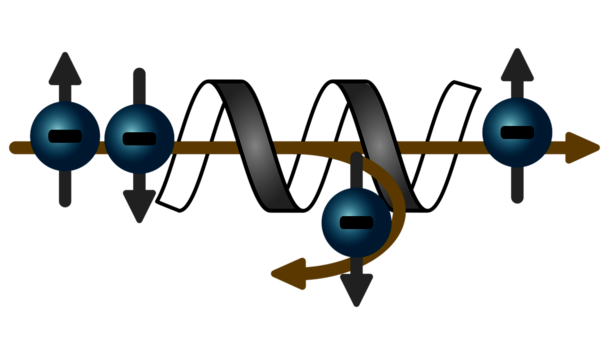
We review the theory of the CISS effect, that is, phenomena in which the chirality of molecular species imparts significant spin selectivity to various electron processes. We discuss CISS effects in electron transmission, electron transport, and chemical reactions.


Reference: Adv. Mater. 34, 2106629 (2022) (external link, opens in a new window)

Atomically resolved single-molecule triplet quenching (external link, opens in a new window)

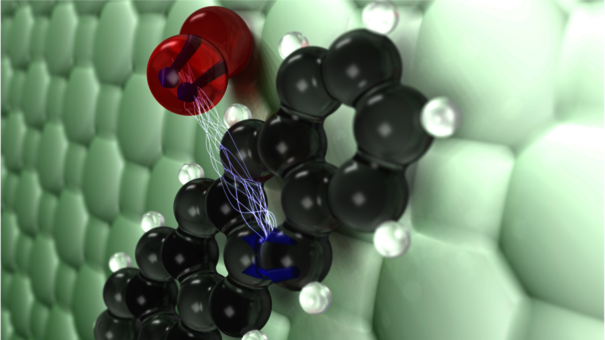
Led by Prof. Repp and Prof. Lupton (both UR), an experimental breakthrough has been achieved in measuring the energy transfer between a single oxygen molecule and a dye molecule. While first theoretical steps have been taken with success, a detailed understanding is yet to be worked out.


Original publication: Science 373, 452-456 (2021) (external link, opens in a new window)

Popular and Outreach

To top