The EU-funded COST (European Cooperation in Science and Technology) Programme supports international research collaboration by funding networking activities that connect researchers and innovators across Europe and beyond to advance scientific knowledge and innovation.
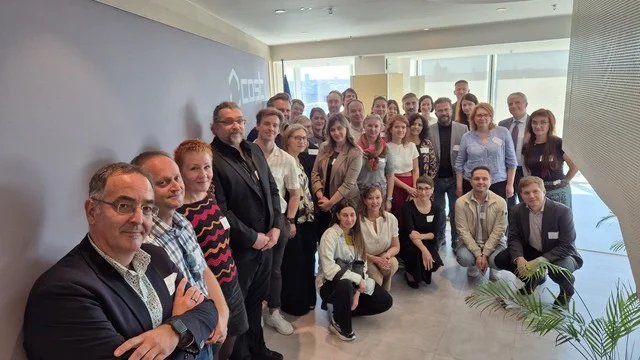
On 29 September 2026, the new COST Action Terra Atomica: Exploring the Afterlives of Nuclear Landscapes in Europe was officially launched in Brussels.
Bringing together representatives from 29 European countries, the first Management Committee meeting marked the beginning of a four-year international research network dedicated to advancing interdisciplinary research on nuclear heritage in Europe.
 by COST
Documenting and reinterpreting nuclear legacies
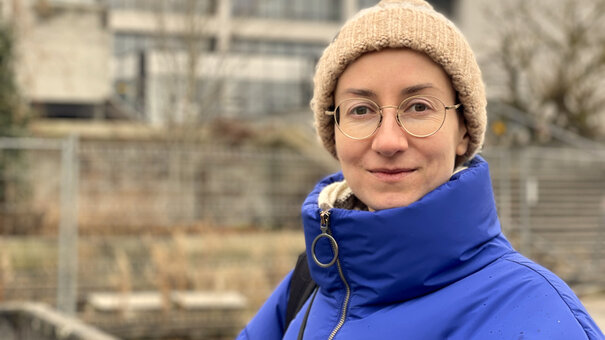
Terra Atomica connects researchers, artists, educators, policymakers, and affected communities across Europe to explore, document, and reinterpret the legacies of nuclear activities. “From uranium mining and nuclear testing to energy production and radioactive waste management, the development and use of nuclear technologies has left a lasting imprint on landscapes, communities, and collective memories,” explains Juliane Tomann, a juniorprofessor of Public History at the University of Regensburg and a workgroup leader within the project. Tomann was substantially involved in writing the application and represents Germany on the management committee of the Action.
Against the backdrop of a resurgence in nuclear activities and the associated fears, environmental uncertainty, and misinformation, “this project seeks to promote more equitable, cross-regional dialogue on one of Europe’s most controversial and enduring legacies. It explores how this legacy continues to shape the present and future”, Tomann says.
Terra Atomica aims to develop shared methodological and pedagogical tools, strengthen connections across disciplinary boundaries, and formulate policy recommendations for the responsible management of nuclear legacies through collaborative research, virtual exhibitions, training schools, and public engagement activities.
The COST Action is chaired by Professor Jovana Janinovic (external link, opens in a new window) of the University of Montenegro, and Professor Magdalena Banaszkiewicz (external link, opens in a new window) (Jagiellonian University Kraków, Poland) serves as Vice-Chair.
During its inaugural meeting, the Management Committee laid the foundations for future cooperation, establishing the Action’s leadership structure and discussing the priorities and activities of its six Working Groups. The working group led by Juliane Tomann focuses on Temporalities, Geographies, and Actors of Nuclear Heritage.
One of the working group’s goals is to establish an interactive and participatory online repository of European sites with a nuclear past. It is intended to map spatial connections between these sites while also highlighting the diverse ways in which this often-toxic legacy is dealt with. “Analogous to the concept of the nuclear chain, we use the term ‘nuclear chain of heritagization’ to describe the process of heritage formation, in order to highlight the close connections and interrelationships in society’s engagement with the past,” Juliane Tomann says.
Other working groups cover topics such as governance, policies or management of nuclear heritage, nuclear cultures, nuclear heritage education, or dissemination, impact, and sustainability.

Further information
More about Terra Atomica (external link, opens in a new window) and COST (external link, opens in a new window) and the European Cooperation in Science and Technology
Express your interest to join any of the working groups (external link, opens in a new window)
More about Professor Juliane Tomann (external link, opens in a new window)
#talktime with Juliane Tomann: Doing History (external link, opens in a new window)
Contacts
Prof. Dr. Juliane Tomann
Public History
Faculty of Philosophy, Art, History, and Humanities
University of Regensburg
Mailto: juliane.tomann@ur.de