

What happens when researchers cross borders—not just once, but again and again? When a fellowship becomes a second visit, a conference encounter becomes a joint project, and professional contacts gradually turn into friendships?
For chemists Professor Dr. Burkhard König and Professor Dr. Oliver Reiser, University of Regensburg (UR), as well as their Indian colleagues, Gopinath Purushothaman, Biswajit Saha and Sandip Murarka, the answer is clear: it pays off.
Three researchers, three paths to Germany
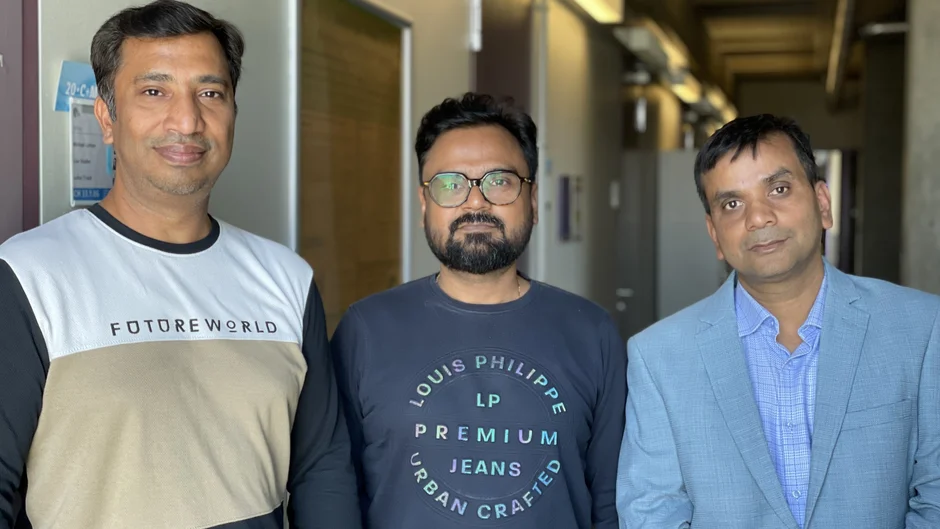
The three postdocs from India are currently conducting research with colleagues at the University of Regensburg as Alexander von Humboldt Experienced Research Fellows. The researchers, all between 40 and 50, had not known each other before their stays in Germany. They met here for the first time—and quickly discovered that, besides individual as well as similar research interests, they share a strong belief in the value of international exchange.
The paths of the Indian fellows are different, but all three stories have something in common: the collaboration grew out of existing scientific connections. The shared interest in photocatalysis was the starting point for all the stories.
Biswajit Saha is working as a professor at Amity University in Noida, India. He first came to Germany in 2009 as an Alexander von Humboldt Fellow, spending two academic years in Chemnitz. He returned in 2015 and later came to Germany again in 2022. His collaboration with Oliver Reiser began through scientific publications. What started as an academic connection gradually became much more. “Publications were my first contact with Professor Reiser,” Biswajit Saha explains.
 UR/Tanja Wagensohn
Sandip Murarka’s research focuses on the discovery of new activation modes and the development of chemoselective and sustainable synthetic methods. He met Oliver Reiser at a conference in India, where they realized that their research areas overlapped—and, importantly, complemented each other. “So, everything fell into place,” Sandip Murarka says.
He completed his PhD at the University of Münster and then worked as a postdoc at the Max-Planck-Institute in Dortmund, spending seven years in Germany before returning to India to take up a position as an associate professor at IIT Jodhpur. His current stay therefore brings him back into a research environment he knows well, while allowing him to develop new collaborations from his position in India.
Gopinath Purushothaman approached the collaboration from a similar scientific perspective. As an associate professor at IISER Tirupati he was looking for an international research group where he could learn more about photocatalysis. The University of Regensburg was a natural choice: “Burkhard König is an international capacity in this field,” Gopinath Purushothaman says. “So I approached him by email.” That first email has since developed into an ongoing collaboration. The research groups in Germany and India are now connected, exchanging ideas and looking for new opportunities to work together.
A broad and strong network
Their visits are also part of a much longer story. UR’s Faculty of Chemistry and Pharmacy has maintained contacts with Indian universities and research institutions for many years. Researchers have met at conferences, developed common projects, published together and visited each other's laboratories. Over time, these individual encounters have grown into a broad network of cooperation.
That investment is bearing fruit in many ways. “It has paid off that we have built up this exchange with India over the years. What started with individual contacts has grown into a strong network of trusted research partners”, says Burkhard König.
 UR/Julia Dragan
Different expertise, complementary strengths
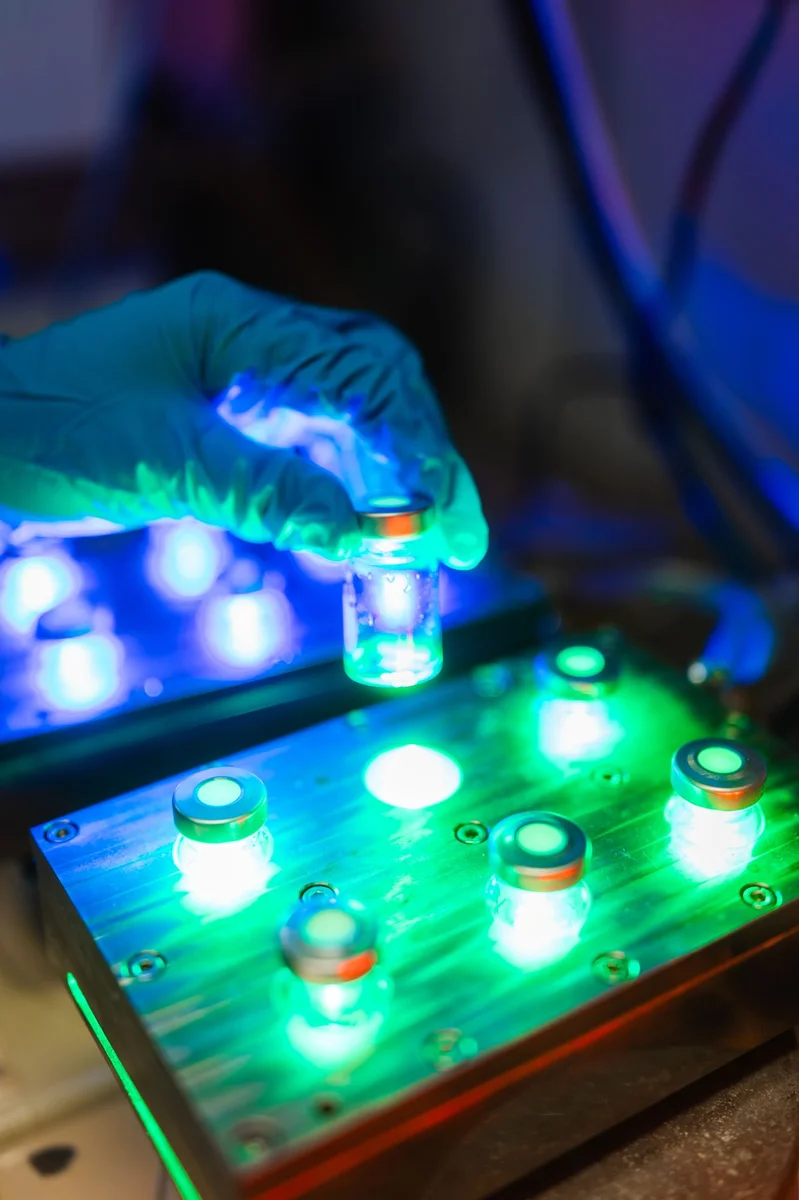
The three researchers work in closely related areas of chemistry, but from different angles. Gopinath Purushothaman’s research group focuses on using visible light for the sustainable synthesis of various heterocycles, including drug derivatives and natural products, through photo redox catalysis.
Sandip Murarka’s group investigates new activation modes and sustainable synthetic methodologies. His research uses modern synthetic tools, including base-metal catalysis, photocatalysis and electro-organic synthesis—to transform feedstock chemicals into value-added compounds and pharmaceutically relevant molecular architectures.
Biswajit Saha’s research interests lie in organic and medicinal chemistry. His current project, “Sustainable Synthesis of Bioactive Nitrogen Heterocycles through Photochemical and Electrochemical C–H Activation,” combines questions of sustainable synthesis with the preparation of biologically relevant molecules.
For the researchers, the differences between their groups in Germany and India are an advantage.
“When it comes to my research, my personal research is more on the organic side, while Burkhard König’s experience is more on the physical side,” Gopinath Purushothaman explains. “For us, it is complementary. I can learn things from him and implement them.” Biswajit Saha sees similar benefits in combining different approaches. New techniques can make it possible to synthesize molecules in new ways, particularly at the interface between organic and medicinal chemistry.
The point is not that one side has everything the other side lacks, they emphasize. Rather, the two research environments offer different perspectives, expertise and possibilities. Even in a broad field such as photocatalysis, the researchers explain, the important differences are usually not between countries but between individual groups. Different scientists ask different questions and develop different approaches. “That is precisely where collaboration becomes productive: when various approaches meet.”
Laboratories and workshops
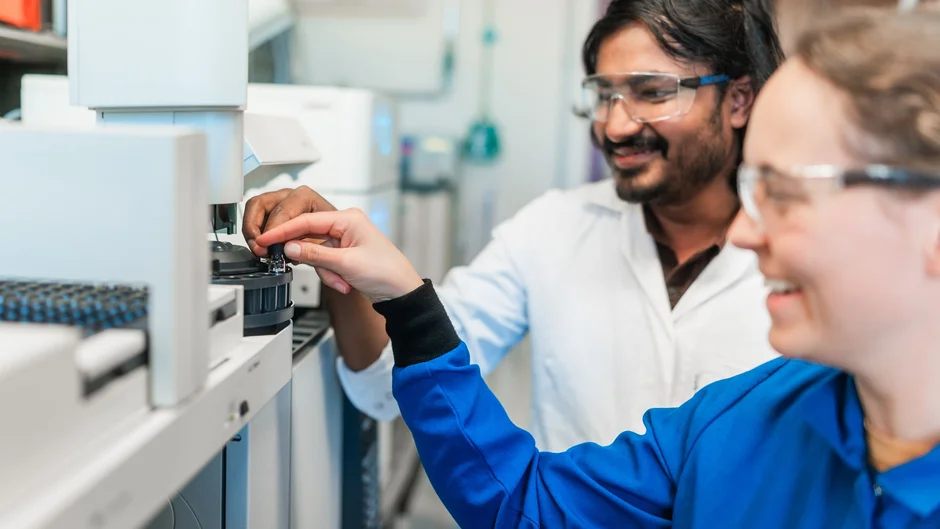
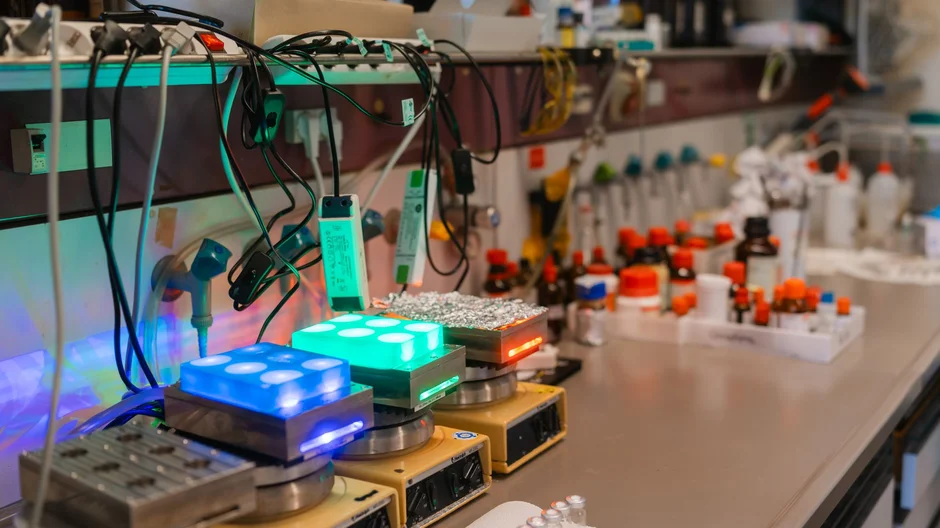
The research infrastructure in Regensburg is another important part of the experience. The Indian researchers are particularly impressed by the University's workshops. Researchers can work with specialists to develop or adapt instruments for their own experiments, rather than having to purchase every specialized component from a catalogue.
“One great advantage here is that you can go to the University’s workshop and make your own instruments,” one of the researchers explains. The mechanical and glass-blowing workshops and their staff make it possible to customize equipment to specific needs.
The difference can be considerable. A specialized device that might cost several hundred euros when purchased commercially can sometimes be produced in the University's workshops for a fraction of the price. For researchers working on complex and sometimes highly individual experimental setups, that flexibility is a real advantage.
Sustainable two-way connection
All three researchers are already involving their own students in their partnership. Gopinath Purushothaman brought a student to Germany for almost three months. Sandip Murarka’s doctoral student has just spent two months in Regensburg. Biswajit Saha sends students and postdocs to Germany—and sees reciprocal visits as an important part of the collaboration. Reiser and König, of course, can visit the Indian partners and their Universities at any time, they say with a smile.
This two-way connection is important for the long-term sustainability of the partnership. “A research relationship becomes much stronger when it extends beyond individual professors and includes students, postdocs and early-career researchers who can build relationships of their own”, Oliver Reiser says.
 UR/Julia Dragan
Trust makes a difference
Sandip Murarka reflects that the personal relationship with Oliver Reiser has made a considerable difference to his research stay. He came to Germany with his family, and his host understood that the experience involved much more than simply arriving at a laboratory and starting an experiment.
“Oliver helped me feel comfortable and made me aware of the processes, both professional and personal.” Sandip Murarka says. “I came here with my family. He knows that, is aware of that, gives time for that. He checks on me if I am fine.” That support has a direct effect on the research itself.
“It makes you feel free,” the academic says. “If you understand that the other person is on the same page, you can focus on your research efficiently.” For the three international researchers, knowing a colleague well improves the way projects work. Trust creates the freedom to exchange ideas openly, ask questions and concentrate on the scientific work.
The researchers' experiences also show that sustainable international exchange has to take the whole person into account. Two of the three guests are currently in Germany with their children; another had his children with him during an earlier stay.
The University of Regensburg's Welcome Center has played an important role in making this possible. Help with finding accommodation, fast email communication and information relating to family matters made the transition much smoother.
“For international researchers, these practical details can be crucial. Scientific collaboration may be the reason for coming, but feeling supported as a person—and as a family—can determine whether an international stay becomes a positive and repeatable experience”, Reiser and König say.
Bavaria through Indian eyes
International fellowships also provide plenty of opportunities to experience life outside the university.
The researchers have discovered Regensburg’s Dult, travelled to cities such as Dortmund and Berlin, attended conferences and met colleagues from around the world. They enjoy the fact that travelling for conferences and meetings does not always feel like work. “You see new places, travel and network,” Gopinath Purushothaman says. “This is not just work.”
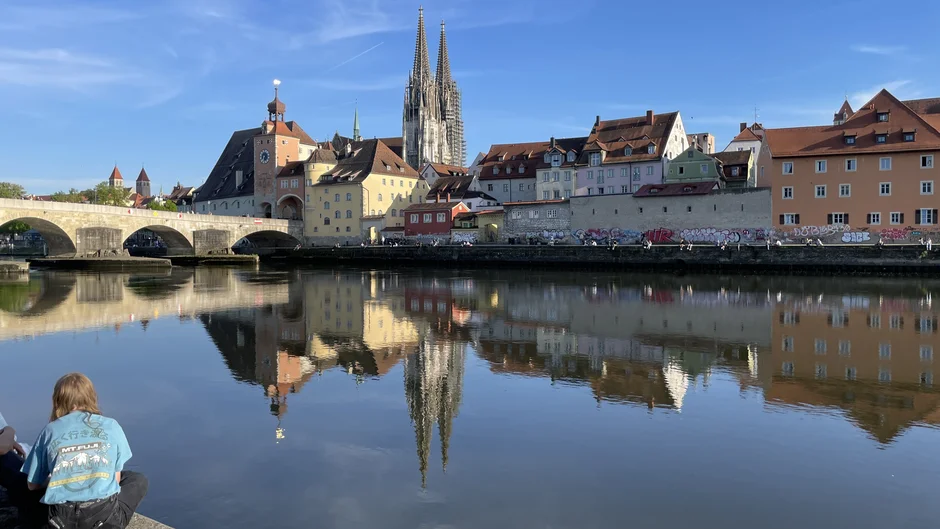
For Biswajit Saha, spending time with his family in Regensburg’s parks along the Danube is one way of switching off from research. Sandip Murarka meanwhile recommends to all internationals the Deutsches Museum in Munich to anyone coming to Germany with a family. His enthusiasm is unmistakable. He is still glad that he took Oliver Reiser's advice and visited it with his family.
“It was the best museum I saw in my life,” he says, praising the instruments, the educational program and the opportunities for children to explore science themselves. Ships and aircraft, interactive exhibits and hands-on experiences made a strong impression on him.
And then there are the cultural discoveries that are perhaps harder to put into a research paper.
The three researchers laugh about their German. All three say they speak “ein bisschen”. One says, “I can manage myself.” Another jokes that he can go shopping—but that people do not always understand him. They have also discovered Bavarian beer gardens and the Oktoberfest. And one particular cultural observation generates plenty of laughter: what was irritating or surprising about Germany? “Actually, that beer is cheaper than water if you go to a restaurant.” The cultural differences are noticeable in other ways, too. Having grown up and worked in India, the researchers enjoy the lower population density in Germany.
 UR/Tanja Wagensohn
A reputation built over many years
Meanwhile, UR’s Institute of Chemistry has developed a reputation among Indian researchers that extends far beyond any individual fellowship.
Is the University of Regensburg becoming a kind of brand in chemistry in India? “True,” the researchers say. Regensburg's reputation is genuinely recognized among Indian researchers. Its chemistry research is internationally visible. One of the researchers points out how the field of photocatalysis has developed over the past two decades. What was not yet widely pursued around 20 years ago has become a major area of research.
Looking at the international research landscape today, he considers the University of Regensburg one of the top places globally in the field of chemistry. “It is top-notch.” This kind of reputation does not appear overnight. It has been built through research, publications, conferences and, crucially, relationships of König, Reiser, and their working groups.
Sustainable cooperation means continuity
At the same time, the researchers see room to make the relationship even more reciprocal. Mobility is currently stronger from India to Germany, and more opportunities for German researchers to spend time in India could make the exchange even richer.
The next step could be to develop more structured forms of cooperation. Sandip Murarka points to the possibility of an International Research Training Group involving Indian partners. “We did not have some IRTG program in India,” he explains. “This is something where we can work on all together, establishing long-term cooperation with Germany as a whole and Regensburg in particular.”
 UR/Julia Dragan