Focus
The focus was on the question of how the Church’s marriage preparation programme is experienced by those who take part in it – and by those responsible for it. Building on *Amoris laetitia* (nos. 208/211), the aim was to conduct a methodologically rigorous exploration of the ‘diversity of topics’ that genuinely concern engaged couples, in order to derive ‘well-grounded advice’ for the further development of the courses on offer.
Methodological approach
The project combined several lines of inquiry into a mixed-methods design:
A quantitative longitudinal survey collected data at three time points – upon registration for marriage at the parish office, on the day of the course itself, and eight weeks later – capturing the perspectives of a total of 1,567 participants and 89 course leaders across the three participating dioceses (2019–2021).
In addition, qualitative, guided interviews were conducted with four couples and ten individuals (2020–2021) to reveal more complex interrelationships between course experiences, theological views, motivations for marriage and expectations of married life. The data were analysed using a content-structuring qualitative content analysis (Kuckartz/Rädiker) with the aid of MaxQDA.
Expert interviews with those responsible for church-based marriage preparation in Sierra Leone, the USA, Chile, South Korea, Australia, Poland and Italy (2021–2024) provided an international comparative perspective. These discussions were intended less as a means for the interviewees to provide personal accounts and more as a way for them to act as witnesses to social realities about which they possess exclusive knowledge.
Results
The interpretation of the data has yielded, amongst other things, two systematic outlines that are relevant both for pastoral practice and for the couples themselves: a theology of vocation in marriage and a ‘Brief Theology of the Wedding Celebration’. Both are elaborated upon in the final volume and linked to concrete proposals for the further development of marriage preparation.
Publication
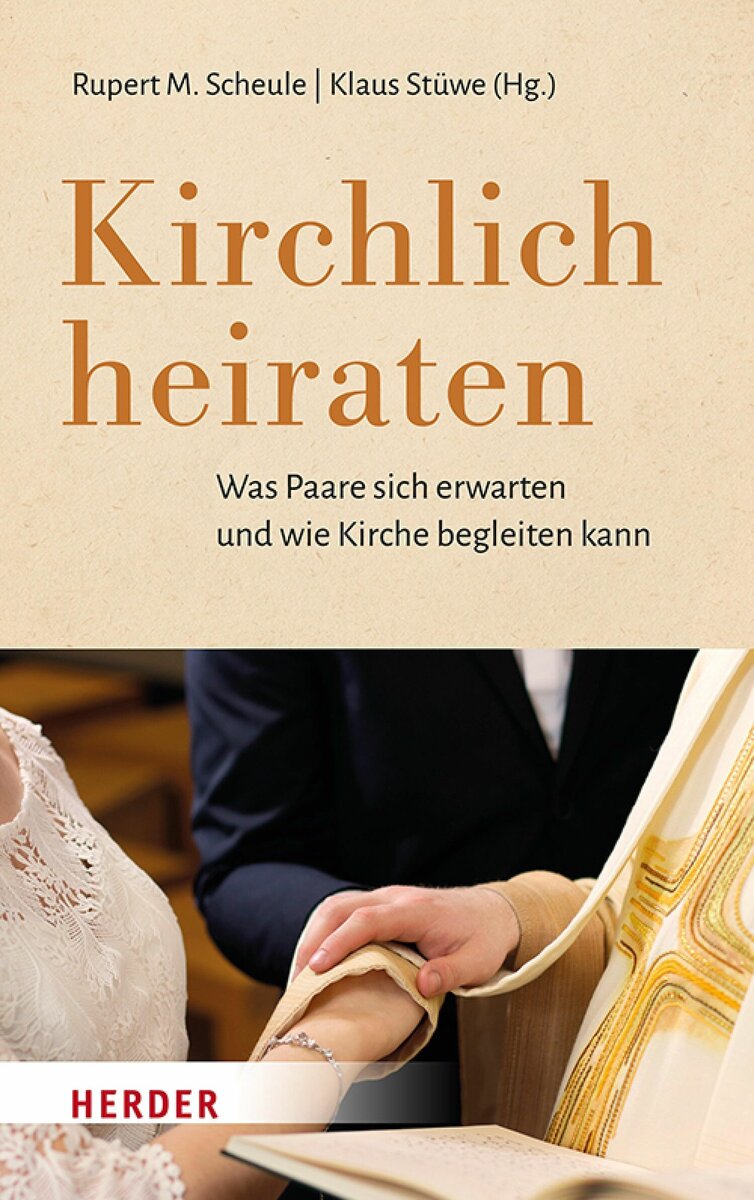
The full results are documented in: Getting Married in the Church. What Couples Expect and How the Church Can Support Them (external link, opens in a new window) (Herder, 2025).
Contact
Antonio Zierer · antonio.zierer(at)ur.de (opens your email program)
We would like to thank all the course leaders and those responsible for church marriage preparation in the dioceses of Eichstätt, Passau and Regensburg for their dedicated contribution.