

Research focus on biotic interactions
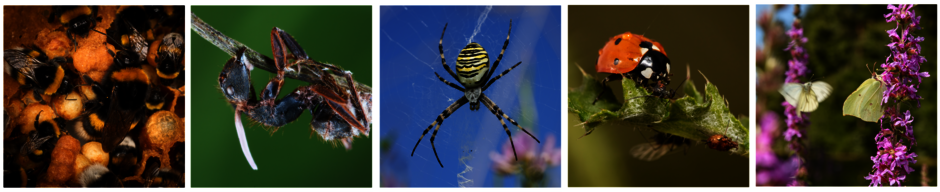
The goal of the newly established research cluster "Biotic Interactions" is to understand the evolutionary and ecological functioning of biotic interactions. We are particularly interested in the following topics:
- Mechanistic (genetic, chemical, organismic) functioning of the interactions that occur between different organisms
- Evolutionary origin of biotic interactions (e.g. co-evolution) including the consequences of biotic interaction on speciation and extinction processes
- Understanding the assembly rules of biotic interaction networks and predicting their shift under climate and global change
- Understanding biotic interactions in the context of (multiple) stressors (e.g. light, drought, heat)
Next to the research activities, the activities of the cluster are also represented in teaching, in particular in the M.Sc. programme "Ecology, Evolution & Conservation (external link, opens in a new window)".
The following research groups are associated with this cluster:
Prof. Dr. Aline Koch
- Important information: We study how regulatory non-coding and coding RNAs can be used as "sprayable RNAs" to improve the agricultural value of crops
Further info of
Prof. Dr.
Aline Koch

Prof. Dr. Christoph Reisch
-
Important information: Molecular Ecology and Conservation Genetics
Genetic variation is essential for plant evolution and conservation. We analyse the mechanisms that generate genetic variation and investigate how much variation is required for the long-term protection of endangered plant species

Prof. Dr. Lena Wilfert
-
Important information: We study the evolution and ecology of host-parasite interactions in pollinators and other insects.