


1968 - 1979
1968
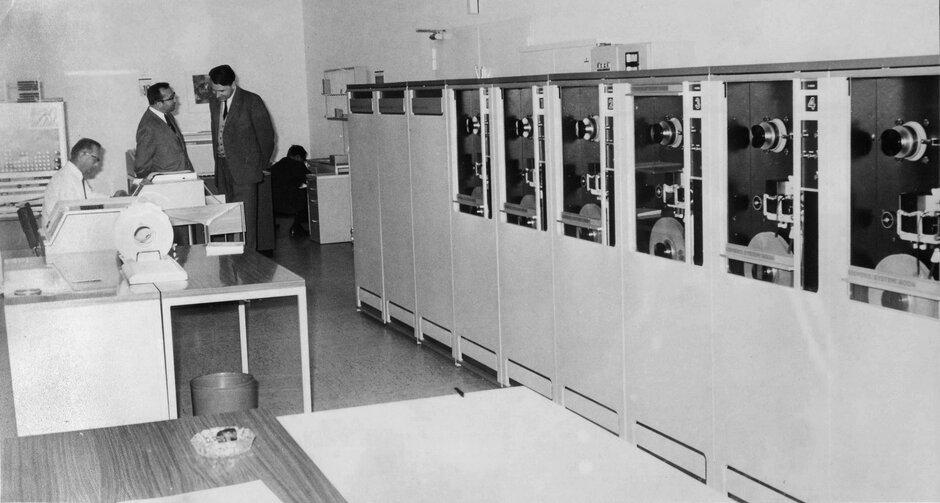
Commissioning of Siemens 4004/45F (128 KB RAM threaded ferrite core memory blocks) in the collection building.
1970-1973
First training and research work and expansion of the plant to Siemens 4004/45G.
1974
Creation of the ROBUR computer network system for the university and university of applied sciences.
1976
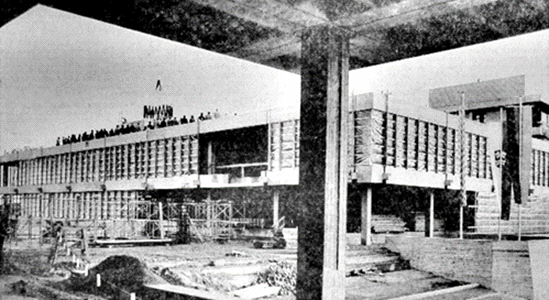
New construction of the CC building.
New mainframe computer TR-440 with 256 KB RAM á 48 (usable) bits.
1980 - 1989
1979
First decentralised "microcomputers" at the university.
1980
Installation of the DIETZ 621-X1 faculty computer at various locations.
1981
Siemens 4004 is replaced by Siemens 7531.
Decentralisation through the installation of further DIETZ computers
1983
CC's own software and compiler for word processing.
1984/85
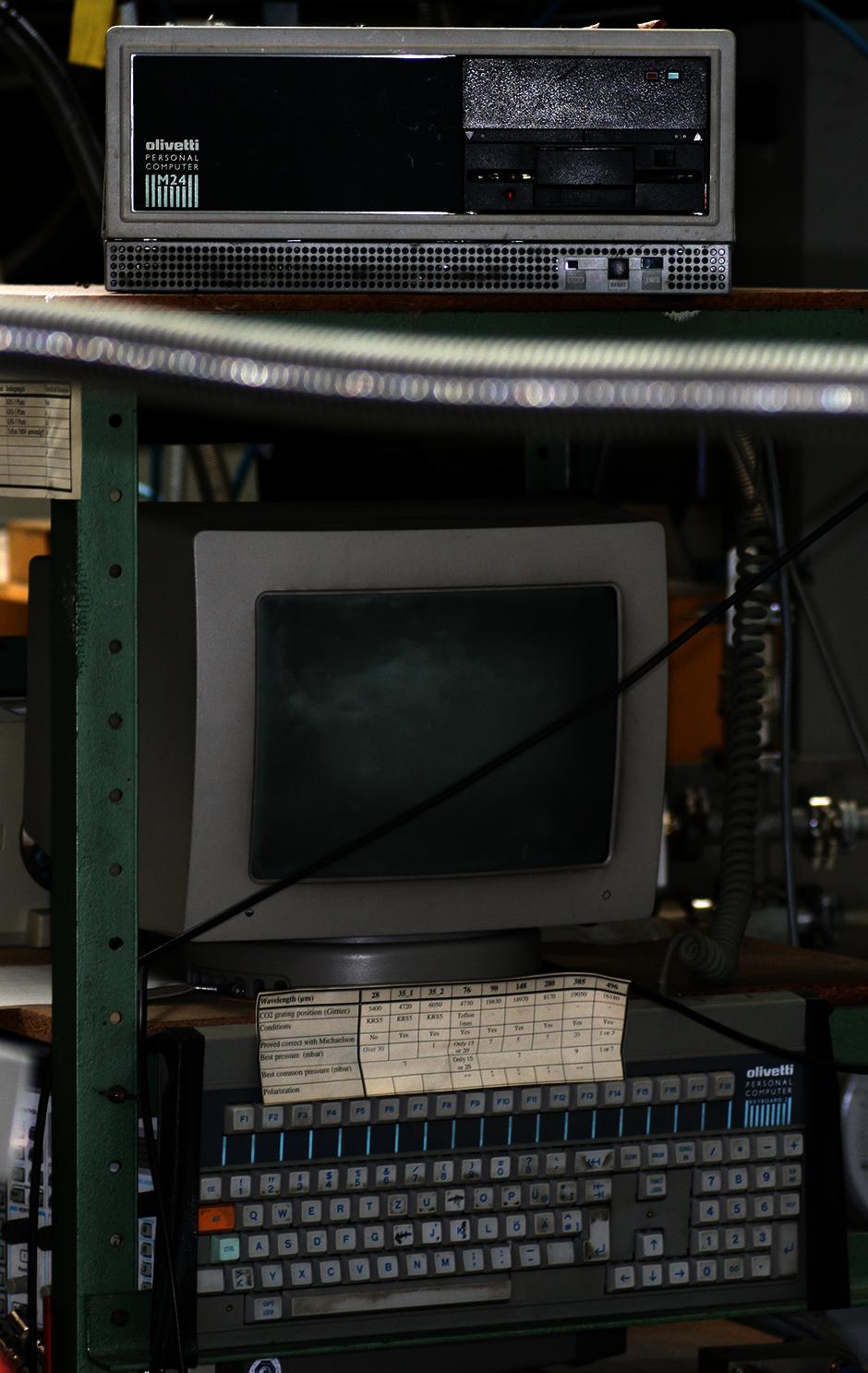
First IBM-compatible PCs "Olivetti M24"
1990 - 1999
1986-1989
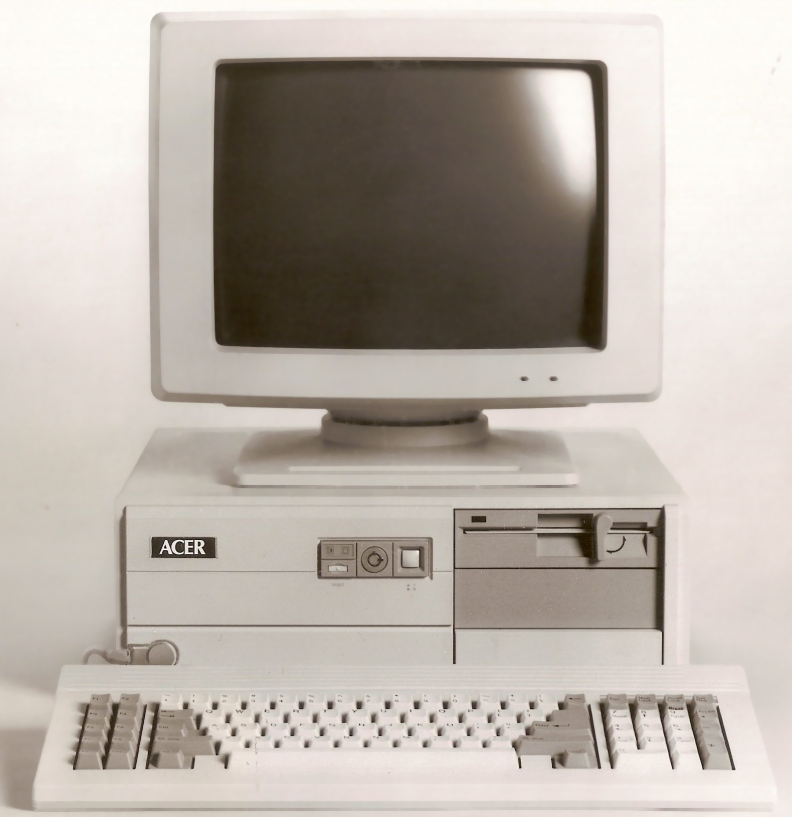
Expansion of the first computer rooms (CIP-Pools) with Acer 910.
Connection to the DFN (FTP, Telnet, e-mail) via Datex-P.
1990-1992
First fibre-optic lines, approval of access to the DFN science network, 2-MegaBit DFN connection.
Networking with the University Hospital "KKS".
1993
Central mainframes SNI C40 Comparex 8/85, Cray Y MP-EL 1, new SGI Challenge.
Procurement of the RIO (Regensburg IO/Server).
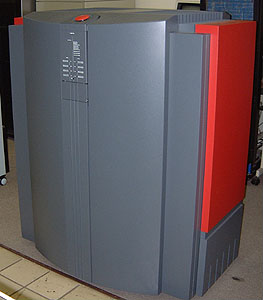
1994–1999
1996-1999
First loan devices (projectors and laptops).
Introduction of the decentralised support concept (workgroup managers and PC supervisors).
Launch of the information desk as a support service.
2000 - 2009
2000-2005
Further network expansion with WiFi and VPN.
Expansion of the passive infrastructure with Gigabit.
2005–2009
2006-2009
New concept for the backup and archive service.
Start of vocational training for IT specialists and the IT training programme for students (SITA).
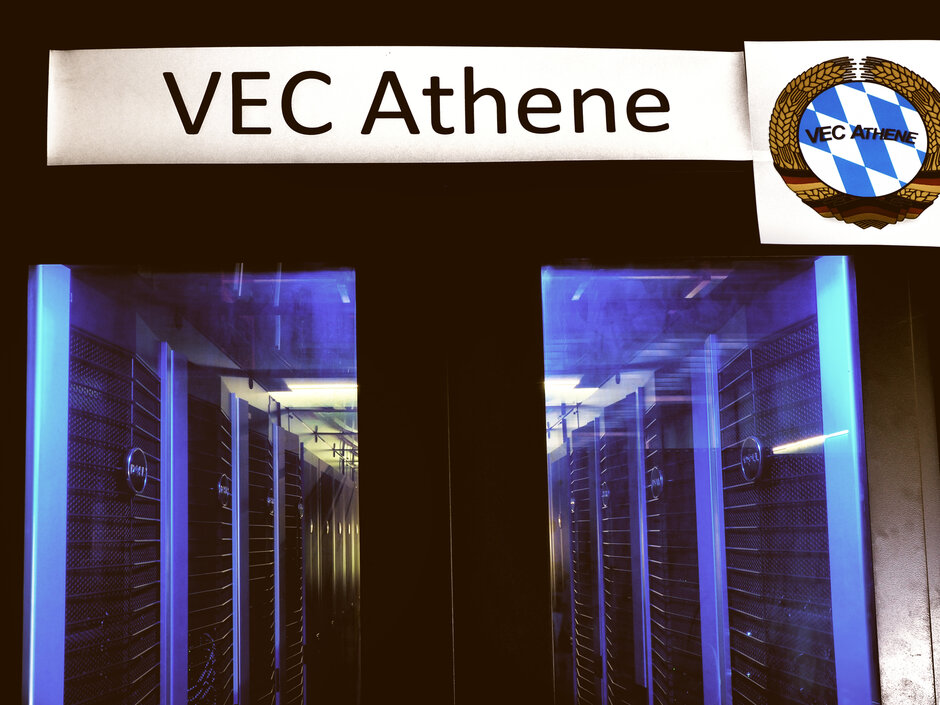
Development and regular operation of the Linux HPC cluster.
Launch of the G.R.I.P.S. e-learning system.
Introduction of a ticket system for student support.
2010 - 2019
2010-2011
Start with electronic examinations.
Science network X-WiN and DFN-PKI
Introduction of a CMS for the UR website.
Renovation and reorganisation of IT support for students.
2012-2015
Eduroam at the UR.
Centralised operation of the BayZeit time recording system.
Equipping the first lecture theatres with lecture recording systems.
Introduction of IT Support+.
2016-2019
Commissioning of the HPC cluster "Athene2".
BayernWLAN at the UR.
2020 - Today
2020
Various pandemic-related challenges
- VPN for increased requirements in the home office
- Video conferencing and chat systems (Zoom, RocketChat)
- Further expansion of our video platform and our e-learning system, as well as our offer for conducting e-exams
- Establishment of a support programme to support digital teaching
Development of an information security management system (ISIS12).
2020 to date
Operation of a Serviceportal - self-service for account management.
Packstation for time-independent collection of IT procurements.
"Green IT" joint project.
Conversion and renovation for the introduction of a central Servicedesk.
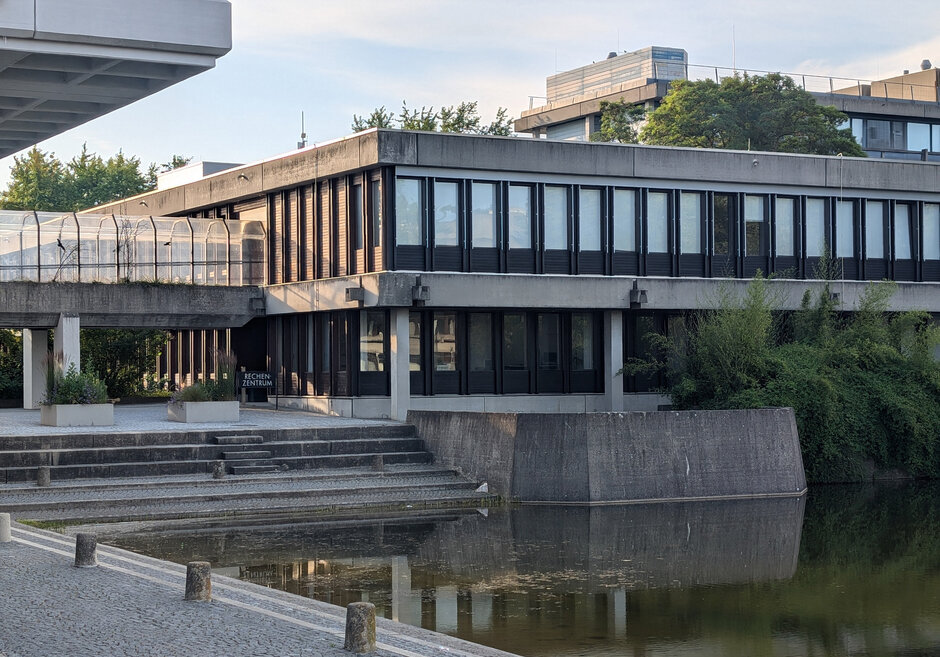
50 years of the RZ building
From a mainframe for libraries, administration and academia to a service provider in teaching and research
The University of Regensburg’s computer centre building will celebrate its 50th anniversary in 2026: on 20 November 1976, a topping-out ceremony was held for a building specifically designed to house a mainframe computer.
Eike Jessen (external link, opens in a new window), developer of the TR 440 mainframe (external link, opens in a new window) at AEG-Telefunken in Konstanz, had already worked closely with the architects during the building’s planning phase to perfect the design for the machine room, raised floor (the highest of any data centre in Germany, no less), an uninterruptible and stabilised power supply, a CO₂ fire-suppression system, etc.: provision was made for data acquisition, operations (running in multi-shift operation) and staff facilities, as well as ensuring a central location on the campus.
Even the old Siemens 4004/45 G (dating from 1968, formerly housed in the basement of the main building) had found a place and was thus able to remain in service until 1981.
The main users of the system at the time (the library, administration, and the humanities and natural sciences) had short distances to cover when delivering input data and collecting results.
These distances were also reduced as part of ‘ROBUR’ (‘Computer networkfor operational purposesat the University of Regensburg’), the computer network system planned in 1974, launched in 1978 with 8 laboratory and 2 departmental computers networked via (two-wire) telephone lines. This connection was subsequently improved in-house and sold back to Deutsche Telekom (then still known as “Deutsche Bundespost”) as a patent.
The TR 86S, the satellite computer for interactive peripherals (fax, display devices and remote data processing), was also already capable of establishing contact with external sites (such as libraries or the LRZ in Munich) via remote dialling. The first e-mail was sent using X.64 (“Datex-P”).
As early as 1984/85, the first CIP pools (“Computer Investment Programme”) were set up with PCs, which drove forward digitisation on campus.
The World Wide Web, email and remote access were part of our services from a very early stage.
As early as 1993, the concept of the Regensburg I/O server (‘RIO’) had set a national benchmark for how a computer centre could drive forward digitisation: Scanners (paper, large format, slides & negatives), printers (continuous feed, large format, dye-sublimation and laser [even in colour back then!]), digital cameras, hire projectors (‘beamers’), CD (and later DVD) burners, audio and video editing suites and much more were now available to the public!
We were also national leaders in network design and identity management (NetWare with X.400).
We also succeeded very early on in establishing a recognised teaching programme independent of the faculties: In 2008, the ‘Supplementary IT Training’ programme (leading to a recognised minor subject certificate) evolved into the ‘Student IT Training’ (SITA) programme and staff training. This was followed in 2025 by a training programme leading to a journeyman’s certificate in IT professions (‘IT Specialist for Application Development’ and ‘IT Specialist for System Integration’), achieving Bavaria’s best results.
Today, the generations of mainframe computers have long since changed, and much has shifted to cloud-based solutions with robust data management. The increase in device performance followed Moore’s Law (external link, opens in a new window), but was equally constrained by Wirth’s Law (external link, opens in a new window): our customers’ requirements have become more diverse.