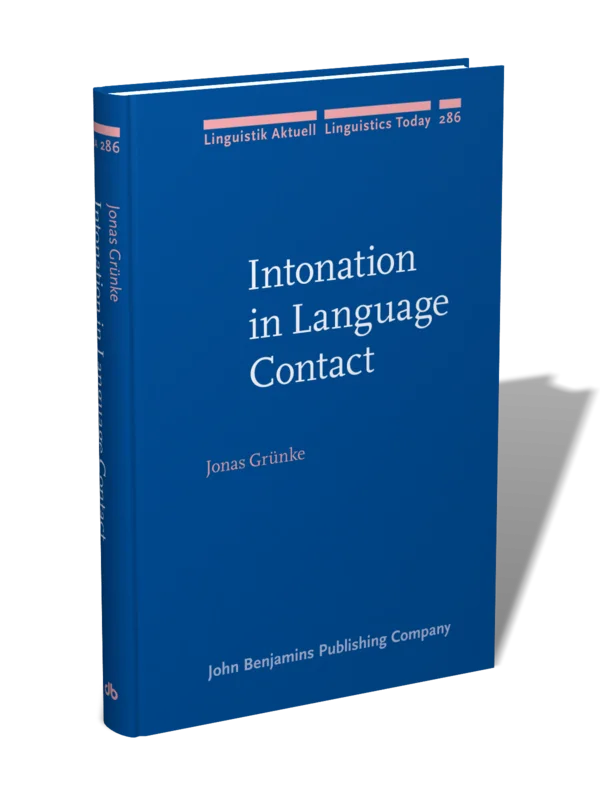
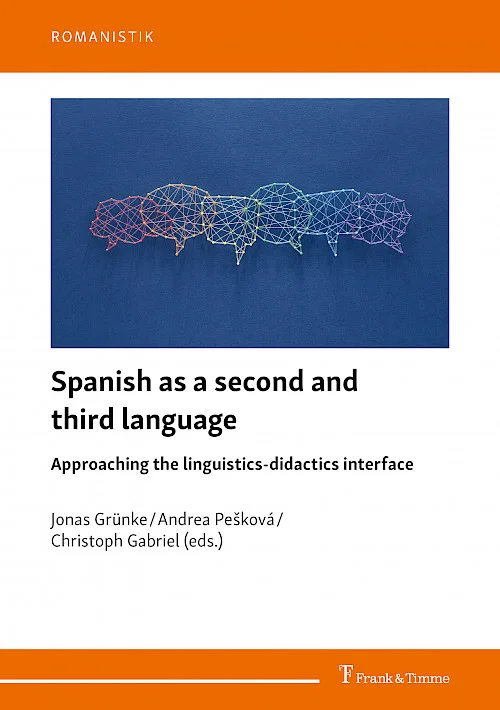
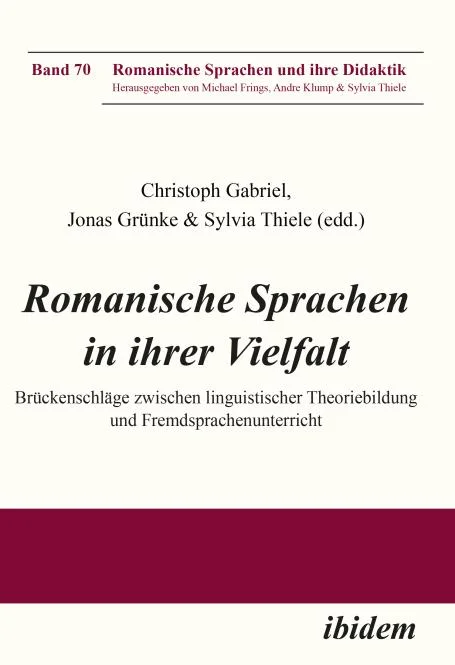
- Phonetics and phonology, segmental and suprasegmental (Spanish, French, Catalan, Romansh)
- Syntax, synchronic and diachronic (information structure, clitics, postverbal subjects)
- Second language acquisition (particularly L3 acquisition, acquisition of phonology and syntax)
- Multilingualism (societal and individual, language dominance, languages of origin)
- Variety linguistics and dialectology
- Linguae Minores (Judeo-Spanish, Grisons Romansh, Friulian, Occitan)
- Slavic languages (Ukrainian, Bulgarian) and Nordic languages (Swedish, Danish), Modern and Ancient Greek
Pictures
International Research
Research into multilingualism is conducted all over the world, but takes on country-specific forms in each case. Research activity is particularly intensive in socially multilingual countries, depending on the languages spoken in different regions. For example, the US ‘classics’ of multilingualism theory focus on languages spoken in the USA; for instance, U. Weinreich, the author of ‘Languages in Contact’, also conducted research on Yiddish. The linguist Shana Poplack, who grew up in New York, collected the language data for her groundbreaking 1980 article on code-switching between English and Spanish amongst immigrants from Puerto Rico in the New York neighbourhood of Harlem. Similarly, the Belgian linguist Peter Nelde developed concepts of language conflict based on the linguistic situation in Belgium (Dutch vs. French).
In this sense, international research into multilingualism is always embedded in a regional context. By focusing on regionality, FoMuR forms part of the international research community which – de facto always regionally oriented – has contributed to the development of general theories of multilingualism.
Research in Germany
Research into multilingualism in Germany is characterised in particular by its thematic diversity and its relevance to contemporary society. Numerous research institutions and projects are investigating all its forms: individual, societal and institutional multilingualism.
The following is a brief overview of those projects, centres, networks and research consortia that stand out for their interdisciplinary nature or their nationwide scope:
- The Hamburg-based interdisciplinary research project ‘Multilingualism Development over Time’ (MEZ) focuses its research on the development of individual German-Turkish and German-Russian multilingualism over a two-year observation period in secondary schools across Germany, and on the relationship between pupils’ multilingual competences and educational achievement.
- A series of projects on language development and multilingualism has been launched by the Leibniz Centre for General Linguistics (ZAS) in Berlin. These projects investigate language development trajectories in children growing up in multilingual environments at pre-school and primary school age. Research findings are being incorporated into tools for the diagnosis and treatment of language development disorders and into methods designed to support the acquisition of German.
- Fifteen different research projects were funded by the BMBF on the topic of ‘Linguistic diversity – a resource and an opportunity’, with the aim of investigating several research topics such as multilingual language development, learning conditions and language support measures, multilingualism as a resource, and to ensure the professional development of teaching staff.
- In 2017, a Germany-wide network was established by the Co-ordination Centre for Multilingualism and Language Education (KoMBi, Hamburg) and the ProDaZ project: German as a Second Language in All Subjects (Duisburg-Essen). This network of experts from academia and practice aims to bring mother-tongue instruction to the forefront of educational research and public discourse on education in Germany, to develop teaching materials, to introduce coordinated literacy programmes in primary schools, to integrate mother-tongue instruction into the standard curriculum, and more.
- Multilingualism is researched from psycholinguistic, sociolinguistic and systemic-linguistic perspectives at the interdisciplinary Ruhr Centre for Multilingualism (RZM). Specifically, research topics include language acquisition and language loss, as well as language use in institutions and in everyday life.
- Phenomena relating to language change, language contact and language acquisition in the context of migration are investigated at the interdisciplinary Centre for ‘Language, Variation and Migration’ (SVM) in Potsdam, which serves as an umbrella organisation for several research projects.
- Research into multilingualism in Germany’s border regions is also a current topic. Worth mentioning here is the Greifswald project on the German-Polish border region (KiBi), which focuses, amongst other things, on researching teaching approaches and developing teaching materials for German-Polish bilingual educational institutions in the border region on both sides.
Research at the UR
Research into multilingualism has long been carried out at the Faculty of Linguistics, Literature and Cultural Studies at the University of Regensburg. FoMuR raises the profile of existing research activities in this field and aims to initiate and support research collaborations in this area.
Current research projects at the Faculty on the topic of multilingualism include, for example:
- LangGener ‘Language across generations: Contact-induced change in the morphosyntax of German-Polish bilinguals’, 2018–2021, funded by the German Research Foundation and the Polish National Centre for Science (Prof. Dr B. Hansen)
- Research consortium “Borders in national and transnational cultures of remembrance between the Czech Republic and Bavaria”, 2017–2020, Bavarian-Czech University Agency. University of Regensburg in collaboration with the University of Passau, Charles University in Prague, UJEP University of Ústí nad Labem and the Adalbert Stifter Association (Prof. Dr M. Nekula)
- “Research Centre for World Englishes” (Prof. Dr J. Leimgruber), with a particular focus on regional varieties of the English language (Asia, Africa, the Middle East) and their conceptual integration into models of “World Englishes” (including, amongst others, the “Dynamic Model of postcolonial Englishes” developed in Regensburg (Prof. Dr E. Schneider), which has largely established itself as the standard model).
- “The Dying Karelian Dialects in the Murmansk Oblast. A contribution to their comprehensive documentation and description”, 2017–2020, DFG-funded project at the Leibniz Institute for East and South-East European Studies (IOS) in Regensburg (Dr Petar Kehayov)
- Forum on Languages of Origin (Prof. Dr B. Hansen)