Third funding period of our CRC 1277 approved
(November 2025)
The German Research Foundation (DFG) has approved the third funding period of our Collaborative Research Centre SFB 1277 (external link, opens in a new window) starting in January 2026.
We are excited to many fascinating discoveries ahead and look forward to continue our research within the highly collaborative ecosystem of the CRC!
Dr. Weiyi Pan joins our group
(October 2025)
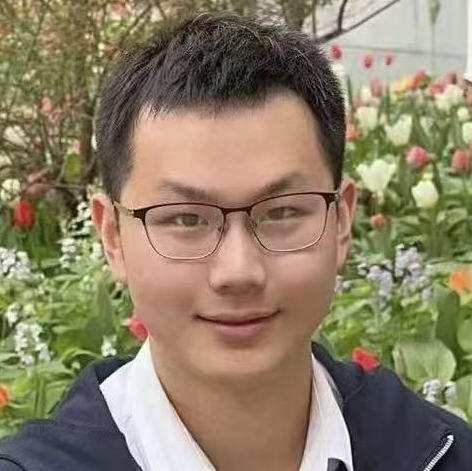
Dr. Weiyi Pan joins our group as a Postdoc. Weiyi will be working on models for spin-orbit torques and magnetization dynamics in two-dimensional magnets from first-principles calculations.
Welcome, Weiyi!
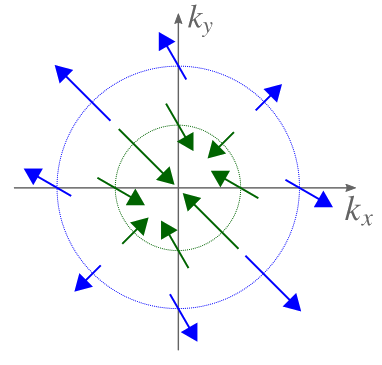
Our preprint “Radial Rashba spin-orbit fields in commensurate twisted transition-metal dichalcogenide bilayers” published on arXiv
(September 2025)
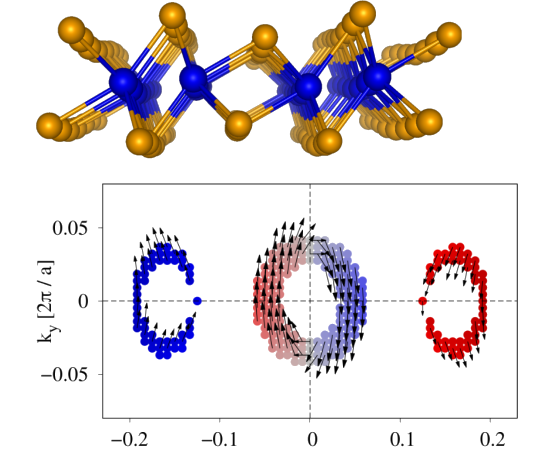
We studied the ab initio band structures of commensurate twisted transition-metal dichalcogenide bilayers unraveling that their in-plane spin textures mostly feature radial Rashba spin-orbit fields. Fitting the first-principles results to established model Hamiltonians, we obtain all relevant parameters such as the spin-orbit and exchange couplings.
Our preprint can be found at arXiv:2509.10068 (external link, opens in a new window).
Contributed Talk at the DPG Fall Meeting in Göttingen
(September 2025)
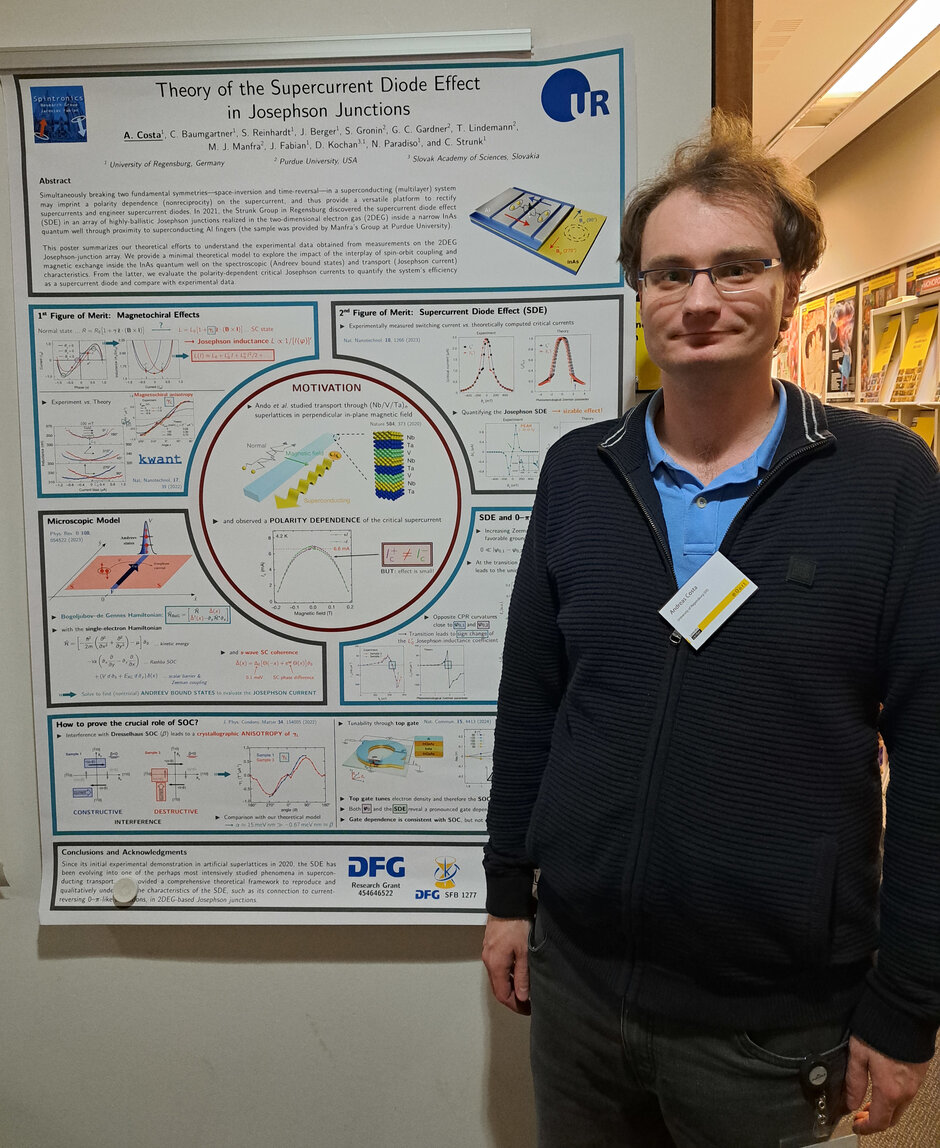
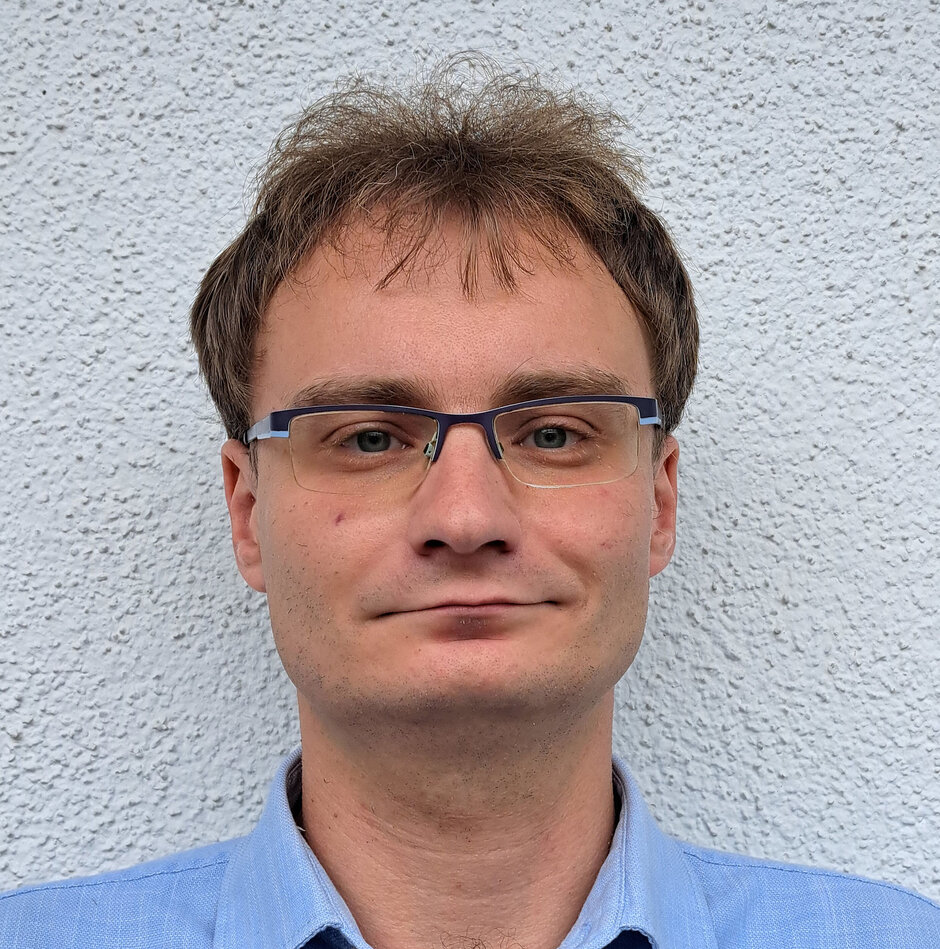
Dr. Andreas Costa, Research Associate in our group, has been presenting our work on the unconventional supercurrent diode effect resulting from chiral spin-orbit fields in vertical superconductor/ferromagnet/superconductor Josephson junctions at the DPG Fall Meeting “Quantum 2025” (external link, opens in a new window) in Göttingen (September 2025).
More information and the abstract are available here (external link, opens in a new window).
Our preprint “From Atoms to Moiré: Combining Ab-initio and Machine Learning to Predict Proximity Effects in van der Waals Heterostructures” published on arXiv
(August 2025)
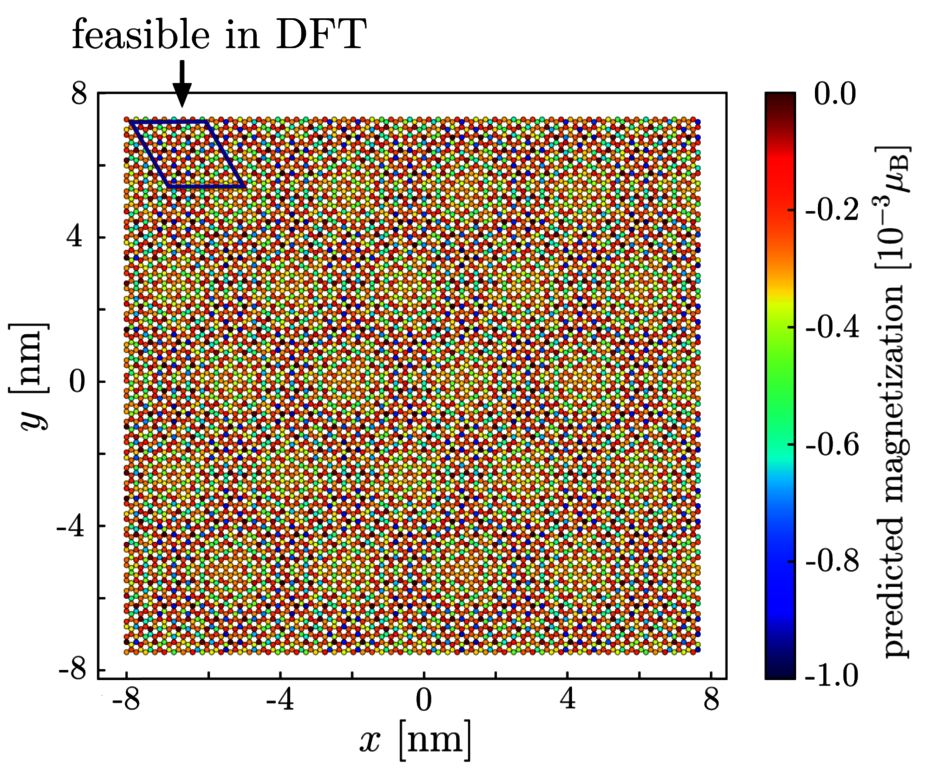
We developed a machine-learning framework to efficiently predict proximity-induced magnetism in van der Waals heterostructures at large scales that are inaccessible to state-of-the-art first-principles calculations. As an example, our approach was applied to graphene/Cr2Ge2Te6 heterostructures pointing towards rich magnetic Moiré textures in this structure. Our method can be broadly applied to orbital and spin proximity effects.
Our preprint can be found at arXiv:2508.12406 (external link, opens in a new window).
Cluster of Excellence “Center for Chiral Electronics” will receive funding from January 2026 on
(May 2025)
In a highly competitive process, the Excellence Commission and German Research Foundation (DFG) have selected our proposal for the new Cluster of Excellence EXC 3112 “Center for Chiral Electronics” (external link, opens in a new window) to receive funding for initially seven years starting in January 2026.
Together with our strong partners at Martin-Luther-Universität Halle-Wittenberg, Freie Universität Berlin, and the Max Planck Institue of Microstructure Physics in Halle, we will explore the yet little-used chiral properties of condensed matter to design the next generation of energy-efficient electronics.
We are thrilled that our Spintronics Group at UR will be part of this exciting journey and look forward to many fascinating discoveries ahead!
Our Technical Review “First-principles determination of spin-orbit coupling parameters in two-dimensional materials” out in Nature Reviews Physics
(April 2025)
Spin-orbit coupling is an interaction that is fundamental to many phenomena in solid-state physics and, most interestingly from the application point of view, particularly well controllable in two-dimensional materials and van der Waals heterostructures. Our Technical Review provides a step-by-step introduction on how to determine the physically relevant SOC parameters in two-dimensional materials from first-principles methods.
Our Technical Review has been published in Nature Reviews Physics (external link, opens in a new window).
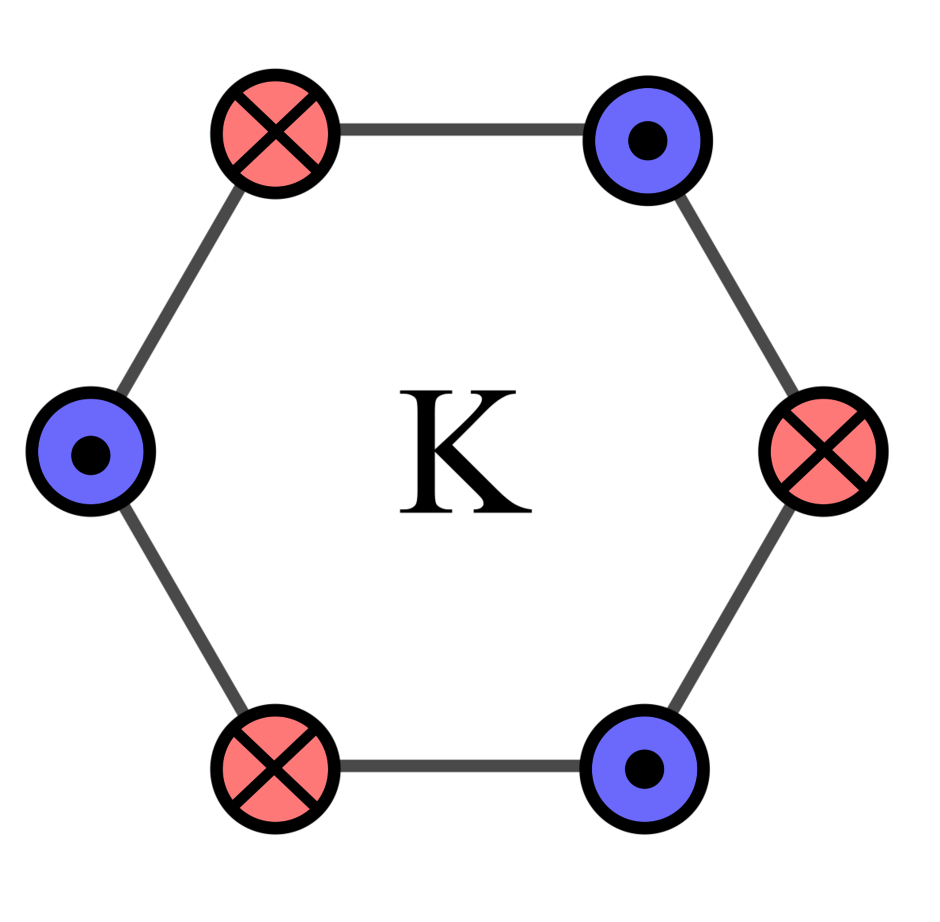
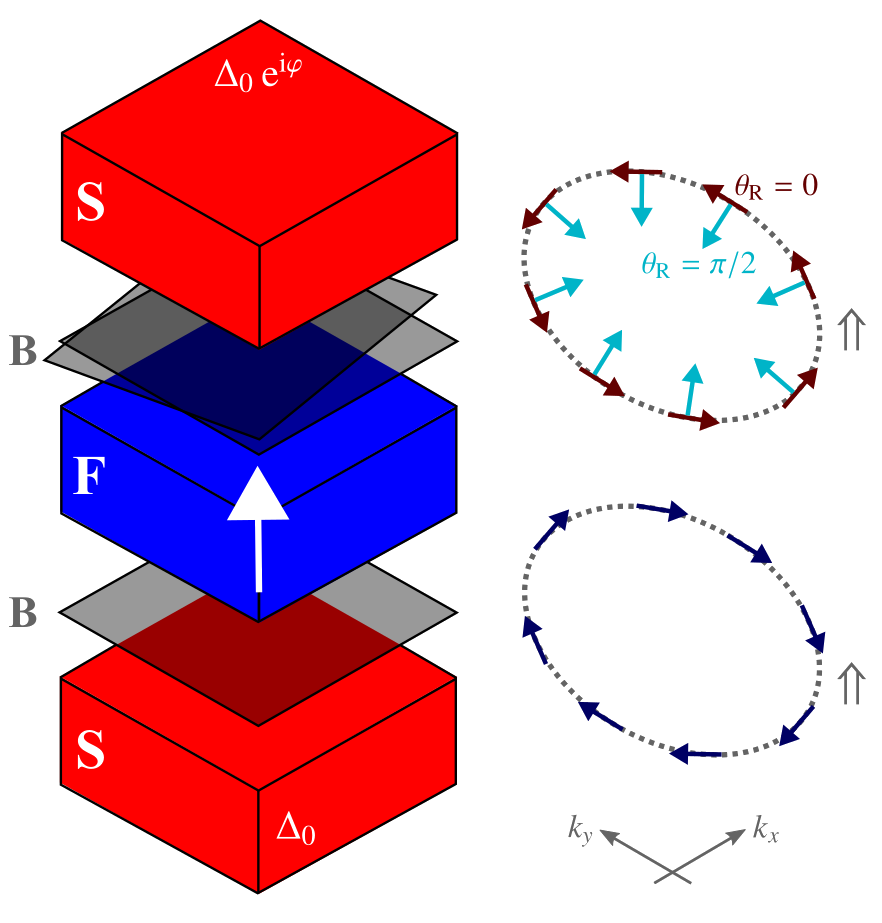
Our article “Unconventional Josephson supercurrent diode effect induced by chiral spin-orbit coupling” published
(April 2025)
Together with colleagues from Sendai, we proposed a new type of supercurrent diode effect – termed unconventional supercurrent diode effect – as a highly sensitive probe of interfacial chiral spin-orbit fields in vertical superconductor/ferromagnet/superconductor Josephson junctions.
Our results have been published in the Letter section of Physical Review B (external link, opens in a new window).
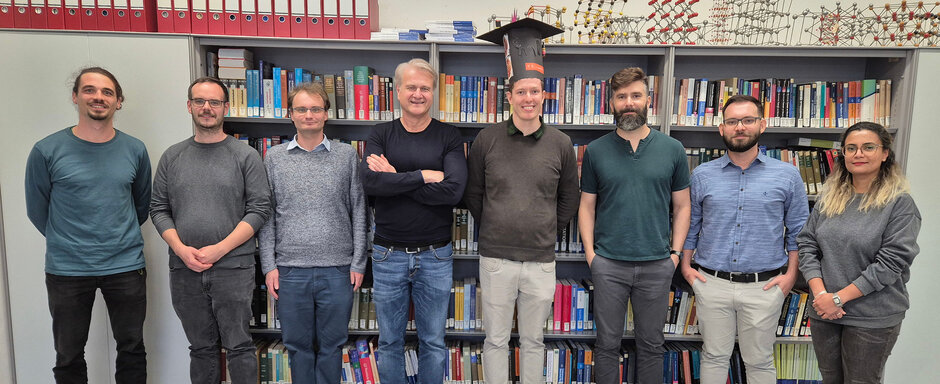
Our group at the DPG Spring Meeting in Regensburg
(March 2025)
Our group has shown a comprehensive presence at the DPG Spring Meeting (external link, opens in a new window) in Regensburg (March 2025) showcasing our work on spin-orbit torques, the unconventional Josephson supercurrent diode effect, altermagnet/superconductor/altermagnet junctions, as well as our first-principles studies of radial Rashba spin-orbit coupling in twisted heterostructures.
The schedule with our group's contributions can be looked up here (external link, opens in a new window).
Our article “Transport Signatures of Radial Rashba Spin-Orbit Coupling at Ferromagnet/Superconductor Interfaces” published
(February 2025)
After predicting that the competition between conventional and chiral spin-orbit fields in Josephson junctions can lead to the unconventional supercurrent diode effect (see below), we explored fundamental ways to disentangle both types of spin-orbit coupling in real materials from transport measurements focusing at single-interface ferromagnet/superconductor junctions and also addressing interference with hypothetic Dresselhaus interactions.
Our article has been published in Physical Review B (external link, opens in a new window).
Showcasing our work at the first Heraeus–Lorentz workshop
(February 2025)
The organizers have invited Dr. Andreas Costa to showcase our theoretical studies on the Josephson supercurrent diode effect at the first Heraeus–Lorentz workshop “Superconductivity in symmetry-broken and low-dimensional systems” in Leiden.
More information on the workshop here (external link, opens in a new window).