

We are a theoretical Condensed Matter group at the University of Regensburg with a research focus on Spin(Elec)tronics phenomena in complex systems at the nanoscale. 

Our current research activities comprise first-principles studies of twisted heterostructures based on van der Waals materials and 2D magnets (twistronics), together with spin and magnetic-exchange proximity effects, as well as spin-orbit torques and magnetization dynamics. Moreover, we explore charge and spin transport properties of superconducting magnetic tunnel junctions (superconducting spintronics) controlled by spin-orbit interactions or inhomogeneous magnetization, including the recently intensively investigated supercurrent diode effect.

Logo of the Spintronics Research Group

Our Group

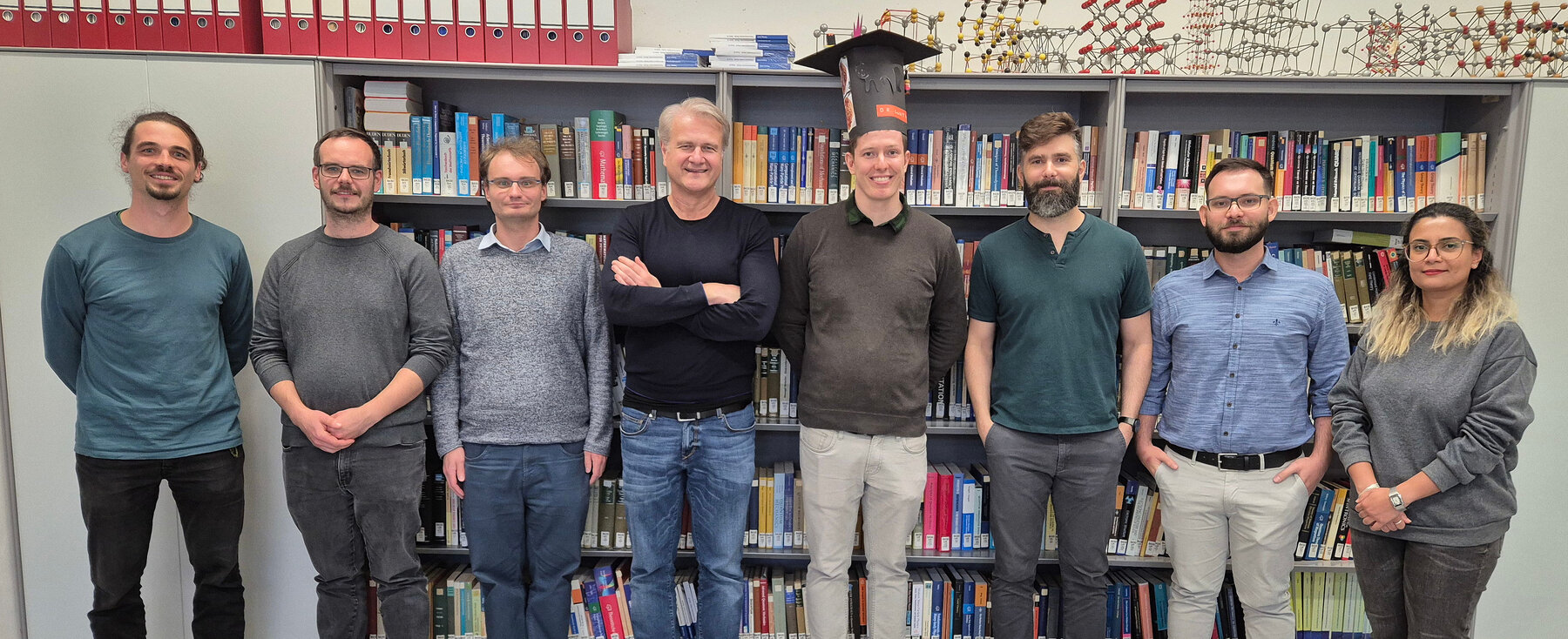
Our group (with Master's student Sareh Bazyar, right) in October 2024

Our Research Highlights

Combining Ab Initio and Machine Learning to Predict Proximity Effects

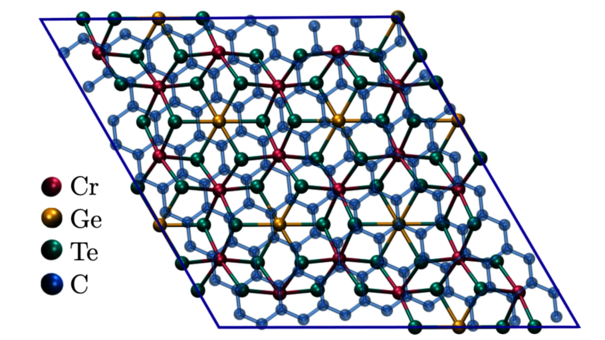
Our preprint demonstrating the potential of combining ab initio data with a machine-learning framework to predict proximity effects in large van der Waals heterostructures is out now!

Graphene/Cr2Ge2Te6 heterostructure

Review on SOC in 2D Materials

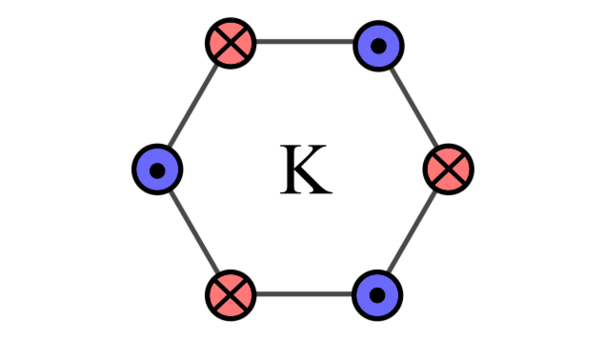
Our technical review on first-principles determination of spin-orbit coupling parameters in two-dimensional materials is out now!

Spin orientation due to Kane-Mele SOC in the Brillouin zone of graphene

Unconventional Josephson Supercurrent Diode Effect

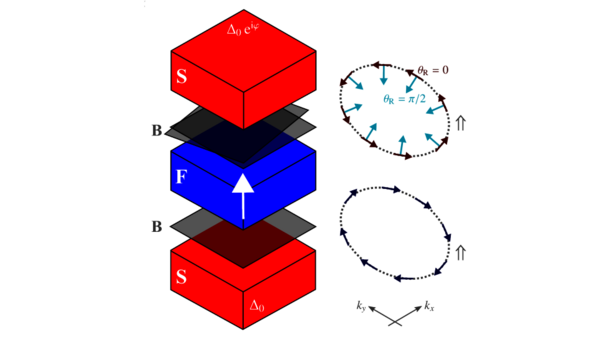
Our theoretical proposal of a Josephson diode effect based on a novel spin-precession mechanism and radial Rashba spin-orbit coupling is out now!

Sketch of a vertical 3D S/F/S Josephson junction with conventional Rashba at one and unconventional (radial) Rashba spin.orbit coupling at the second interface

Interested in more?

Read more research highlights from our group

Radial Rashba spin pattern in proximitized graphene

Our Research Topics

  • Twisted Heterostructures

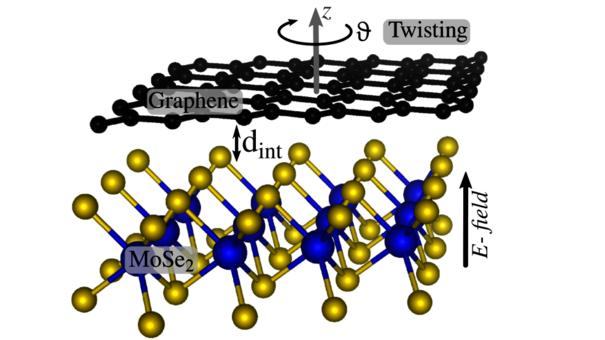
    From first-principles calculations, we study the electronic, spin, optical, and magnetic properties of twisted heterostructures consisting of van der Waals materials and transition-metal dichalcogenides.

    Twisted graphene/MoSe2 heterostructure.
  • Proximity Effects

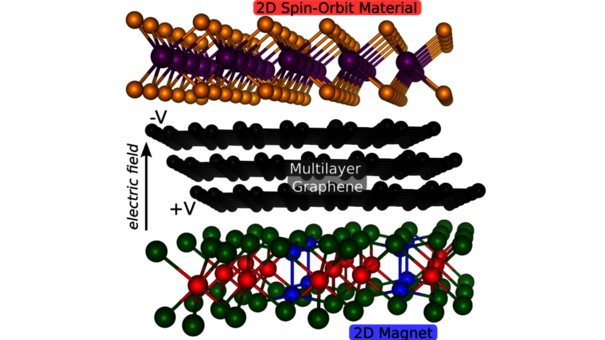
    We explore spin-orbit and exchange coupling proximity effects in stacked heterostructures of two-dimensional materials – together with their tunability through gating – employing ab initio techniques.

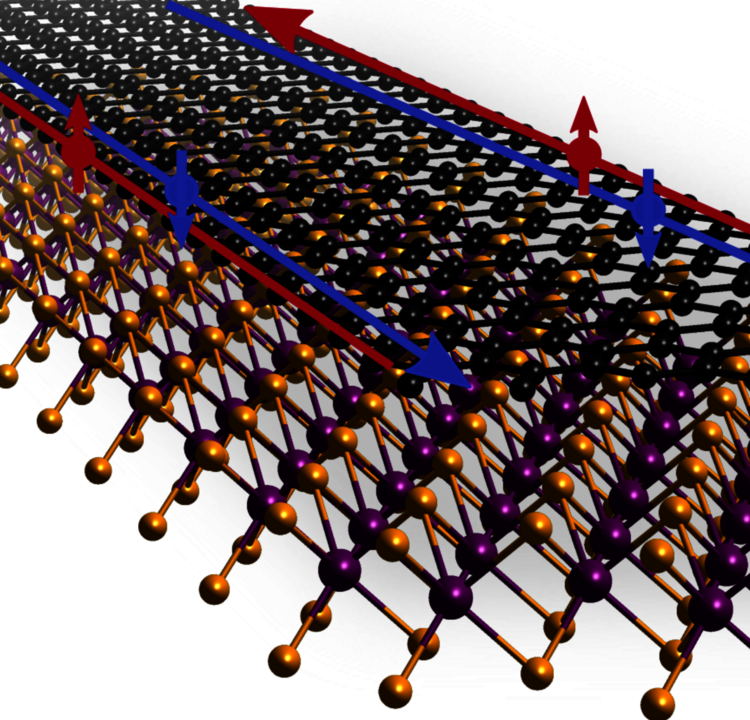
    Stacking of multilayer graphene with 2D spin-orbit and magnetic materials to induce strong proximity exchange.
  • Magnetization Dynamics

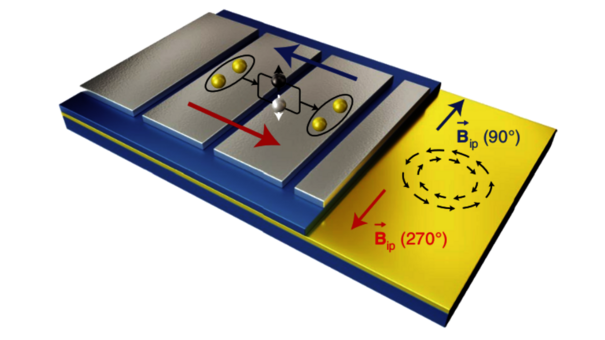
    Applying fully-relativistic first-principles approaches, we describe current-induced spin-orbit torques in van der Waals magnets, which are at the heart of these materials' magnetization dynamics.

  • Superconducting Junctions

    We investigate charge and spin transport phenomena in superconducting magnetic tunnel junctions, including the recently intensively investigated supercurrent diode effect.

    3D illustration of a Josephson-junction array leading to the supercurrent diode effect.

Twisted Heterostructures

From first-principles calculations, we study the electronic, spin, optical, and magnetic properties of twisted heterostructures consisting of van der Waals materials and transition-metal dichalcogenides.

Twisted graphene/MoSe2 heterostructure.

Proximity Effects

We explore spin-orbit and exchange coupling proximity effects in stacked heterostructures of two-dimensional materials – together with their tunability through gating – employing ab initio techniques.

Stacking of multilayer graphene with 2D spin-orbit and magnetic materials to induce strong proximity exchange.

Magnetization Dynamics

Applying fully-relativistic first-principles approaches, we describe current-induced spin-orbit torques in van der Waals magnets, which are at the heart of these materials' magnetization dynamics.

Superconducting Junctions

We investigate charge and spin transport phenomena in superconducting magnetic tunnel junctions, including the recently intensively investigated supercurrent diode effect.

3D illustration of a Josephson-junction array leading to the supercurrent diode effect.
To top