

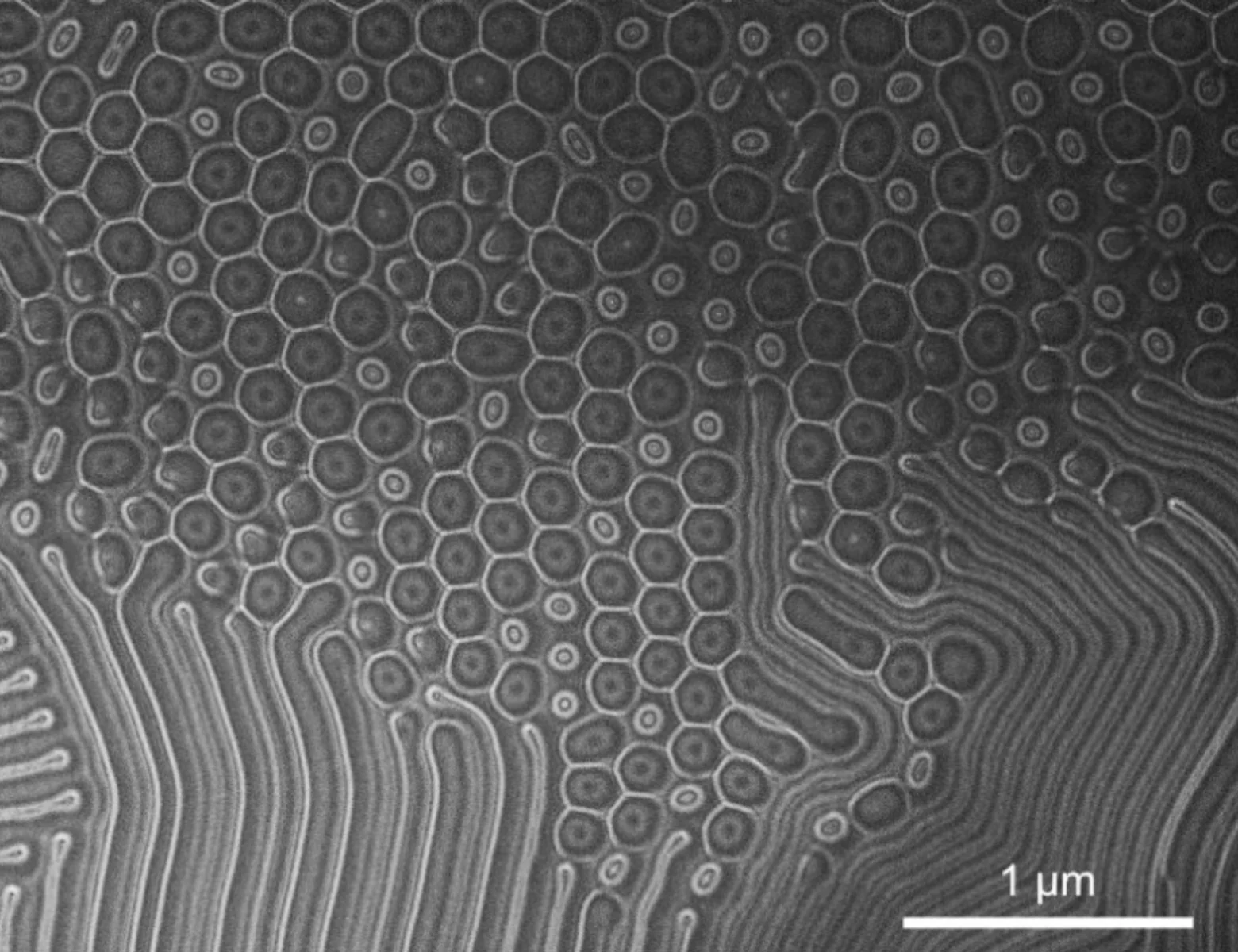
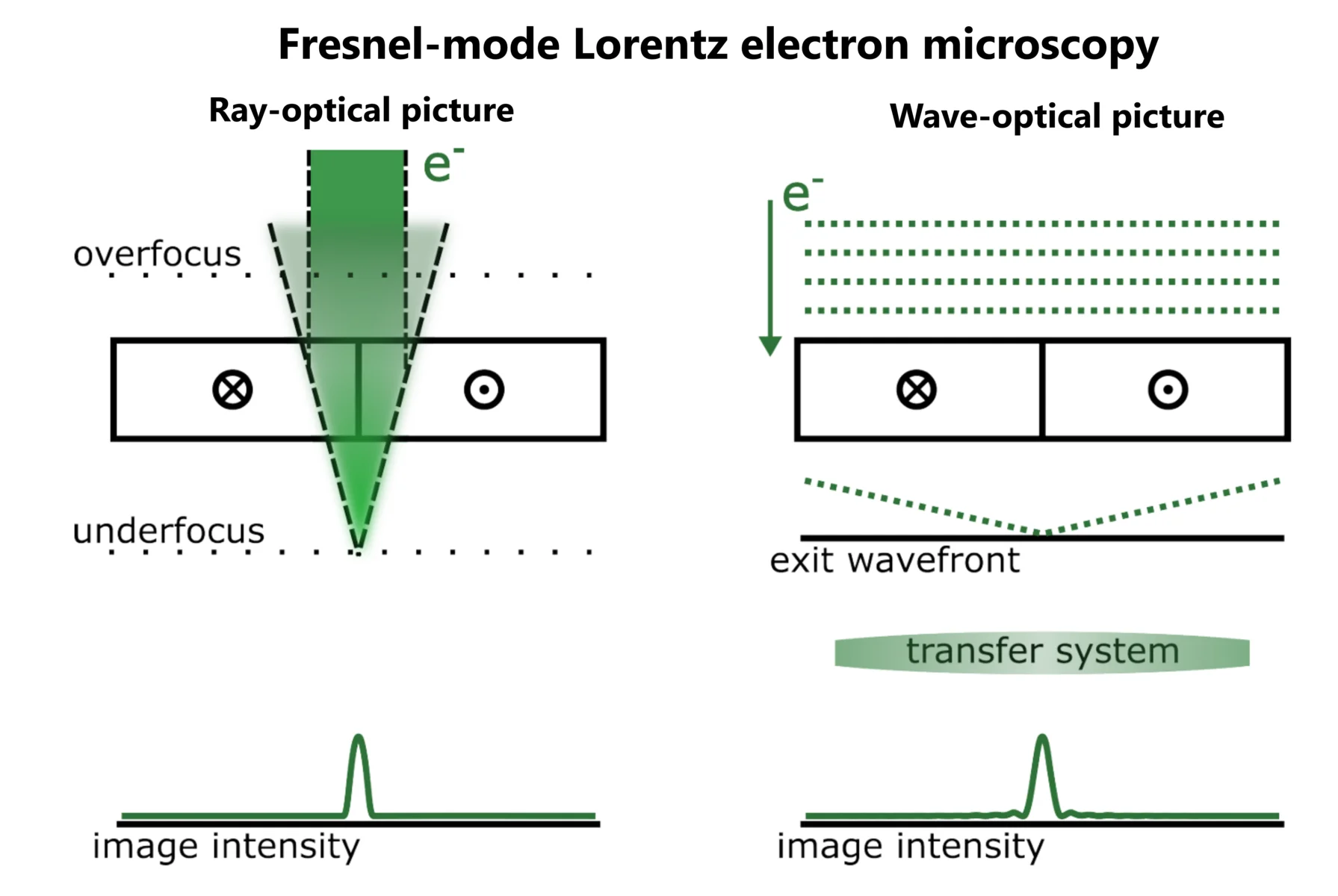
For decades, transmission electron microscopy (TEM) has been used to image magnetic textures through their influence on the phase of the electron wave. This technique, known as Lorentz microscopy, provides direct access to the in-plane magnetization of a material and can be used to study a wide range of magnetic structures, including domain walls, vortices, and topological textures such as skyrmions.
When combined with ultrafast TEM (UTEM), Lorentz microscopy can resolve changes in these structures on picosecond timescales. This makes it possible to investigate ultrafast magnetic phenomena such as domain-wall motion, spin waves, and the dynamics of topological spin textures in ferromagnetic and antiferromagnetic sample systems.