

Ultrafast Nanoscale Dynamics: Instruments and Setups
Instead of using an optical microscope, a transmission electron microscope (TEM) uses electrons to achieve spatial resolutions down to the atomic level. Ultrafast TEM (UTEM) combines this high spatial resolution with ultrafast temporal resolution down to the femtosecond regime by utilizing a pump–probe scheme: Reversible dynamics within the sample are excited by a pump pulse and subsequently probed with an electron pulse generated by pulsed photoemission. Thus, UTEM provides a powerful platform for time-resolved imaging of structural, electronic, and spin degrees of freedom, as well as for investigating electron–light interactions on the nanoscale.
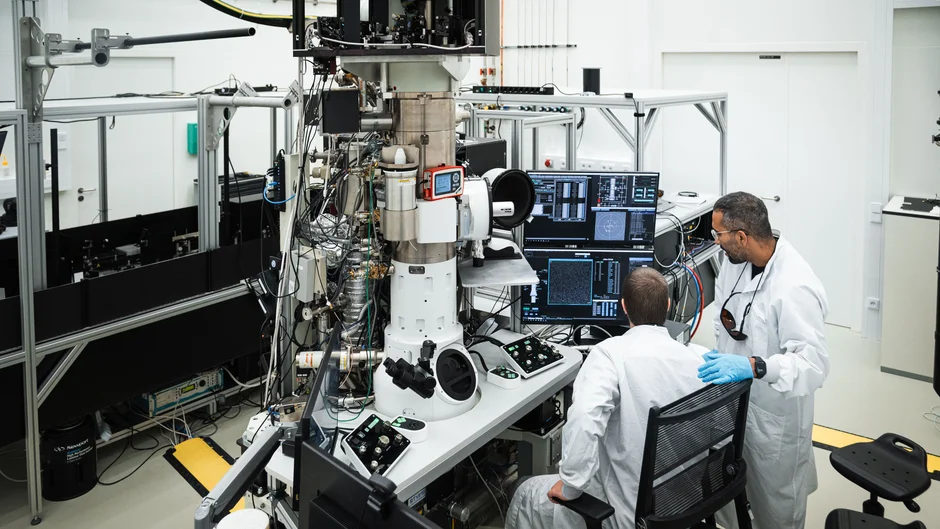
Ultrafast Transmission Electron Microscopy
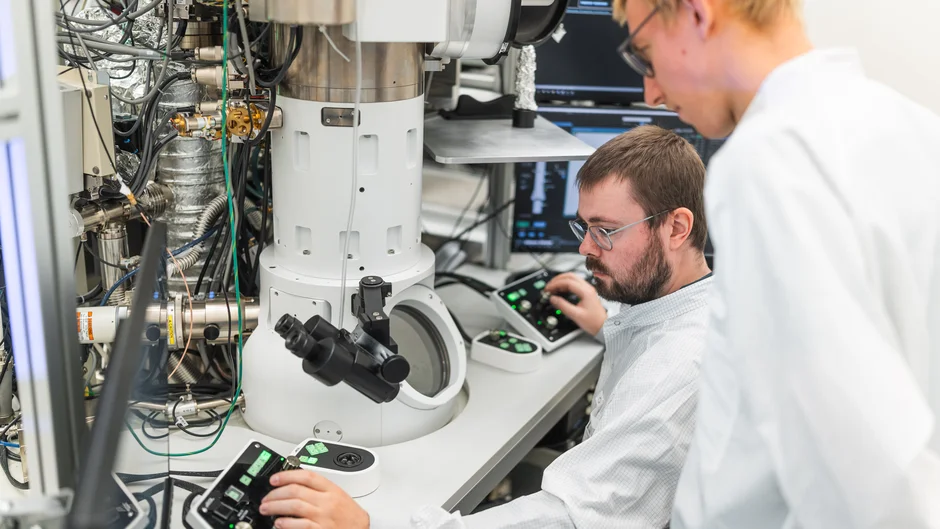
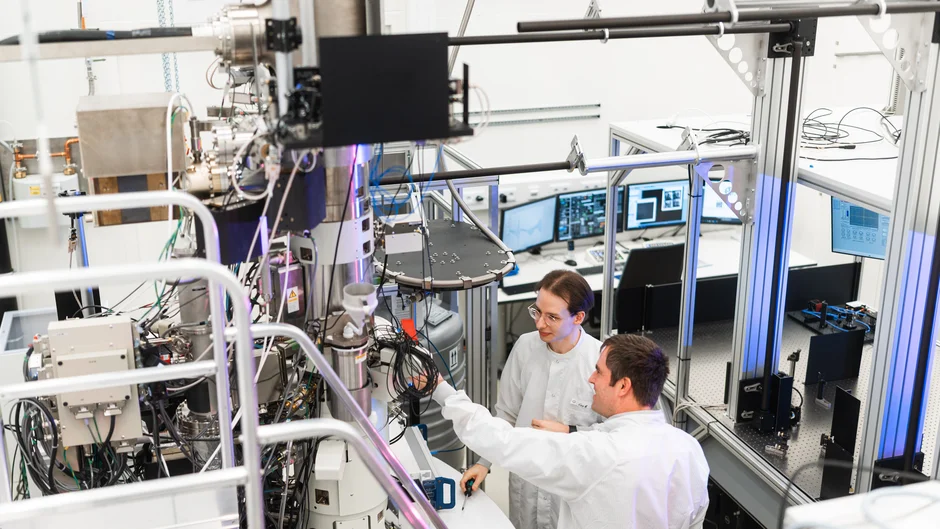
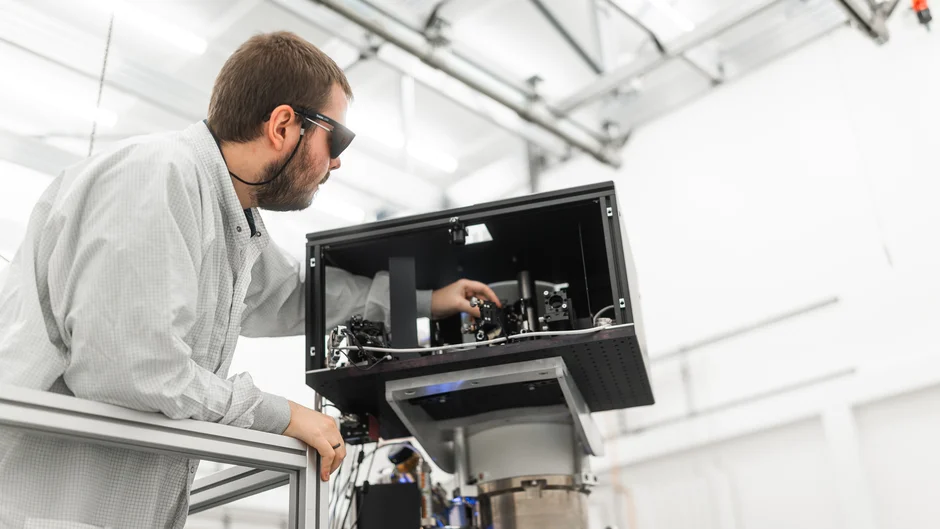
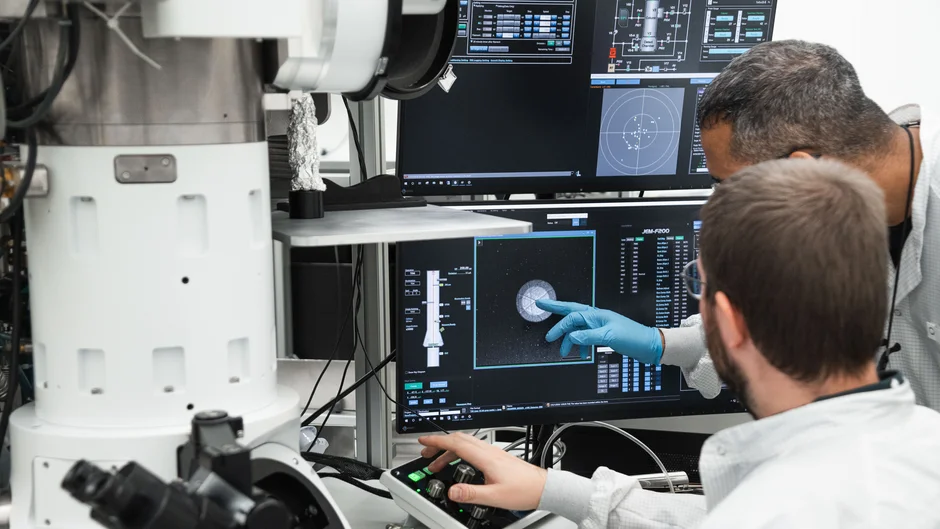
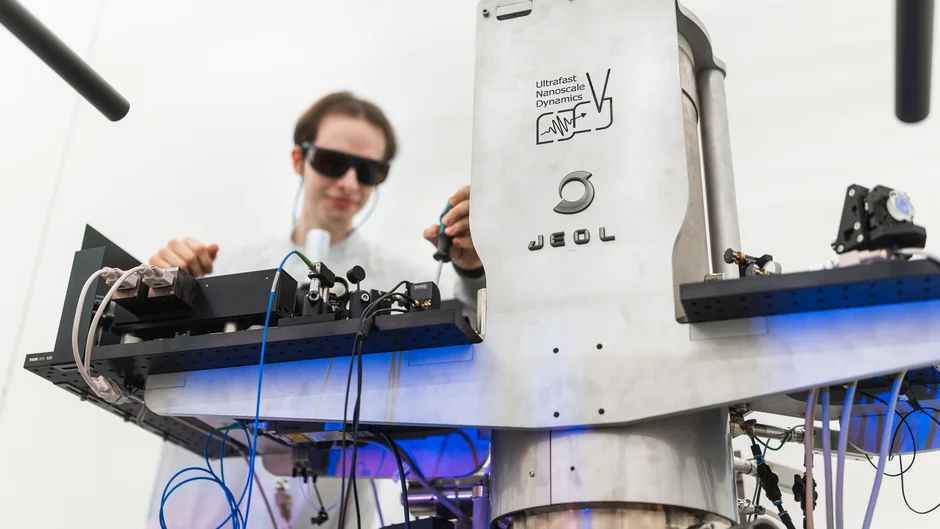
There are two UTEMs in our research group: the JEOL F200 and the NeoArm. Both set-ups combine a conventional TEM with a femtosecond laser system. Thanks to their modified electron sources, the photoelectrons required for ultrafast experiments can be generated. To enable real-space imaging, diffraction experiments and energy-resolved measurements, both UTEMs are equipped with several types of cameras and an energy filter. The NeoArm is also fitted with a state-of-the-art aberration corrector, enabling sub-atomic electron foci. Given the specific requirements of many experiments, we have extensive experience in directly modifying the setup or the control of individual components to achieve the ideal measurement conditions.
Specialised Electron Optical Techniques
We employ a variety of electron-optical techniques, ranging from conventional TEM to UTEM, covering different time scales and combining different measurement techniques.
One area of research is the investigation of particles in liquids using a specialized liquid-cell holder. This enables us to map the movement and collisions of particles, as well as the structures that arise when particles become trapped in the small tubes of, for example, gold nanoparticles. Even the investigation of biological samples is possible.
Lorentz microscopy allows us to investigate magnetic textures and their dynamics. Excitation with laser pulses or radio-frequency currents and fields modifies the magnetic texture, giving rise to, for example, the creation and destruction of topological structures such as skyrmions and antiskyrmions, as well as oscillatory magnetic dynamics.
Another area of research focuses on nonlinear dynamics using a variety of diffraction methods in combination with laser excitation. The displacement of, for example, a simple resonator made from a thin silicon membrane can give rise to complex mode shapes and other exciting behaviors.
In experiments involving emitted photoelectrons, we combine experimental measurements, numerical simulations, and analytical calculations to study and understand their behavior in detail. A better understanding of the emission process could potentially enable the targeted modification and adjustment of the electron beam properties.
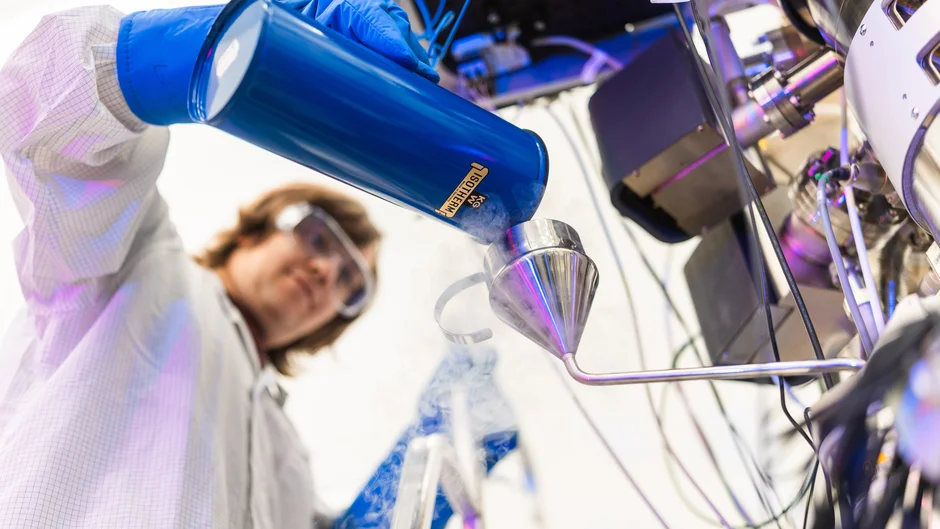
Using a specialized liquid helium TEM holder, we can cool samples to temperatures of just a few kelvin. This allows us to combine low-temperature conditions with various electron-optical and ultrafast measurement techniques to investigate temperature-dependent phenomena, such as phase transitions in different material systems.
Ultrafast Optics
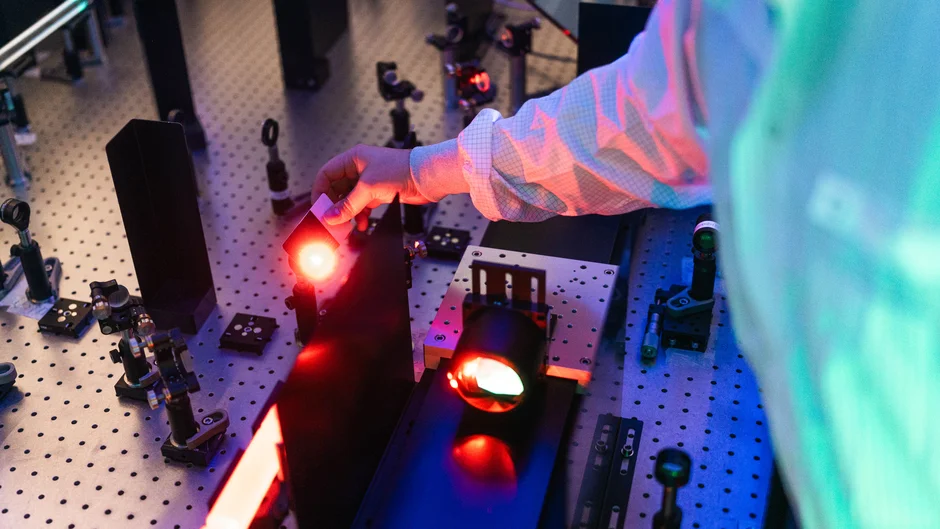
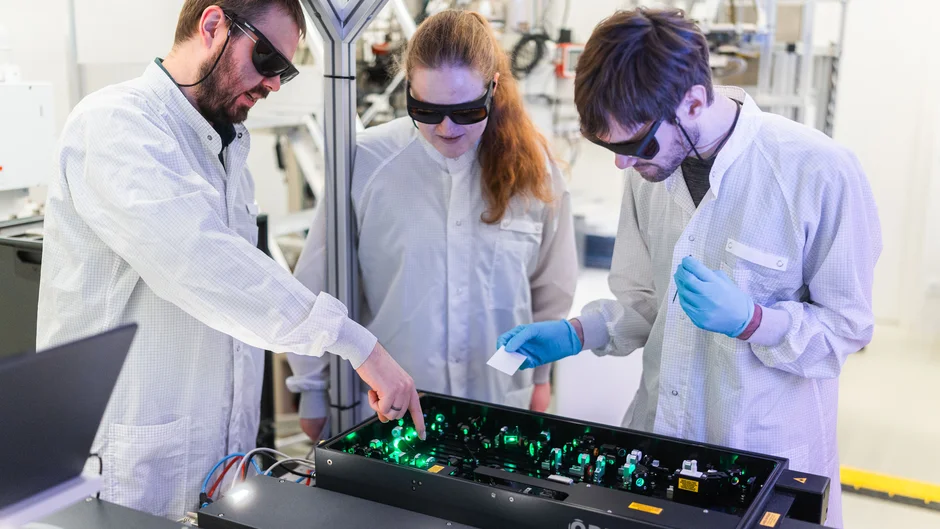
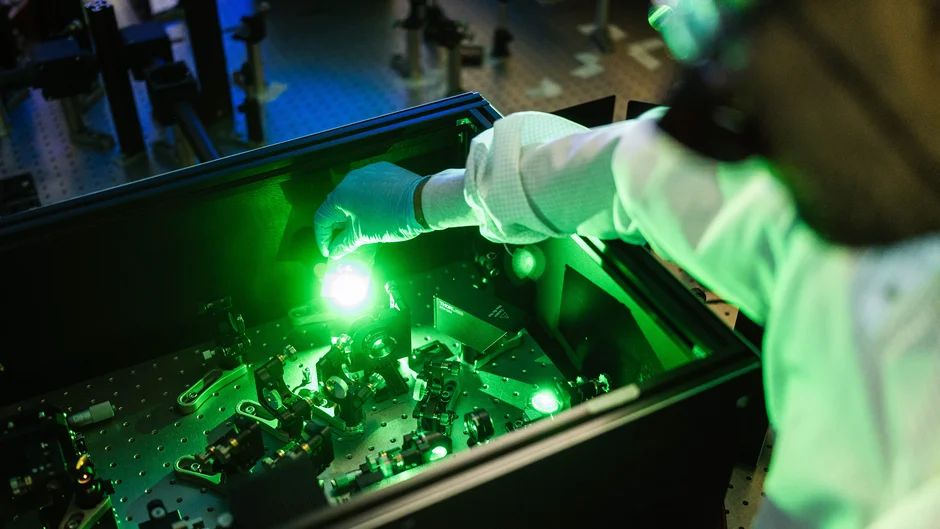
In addition to electron microscopy, optics plays an important role in many of our experiments. For example, at the F200, we use a self-built non-collinear optical parametric amplifier (NOPA), which provides broadband excitation pulses and enables the detection of transient field dynamics and absorption behaviour.
The NeoArm is also equipped with a second laser source, which is used to investigate the response of materials to radio-frequency currents and fields.
A separate, self-built setup is used for terahertz time-domain emission microscopy (THz-TDEM). A femtosecond laser pulse is focused onto the sample under investigation and scanned across its surface to map the emitted THz response using a ZnTe sensing crystal. This provides time-resolved information about the emitted THz field and allows us, for example, to gain insight into the electronic structure of different materials.
Another optical setup is a self-built Laser Doppler Vibrometer (LDV), which enables us to track the vibration amplitude and phase of nanomechanical resonators with high fidelity. To map the response of a resonator, it is placed inside a custom-built vacuum chamber, and the laser used to excite the mechanical motion is scanned across the resonator. The LDV provides a comparatively simple way to characterise vibrational dynamics and is therefore ideal for the pre-characterisation of TEM samples.
Materials & Sample Preparation
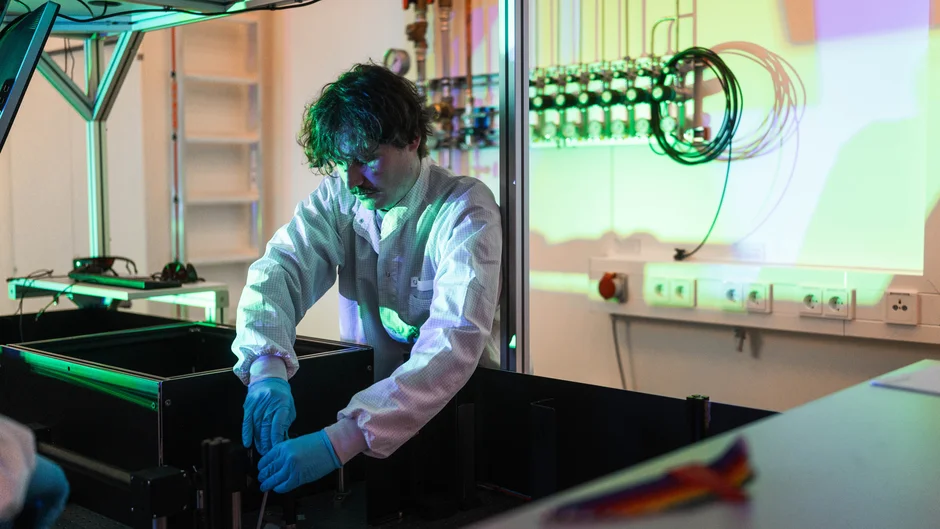
The laboratory specializes in the synthesis of 2D materials for THz emitters, spintronics, and UTEM applications. A three-zone gradient furnace is used for crystal growth and purification via chemical and physical vapor-phase processes. Each heating zone can be controlled independently and reaches temperatures of up to 1200 °C. The system is operated through dedicated software, allowing precise control of temperature profiles and process conditions.