

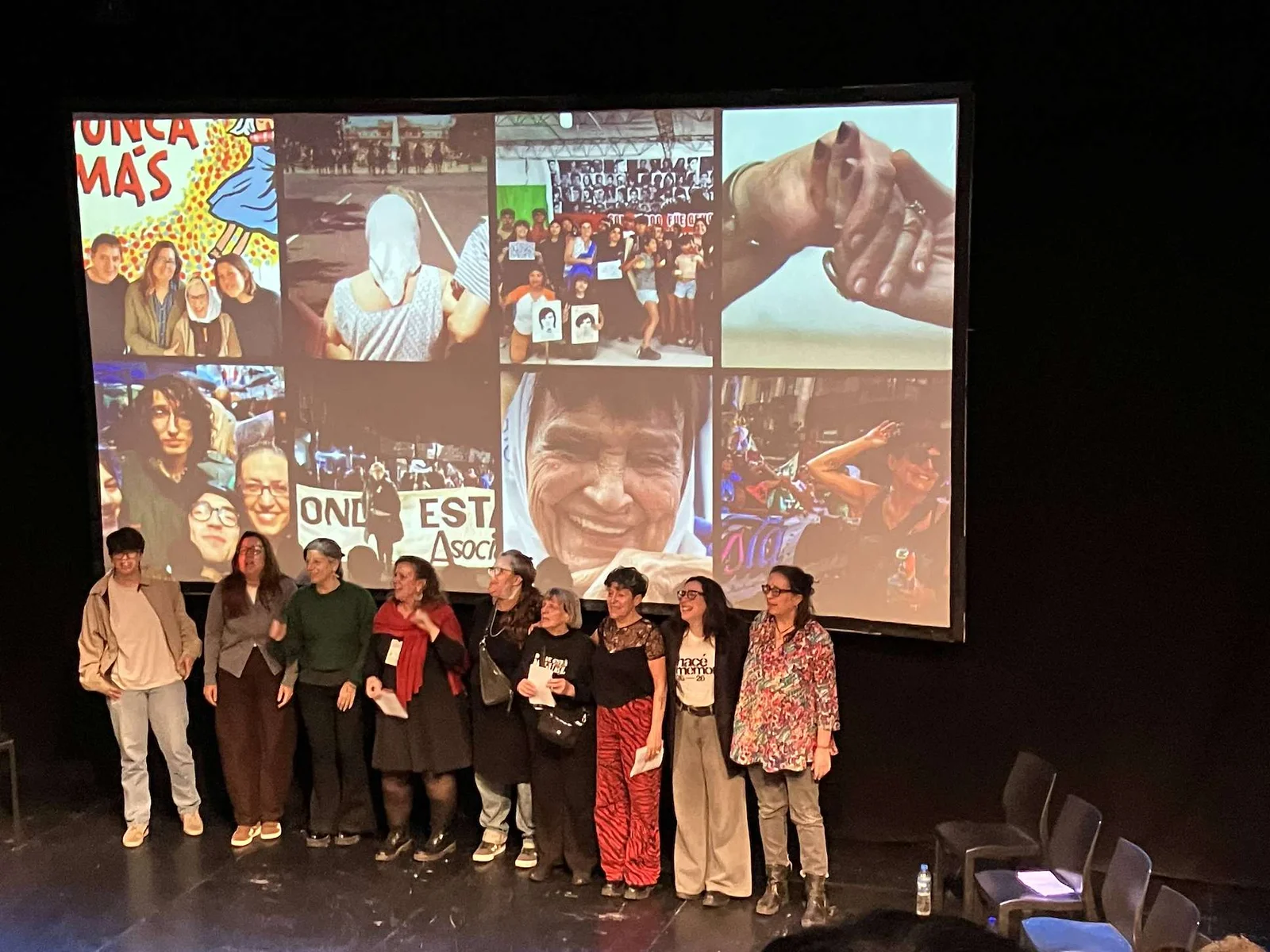
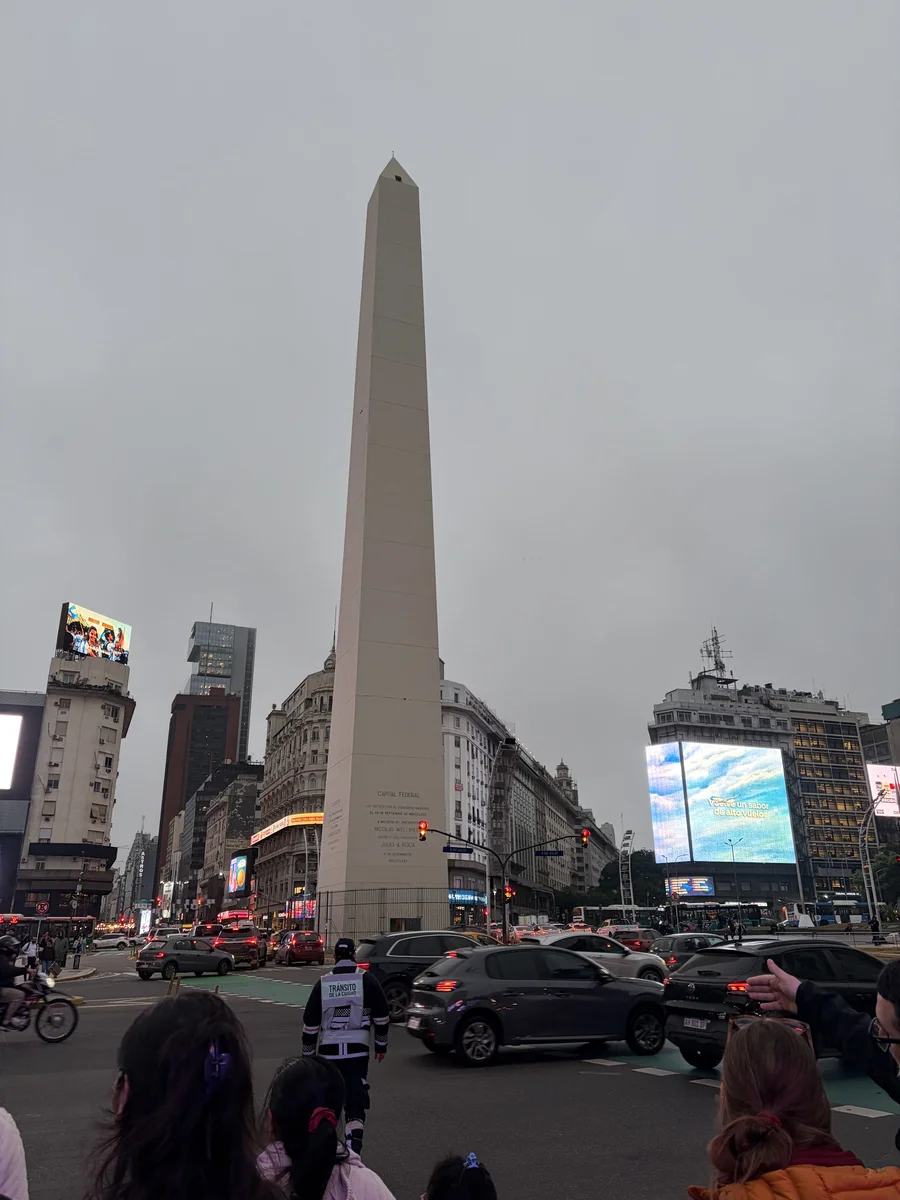
Under the theme “Memory and Democracy”, the conference was held from 28 July to 1 August at the Universidad Torcuato Di Tella. It brought together researchers, activists and artists from around the world working on memory as a political, social and cultural phenomenon. The conference took place in the year of the 50th anniversary of the 1976 coup that installed Argentina’s last military dictatorship, an anniversary that gave its debates particular resonance in the current political landscape of Latin America.
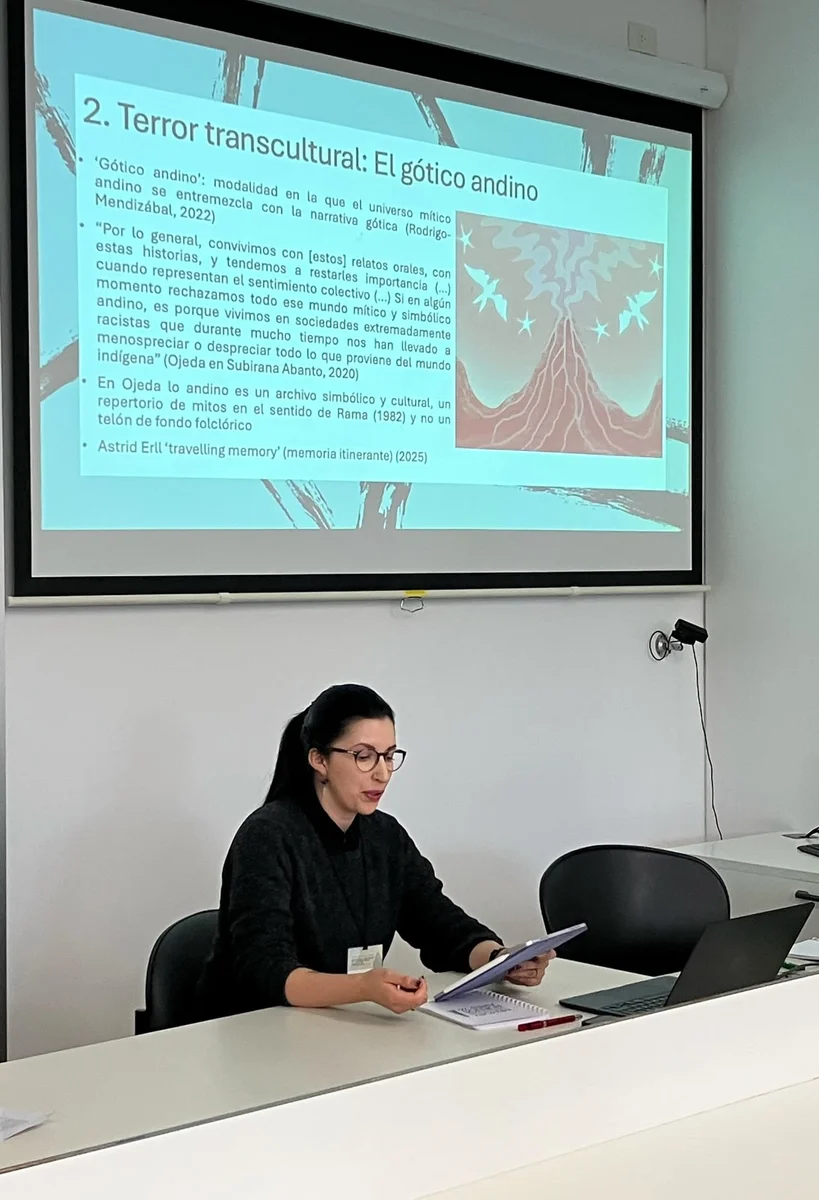
On 30 July, Anne Brüske and Bárbara Aranda presented their research in the panel “Aesthetics of Horror in Latin America and Eastern Europe”. Anne Brüske spoke on Apuntes para un viaje a Alemania (2016) by Carlos Aguilera and Aldito Menéndez. This autographic comic uses horror, gore and humor to set the memory of Cuban and East German state socialism within the wider history of 20th-century totalitarianism. Bárbara Aranda, whose participation was supported by the DAAD's Kongressreisen program, presented her paper on Mónica Ojeda's novel Chamanes eléctricos en la fiesta del sol (2024). She examined how Andean Gothic and weird fiction work as mnemonic strategies in the face of narco-violence and colonial legacies in contemporary Ecuador. The panel was completed by Satarupa Nandi (SRM University AP, India), who read Malik Sajad’s graphic novel Munnu: A Boy from Kashmir (2015) as graphic testimony that counters authoritarian narratives. Together, the three papers explored how horror functions not only as an aesthetic category but also as a political and mnemonic tool. Read side by side, they made the case for a transregional approach to horror narratives, one that brings shared concerns into view across different regions, such as political transitions, migration and unstable democracies.
Beyond their own panel, the two attended a range of panels and lectures. Bárbara Aranda, who is involved in the work of the MSA’s Early Career Initiative (ECA), also took part in the ECA assembly as a guest co-moderator. Among the sessions they attended were the transregional panel “The Memory of Democracy under Threat: Lessons from Latin America, South Africa and Eastern Europe”, with Paweł Machcewicz (Polish Academy of Sciences), Dubravka Stojanović (University of Belgrade), Mariana Tello Weiss (CONICET) and Heike Becker (University of the Western Cape), chaired by Aline Sierp (Maastricht University). They also attended the roundtable “Memory and the Digital: Politics and Epistemologies” which explored how digital infrastructures and AI are reshaping practices of remembrance, with particular attention to inequalities between the Global North and South. Its speakers were Jordana Blejmar (University of Liverpool), Motti Neiger (Bar-Ilan University), Silvana Mandolessi (KU Leuven) and Victoria Walden (University of Sussex), with Johanna Vollmeyer (Universidad Complutense de Madrid) as chair.
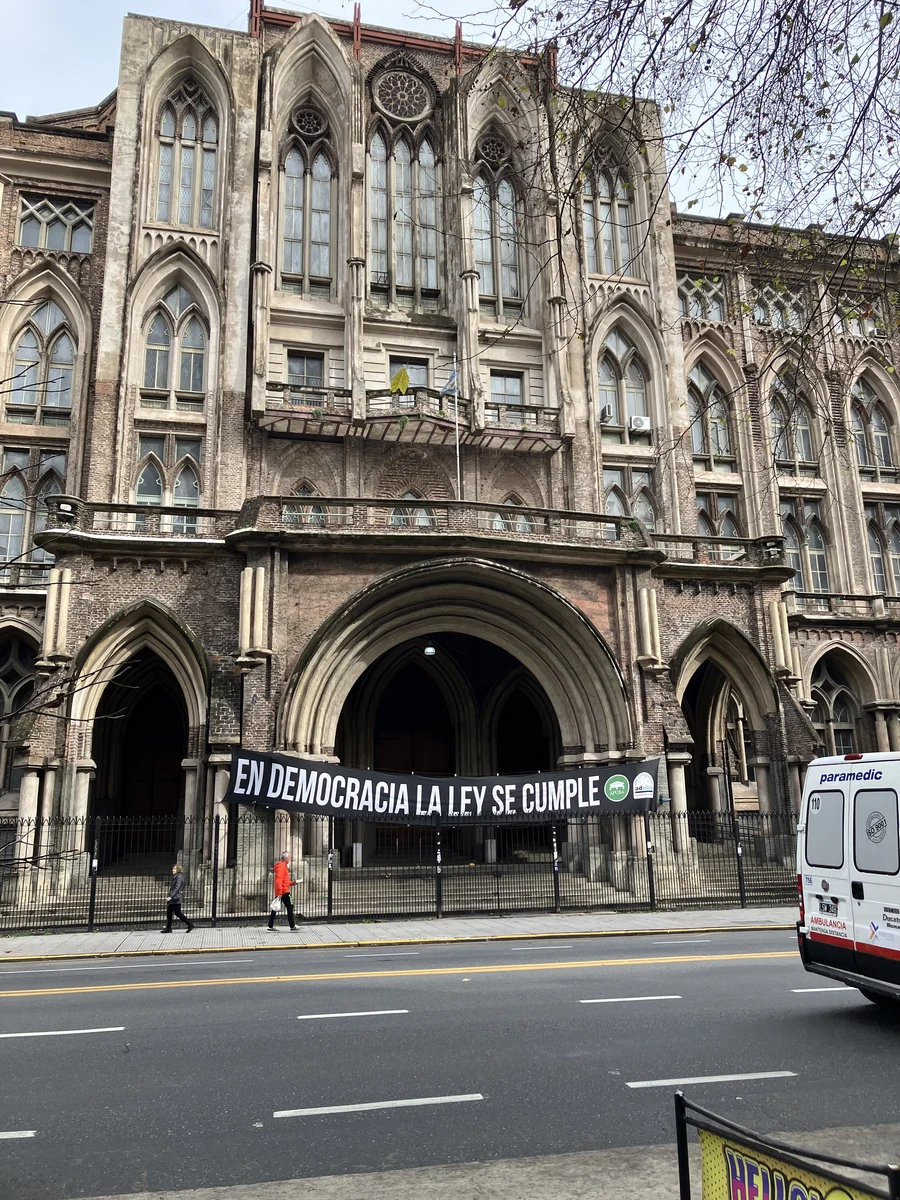
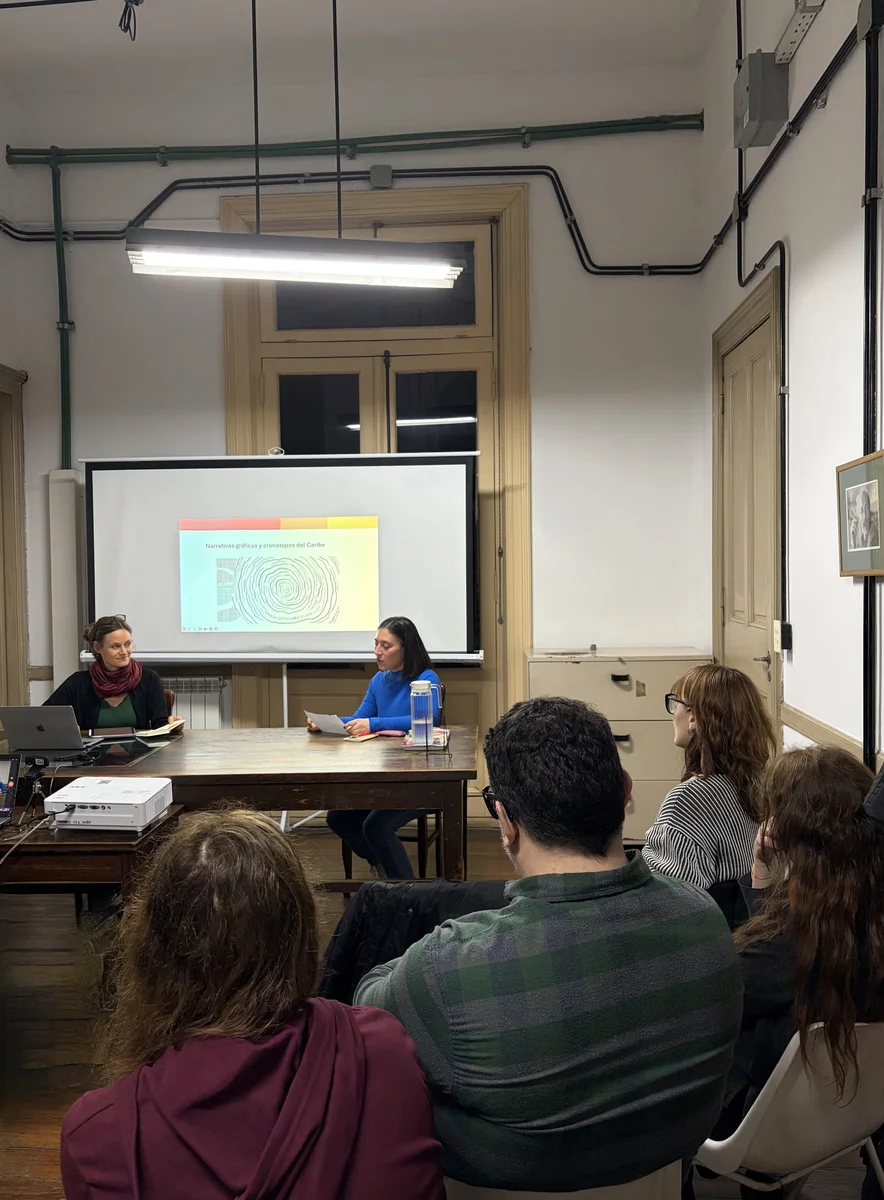
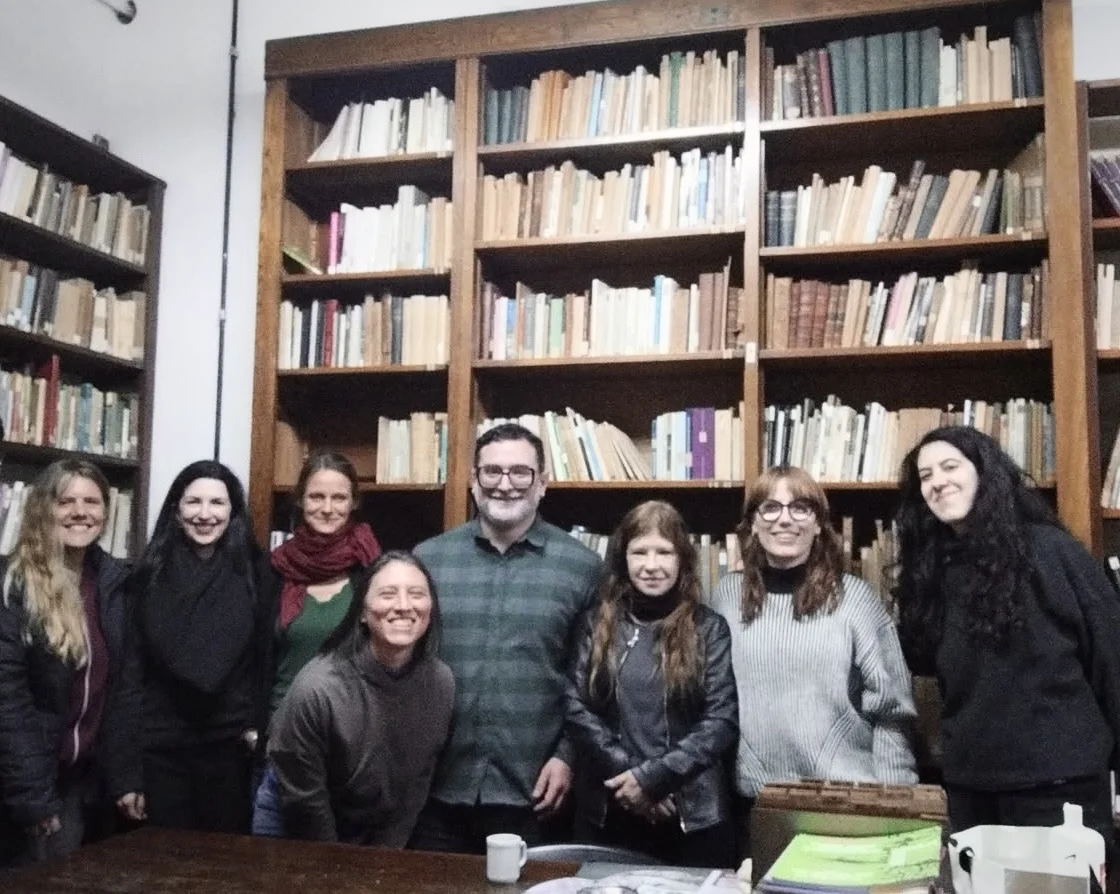
Alongside the conference, on Tuesday, 28 July, Anne Brüske gave a lecture titled “Narrativas gráficas y ecocronotopos del Caribe” (Graphic Narratives and Caribbean Eco-chronotopes) at the Universidad de Buenos Aires. The lecture was organized by the Grupo de Estudios Caribeños of the Instituto de Literatura Hispanoamericana (ILH) and moderated by Irina Garbatzky (Universidad Nacional de Rosario), who was a visiting researcher at DIMAS and the Leibniz Science Campus “Europa and America in the Modern World” in the 2025/26 winter semester. On this occasion, Anne Brüske and Bárbara Aranda were also able to exchange ideas with colleagues such as Francisco Aiello (Universidad Nacional de Mar del Plata), Guadalupe Silva (ILH-UBA) and Ana Eichenbronner (UBA).
Click on this link to watch a YouTube video of Prof. Anne Brüske’s lecture. (external link, opens in a new window)
Contacts
dimas@ur.de