

Computational Electronic Structure Theory

    
Many phenomena in physics, chemistry and biology are caused by the motion of electrons and nuclei on the ultrafast time scale (~ 1 femtosecond = 10-15 s). We study ultrafast phenomena by analytical models and numerical simulations, our main focus is on exploring the motion of electronic excitations in condensed matter. In parallel, we develop efficient electronic-structure algorithms for electron-electron interactions to support our studies on ultrafast dynamics.


Ultrafast Electron Dynamics

We study nonequilibrium electron dynamics in solids driven by ultrashort laser pulses. For our studies we use analytical models and numerical simulations based on quantum mechanics.

Electronic Structure Methods

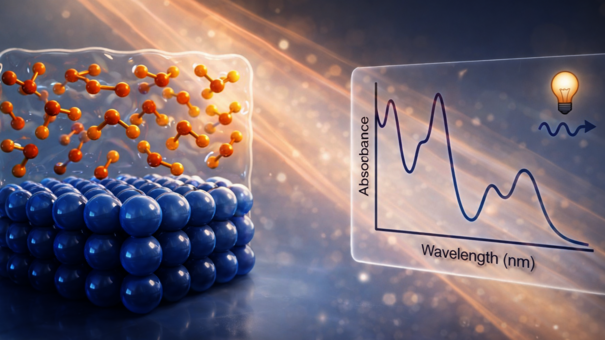
We design algorithms that make GW and Bethe-Salpeter efficient for the study of band structures and optical absorption spectra of crystals, nanostructures and complex interfaces.

News and Highlights

A guide to the capabilities of the open-source CP2K program (external link, opens in a new window)

The CP2K community provides a user-oriented introduction of quantum-mechanical simulations with CP2K, including our recent developments for computing band structures and optical properties of molecules and materials. Many thanks to Thomas Kühne (CASUS & TU Dresden) for coordinating this effort.


Journal of Physical Chemistry B 130, 1237 (2026) (external link, opens in a new window) (selected as Editor's Choice)

Probe of Broken Time-Reversal Symmetry (TRS) with Third Harmonics (external link, opens in a new window)

We use third-harmonic Faraday rotation to probe whether TRS is preserved or broken in a crystal: zero rotation shows preserved TRS, non-zero rotation broken TRS (measurements by the group of Giancarlo Soavi, Uni Jena). Our analytical model reveals the microscopic mechanism causing Faraday rotation and shows its dependence on material parameters.


Nature Photonics 20, 186 (2026) (external link, opens in a new window)

Band structure calculations on a laptop (external link, opens in a new window)

The GW approximation is the state-of-the-art Green’s-function method for calculating band structures beyond density-functional theory. We developed an atomic-orbital GW algorithm that enables band structure calculations of 2D crystals on a laptop, available open-source in CP2K and orders of magnitude faster than conventional plane-wave GW algorithms.


Physical Review B 112, 205130 (2025) (external link, opens in a new window) (selected as Editor's Suggestion)

To top