

Klaus Unterburger, Gefahren, die der Kirche drohen. Eine Denkschrift des Jesuiten Augustinus Bea aus dem Jahr 1926 über den deutschen Katholizismus
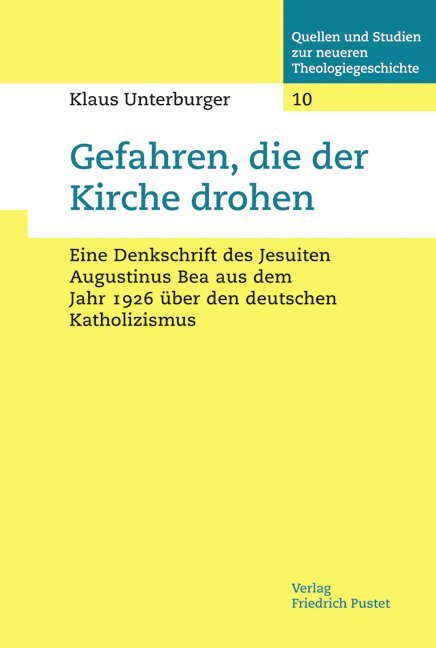
Cardinal Bea was, during the Second Vatican Council, one of the most influential protagonists of the progressive conciliar majority; as President of the Secretariat for Unity, he was regarded by many as the guarantor of the legacy of Pope John XXIII. The Jesuit underwent a remarkable development, as demonstrated by a memorandum on German Catholicism from 1926, drafted in coordination with Nuncio Eugenio Pacelli, which is made accessible here for the first time following the opening of the Vatican Archives for this period. It apparently sets out the fundamental assumptions that shaped Vatican policy toward Germany before 1933.
Johann Kirchinger, Julia Antony, Christina Ringer, Tanja Schuhbauer, Sophie Weigert, Die Kirchen der Pfarrei Oberschneiding
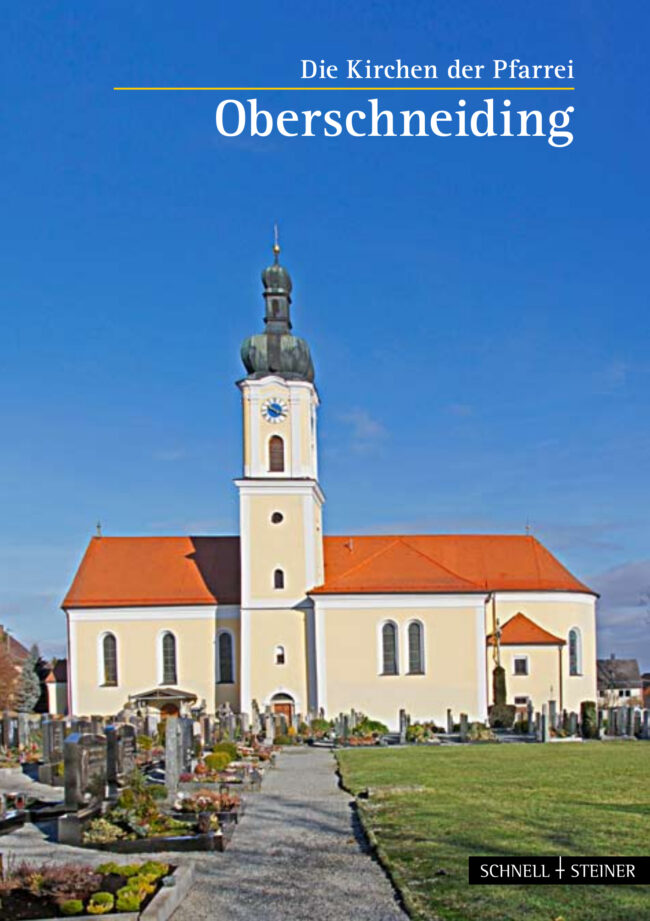
The texts of this church guide were written for a seminar taught in the winter semester 2010/2011 at the Chair of Medieval and Modern Church History in the Faculty of Catholic Theology at the University of Regensburg.
Local and parish history – "Blessing priest" Franz Sales Handwercher – Parish Church of the Assumption of Mary, Oberschneiding – Branch Church of St. Emmeram and Kassian, Großenpinning – Wayside Chapel and Castle Chapel of Our Lady of Sorrows in Hienhart – Branch Church of St. Sebastian in Münchshöfen – Branch Church of St. Peter in Niederschneiding – Chapel of St. Joseph in Taiding – Branch Church of St. Aegidius in Wolferkofen
Johann Kirchinger - Richard Stadler, Die Arbeit, das Sach und der Tod. Dörfliche Lebenswelten vor dem Ersten Weltkrieg. Historische Fotografien 1908 bis 1914
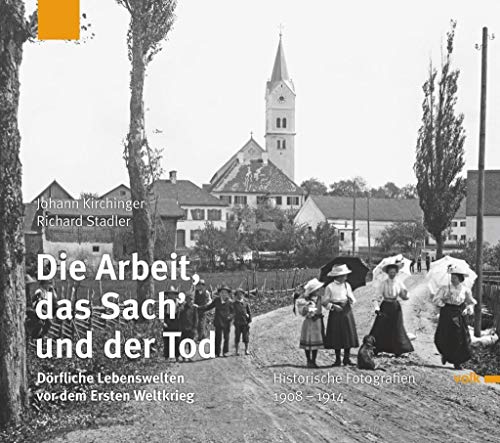
The photographic plate archive of Ferdinand Pöschl (1877–1914), a photographer active in Lower Bavaria, discovered in an attic, is a small sensation. For the first time, his photographs, taken in the years immediately before the First World War, are now being published.
With skilled craftsmanship and technical expertise, Ferdinand Pöschl documented the village life of his time. Wealthy farmers and smallholders, the parish priest and the schoolteacher, the barber-surgeon's wife and the forester's daughters populate his images from the villages of Hofkirchen and Haimelkofen.
They show the village carnival as well as the beer strike of 1910, laid-out corpses alongside wedding couples. The photographs depict a village society shaped by labor, the overwhelming importance of property, and the vicissitudes of life during the late Prinzregent era. Complemented by in-depth texts, the carefully processed historical photographs offer a glimpse into a long-vanished world.
Klaus Unterburger, Vom Lehramt der Theologen zum Lehramt der Päpste?
Conflicts between theology and the magisterium appear to be part of contemporary church life. A look at history can help us understand the emergence and development of their mutual claims. In the 19th century, a fundamental reorientation of the papal self-understanding took place. On this basis, the Church in Rome regarded it as a fundamental task of ecclesiastical policy to integrate university theology into this conception—something comprehensively achieved during the pontificate of Pope Pius XI with the Apostolic Constitution Deus scientiarum Dominus (1931). For the first time, it is now possible to trace in detail the genesis of a key papal document on the basis of newly accessible Vatican sources. The aim was to standardize theology, philosophy, and canon law at ecclesiastical university faculties worldwide, to raise the academic level following the model of the German-speaking countries, and above all to establish a Roman neo-scholastic orientation. These objectives continue to have effect, in modified form, in the successor document Sapientia christiana (1979), which remains in force to this day. The contributions of the commission members also shed light on the theological development of central figures in the church and theological history of the 20th century, such as the protagonists of the Second Vatican Council, Ernesto Ruffini and Augustin Bea.
Johann Kirchinger, Der Bauernrebell. Das Leben des streitbaren Landtagsabgeordneten Franz Wieland (1850 - 1901), Ökonom in Hierlbach, Post Straubing
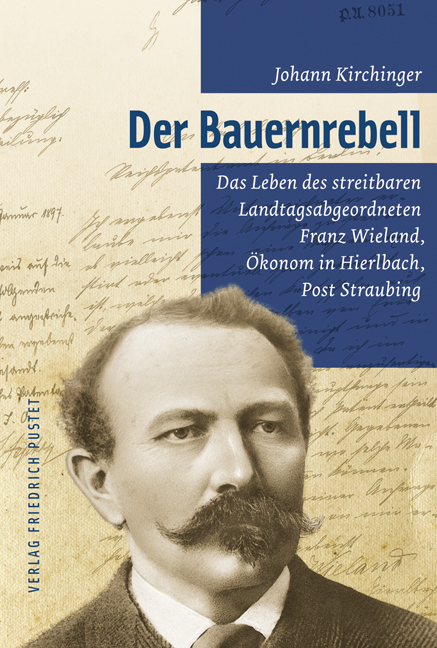
He was radical and uncompromising. With charisma and demagoguery, the wealthy large-scale farmer Franz Wieland (1850–1901) from the Gäuboden village of Hierlbach rose to the head of the young Farmers' League movement at the end of the 19th century, with the aim of freeing agriculture from the political paternalism of traditional authorities. This is why the officials feared him, the clergy preached against him, and the nobility held him in contempt. But the farmers revered him. The unexpected discovery of his written estate allows, for the first time, deep insights into the motives and mindset of this controversial politician. The reader is presented with the panorama of a political agrarian history, populated by rebellious farmers, ranting priests, and law-bending bureaucrats — an exciting journey back in time to those corners of the Prinzregent era where it was not cultured and refined, but full of rough and robust energy.
Karl Hausberger, Reichskirche – Staatskirche – "Papstkirche"
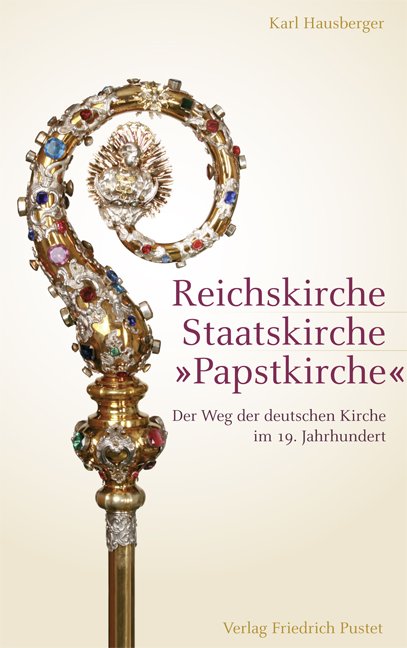
At the beginning of the 19th century, the once-powerful Imperial Church stood amid ruins in the wake of the storm of secularization that had swept over its churches and monasteries—and with them, large parts of the population. The loss of old property and lordship rights demanded a fundamental reorganization of the church system. This took place amid sometimes fierce disputes with the various newly formed German states—as illustrated by selected examples from Bavaria, Prussia, the Kingdom of Hanover, and the south-western German states.
Ultimately, a salutary reorientation took hold of the Church: a broadly based religious renewal that secured growing influence for the papacy, particularly in the second half of the century.
Johann Kirchinger - Ernst Schütz (Ed.), Georg Ratzinger (1844-1899)
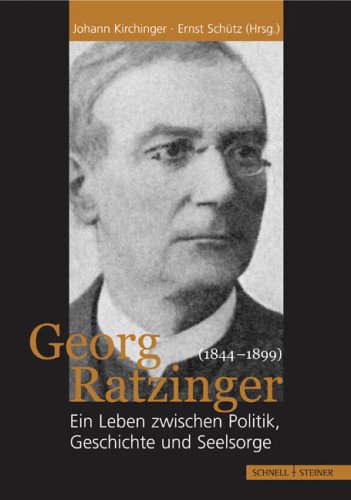
Dr. Georg Ratzinger (1844–1899) was one of the most unconventional and colorful personalities that Bavaria produced in the second half of the 19th century. The ultramontane priest engaged extensively, both in early Catholic journalism and in the state and imperial parliaments, with the ecclesiastical-political conflicts of the Kulturkampf and the challenges of the Social Question. With his widely acclaimed major work "Die Volkswirtschaft in ihren sittlichen Grundlagen" ("The National Economy in its Moral Foundations"), he is regarded as one of the most important German-language authors of the emerging Catholic social ethics. As a student of Ignaz von Döllinger, he produced numerous studies in church history. Whether active in politics, scholarship, or journalism, Georg Ratzinger always understood himself as a priest and pastor. The twelve contributions from the fields of historical studies, Catholic theology, and economics assembled in this volume offer, for the first time, a comprehensive and critical appreciation of Ratzinger's life's work.