

Professor Emeritus Dr Dr h.c.
Ekkehard Schumann
Professor Schumann was the former holder of the Chair of Procedural Law and Private Law; he passed away on 23 July 2024 at the age of 92. An obituary (external link, opens in a new window) written by Professor Roth in the *Juristenzeitung* (external link, opens in a new window) mourns the loss of one of our “most distinguished scholars”. Professor Heese shared a deep friendship and a long-standing, fruitful collaboration with Professor Schumann. The congratulatory message written (external link, opens in a new window) by Professors Heese and Walter to mark Ekkehard Schumann’s 90th birthday (external link, opens in a new window) highlights his fulfilling academic and private life and his impressive academic legacy.
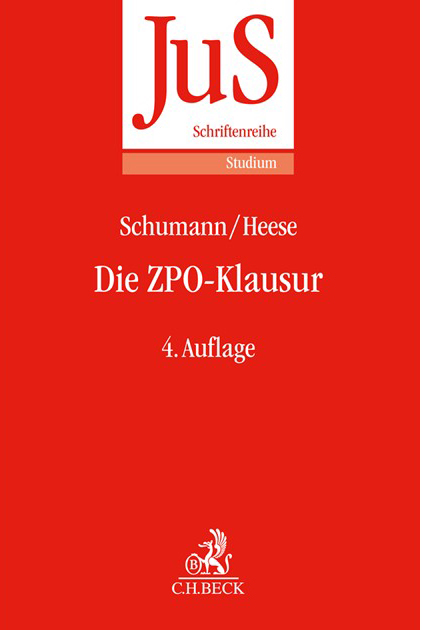
Schumann/Heese: The ZPO Written Exam
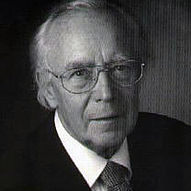
Prof. Dr. Dr. h.c. Ekkehard Schumann
Prof. Dr Michael Heese, LL.M. (Yale)
The ZPO written exam, 4th edition 2024 (external link, opens in a new window)
A guide to solving cases relating to contentious proceedings and enforcement. Guidance on addressing the key issues in civil procedure. 4th edition, Munich 2024, 275 pages, published by C.H. Beck.
This volume presents civil procedure law through a case-based approach. It addresses the main issues in contentious proceedings and the law of enforcement from the perspective of a student or candidate required to solve a case as part of their studies or in an examination. Of particular importance are the key pointers to difficulties and errors that recur time and again when working through cases.
Congratulations – Ekkehard Schumann on his 90th birthday, JZ 2022, 27

On 28 December 2021, Ekkehard Schumann celebrated his 90th birthday. To mark the occasion, the publisher Mohr Siebeck has honoured him with a congratulatory message written by Michael Heese and Tonio Walter. Heese/Walter JZ 2022, 27 (external link, opens in a new window)
A preliminary ruling procedure before the Federal Court of Justice (BGH), Heese/Schumann, NJW 2021, 3023–3029
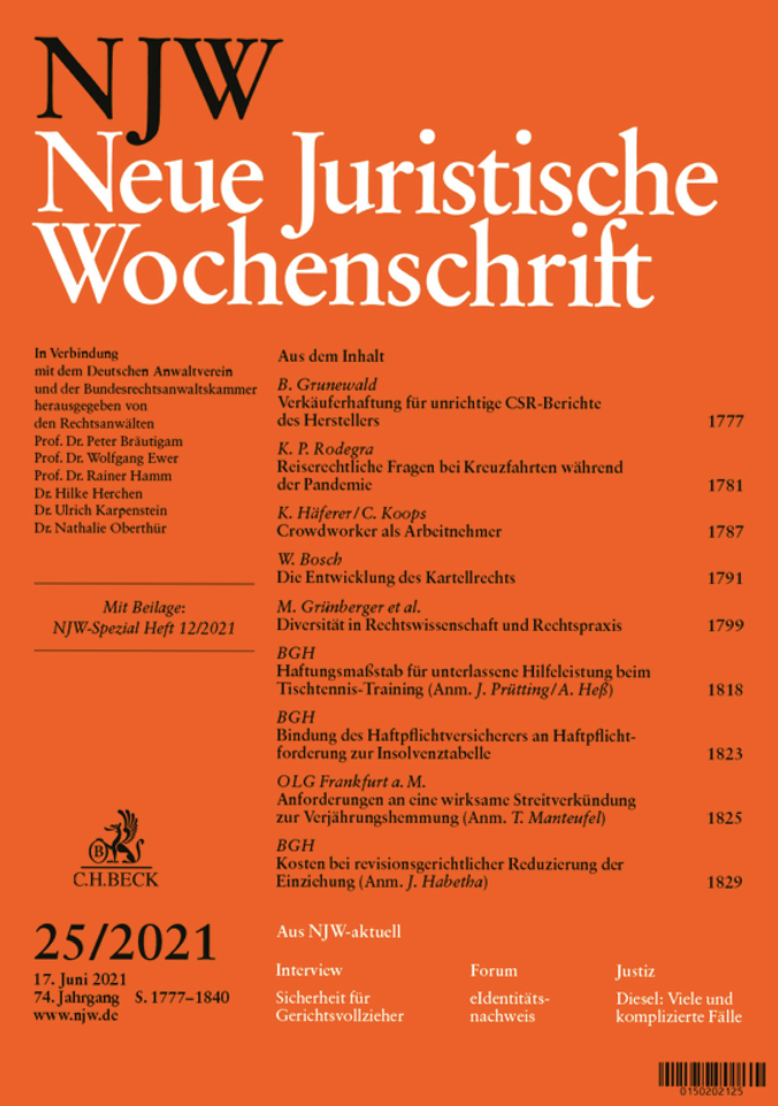
According to the wishes of the Conference of Ministers of Justice, a preliminary ruling procedure could be introduced at the Federal Court of Justice (BGH) for civil cases. The aim of this procedural mechanism is to achieve ‘swift clarification by the highest court of fundamental legal affairs relating to mass litigation’. It serves to streamline proceedings and ensure the effective administration of justice, operating at the interface between individual and collective legal protection.
This article welcomes the reform proposal, explains what can and cannot be expected from such a procedure, and outlines key issues that arise during its implementation. Heese/Schumann, NJW 2021, 3023–3029 (external link, opens in a new window)
‘Of Counsel’ in German Legal Practice, in: Althammer/Schärtl, Festschrift for Herbert Roth on his 70th birthday, 2021, pp. 1119–1144
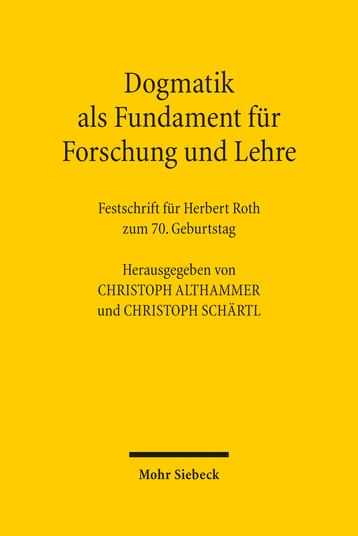
I have enjoyed a close, friendly working relationship with Herbert Roth for many years. We have always been united in our commitment to a modern, liberal system of civil procedure, which, in our view, is an integral part of a civil society based on liberal principles. I was therefore delighted a few years ago when Herbert Roth, in publishing a selection of my writings, included an essay imbued with our shared liberal commitment, in which I had taken up the fight against the authoritarian barriers within the German legal profession that still persisted towards the end of the 20th century. These barriers have since been removed, but there are still many superfluous provisions in the professional regulations governing the legal profession, and new developments continue to come up against bureaucratic barriers. I hope Herbert Roth will enjoy exploring the questions of whether such barriers are to be feared with regard to the ‘Of Counsel’ role, which has been emerging in the German legal profession for some time, and how this role fits into the law governing the legal profession in the first place.
Constitutional appeals at state level against decisions in proceedings under federal law, JZ 2021, 373–381
Almost 25 years ago, the Federal Constitutional Court affirmed the power of the state constitutional courts to review and also to quash court decisions based on procedural provisions under federal law (primarily the Code of Civil Procedure (ZPO) and the Code of Criminal Procedure (StPO)). A recent ruling by the Bavarian Constitutional Court provides an opportunity to trace a development that has led to a resurgence of state constitutional jurisdiction and also to a strengthening of the protection of fundamental procedural rights.
Constitutional Rights Are Constitutional Rights – Reflections on the Terminology Used by the Federal Constitutional Court in Relation to Procedural Constitutional Rights, JZ 2020, 30–33
No closed-door proceedings in interim injunction cases relating to the press, JZ 2019, 398–405
In two chamber rulings (JZ 2019, 407 and JZ 2019, 409, in this issue), the Federal Constitutional Court has convincingly challenged an unconstitutional practice of the civil courts regarding interim injunctions in press cases. Furthermore, the rulings set a precedent for proceedings concerning interim injunctions under civil procedure, as well as for direct constitutional complaints against decisions in such proceedings.
The Decline in Support for Representatives of Public Interests in German Procedural Law, in: Brinkmann et al., Festschrift for Hanns Prütting on his 70th birthday, 2018, 541–558
The Federal Court of Justice’s ruling on dashcams: No exclusion of evidence despite the illegality of the recording, JURA 2019, 3–14
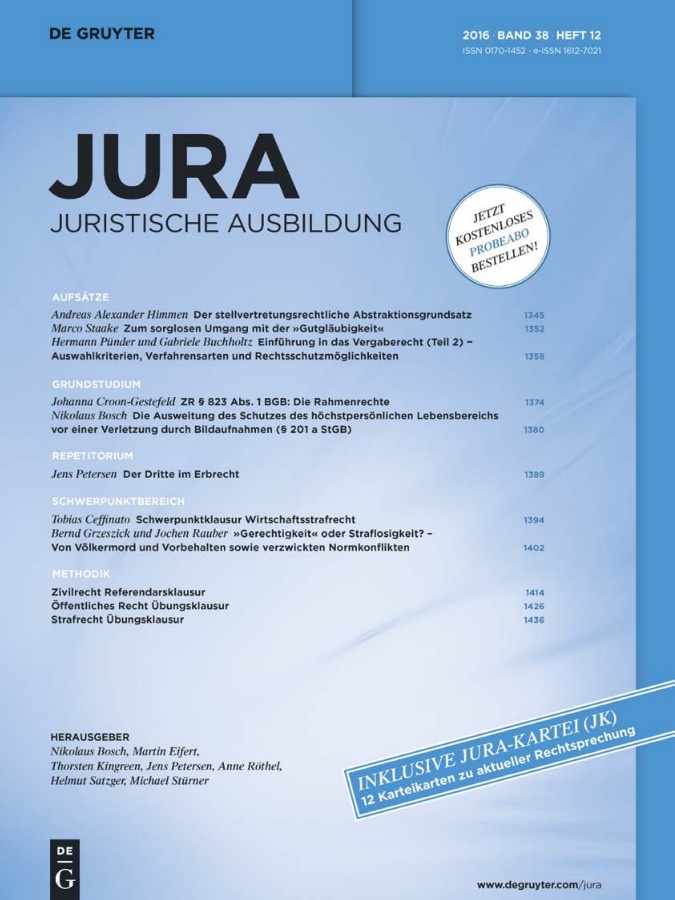
Professor Schumann discusses the Federal Court of Justice (BGH) judgement of 18 May 2018 – VI ZR 233/17 (the admissibility of video recordings made using a dashcam in breach of data protection law in traffic accident proceedings).
Civil Procedure in Practice – Selected Writings
Ekkehard Schumann celebrated his 85th birthday on 28 December 2016. To mark the occasion, Herbert Roth is publishing a selection of Schumann’s writings, under the title *Lebendiges Zivilprozessrecht* (*Civil Procedure in Action*), which are characteristic of his life’s work.
The honouree is one of the most influential German proceduralists and has enhanced the reputation of our discipline far beyond the German-speaking world. Many of his contributions have proved timeless and have left a lasting mark on academic discourse. […] This anthology is intended to complement Ekkehard Schumann’s seminal monographs, thereby providing a comprehensive picture of his academic output. […] Ekkehard Schumann is a world-class scholar of procedural law. This status has been earned in equal measure through his methodologically guided, rigorous dogmatic thinking and his ongoing legal-policy efforts to establish a liberal civil procedure strictly grounded in the rule of law. He was, however, also a gifted legal educator, whose advanced courses covered not only civil procedure but also constitutional, administrative and criminal procedure law. For him, research and teaching formed a single, integrated whole.