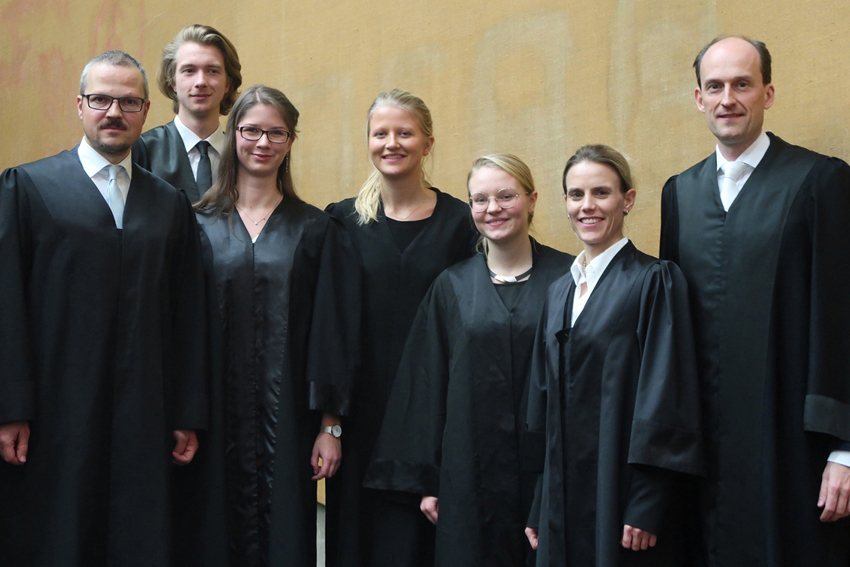

What is a moot court?
A moot court is a simulated court hearing. Law students are assigned a fictional or real-life case; they represent one of the parties to the proceedings in court by drafting the relevant pleadings and appearing and arguing their case during the oral hearing. The moot court originated in the USA; however, it has now also become an integral part of legal education in Germany.
A moot court can take the form of a single local event. However, there are also numerous moot court competitions covering various areas of law at both national and international level, in which students from different universities compete against one another.
ELSA Germany Moot Court (EDMC)
Until 2024, Professor Heese and his department, in collaboration with Professor Mayer and Dr Graml, Solicitor (Graml & Kollegen law firm, Regensburg (external link, opens in a new window)), as well as the REGINA (external link, opens in a new window) Training Centre, have been supervising the Regensburg students taking part in the ELSA Germany Moot Court (EDMC) (external link, opens in a new window).
The EDMC, organised by the German section of the European Law Students’ Association, has been running since 1994 and takes place once a year. It involves cases relating to German civil law, which are heard before a mock German court of first instance in accordance with the German Code of Civil Procedure.
The EDMC begins with the regional rounds. At the national round, the finalists are then selected from among the regional winners; they subsequently compete for the overall victory at the national final in Karlsruhe before judges and lawyers from the Federal Court of Justice.
Teams from Regensburg have traditionally been very successful in this competition: Nikolaus Schröder (Professor Heese’s department) won the EDMC in 2015. Elina Mayer (Professor Kühling’s department) and Anna Gmehling (Professor Heese’s department) went on to win the EDMC in 2021. In 2024, Felix Summerer (Professor Heese’s department) and Bastian Reinsch were the winners.
A look back at previous years
Below you will find some highlights from previous years’ competitions, as seen from Regensburg’s perspective.
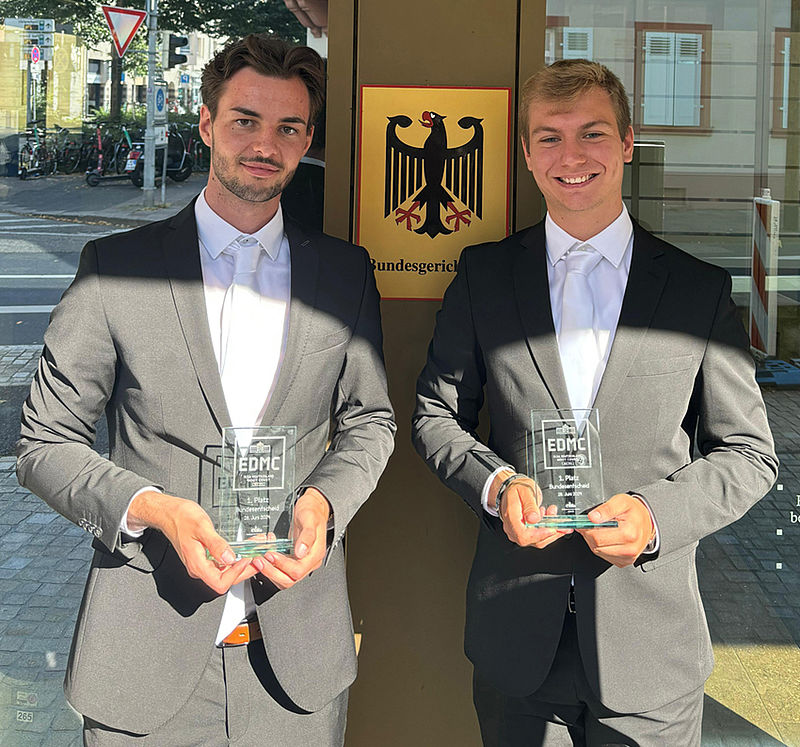
EDMC 2024: Team Regensburg wins again at the Federal Court of Justice
Felix Summerer (Prof. Heese’s research group) and Bastian Reinsch, representing Regensburg, have won the ELSA Germany Moot Court (EDMC) 2024!
Following their initial success at the Regensburg regional round in January 2024, the Regensburg team first prevailed against twelve other teams at the national round in Berlin and received special recognition for their outstanding statement of claim. In the national final, held on 28 June 2024 at the Federal Court of Justice in Karlsruhe, they faced the team from the University of Osnabrück, where the Regensburg team once again emerged victorious.
The Regensburg team’s success once again confirms the quality of their preparation under experienced coaches and their thorough training in civil procedure, which, alongside family law, is traditionally one of the cornerstones of civil law at the University of Regensburg. Back in 2021, Anna Gmehling (Prof. Heese’s department) and Elina Mayer (Prof. Kühling’s department) had already won the ELSA Germany Moot Court as the Regensburg team. In 2024, we say once again: Congratulations on this fantastic achievement!
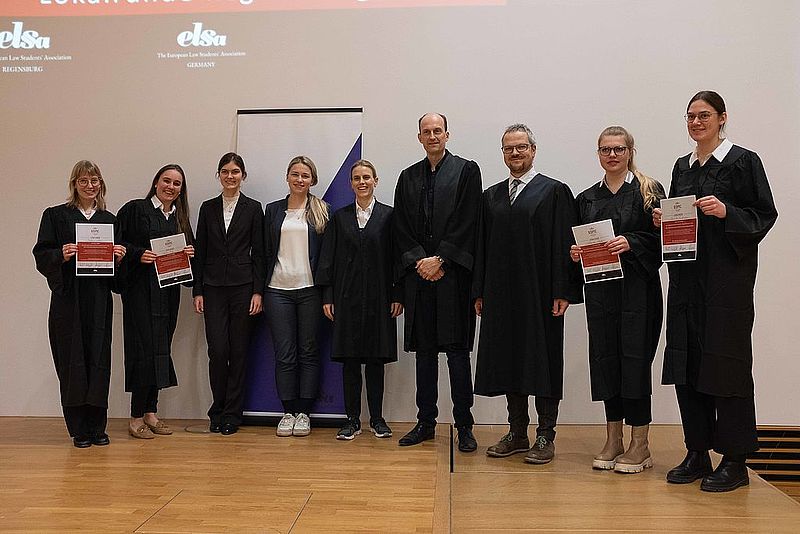
ELSA Moot Court 2023 – Regensburg regional round and oral hearing on 26 January 2023
What happens if “20 mint-condition 2-euro coins” (sic!) from the Republic of Ireland are auctioned on eBay and the parties are subsequently unable to agree on the validity of the contract of sale and the settlement of the transaction? And what if it then turns out that the 2-euro coins actually include some from the Vatican, which are far more valuable? Having gone through all this confusion, did the parties reach a valid settlement? Or can the buyer still demand that the seller provide the coins? And which coins? Only those from the Republic of Ireland, or the ones from the Vatican as well?
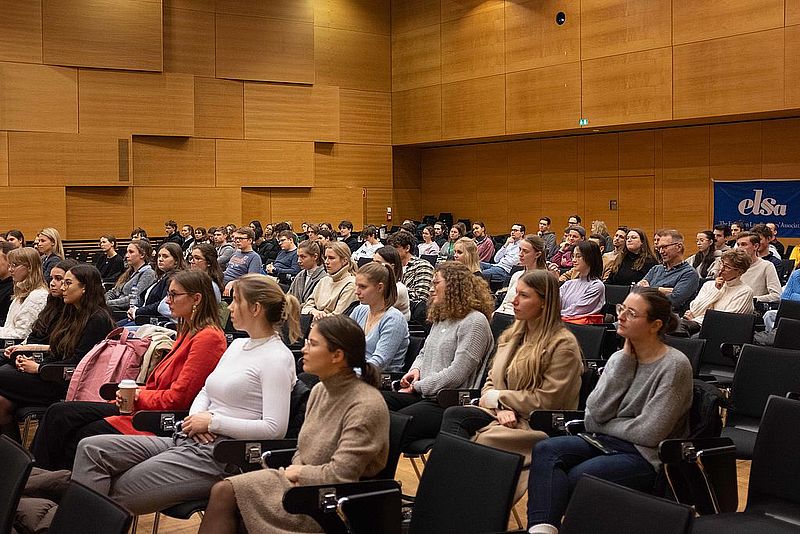
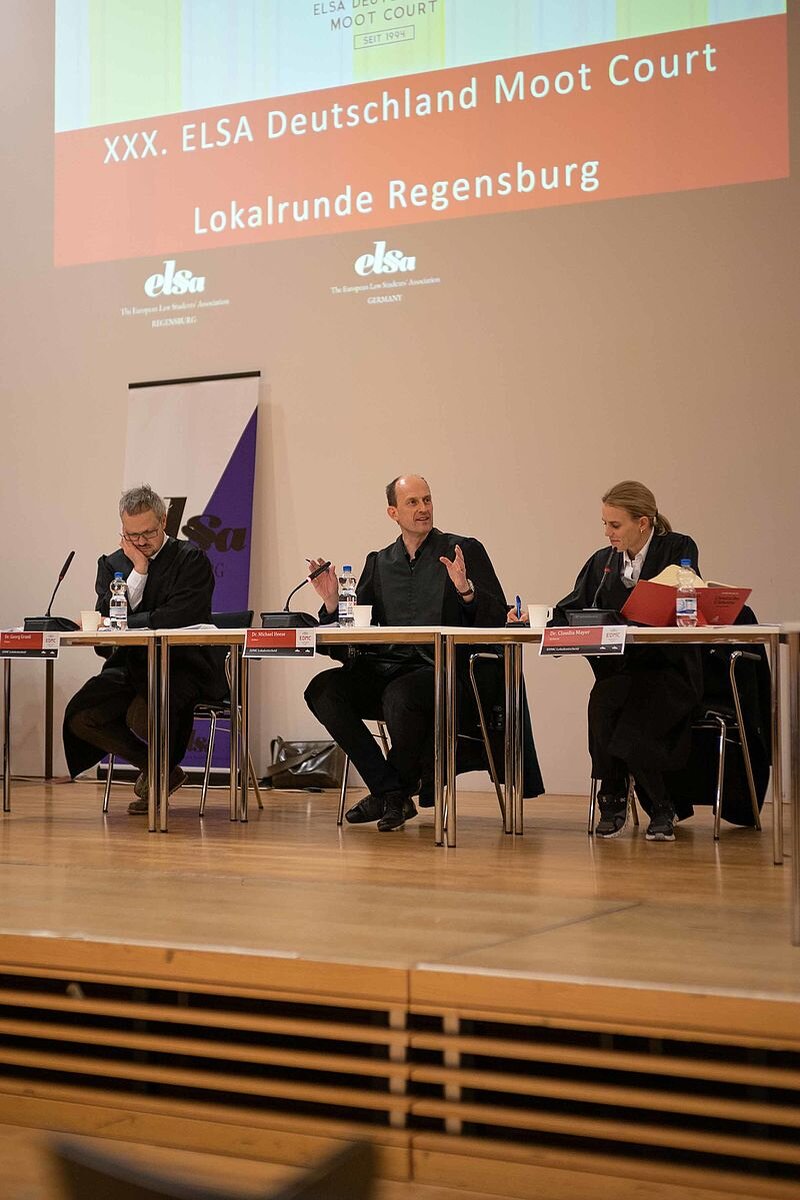
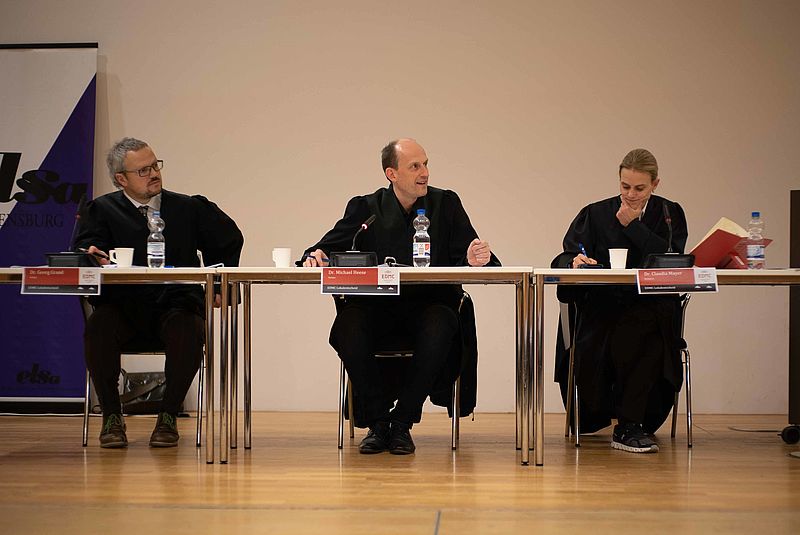
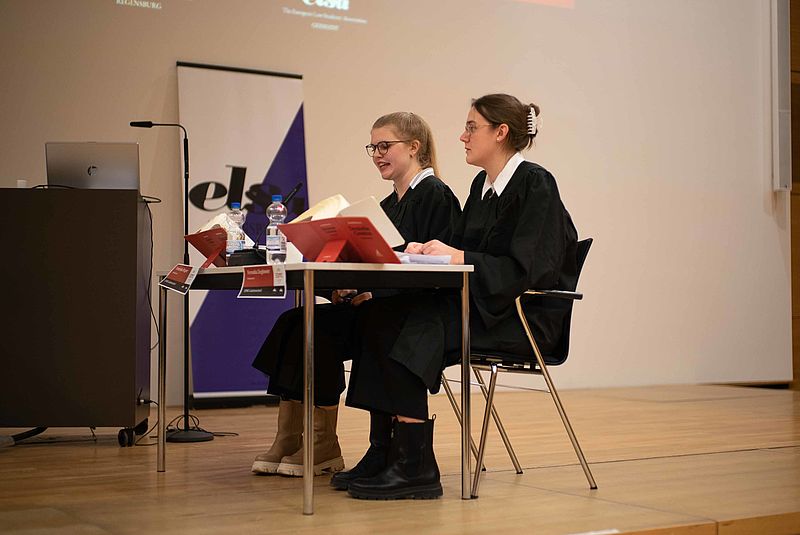
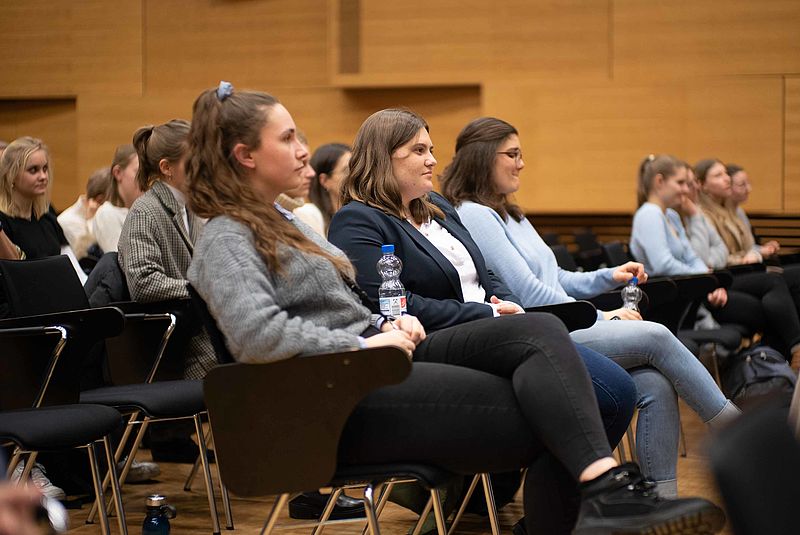
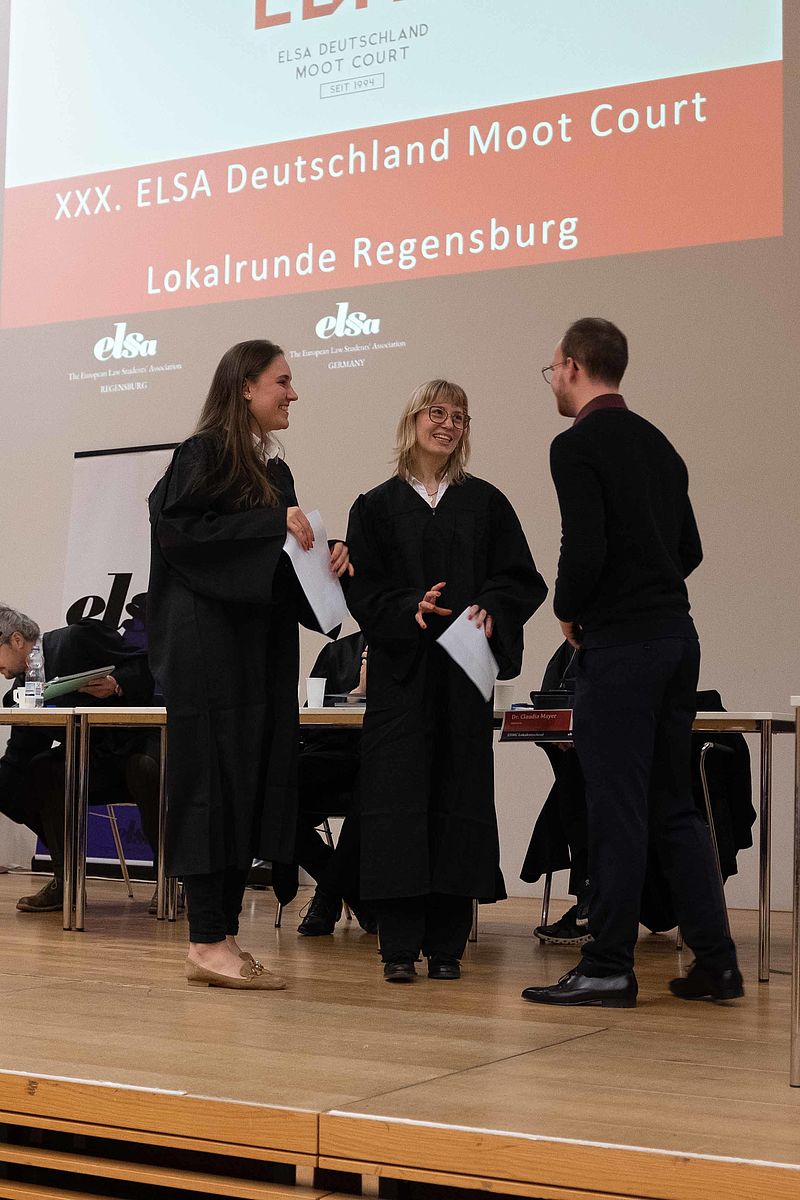
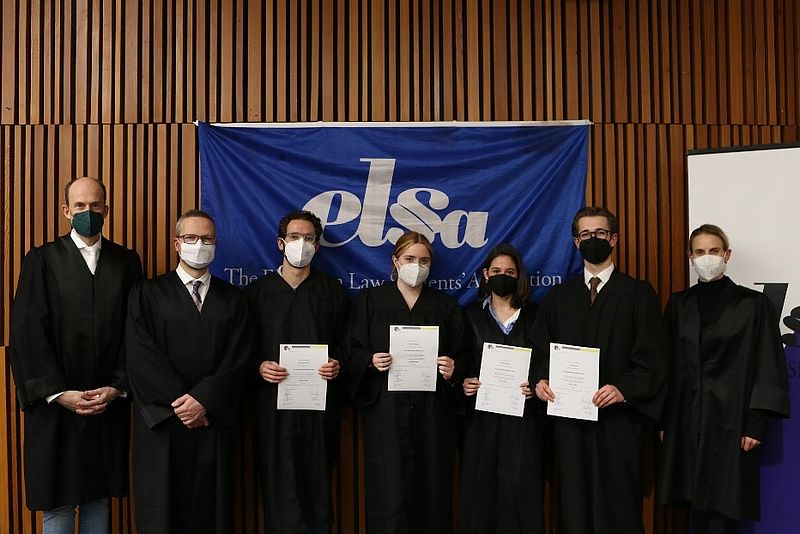
On 26 January 2023, the Regensburg regional round of this year’s ELSA Germany Moot Court took place. In the afternoon, two preliminary rounds were held to determine the two finalist teams. In the evening, the finalist teams then competed against each other in front of an audience in the well-attended H 24 room of the Vielberth Building.
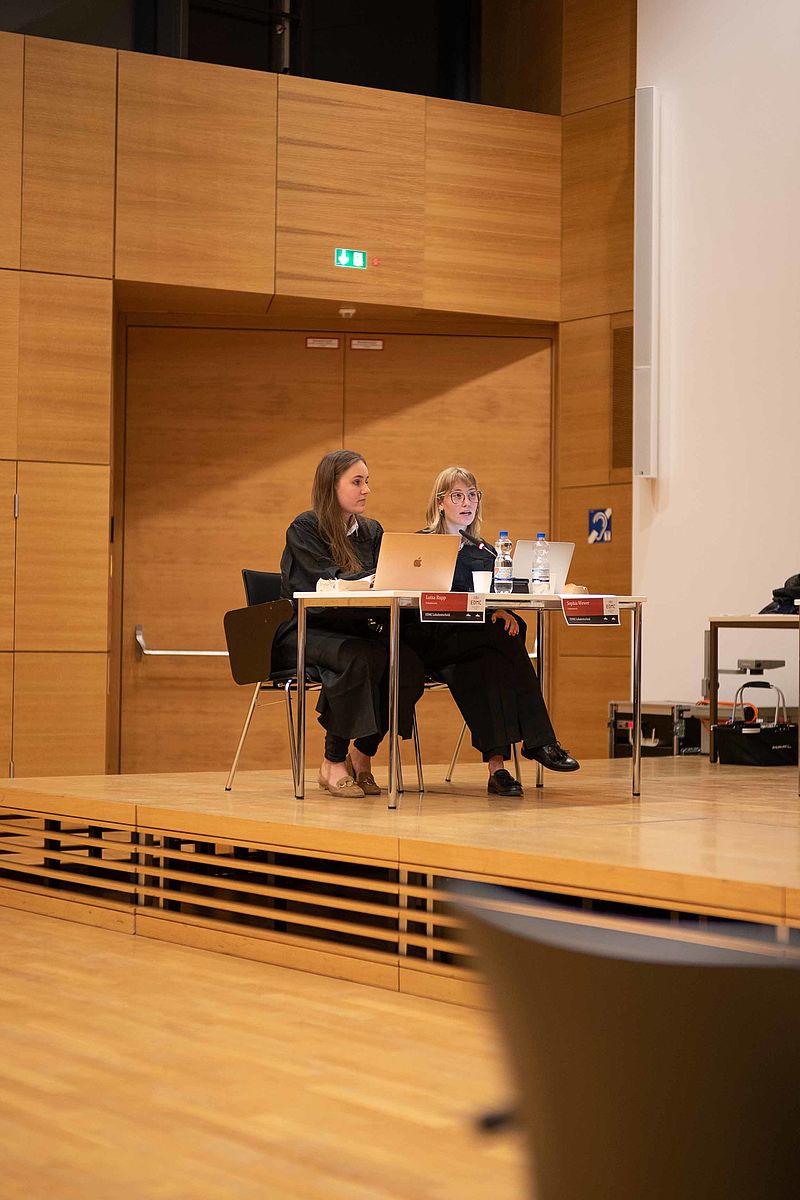
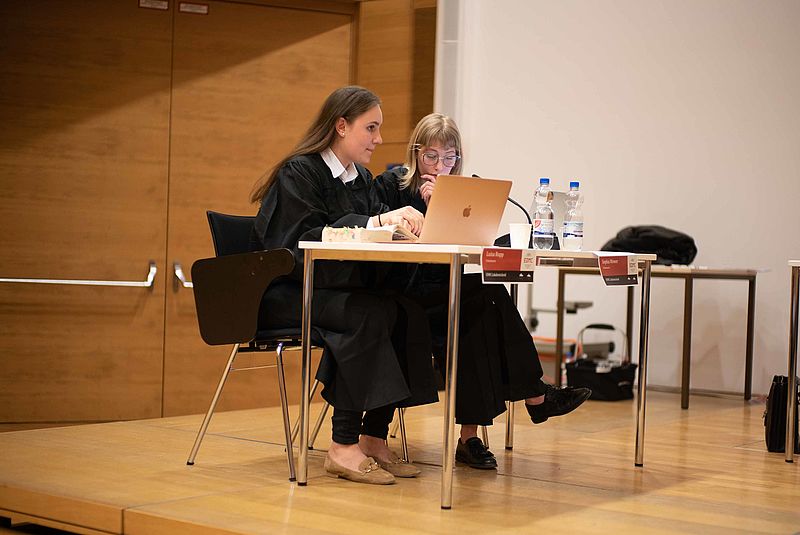
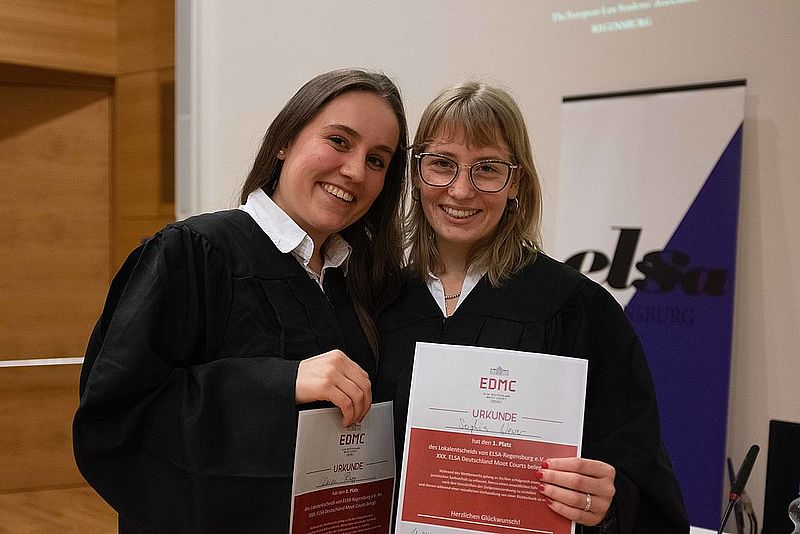
The claimant was represented by Franziska Wagner and Veronika Zieglmeier, and the defendant by Luisa Rupp and Sophia Wewer. Alongside Prof. Dr Claudia Mayer, this year’s preliminary selection jury comprised Isabelle Clemm and Anna Gmehling. The final round jury once again comprised Prof. Dr Claudia Mayer, Dr Georg Graml (solicitor) and Prof. Dr Michael Heese. The ELSA Moot Court jury would likely have dismissed the buyer’s claim in the end, but the parties ultimately reached a settlement during the oral hearing. In the end, Luisa Rupp and Sophia Wewer impressed the jury most with their oral arguments and won the competition. The winning team will now progress to the next round, where they will compete against teams from other faculties at regional level. There, they will have the opportunity to qualify for the final at the Federal Court of Justice in Karlsruhe.
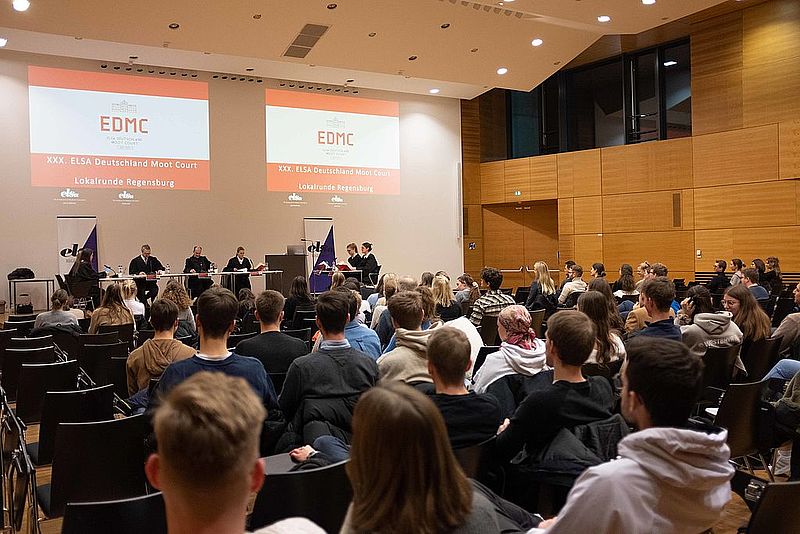
ELSA Moot Court 2022 – Regensburg regional round and oral hearing on 26 January 2022
On 26 January 2022, the Regensburg regional round of this year’s ELSA Germany Moot Court took place. Due to the pandemic, the oral proceedings were held as a hybrid event. Members of the public were able to follow the proceedings live via Zoom.
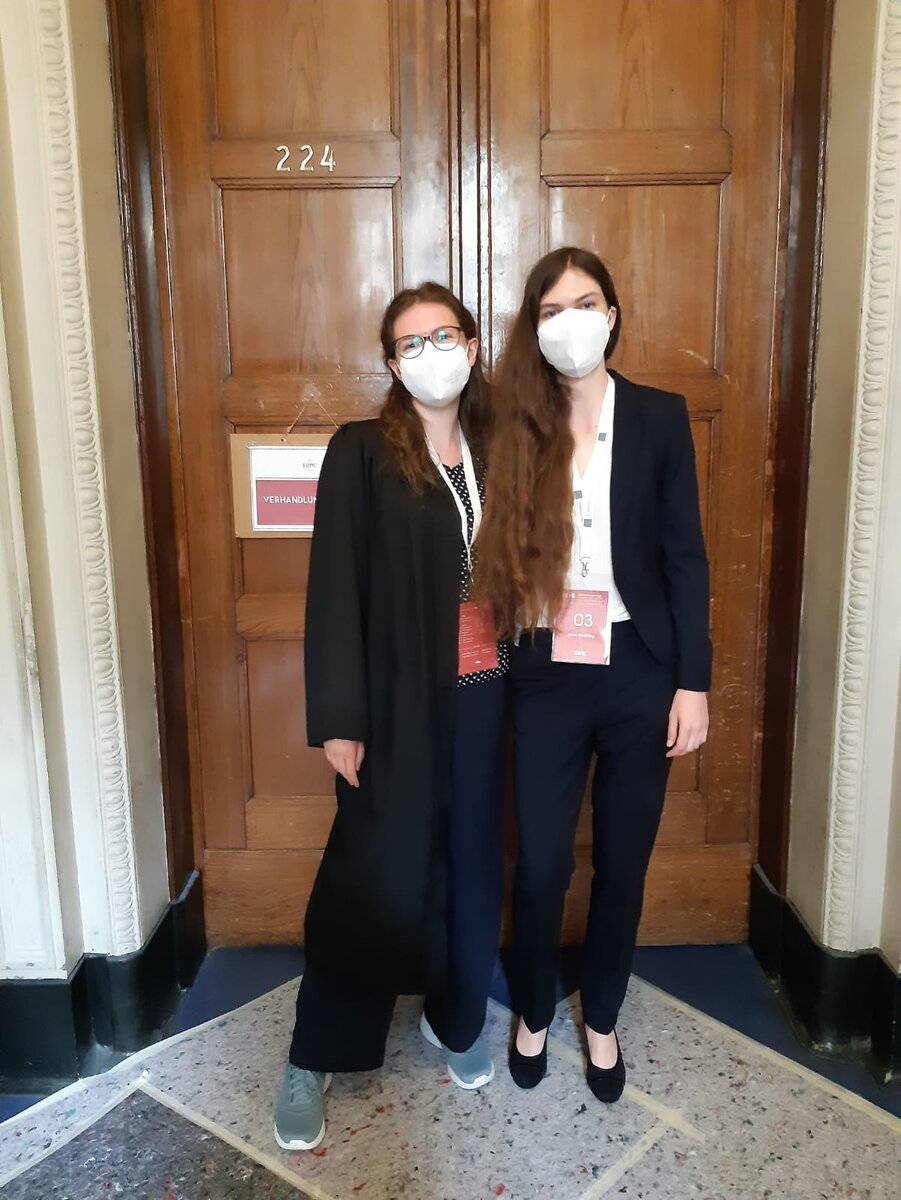
The claimant was Huevos sorpresa S.A. de C.V., represented by lawyers Helena Manke and Tom Jensson; the defendant was Verpackungslösungen GmbH, represented by lawyers Sarah Reisinger and Benjamin Roemer. Once again this year, the jury comprised Dr Georg Graml, Prof. Dr Claudia Mayer and Prof. Dr Michael Heese.
The fictitious legal dispute centred on the construction and delivery of a packaging machine for chocolate surprise eggs. A Mexican company had purchased the machine as a prototype from a German manufacturer. Unfortunately, however, the machine subsequently did not function as the Mexican surprise-egg producer had envisaged: The vacuum system, designed to transport the eggs within the machine, was not rated for the atmospheric pressure prevailing at an altitude of 2,000 metres in Mexico, and the ‘missing egg’ function had not been fitted at all. After a short time, the cutting blades became blunt and, to make matters worse, the drive shaft also broke. It is hardly surprising, then, that the machine could package just 140 eggs per minute, rather than the promised 200. After numerous attempts at rectification, the Mexican company sought not only a refund of the 750,000 euros paid for the machine, but also compensation for its loss of profit amounting to over one million euros – ultimately without success. The jury court ultimately dismissed the claim, partly because the priority of rectification had not been observed, and partly because the Mexican company had been too quick to refuse further attempts at rectification by the prototype manufacturer.
Nevertheless, it was a good day for the plaintiffs’ representatives: Helena Manke and Tom Jensson wonthe preliminary ruling in Regensburg; the pair were able to convince the jury above all through their oral arguments. Sarah Reisinger and Benjamin Roemer also performed well during the hearing.
EDMC 2021: Team Regensburg wins at the Federal Court of Justice
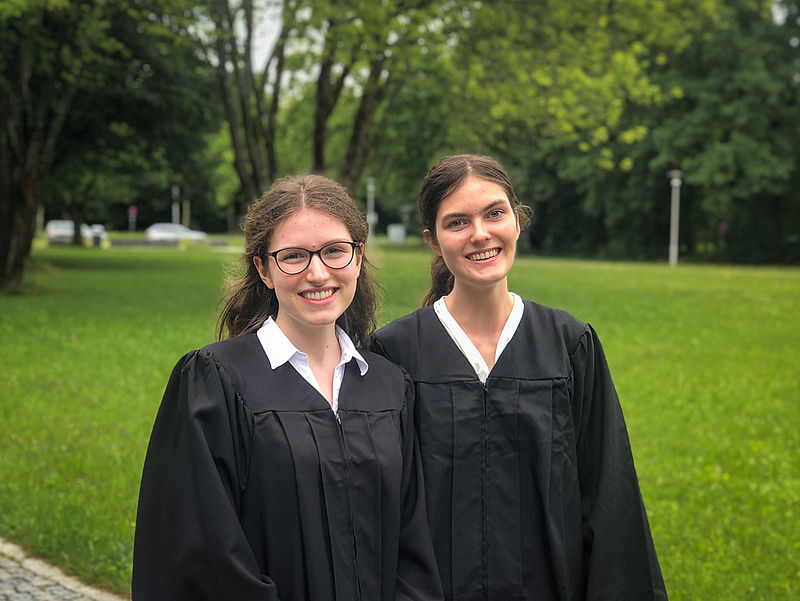
Elina Mayer (Prof. Kühling’s department) and Anna Gmehling (Prof. Heese’s department) have won the ELSA Germany Moot Court (EDMC) 2021 as the Regensburg team!
The winners of the Regensburg regional round in January 2021 had recently prevailed against nine other teams at the national round in Hamburg. In the final of the competition, the national final, the Regensburg team faced a team from the University of Osnabrück; see the EDMC National Final brochure (external link, opens in a new window) for further details.
On Friday 9 July 2021, a case from the ‘Frankfurt Regional Court’ was heard and decided at the Federal Court of Justice as part of a digital main hearing. The teams had to file motions and make further procedural submissions, and in response to numerous queries from the court, they engaged in challenging legal debates. The legal dispute centred on the surrender of the Part II registration certificate (vehicle registration document) for a Golf 5, the validity of a peculiar pledge agreement, and pre-trial legal fees.
The moot court panel at the Federal Court of Justice (BGH) also had to take on the role of the competition jury. In a thrilling 70-minute hearing, the two Regensburg students, representing the plaintiffs, ultimately prevailed against the team from Osnabrück and thus secured first place; see also the UR press release dated 15 July 2021 (external link, opens in a new window) and the Mittelbayerische Zeitung dated 21 July 2021 (external link, opens in a new window). We would like to offer our heartfelt congratulations on this fantastic achievement!
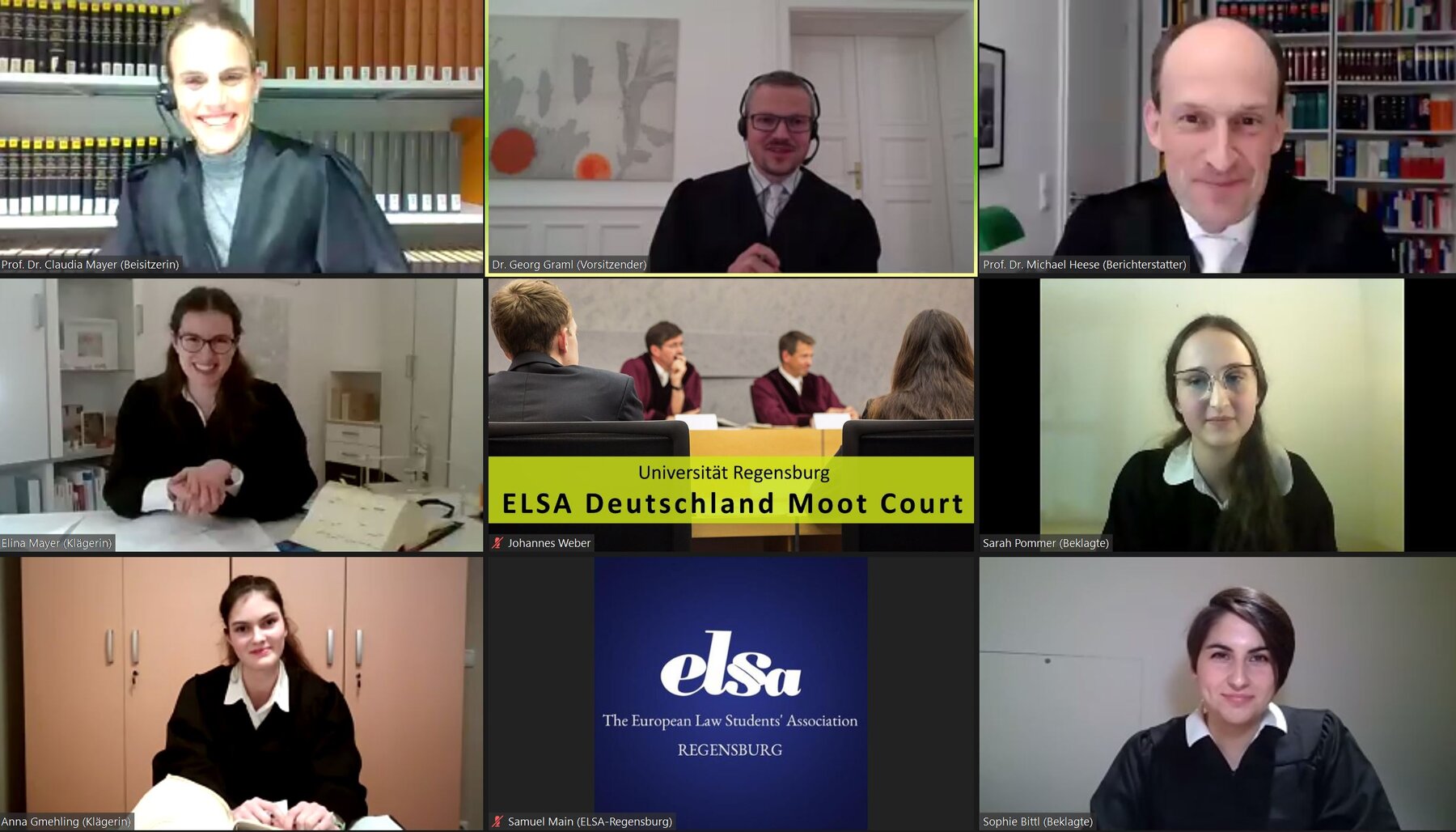
EDMC 2021: Regensburg regional final and oral examination on 13 January 2021
Is a sales assistant entitled to the purchase price if she sells a book to its former owner? Not really – at least, that was the view of the Reich Court. However, the facts of the case underlying the Regensburg local decision of the ELSA Germany Moot Court (EDMC) 2021 were more complicated. After all, the origin of the book was disputed between the parties, and the possibility of the seller having acquired title by adverse possession was also on the table. Anna Gmehling and Elina Mayer, representing the claimant, won the local decision on Wednesday 13 January 2021. Sarah Pommer and Sophie Bittl, who represented the defendant, also performed well.
Due to the pandemic, the mock court hearing was held online via Zoom for the first time. Around 150 spectators followed the civil trial from their screens at home, as four law students, acting as solicitors, fought for the interests of their fictional clients. As was the case last year, Dr Georg Graml, Prof. Dr Michael Heese and Prof. Dr Claudia Mayer co-advisored the participants on the case and subsequently announced the winners of the competition.
Events such as the ELSA Germany Moot Court enable law students to practise essential key skills and gain insights into professional practice. Nikolaus Schröder (Professor Heese’s Chair) and Johannes Weber (REGINA Training Centre) prepared the participants for their court appearances and for drafting a legal submission.
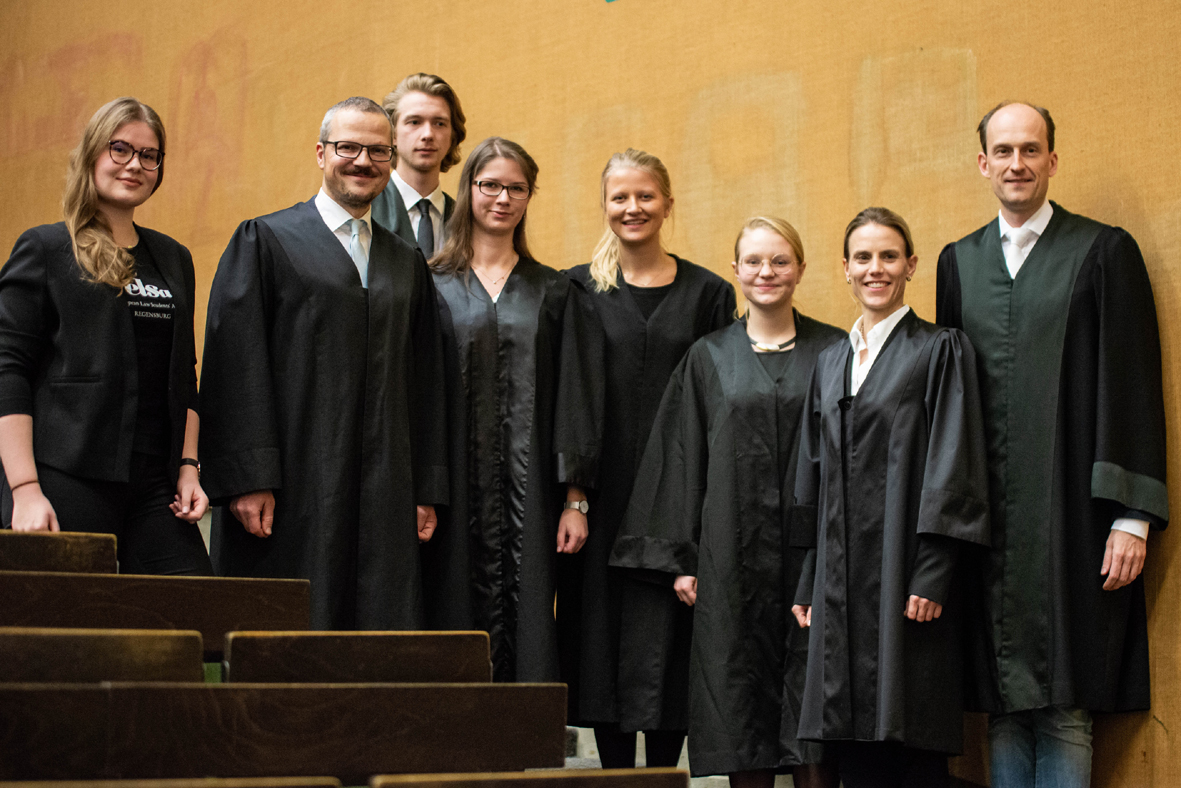
EDMC 2020: Regensburg regional final and oral examination on 16 January 2020
A toaster becomes the subject of a legal dispute: students from Regensburg take on the roles of lawyers at the Regensburg regional round of the ELSA Germany Moot Court 2020.
It’s a tricky case: a toaster costing just under 20 euros has broken down. The buyer wants a replacement, but the model is no longer available on the market. The seller refuses to repair the appliance, as the cost would be around 160 euros. Instead, he offers the customer the successor model, which is worth just under 50 euros. The customer does not want this, as she does not like the way it looks. She insists on a repair – and takes legal action.
The oral hearing of the Regensburg local ruling took place on 16 January 2020. In the case of Keila Kashira % Volt-GmbH, the claimant was represented by solicitors Eckert and Stauß, whilst the defendant was represented by solicitors Weinzierl and Philipp.
The court was composed of Prof. Dr Claudia Mayer (Presiding Judge) and Prof. Dr Michael Heese, as well as Dr Georg Graml, barrister (assistant judge). Clara Weinzierl and Katharina Philipp, who represented the defendants, secured a narrow victory; see also the university’s (external link, opens in a new window) detailed press release (external link, opens in a new window).