Heat Stress and Reproduction
Even short periods of elevated temperature can disrupt plant reproduction and substantially reduce crop yields. Pollen development, fertilization and the interactions between male and female reproductive tissues are particularly sensitive. The Dresselhaus lab uses maize as a crop and grass model to investigate the cellular, metabolic and gene regulatory mechanisms underlying heat-induced sterility. The long-term objective is to identify mechanisms that help maintain reproductive success and yield stability under increasingly challenging environmental conditions.
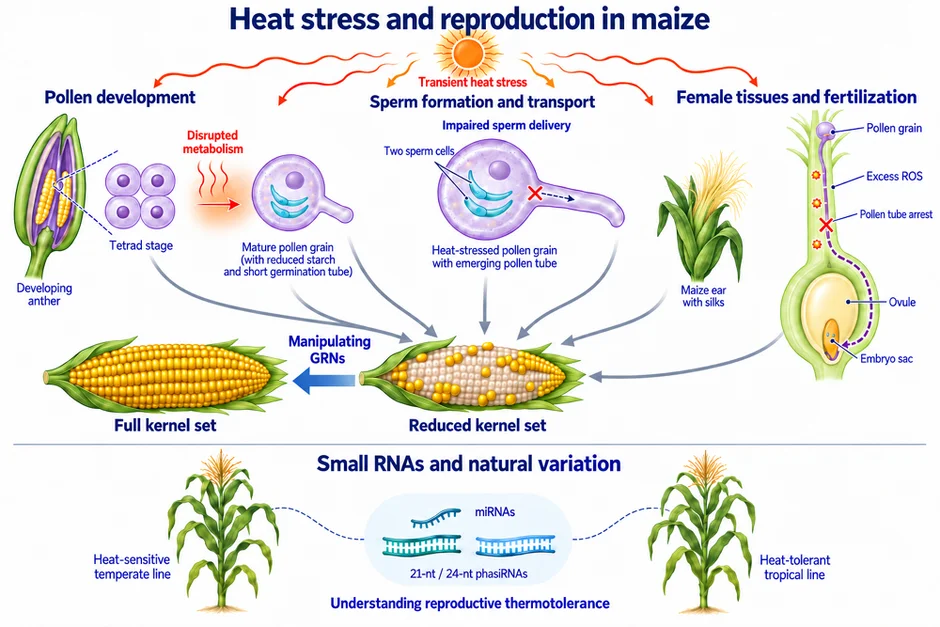
Our studies show that transient heat stress (heat waves) for only two days have lasting effects on pollen function, even when plants subsequently return to favourable conditions. Exposure during the tetrad stage, for example, disrupts starch, lipid and energy metabolism, resulting in mature pollen with reduced germination capacity. Heat stress during later stages affects additional processes: at the bicellular stage, it impairs sperm cell formation and their transport into pollen tubes. These findings demonstrate that reproductive heat sensitivity involves distinct mechanisms at different developmental stages. To undertstand natural variation in reproductive heat tolerance, we compare heat-sensitive temperate maize with heat-tolerant tropical lines to identify RNA regulatory networks associated with reproductive resilience and to establish which differences contribute functionally to heat tolerance.
Heat stress also compromises the female tissues supporting fertilization. In maize silks, excessive accumulation of reactive oxygen species (ROS) causes late pollen tube growth arrest, preventing sperm delivery to the ovule. Reducing these reactive molecules can partially restore pollen tube growth and fertility, highlighting the importance of redox balance for successful reproduction under heat stress.
In summary, the group combines precise developmental staging and controlled heat treatments with cellular imaging, reproductive phenotyping and molecular profiling. By connecting mechanisms of heat-induced damage with protective traits in tropical maize germplasm, this research seeks to provide a molecular basis for improving reproductive thermotolerance in cereals.