Parthenogenesis and Engineering of Apomixis
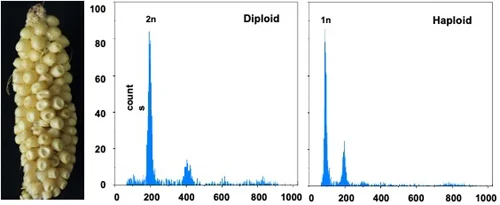
Parthenogenesis is the development of an embryo from an unfertilized egg cell. It is a central component of apomixis—the formation of seeds without sexual reproduction. Complete apomixis also requires the avoidance of meiosis (apomeiosis) and successful endosperm development. Together, these processes can generate genetically uniform seeds, preserving valuable hybrid genotypes across generations, but ist understanding can also be used to generate, for example, haploid or di-haploid plant. Engineering apomixis could therefore accelerate crop breeding, simplify the propagation of high-performing varieties and thus significantly increase crop yield.
The Dresselhaus lab uses the wild grass Tripsacum dactyloides, a close relative of maize, to investigate the molecular regulation of parthenogenesis. Polyploid apomictic accessions form parthenogenetic embryos at frequencies and ovules are large allow the manual isolation of individual egg cells for molecular analyses.
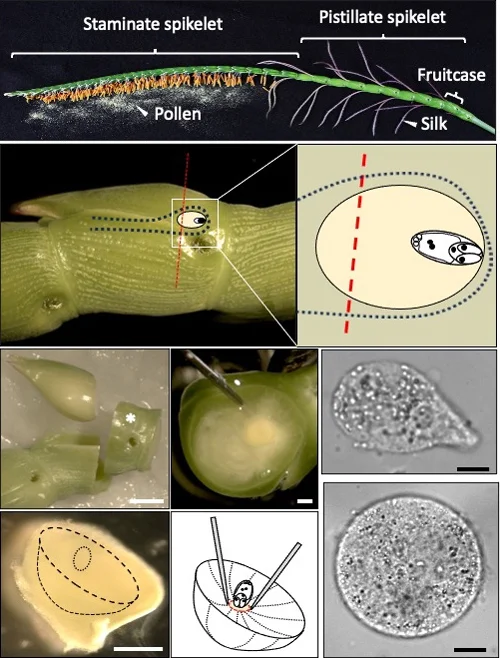
The analyses identified several fertilization-induced transcription factors as candidate regulators. Egg-cell-specific expression of one such factor triggered parthenogenetic embryo formation in maize at frequencies of up to 35%, demonstrating that activation of a zygotic programme can partially substitute for fertilization. The laboratory is now extending this approach to soybean. The long-term objective is to combine high frequencies of parthenogenesis with the other components required to engineer synthetic apomixis in major crops.