

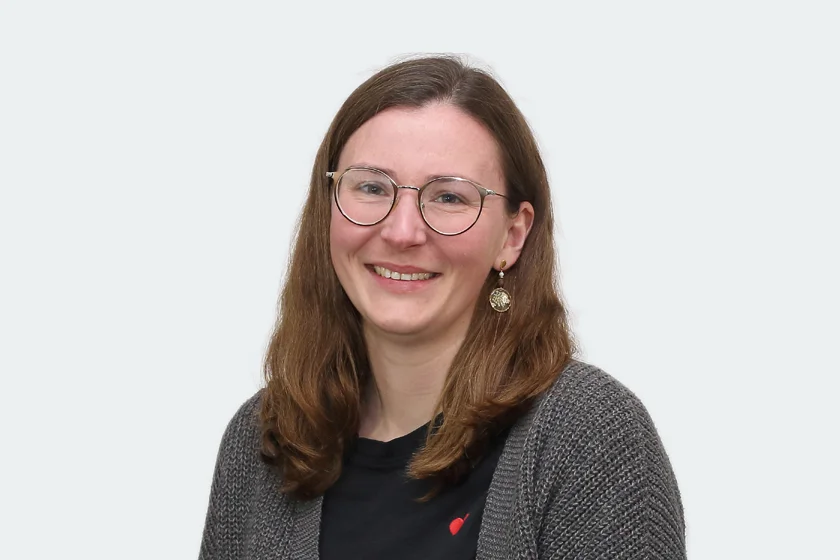
Dr. Karoline Jetter
Research interests
- Environmental microbiomes
- Host adaptation via microbes
- Interconnection of microbial communities
- Sustainable land use
Scientific projects
I am interested in different host associated and environmental microbial communities and their interaction with each other. Particularly, I am interested in how different hosts within an ecosystem adapt to environmental changes with their microbial communities and how hosts are interconnected via their microbiomes within an ecological loop.
Ongoing projects
Land use in circular agriculture includes the usage of organic fertilizers like manure and slurry to increase plant productivity and production of animal fodder. However, these organic fertilizers not only change the nutrient availability for different microbial communities in the environment and thereby modify their composition, but they might also introduce residual antibiotics or microbes from animal guts harboring antimicrobial resistance (AMR) genes. The growing threat of AMR poses a great risk to human and animal health and the spread of AMR genes due to human action needs to be understood to develop sustainable measures for agricultural land use.
My current research is imbedded in the BMFTR funded Project Trophic Health which investigates the impact of organic fertilization on the spread of antimicrobial resistances and zoonotic pathogens in different microbial communities along the trophic chain in agricultural grassland ecosystems. By sampling different compartments on agricultural grassland sites on the Swabian Alb in Baden-Württemberg as well as around Münster in Nordrhein-Westfalen, we assess the impact of pig slurry and biogas digestate fertilization on microbial communities associated to the environment, plants and animals living in these grassland sites. In depth, we are interested in how fertilization affects the prevalence of pathogens as well as antimicrobial resistances and how potential shifts within these might propagate along the trophic chain and spread in the environment. By combining field work with molecular methods and high trough put 16S sequencing as well as metagenomic analysis, we not only identify shifts in AMR gene abundances but also potential disturbances in the interconnection between microbial communities of different hosts.
In a second phase of the project, we will try to counteract potential shifts in microbial community compositions by using indoor mesocosm experiments replicating field set ups in a controlled lab environment. By introducing indicator bacteria, as well as antimicrobial peptide producers, to a setup with strawberry plants, earthworms and green bottle flies, we will aim for solutions for a sustainable and efficient use of fertilizers to secure agricultural land use for the future.
Publications
K.Jetter, K.Jani, K.Wilhelm, U.Stehle, R.R.Chamedjeu, C.U.Riedel, S.Sommer, L.Wilfert, P.Schäfer, 2026, “Effects of Pig Slurry Fertilization History on Grassland Microbiomes: Insights from Field and Mesocosm Experiments”, Science of the total Environment, Volume 1053, 182342, doi: 10.1016/j.scitotenv.2026.182342
M.Meyer, M.Schindler, K.Wilhelm, J.Gruber, A.Schillinger, C.Hiller, K.Jani, K.Jetter, A.S.Carranco, K.Vesely, M.R.Bruck, S.Maurer, H.Frötscher, S.Schneeweihs, C.Baumgartner, S.Sommer, 2026, “Nests of the endangered European pond turtle leave a biogeochemical and microbial imprint on floodplain soils”, Global Ecology and Conservation, Volume 70, e04375, doi: 10.1016/j.gecco.2026.e04375.
R.R.Chamedjeu, K.Jani, K.Jetter, K.Wilhelm, P.Schäfer, L.Wilfert, S.Sommer, C.U.Riedel, 2025, “Impact of Fertilization on Grassland Core Soil Microbiota: Abundance in the Field and Growth in vitro”, Environmental Microbiology Reports, 17(6), e70235, doi: 10.1111/1758-2229.70235
K.Jetter, K.Jani, K.Wilhelm, U.Stehle, R.R.Chamedjeu, C.U.Riedel, L.Wilfert, P.Schäfer, S.Sommer, 2025, “Fertilization impacts microbiomes along the grassland trophic chain”, ISME communications, ycaf162, doi: 10.1093/ismeco/ycaf162
K.Jetter and P.Schäfer, 2025, “Advances in understanding soil microbiomes in ecosystem functions across trophic chains”, In Dunfield, K. (ed.), Understanding and utilising soil microbiomes for a more sustainable agriculture, Burleigh Dodds Science Publishing, Cambridge, UK; doi: 10.19103/AS.2024.0136.31
J.Buse, M.Illi, K.Jetter, A-K.Klotz, S.Knödler, N.Schütz, M.I. Förschler, 2021, “Extensive Beweidung mit Rindern als Maßnahme des Insektenschutzes“, Naturschutz und Landschaftsplanung, 53 (07), doi: 10.1399/NuL.2021.07.02