

The Ribolab is expanding!
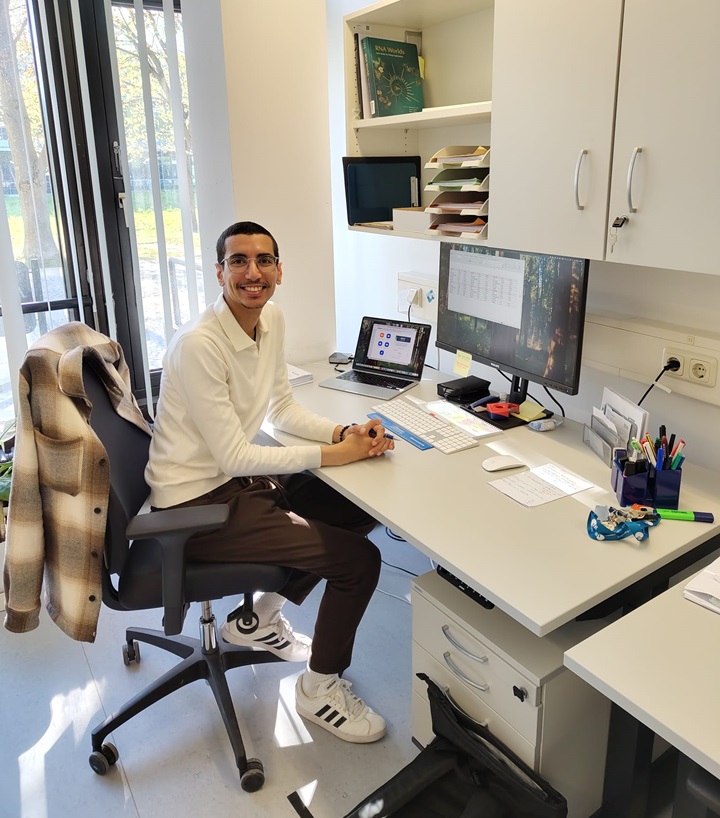
RiboLab is growing, and we are excited to welcome Dr. Makram Mghezzi to our department!
Makram Mghezzi joins us from ENS Lyon (École Normale Supérieure), shortly after completing his PhD work in the Jalinot/Mocquet groups. His research focuses on understanding how RNA‑binding proteins regulate cellular homeostasis and infection responses, and during his PhD he worked on nonsense mediated decay factors and their interplay during infections. At RiboLab, Makram will develop pulldown approaches and contribute to our ERC‑funded project T‑FRAME to identify new RNA‑binding proteins involved in HIV‑1 frameshift regulation.
Please help us warmly welcome Makram to RiboLab and to Regensburg!
Bienvenue dans notre chaire!
Benjamin Riocreux-Verney from St. Etienne will join the AG Caliskan team as Postdoc!
We are delighted to welcome Benjamin to the Caliskan research group. He brings along bioinformatic expertise in determining RNA tertiary structures, knowledge about different viruses and interest in next generation sequencing.
Here's to an exciting time ahead!
More members join the Ribolab!
Selina Braun and Komal Raina will be joining our team as a next-generation sequencing specialist and flow cytometry expert, respectively. They will be developing important building blocks for our research work.
After completing her master's thesis at the Lund university in Sweden in the field of protein characterization via NMR, Komal will be supporting us at the University of Regensburg.
After completing her master's degree at the University of Regensburg, Selina has decided to join our department.
We are also delighted to welcome Nelly Molander from Sweden for her master's thesis.
New members for the Caliskan team!
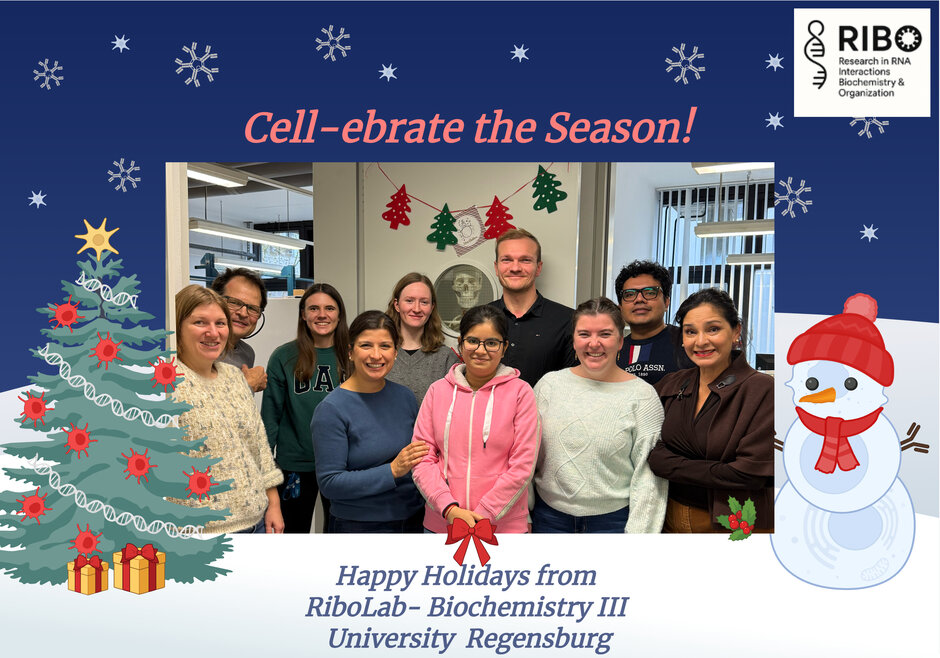
We are happy to welcome Eva-Maria Lederer and Dr. Andreas Maier, both from TU Munich, to our team.
They will support us with their expertise, among other things, in further developing ribosome profiling and protein expression at the chair.
Here’s to a successful 2026!
The basics of HIV research at the group of Prof. Dr. Neva Caliskan
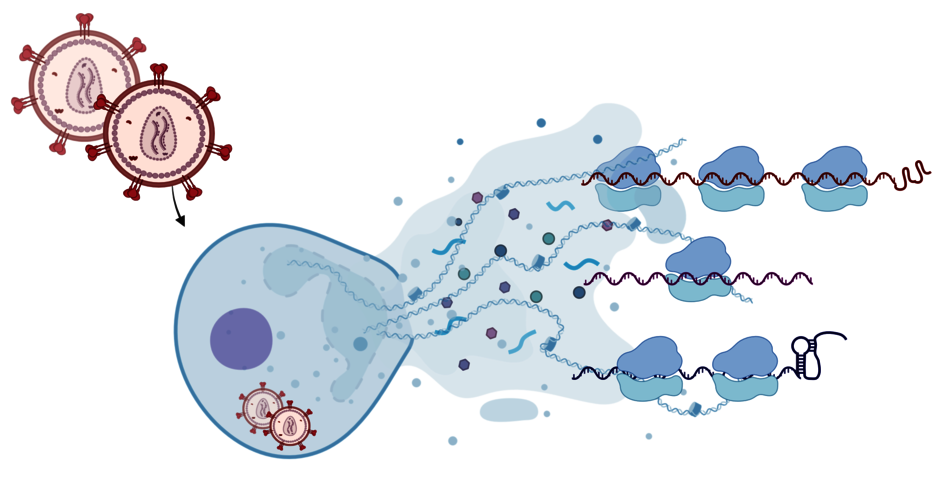
A recent study has shed light on how HIV-1, the virus responsible for AIDS, hijacks the cellular machinery for its own survival. By analyzing the molecular interplay between the virus and its host, researchers identified new strategies of HIV-1 to ensure its replication while simultaneously suppressing the host’s cellular defenses (published in Nature Structural and Molecular Biology).
Like other viruses, HIV-1 is unable to produce its own proteins and must rely on the host cell to translate its genetic instructions. After entering the host cell, it takes control of the translation process in which messenger ribonucleic acid (mRNA) is converted into proteins. “In this study, we combined ribosome profiling, RNA sequencing, and RNA structure probing to map the viral and host translation landscape and the ribosomal stalling during viral replication in unprecedented detail,” says corresponding author Neva Caliskan, who holds the Chair of Biochemistry III at the University of Regensburg.