
organised by akku e.V-Autismus Kunst und Kultur (external link, opens in a new window), Chair of Media Studies University of Regensburg and Regensburg City Library
Saturday, 21 May 2022, 4-8 pm
Direction & organisation: Dr. Herbert Schwaab
Venue: Thon-Dittmer Palais, Regensburg
Participation: free of charge; registration by e-mail to veranstaltungen.stadtbuecherei(at)regensburg.de (opens your email program)
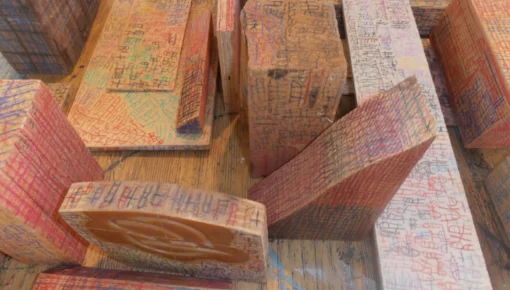
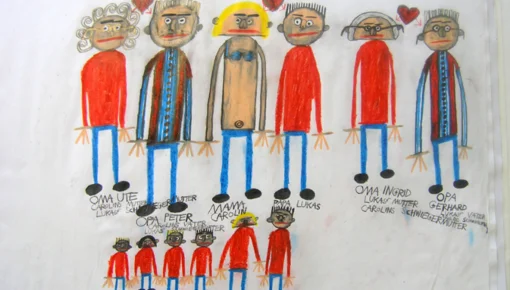
Exhibition for the symposium: "Everything flies, at fly prices..." -reading, writing and storytelling. Thon-Dittmer Palais Regensburg 17 May to 20 June 2022
Programme flyer as pdf (opens in a new window). (This PDF is not accessible)
Description of the
Autismus ist von einem wenig erforschten und greifbaren Syndrom nicht nur zu einem breiten Spektrum sehr diverser Formen der Beeinträchtigungen geworden, sondern beschäftigt auch auf immer intensiver werdende Weise die Kultur, z.B. in Fernsehserien über Menschen aus dem Autismus-Spektrum. Kunst ist dabei nur eines von vielen Mitteln (oder Medien), die als Teil einer ‚Autismuskultur‘ betrachtet werden können, welche es über die konkreten Anforderungen und Probleme im Umgang mit Autismus gibt. Damit entsteht eine Sphäre, die Begegnungen mit Autismus ebenso wie problematische Vorstellungen davon produziert.
Following the exhibition at the Thon-Dittmer Palais, this symposium will focus on the role of the media in connection with autism and 'autism culture'. On the one hand, the focus will be on how the media function of art is used to offer mediation services and what this means for the conception of exhibitions with artists from the autism spectrum (Katharina Dietz, Menia). This consideration will be expanded by a perspective that reacts to this art with the concepts and approaches of media aesthetics and categorises its engagement with media (Christiane Heibach).
Another central theme of the symposium is the study of the media history of autism. The aim is to examine how media have been involved in the construction of ideas, which have often also had consequences for dealing with autism (Herbert Schwaab). Media are not only interesting as a framework for representations of autism, but also as a means used in different ways to compensate for deficits in communication or to provide 'other' images and ideas of autism as a correction to stereotypical representations. An important role is also played by media technologies, which have repeatedly been used as a means of autism therapy, among other things. The fact that with the differentiation of media technologies, the applications have also multiplied and there is an interest on the part of providers to advertise these technologies as a means of therapy with autism is another aspect that is dealt with here (Daniela Wentz). What media means for the artists themselves will be conveyed by the artists Menia and Christine Denck, whose art presented in the exhibition and at the symposium can be understood as art reflecting on aspects such as religion or as media art and as lucid reflections on social networks and mechanisms of self-representation.
The symposium sees itself explicitly as an attempt to create an interface between the exhibition and media studies, represented by the chair in Regensburg, but also to address an audience that is involved with autism in different ways or wants to learn more about it. It is therefore planned not only to introduce the topics mentioned here with short lectures, but also to seek discussion of the positions with the audience in a subsequent roundtable.
Contributors
Kurzvorstellung
Contributors
Katharina Dietz, Board of akku e. V. - Autism, Art and Culture
Christine Denck, artist, Berlin
Prof Christiane Heibach, Chair of Media Studies, University of Regensburg
Menia, artist from Mönchengladbach
Dr Herbert Schwaab, University of Regensburg
Dr Daniela Wentz, Ruhr University Bochum
To the contributors
Prof. Dr Christiane Heibach teaches and researches at the University of Regensburg on topics including media of immediacy and media aesthetics and the connection between the positions of art and media studies.
Katharina Dietz, a qualified cultural worker, has been chairwoman of akku e.V. - Autismus, Kunst und Kultur for two years and has been involved in many exhibition projects for the association since 2010, in which art by people on the spectrum has been shown. Currently working on a thesis on autism and the possibility of setting up a producer's gallery that offers artists on the spectrum the opportunity to benefit financially from art.
Dr Daniela Wentz teaches and researches at the Ruhr University Bochum. In addition to working primarily on the theory, history and aesthetics of digital (image) cultures and following her doctorate with a thesis on the diagrammatic image (published in 2017), she is now working on a book on the relationship between autism and media.
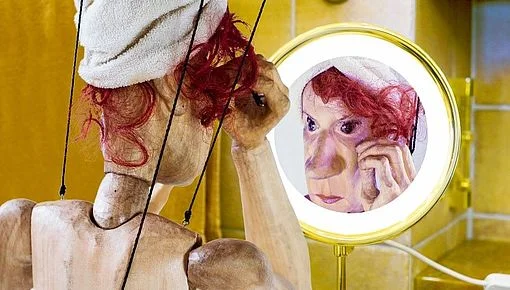
Christine Denk is an artist from Berlin whose media art operates with the alter ego Alphonsin Terego and uses her presence on social networks such as Instagram to explore the mechanisms and motives of identity construction in the new media.
Dr Herbert Schwaab teaches and researches at the Chair of Media Studies at the University of Regensburg on topics including television, popular culture, anime, populism and the mediality of the bicycle. As a board member of akku e.V., he is also involved in a research project on autism representations and their history, which draws on over 50 years of autism literature collected in his family.
Menia is an artist from Mönchengladbach who has participated in numerous exhibitions bya akku since 2009 and has been involved in the association. She has been active on the board of akku e.V. since 2021.
Programme
Samstag, 21. Mai 2022, 16-20 Uhr
4 p.m
Welcome by Dr Herbert Schwaab and Katharina Dietz
16.30 hrs
Introduction to a brief media history of the representation of autism;
Dr Herbert Schwaab, University of Regensburg
5 p.m
Exhibiting the art of people on the autism spectrum. Remarks on the work of akku e.V.;
Menia, Mönchenglattbach and Katharina Dietz, Berlin
17.30 hrs
Media-aesthetic considerations on the exhibition "Alles fliegt, zu Fliegepreisen";
Prof. Dr Christiane Heibach, University of Regensburg
6 pm
Break
18.30 hrs
On the discourse of autism media. The use of media technologies in the autism spectrum;
Dr Daniela Wentz, Leuphana University of Lüneburg
19.3 p.m
Screening of video art by Christine Denck
19.30 hrs
Roundtable with Katharina Dietz, Christiane Heibach, Daniela Wentz, Herbert Schwaab and the artist Christine Denck
8 pm
Get together
Exhibition for the symposium
„Alles fliegt, zu Fliegepreisen…“ - Lesen, Schreiben und Erzählen
Exhibition Thon-Dittmer Palais, Regensburg 17 May to 20 June 2022
Organised by Stadtbücherei am Haidplatz, akku e.V. - Autismus, Kunst und Kultur and Chair of Media Studies, University of Regensburg
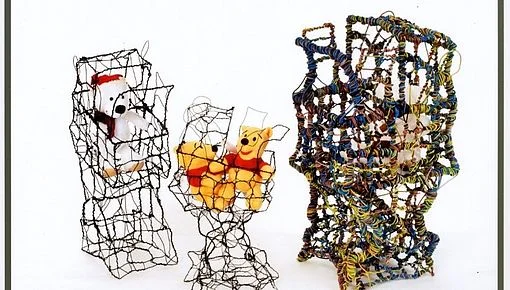
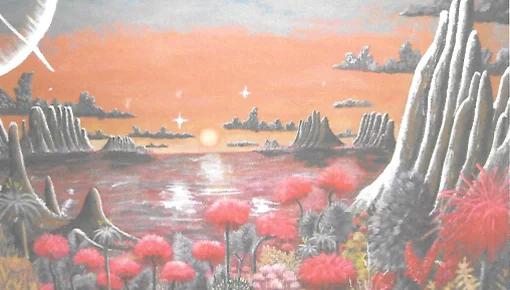
Artists: inside: Deniz Aras, Felix Beilstein, Adolf Beutler, Christine Denck, Menia, Patrick Ott, Andrea Rausch, Marina Sonnenberg, Stefan Wepil
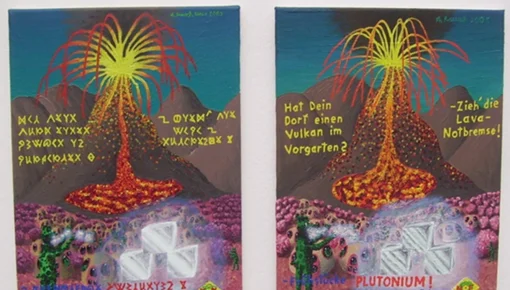
"Everything flies, at fly prices, and without an aeroplane!" This slogan can be found in one of the works by Andrea Rausch, who has developed her own mythology in her paintings, which revolves around motifs of movement and energy with elements such as lava, plutonium, sun or light. She integrates words and sentences into her artworks and sometimes operates in her own script and language, which are translated into our language in duplicates of the artworks. The fact that the art of people from the autistic spectrum has something to tell or communicate offers the opportunity to place the art in a dialogue with the location of the library, the Regensburg City Library, and to focus on works that are about more than sharing and communicating (perceptions), but that "tell, write and read". They tell because, like books, they create connections and develop narratives that extend systemically or serially across several works of art (Menia, Deniz Aras, Marina Sonnenberg). They read because, for example, they receive books and, in response to them, emphasise intertextual references, comment on other works and thus situate themselves in the world or deal specifically with the mechanisms of representation in social media (Stefan Wepil, Felix Beilstein, Christine Denck). They literally operate in the mode of writing and signs and thus refer to the requirements of narrative and related cultural techniques (Adolf Beutler, Andrea Rausch, Patrick Ott).