


Series "KI-Kritik/AI Critique"
(transcript-Verlag), co-editor Prof. Dotzler
Friedrich Kittler: Collected Works
Publication project, co-editing of the estate (Prof. Dotzler)
Moon and media
Moon and Media: Astronoetic Observations on Information Technology (Prof Dotzler)
Matters of Activity
Participation in the Cluster of Excellence Matters of Activity, Associate Investigator (Prof. Heibach)
Ubiquitous computing
Human - Technology - Design. Paradigms of Ubiquitous Computing (FHNW HGK Basel), Associate Investigator (Prof. Heibach)
Construction of Media Authorships
(Publication project together with Prof Dr Angela Krewani and Dr Irene Schütze), de Gruyter, ET: Spring 2020 (Prof Heibach)
Figurations of immediacy
Prof Heibach
Media epistemology and digital knowledge cultures
Heisenberg Professorship | Funded by the German Research Foundation, 2026-2031
The project aims to develop an approach that offers an aesthetico-epistemological counterpart to existing historiographical, conceptual, and methodological approaches in the emerging field of critical AI studies. To this end, the project seeks to ascertain the fundamental change in the relationship between the sensible and the intelligible through machine learning (ML). That means researching how technical systems dehumanize and rehumanize perception and exploring the implications for the knowledge process.
What is new about this approach is that it combines media-epistemological questions with media-aesthetic perspectives and that it uses a praxeological approach to focus decidedly on the empirical investigation of current machine-learning practices. Existing media epistemological work primarily aims to open up and evaluate historical bodies of knowledge or to investigate the genesis of the techniques and structuring concepts that produce current knowledge formations. The project, instead, uses praxeological methods that were developed in the context of science and technology studies, to investigate the fabrication of knowledge in laboratories and at aerospace centers (research line 1) and examines how approaches from the field of critical AI studies highlight the reflexive and critical potential of current positions in the field of media art today (research line 2).
While the first research line focuses on knowledge-generating forms of machine learning, the second theme concentrates on ML in aesthetic practices. The second research line aims to analyze selected works particularly suitable for examining the aesthetic strategies for addressing social, global, and planetary imbalances that ML practices reinforce. The guiding hypothesis is that the artistic works uncover the mystifying discourses surrounding artificial intelligence and offer ways out of practices that sustain inequality. At the same time, some of the works adopt the popular rhetoric of enthusiasm and fear and profit from problematic practices of data collection and annotation.
The project pursues the strategic research objectives to contribute to the interdisciplinary dialogue with the natural sciences and computer sciences and to undertake a self-reflective assessment of media epistemological research. To this end, the planned work combines insights from critical AI studies, media aesthetics, and science and technology studies.
(Prof Papenburg)
AI in the Sky: Orbital Infrastructuring, Planetary Perception, and Digital Twins of the Earth
Individual Research Grant | Funded by the German Research Foundation 2026–2029 | Project team: Prof. Dr. Bettina Papenburg, Jan Knöferl, M.A., Tobias Emmerling, B.A.
The overarching goal of the project is to develop a new theoretical and methodological approach in the field of media studies by conducting exemplary media ethnographic laboratory research at the German Aerospace Center and other selected locations of the Copernicus Earth Observation Program in combination with a dispositive and usage analysis of geo-medial platforms such as Destination Earth (DestinE), which collect data for the development of simulation models, so-called digital twins, of the Earth. Specifically, this means to explore how and for what purpose scientists use machine learning in satellite control and in the evaluation of earth observation data to answer the question of how such media techniques generate insights into planetary climate development. The project seeks to corroborate the hypothesis that the knowledge generated by sensor technology and machine learning in remote sensing suggests not just the hypervisibility and calculability of planetary phenomena but, moreover, is organized around a black box. The predominantly automated infrastructures of data collection and data analysis exclude human perceptual and cognitive performance in favor of a fantasy of predictability and prognostics and relegate human interpretative activity to the beginning – the conception phase – and the end – the interpretation phase – of the knowledge process.
The first sub-goal of the project is to explore the infrastructures and media techniques of planetary perception to determine the relationship between the sensible and the intelligible by evaluating the interactions between the aesthetics and epistemology of satellite images and learning algorithms. Based on the insight that sensing and sense-making drift apart here, the project will explore a middle way between a media epistemology that understands artificial intelligence (AI) as ideology and a media epistemology that focuses on AI as a classification tool.
The second sub-goal is to work out which worldviews are reinforced or undermined by the digital twins of the earth, which simulate different, thematically-oriented future scenarios. The aim is to determine what becomes perceptible and what becomes imperceptible through the suggestion of a planetary oversight and what consequences this has for the self-world relationship. The project claims that the aesthetics of the hyper-visible, which simulation models of the earth imply, anesthetizes the sense of the invisible.
The third sub-goal is to demonstrate the added value that a praxeological-microanalytical approach brings to theory formation in media studies. To this end, the empirically gained insights into the sensory-aesthetic practices of remote sensing are to be linked to the epistemological reflection of the worldviews manifested in the simulation models.
Queer Futures
Queer Futures Series
Is ‘queer’ still a useful concept? How can queer thought and artistic expression contribute to reimagining possible futures?
Queer Futures seeks to attract critical interventions in the debate on queer as a concept, its potential and futurity. Given the problematic legacy of queer, a term mainly associated with white gay male history and thus only partly operative for lesbians, people of color, or trans*, intersex, and non-binary people, this series not only deliberates the possible futures of queer as a concept, but also strives to imagine queer futures.
Aesthetic considerations play an important role in thinking about queer futures. In the context of the series, we understand the aesthetic as the capacity of media environments to profoundly change and reorientate our perception. To this end, Queer Futures promotes theoretically advanced research on a range of creative expressions by feminist, queer, and trans* media artists, filmmakers, photographers, musicians, performers, curators, and writers that materialize futures and forms of community. Contributions address the aesthetics of sexual and gender identities and engage critically and creatively with persisting hegemonic ways that cultural artifacts are produced and exhibited. Queer Futures aims to provide a platform for exploring how various theoretical, artistic, and activist cultures translate, appropriate, critique, and redefine queer as a concept and the visions of the future it generates.
Edited by Bettina Papenburg together with Kathrin Dreckmann and Jami Weinstein (De Gruyter)
https://www.degruyterbrill.com/de/serial/qfs-b/html (external link, opens in a new window)
The media of the 'Truth and Reconciliation' process in Canada
Dr. Fleig, habilitation project on media decolonisation in contemporary Canada
Out of this World - The other side of the media
Dr Michael Fleig
Hate speech in social networks
Viola Melzner M.A.
PhD project on negotiation dynamics in discrimination contexts on social media.
DFG network on the dispositif of quantity/narrative of inflation
-
Dr Vera Bachmann
Formations of (un)knowledge about the electric guitar
Every year, Dr Hendrik Buhl presents his media culture research on the electric guitar at the annual conference of the Gitec Association.
The Internet as an acoustic space
-
Solveig Ottmann (2021): In the frenzy(s) of information. Why the Internet must be thought of as an acoustic space. In: /Auditive Media Cultures/, 3 July 2021. Online: www.auditive-medienkulturen.de/2021/07/03/im-rauschen-der-informationen-warum-das-internet-als-akustischer-raum-gedacht-werden-muss/ (external link, opens in a new window)
Medial arrangements of autism. Literature, film and art
-
Analyses constellations resulting from the preoccupation with autism in three sub-projects.
Sub-project 1: The autism writing scene
Review of autism literature (romances, manuals, biographies, autobiographies of parents, relatives and people with autism from the 1970s to the 2000s. Explores the discourse history of autism, the constructions of meanings (refrigerator mothers etc.), therapies (holding therapy, behavioural therapy etc.) in connection with paradigms.it explores the discourse history of autism, the constructions of meaning (refrigerator mothers etc.), therapies (holding therapy, behaviour therapy etc.) in connection with paradigms of research (cybernetics, psychoanalysis, constructivism) and medial domestic, familial constellations of relatives who (have to) become autism experts.
Sub-project 2: Contributions of autism to the aesthetics and narration of films.
Subproject 3: Exploring the aesthetics of autism through the art of people with autism.
(Dr Herbert Schwaab)
Series research and television science
Book project together with Dominik Maeder (University of Bonn, media studies) and Denis Newiak (Brandenburg Centre for Media Research - ZEM, to be published in the publication series of the Brandenburg Centre for Media Research by Kadmos Verlag (financed by ZEM) in early 2020.
The book project emerged from a conference of the GfM's Television Working Group, which took place in Potsdam in 2018 and was organised by the editors and the ZeM.
(Dr Herbert Schwaab)
Trump and television: Media, reality, affect and politics
Book project together with Dominik Maeder (University of Bonn), Stephan Trinkaus (University of Bielefeld), Anne Ulrich (University of Tübingen) and Tanja Weber (University of Bremen), Herbert von Halem Verlag, ET: Spring 2020.
The book project is the result of a conference organised by the editors in Tübingen in 2017 as an event of the GfM's Television Working Group. (Conference sponsored by the GfM and the SFB Bedrohte Ordnungen).
(Dr Herbert Schwaab)
The bicycle and the media
Book project together with Julia Bee, Markus Stauff, Linda Keck and Ulrike Bergermann for 2020.
Various contributions on the mediality of the bicycle, which go back to a workshop "Bicycle utopias" at the GfM conference in Cologne 2019.
(Dr Herbert Schwaab)
TV culture and criticism
-
The blog "TV Culture and Criticism" (external link, opens in a new window) was created as part of an exercise by Dr Herbert Schwaab in media studies at the University of Regensburg. The blog
collects reviews on the most diverse facets of television culture
Television culture, ranging from arte (Breaking Bad) to RTLII (Die Geissens)
(The Geissens). The aim is to establish a form of criticism that takes into account the nature, reception
Reception and fascination for the medium. We are
open to contributions that broaden the debate on television.
http://tvkulturundkritik.blogspot.de/ (external link, opens in a new window)
Visual studies
Research Group: Visual Studies
Publication(s):
Bernhard J. Dotzler, Failure? Farewell? Destruction! A short reflection on Visual Studies, or Visual Studies contra Bildwissenschaft. In: James Elkins et al. (eds.), Farewell to Visual Studies, Pennsylvania University Press 2015, pp. 215-217
Bernhard J. Dotzler, Thinking Images. On the critique of image criticism. In: Marc Greenlee et al. (eds.), Seeing Images. Perspectives on visual studies, Regensburg 2013, pp. 103-118
Bild/Kritik, ed. by Bernhard J. Dotzler, Berlin 2010.
Regensburg Association for Advertising Research (RVW)
The Virtual Laboratory
The Virtual Laboratory (external link, opens in a new window) was initiated by the research project "The Experimentalization of Life" (2000-2011). Based on a cooperation with Bauhaus University Weimar (Prof. Schmidgen, Prof. Stein) and the Max Planck-Institute for the History of Science, Berlin, it is further developed by the program in Media Studies at the University of Regensburg.
Life Writing and Life Narrative
Verena Baier
PhD project on the role of life writing in social movements
Digital Memoryscapes: Remembering and Historiography on the Net
Verena Baier
Project on the analysis, methods and functions of digital memoryscapes and activist digital archives
Publications (selection)



Michael Fleig (2024). Von Hand gedacht – Zum Werk von Michel Gondry. https://verlag.koenigshausen-neumann.de/product/9783826066450-von-hand-gedacht/ (external link, opens in a new window)
Bettina Papenburg & Kathrin Dreckmann (Hg., 2024). Queer Pop Aesthetic Interventions in Contemporary Culture. https://www.degruyterbrill.com/de/document/doi/10.1515/9783111013435/html (external link, opens in a new window)
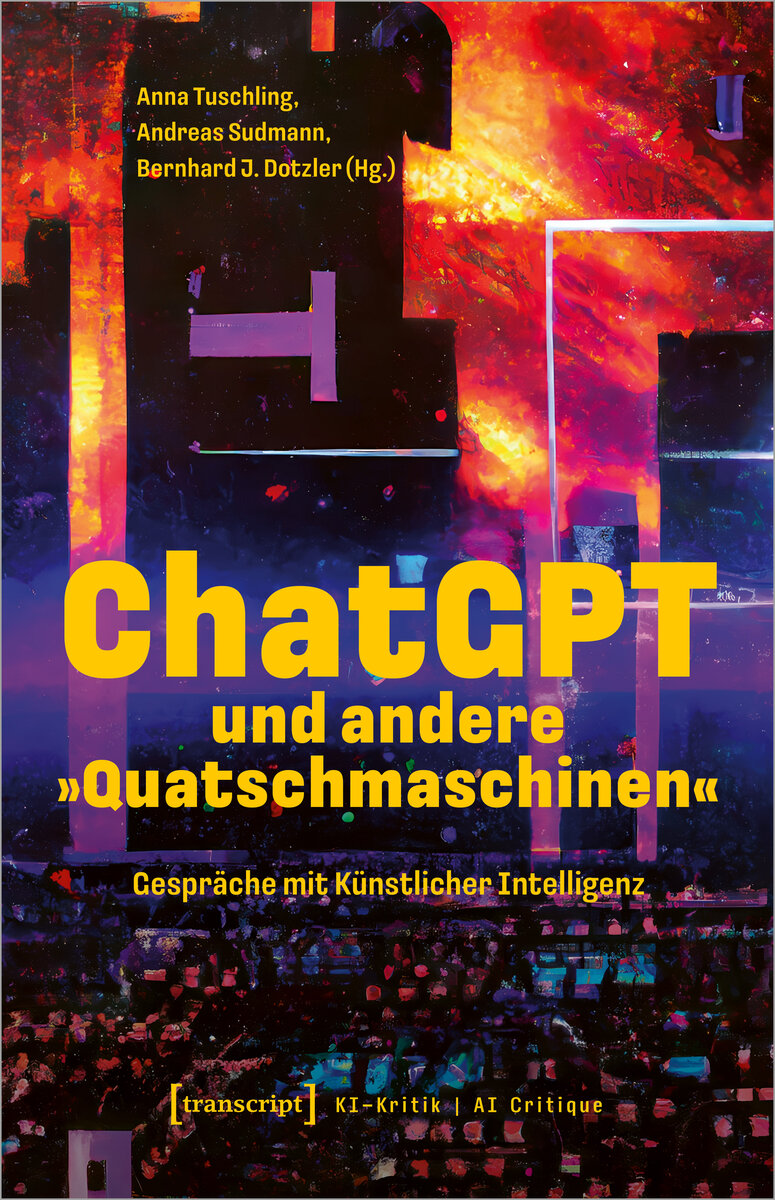
Bernhard J. Dotzler, Anna Tuschling & Andreas Sudmann (2023). ChatGPT und andere »Quatschmaschinen«. Gespräche mit künstlicher Intelligenz.
https://www.transcript-verlag.de/978-3-8376-6908-4/chatgpt-und-andere-quatschmaschinen/ (external link, opens in a new window)
Vera Bachmann & Johanna-Charlotte Horst (Hg., 2023). Weibliche Kollektive. Reihe: Dispositiv der Menge, Band: 2. https://brill.com/edcollbook/title/60925 (external link, opens in a new window)
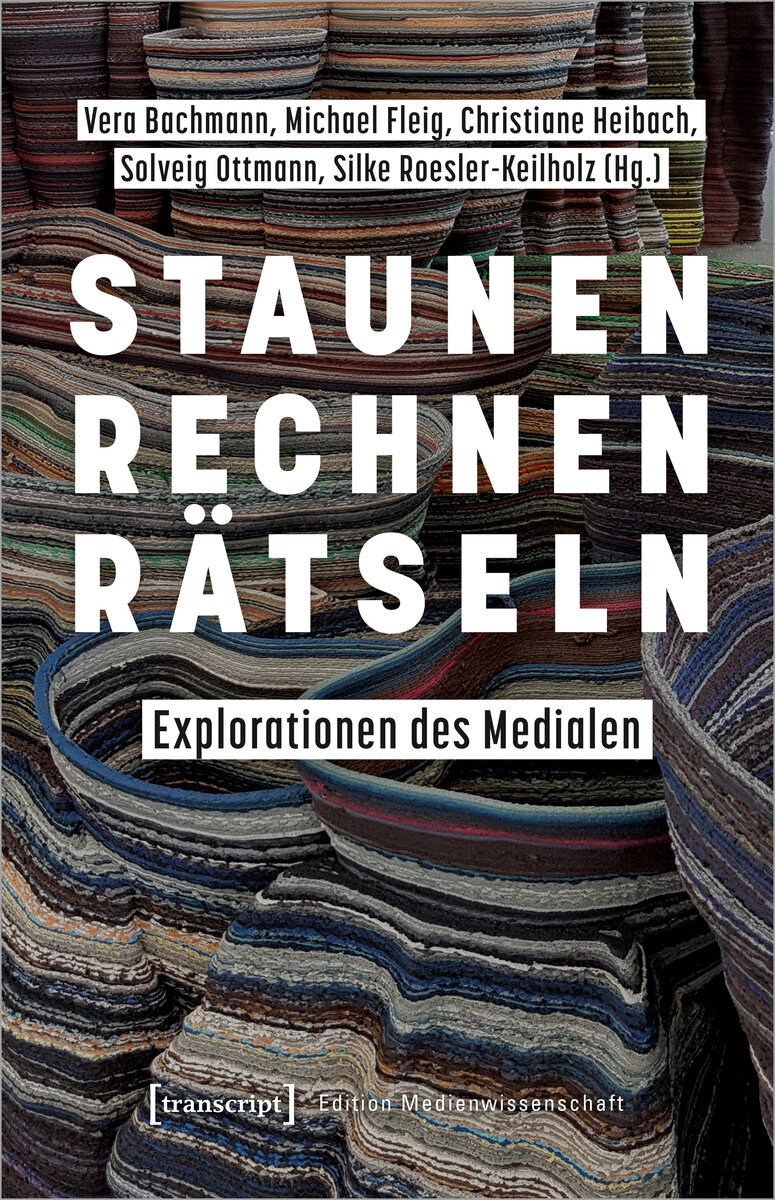
Vera Bachmann, Michael Fleig, Christiane Heibach, Solveig Ottmann & Silke Roesler-Keilholz (Hg., 2023). Staunen – Rechnen – Rätseln. Explorationen des Medialen. https://www.transcript-verlag.de/978-3-8376-6262-7/staunen-rechnen-raetseln/?number=978-3-8394-6262-1 (external link, opens in a new window)
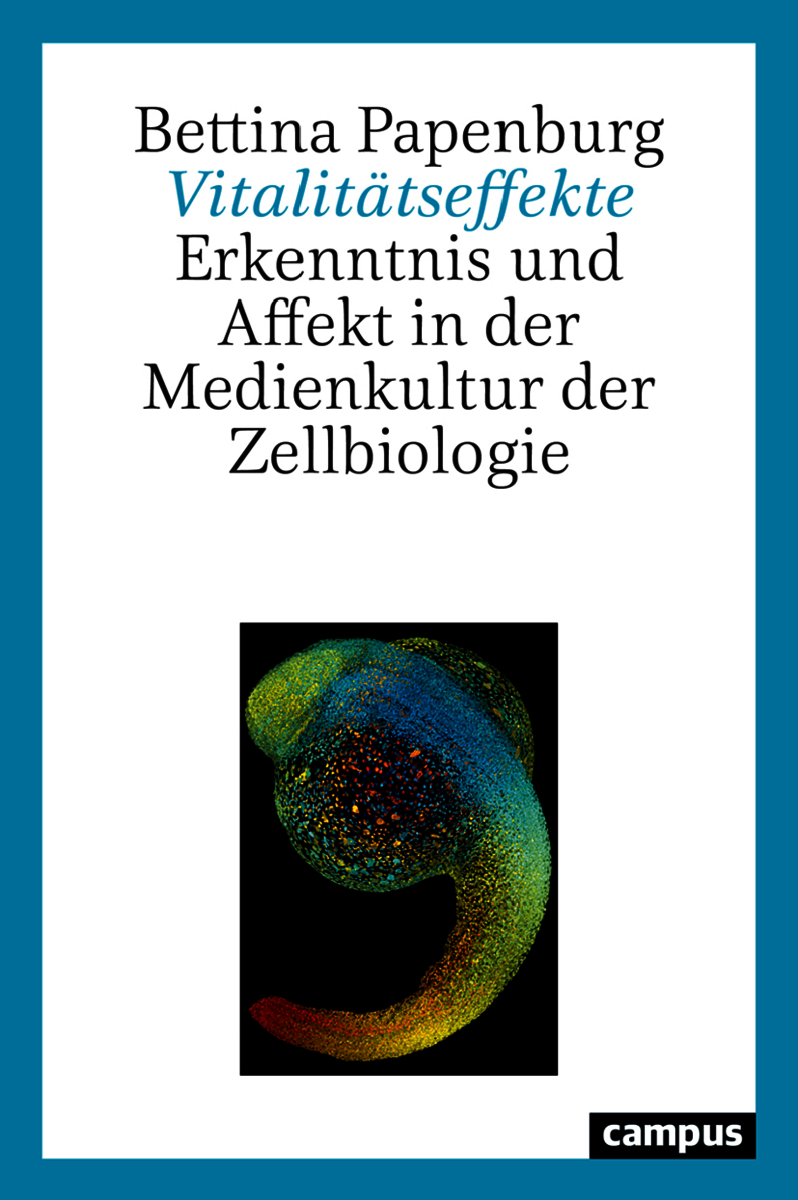
Bettina Papenburg (2023). Vitalitätseffekte. Erkenntnis und Affekt in der Medienkultur der Zellbiologie. https://campus.de/wissenschaft/kulturwissenschaften/vitalitaetseffekte/CAM51731 (external link, opens in a new window)