



Mice
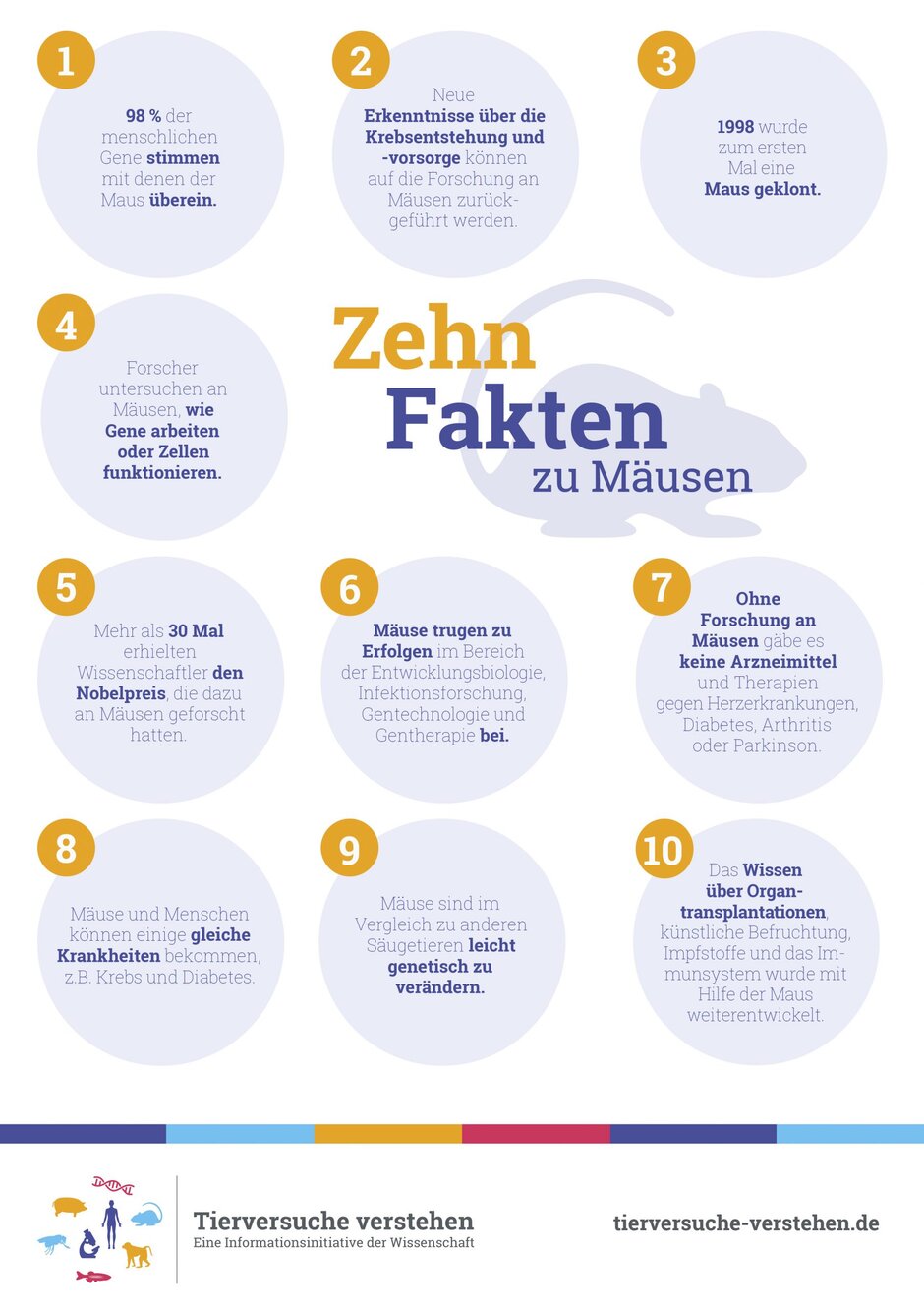
Why mice are used in research
Mice are one of the most important models in biomedical research worldwide because they share many basic biological characteristics with humans and at the same time can be kept and studied well under standardised conditions. Many complex processes can only be reliably investigated in a living organism - such as the interaction between organs, the immune system and metabolism. In addition, mice are very well described scientifically, there are numerous established examination methods, and keeping them under standardised conditions enables easily comparable results.
Advantages
Mice develop quickly, have short generation times and can therefore be easily planned for studies and breeding projects. The controllable housing conditions (e.g. light regime, hygiene, feeding) reduce disturbing influences and increase the validity of the data.
Limitations and disadvantages
Results from mouse models are not automatically transferable 1:1 to humans because there are species-specific differences. Environmental and husbandry factors (e.g. noise, odours, handling) can also influence behaviour and physiology, which is why a high standard of husbandry and work processes is important.
Genetically modified mice
Genetically or genetically engineered mice allow individual genes to be specifically altered in order to better understand disease mechanisms or to model diseases. Such lines can make research more precise, but require particularly careful evaluation and monitoring, as genetic changes can also cause unexpected stress for the animals.
Lifespan and husbandry
Mice are generally short-lived; their lifespan is typically a few years and depends on lineage, health status and intended use in research and breeding. Cages with a solid floor and bedding, suitable nesting material and (where appropriate) retreat options are important elements of animal-friendly housing; stable light/dark rhythms, a good microclimate and social aspects of group housing also play a key role.
Rats
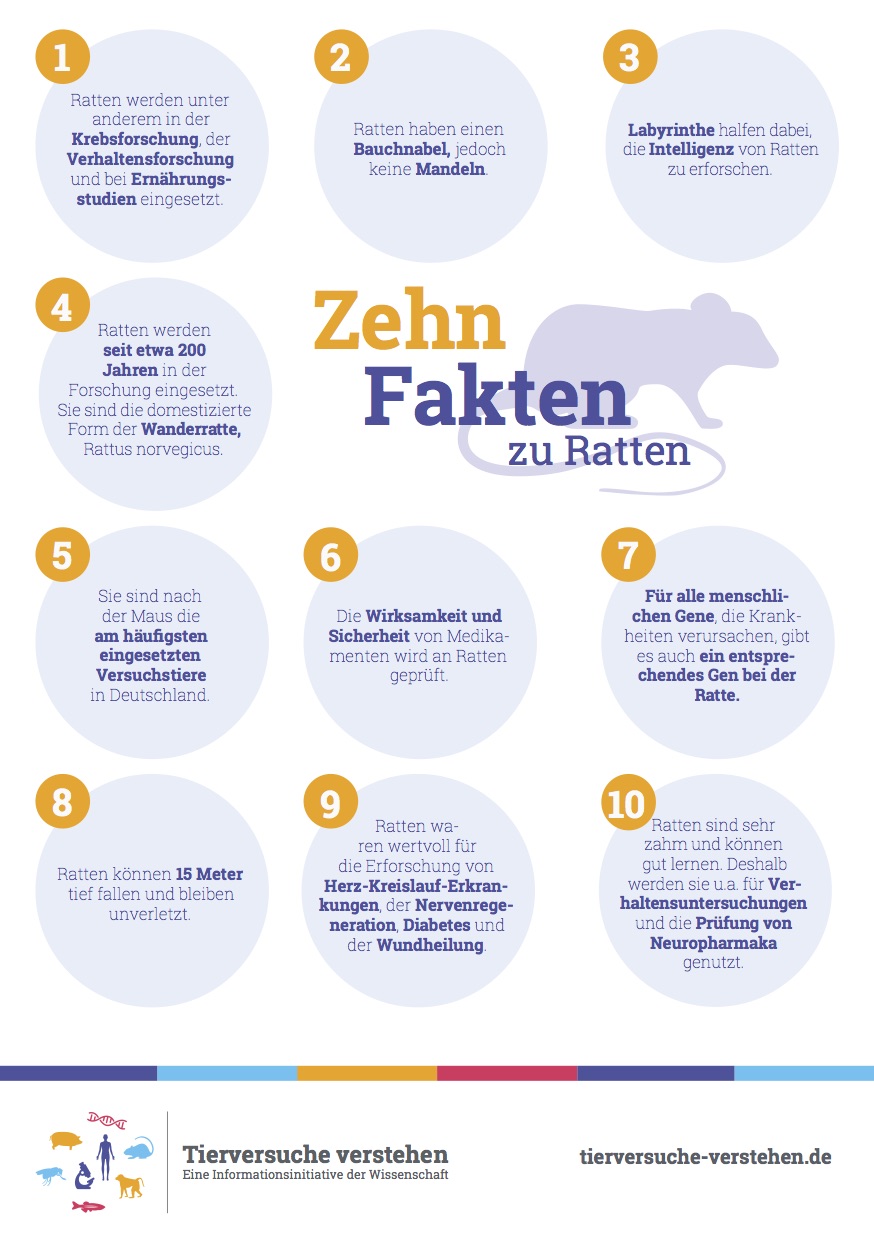
Why rats are used in research
Rats are used in biomedical research because many complex bodily functions can only be reliably investigated in a living organism - such as interactions between organs, the nervous and endocrine systems, the immune system and metabolism. Rats are also long-established model animals; extensive comparative data and proven research methods are available for many questions (e.g. in physiology, behavioural research, pharmacology and toxicology).
Advantages
Rats are larger than mice, which can make certain investigations technically easier (e.g. repeated sampling or measurements). Their learning and social behaviour is particularly suitable for some behavioural and neuroscientific questions. Under standardised conditions, environmental factors can be better controlled, which supports the comparability of results.
Limitations and disadvantages
Results from rat models are not automatically transferable 1:1 to humans and must always be categorised critically. Compared to mice, rats require more space and resources, and stress, handling and environmental stimuli (e.g. noises, odours, light) can also influence animal welfare and measured values. Therefore, calm, well-planned procedures and careful familiarisation with people and routines are particularly important.
Genetically modified rats
Genetically modified rats are used to specifically alter individual genes in order to better understand disease mechanisms or to model diseases. Such models can make research more precise and are an important supplement to mouse models in some areas. At the same time, they require particularly careful evaluation and monitoring because genetic changes can have unexpected effects on health, behaviour and stress.
Lifespan and husbandry
Rats are generally short-lived; in human care, the lifespan is typically a few years and depends on lineage, health status and intended use, among other factors. Sufficient space, a structured environment with bedding, nesting material and retreats are important for animal-friendly housing. Rats are social animals and are generally kept in stable groups; suitable group compositions and good observation are essential in order to recognise and avoid stress and conflicts at an early stage.