

Control
The ZTL's animal facilities are subject to inspection by the Environmental Agency of the City of Regensburg (external link, opens in a new window). An official licence is required for the breeding and keeping of laboratory animals in accordance with § 11 of the Animal Welfare Act. In this context, regular on-site inspections are carried out by the veterinarians of the Environmental Agency, a significant proportion of which are unannounced.
Team
In accordance with legal requirements, the animals must be checked every day. This means that animal carers and/or veterinarians are on site 365 days a year to check the animals' well-being and ensure that they are cared for. Our team includes animal carers, technical assistants, veterinary assistants, biologists, vets and students. We are all committed to the welfare of our animals and do everything we can to ensure that the animals are healthy when they enter the trials and are not subjected to unnecessary suffering.
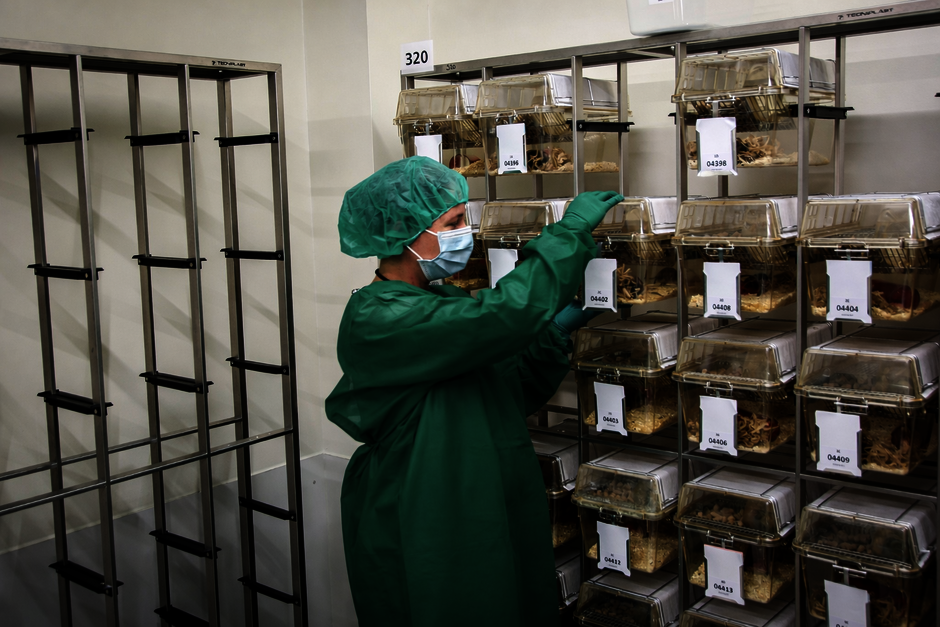 Foto: UR
Animal husbandry area
Our animal husbandry meets the latest requirements for keeping animals for research. All our animal husbandry areas are high hygiene laboratories and are subject to the regulations for genetic engineering safety areas. Therefore, only authorised persons are allowed to enter. In this way, we protect our animals from pathogens and stress factors that could affect their well-being.
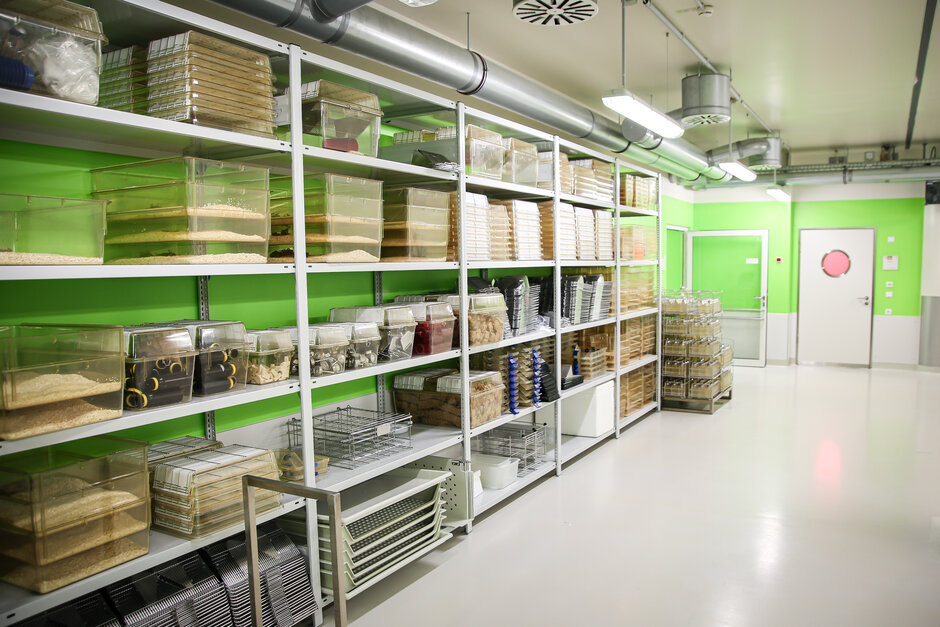 Foto: UR
Small rodent
Mice and rats are very social, which is why we keep all animals in groups. To enrich the housing environment, each cage is equipped with bedding, nest-building material and tunnels or houses. These are made of red Perspex so that the animals can feel safe as if they were in a dark cave. To provide the animals with additional incentives, our keepers use little tricks such as gnawing sticks or sunflower seeds, which the animals can dig out of the bedding.
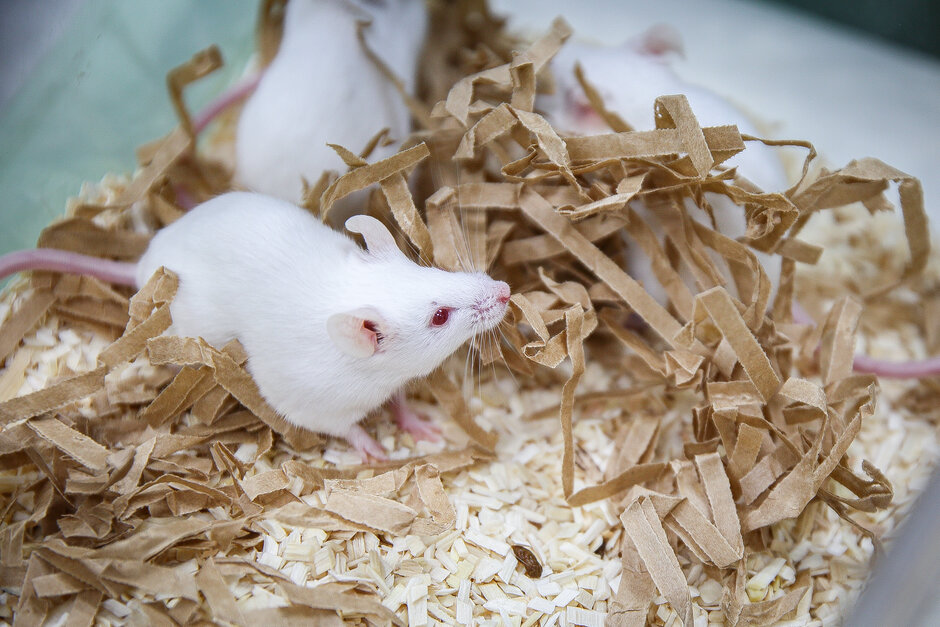 Foto: UR
Rabbit
Rabbits are not kept in cages, but in mobile pens on the floor. These so-called pens can be connected for larger groups of animals to give the rabbits more space. If necessary, partitions can be inserted at any time to separate animals in the event of incompatibilities or similar. These pens are of course equipped with food, water and bedding, but also with hiding places and gnawing material. (At present, no rabbits are kept at the ZTL.)
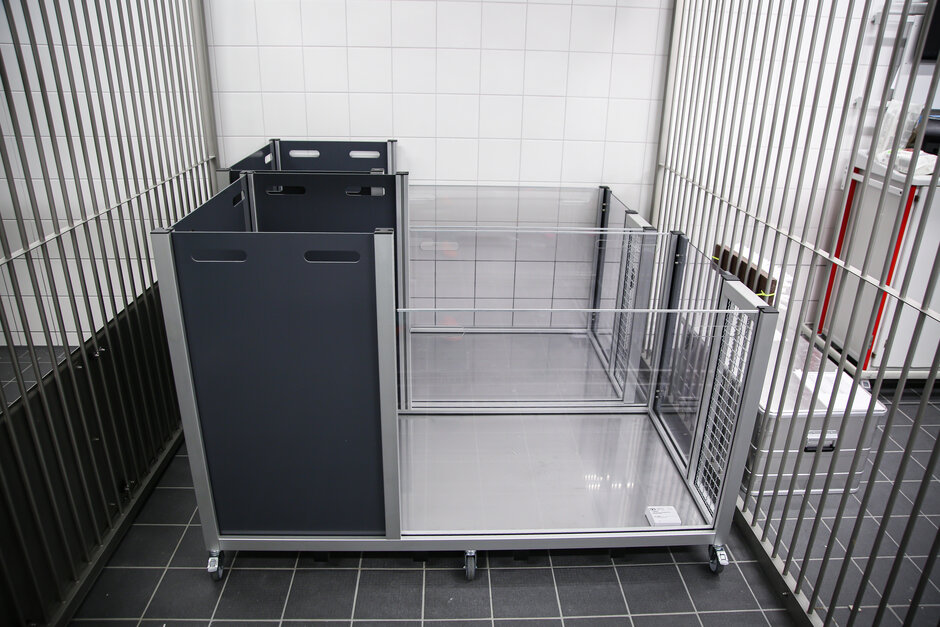 Foto: UR
Handling of mice (poster)
Our trainee carefully trained the animals to take photos of our mice so that they could be photographed without stress. This procedure corresponds to the 3Rs principle, in particular the aspect of "refinement", i.e. the improvement of husbandry and experimental conditions in order to promote the welfare of the animals. She has vividly summarised the procedure she developed in a poster | PDF (opens in a new window). (This PDF is not accessible) (German version only).