

Atomic Spectroscopy and other Spectroscopies
Trace elemental analysis, Reflectometry, CL, ECL and CD spectroscopy
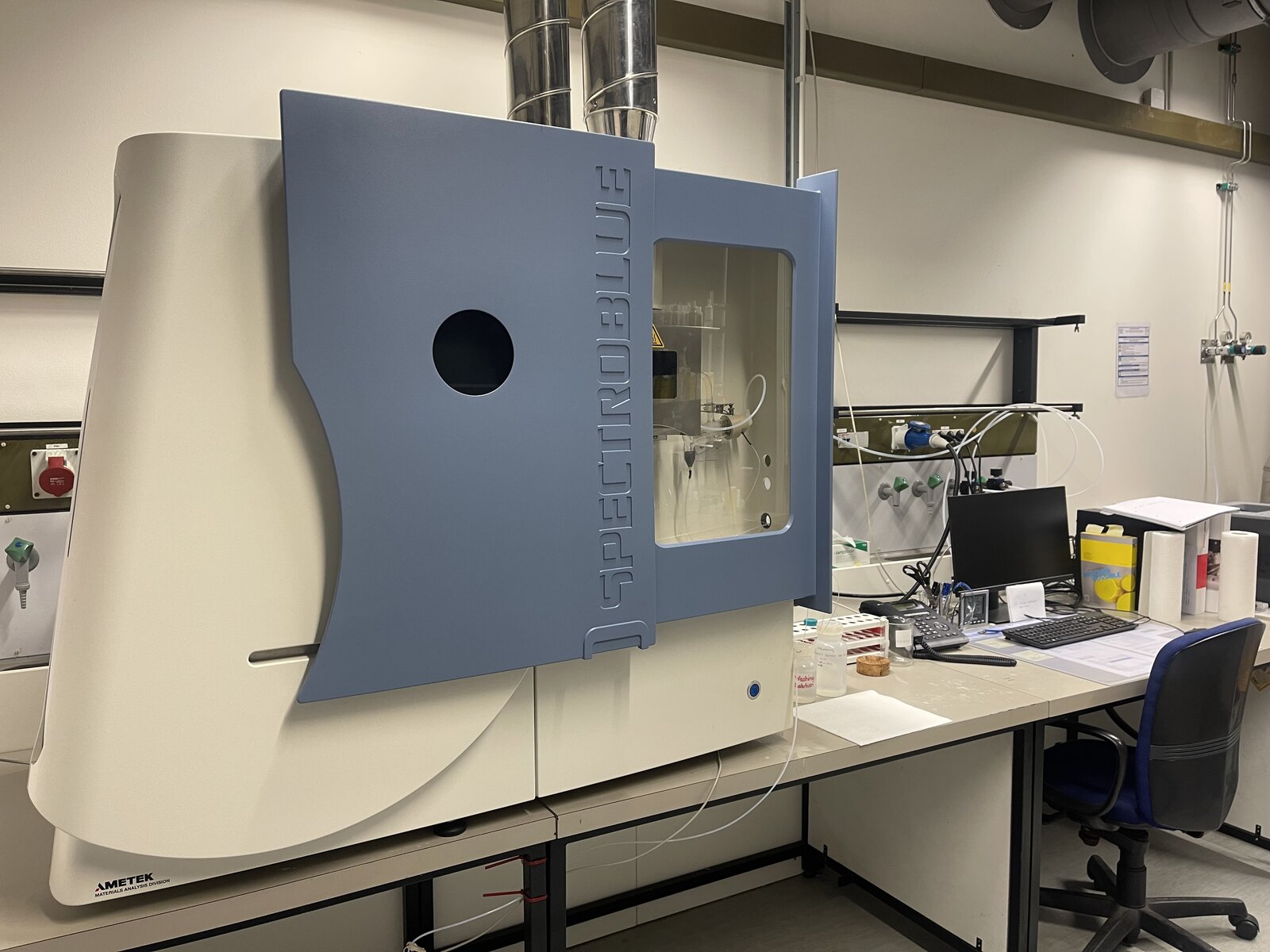
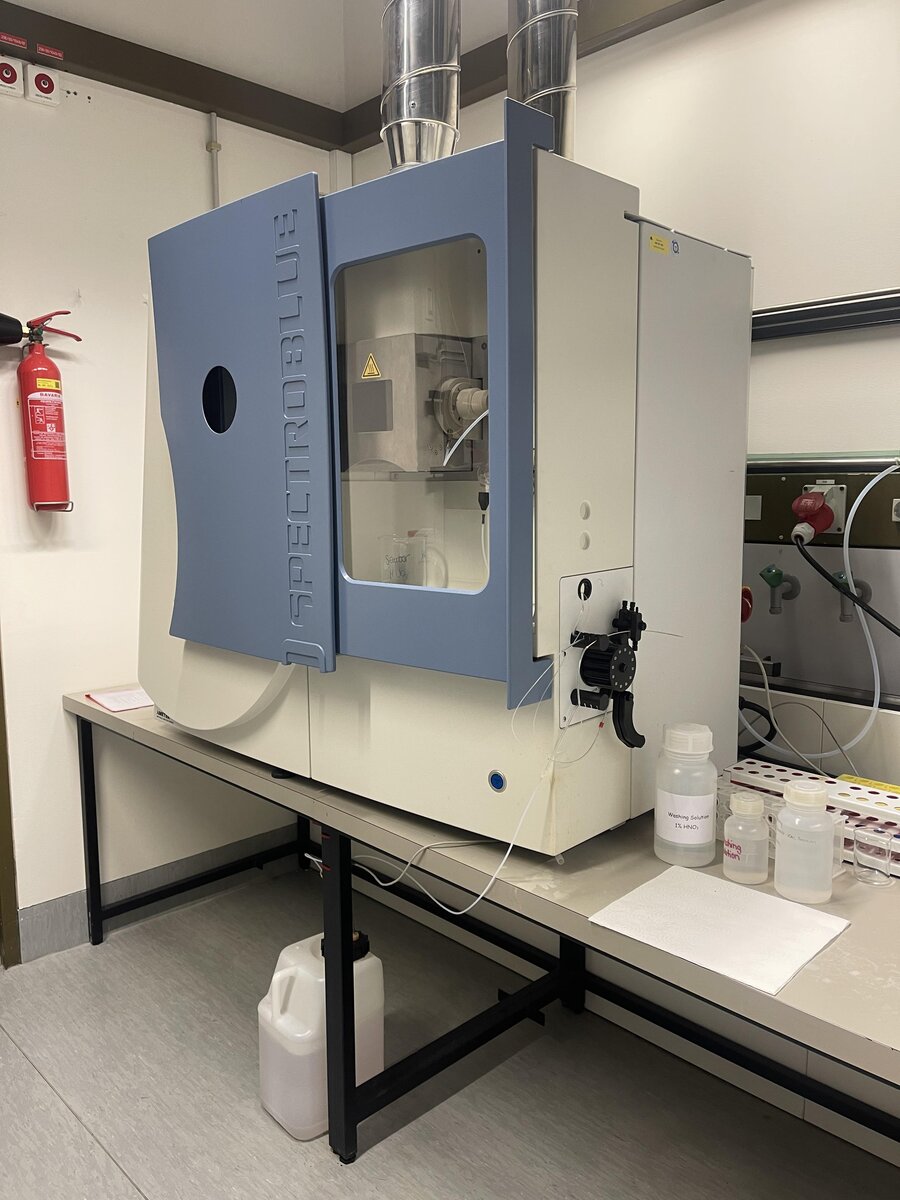
Axel Dürkop founded and is heading the atomic spectroscopy facility at the Faculty of Chemistry & Pharmacy of the University of Regensburg for over 20 years. Trace elemental analysis via a dual-view ICP-OES instrument is offered for all research groups in Chemistry, Pharmacy, Biology and Medicine. As example, we routinely determine lanthanide contents in doped upconverting nanoparticles for the control of their purity and of dopant elements. Further, phosphate contents are determined for characterization of liposomes. For the physiology department, alkaline elements in mice livers were determined to follow the metabolic effects of the knock-out of various proteins. Another application was the quantitation of various metal ions in different plant species for the botany department of the faculty of biology and preclinical medicine. Further informatio (öffnet neues Fenster). (nicht barrierefrei)n can be found here.
Our group uses most techniques of optical molecular spectroscopy. We cover reflectometry, photometry, polarimetry, circular dichroism spectropolarimetry and all parameters of luminescence (intensity, polarization, lifetime, delayed luminescence, electrochemiluminescence and chemiluminescence). Optical sensors are read out continuously in flow-through cells, via fiber optics or in microplates.
ICP-OES SpectroBlue - SPECTRO Analytical Instruments GmbH - Room CH 32.01.21
Selected publications:
Figalist C, Duerkop A, Baeumner AJ, 2019, Nanocontainers for analytical applications, Angew Chem Int Ed 58:12840-12860, DOI: 10.1002/anie.201811821 (externer Link, öffnet neues Fenster)
Mayer M, Takegami S, Neumeier M, Rink S, Jacobi von Wangelin A, Schulte S, Vollmer M, Griesbeck AG, Duerkop A, Baeumner AJ, 2018, Electrochemiluminescence Bioassays can outperform Fluorescence assays using a new water-soluble Luminol Derivative, Angew Chem Int Ed 57:408-411, DOI: 10.1002/anie.201708630 and 10.1002/ange.201708630 (externer Link, öffnet neues Fenster)
Assmann N, Dettmer K, Simbuerger JMB, Broeker C, Nuernberger N, Renner-Sattler K, Courtneidge H, Klootwijk ED, Duerkop A, Hall A, Kleta R, Oefner PJ, Reichold M, Reinders J, 2016, Renal Fanconi´s Syndrome Is Caused by a Mistargeting-Based Mitochondriopathy, Cell Rep 15:1423-1429, DOI: 10.1016/j.celrep.2016.04.037. (externer Link, öffnet neues Fenster)