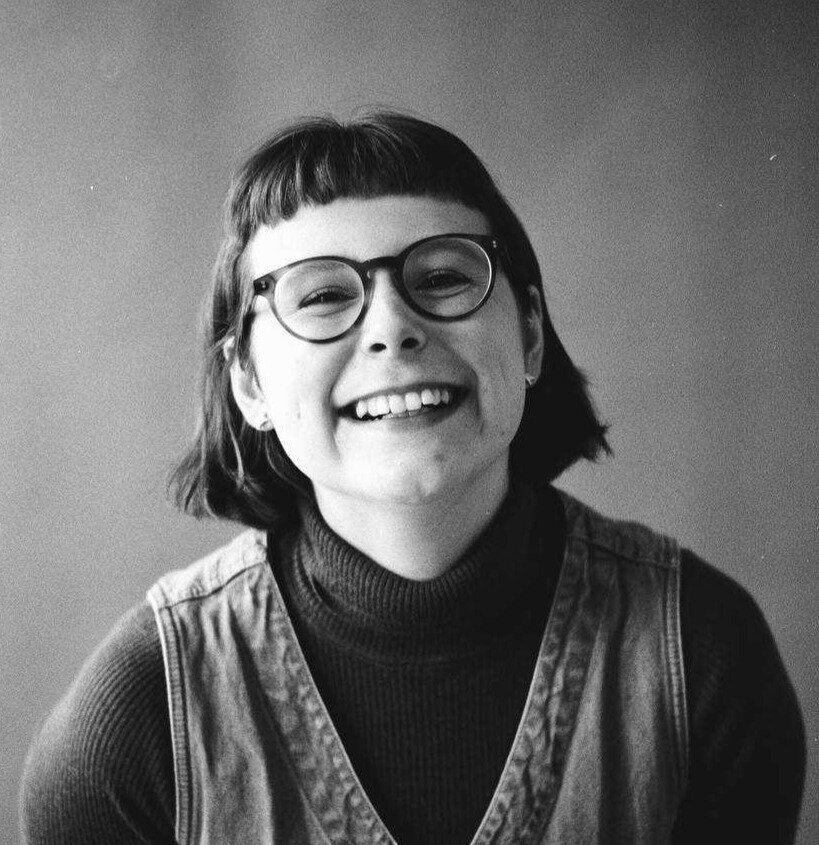

Gözde: To start with, Olga, could you tell us a bit about your research background?
Olga: I’m a social researcher working on the topics of gender and sexuality, parenting, and family. My PhD research, which I worked on for the past four years, focused on how LGBTQ+ parents have and raise children in a hostile and authoritarian context of the contemporary Russian Federation. I was particularly interested in how the parents navigate risk and disclosure, build community under conditions of state-sponsored queerphobia, and, in many cases, ultimately decide to migrate.
At the heart of the project was a broader question: who is ‘allowed’ to become a parent in the Russian Federation and why? The research was primarily based on in-depth interviews with parents, exploring their memories of living in the Russian Federation, their strategies of everyday negotiation of risk and resistance, and their migration journeys. Two articles based on the research will hopefully be coming out this year, so do watch this space.
Before that project, I researched access to abortion, commercial surrogacy, and transnational assisted reproduction. This project is a great place for me to continue my research by exploring the topics of reproduction and family, and how these are shaped by the forces of religion, memory politics, and cultural change.
G: Did you work on related projects before joining the team?
O: As you can probably tell, my research has largely focused on the region and the different contexts, tensions, and relationships within it. For example, although the LGBTQ+ parents I interviewed for my PhD were from the Russian Federation, they migrated to different countries, some ended up in the EU and the UK, mostly as asylum seekers, and some in Georgia and Türkiye, where they attempted to build diasporic networks and integrate into local communities. While researching surrogacy and assisted reproduction, I also examined the transnational networks of surrogates and clinics between Georgia, Kazakhstan, the Russian Federation, and Ukraine, all countries where commercial surrogacy is legal and regulated. While Azerbaijan and Kyrgyzstan are new contexts for me, I’m excited to find new connections and transnational networks.
G: I know you have just started at the project, but what are you most excited about as you join the team?
O: Working within a large multidisciplinary team is always exciting. The project brings together researchers working on very different themes and approaches, which opens up valuable opportunities for collaboration and learning. For example, your work on political transition in Azerbaijani cinema reminds me of the films I watched when working as a curator at a film charity but never got to look at properly as part of my research. In terms of my contribution the project, I’ve been reading about the changes in the family structures and reproductive governance in the region during the ‘long 1990s’, the tensions between the inherited Soviet policies, pronatalism, and liberalisation, the different international actors involved in those changes. Going back to the question that interested me in the PhD —who is ‘allowed’ to become a parent and why? — this same question is relevant for the post-colonial, religiously and ethnically diverse contexts of Azerbaijan and Kyrgyzstan.
G: Thank you, Olga, and welcome once again to our team. We look forward to collaborating with you and following the development of your work within the project.