How do people imagine, narrate, create, and sustain belonging to places shaped by war, political change, displacement, exile, and the new encounters that emerge from them? This question has accompanied me since joining the Transitions team almost a year ago and has shaped my current research, which develops along two interconnected strands. The first strand examines Azerbaijani cinema in the 1990s and early 2000s as a site of identity construction. During this transition period, film functioned as a crucial medium through which national identity was continuously reconstructed. Azerbaijan, recall, had only recently gained its independence from the Soviet Union in 1991, and in the early years of independence, the country’s leadership sought to forge a close connection with Turkey and a pan-Turkic identity. Debates about the place of Azerbaijan’s ethnic minorities within the state, and military defeats to Armenia and refugee crises during the First Karabakh War, only sharpened these tensions. As national identity itself remained contested, even the seemingly neutral founding date of Azerbaijani national cinema became subject to revision, revealing how state institutions retrospectively projected national identity into the past.
My research picks up from this historical context and focuses in particular on films addressing the First Karabakh War, asking how masculine and patriarchal cinematic codes rooted in the Soviet period shaped the national imaginary of the transition era. By examining this body of films as a whole, I explore certain female characters and marginal figures whose portrayal unsettles dominant nationalist and militarist frameworks of wartime representation. These figures, I argue, open space for empathy, ambivalences, internal tensions, and moments of ethical hesitation.
The second strand of my project focuses on Azerbaijani émigré political communities that emerged following the Sovietization of Azerbaijan in 1920, whose members initially found refuge in Turkey before spreading across Europe to Berlin, Paris, Warsaw, and beyond. Such groups were active primarily during the early twentieth century and the Cold War, but their publishing and organizing activities created an alternative framework for Azerbaijani nationalism to that promoted by the Soviet Union. Following the collapse of the Soviet Union, their projects formed a set of “ideas lying around” that could inform the now urgent project of forging a new vision of Azerbaijani nationalism.
Through close readings of a wide range of émigré journals, from Yeni Kafkasya, published in Istanbul in the 1920s, to Azerbaycan, launched in Ankara in 1952 and continuing into the 2000s, I trace the cultural, intellectual, and political trajectories of these figures across several decades. These émigrés were not a homogeneous or ideologically unified community; their positions were contingent and shaped by shifting geopolitical conjunctures, caught between the demands of host states, Soviet surveillance, and their own competing visions of Azerbaijani nationhood. One of the central questions concerns their engagement with the idea of a Caucasian Confederation, which found formal expression in the Confederation Pact signed in Brussels on 14 July 1934. I ask how pan-Caucasian confederalist visions coexisted with national aspirations and what forms of transnational solidarity such a project entailed.
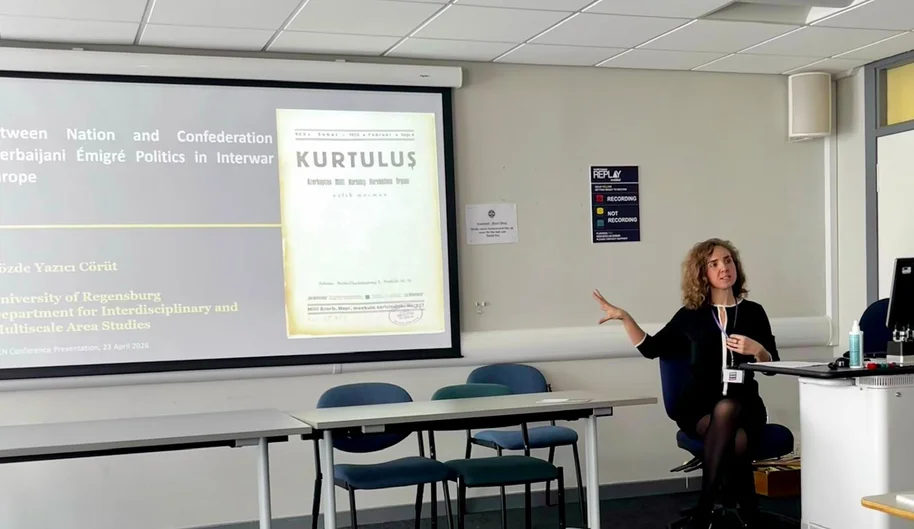
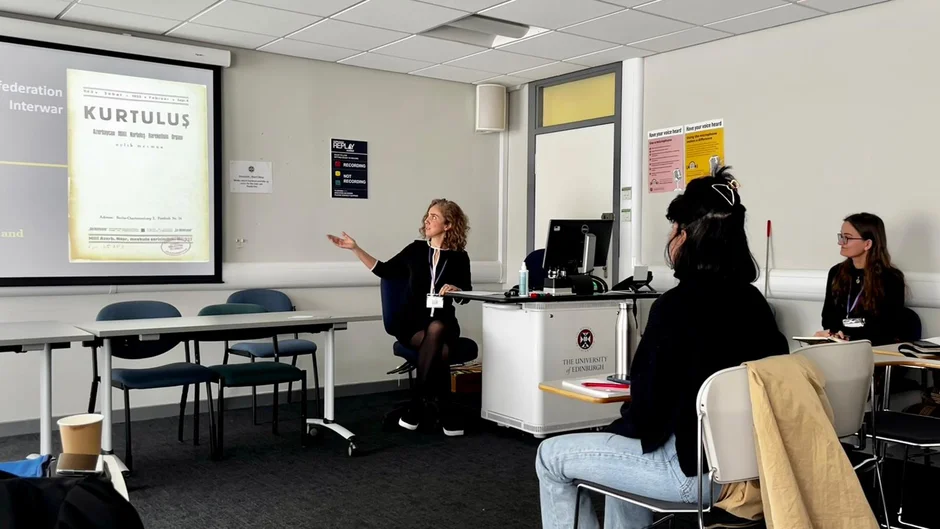
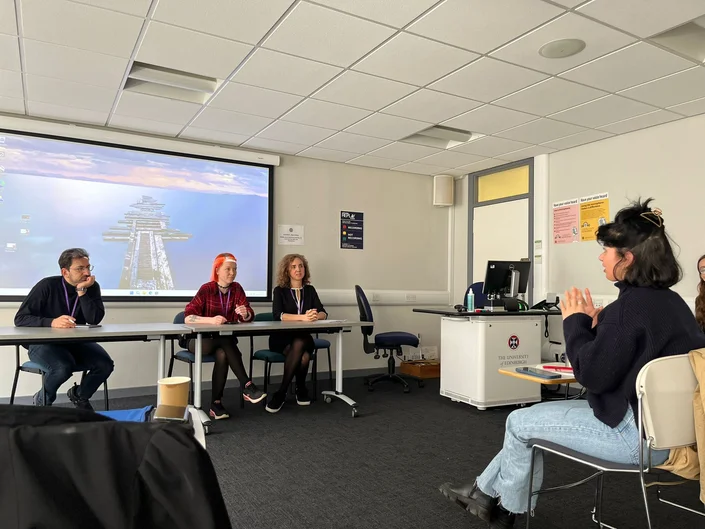
An early finding from this second strand of my research formed the basis of the paper I presented at the 2026 Annual Conference of ASEN, held in Edinburgh from 21–23 April 2026. My paper, titled “Between Nation and Confederation: Azerbaijani Émigré Politics in Interwar Europe,” examined how Kurtuluş constructed the idea of a Caucasian Confederation not merely as a rational political project, but as an emotional and transnational community in exile—one in which mourning, solidarity, and the memory of lost statehood were mobilized as resources for imagining a shared political future. The paper argued that the confederal vision articulated in Kurtuluş, alongside its commitment to an independent Azerbaijan, represented an attempt to move beyond the limits of the nation-state and to imagine alternative forms of political order. Although this political vision ultimately failed, it offers important insights into the ideological flexibility and strategic pragmatism of Azerbaijani émigré politics in the interwar period.
Both strands of my current research grow out of a long-standing engagement with the entangled histories of the former Ottoman and Russian imperial worlds and their successor states across Eurasia. This transimperial and transnational perspective is what I bring to the Transitions team. I am especially excited to draw further on the project’s decolonial framework, which approaches cultural production not merely as representation, but as a critical space where local actors negotiate, contest, and reimagine imperial legacies through the intersecting axes of gender and religion.