

Multilingualism | Multilingualism | Багатомовність
 © BAYHOST 2025
Program of the workshop as PDF (opens in a new window). (This PDF is not accessible)
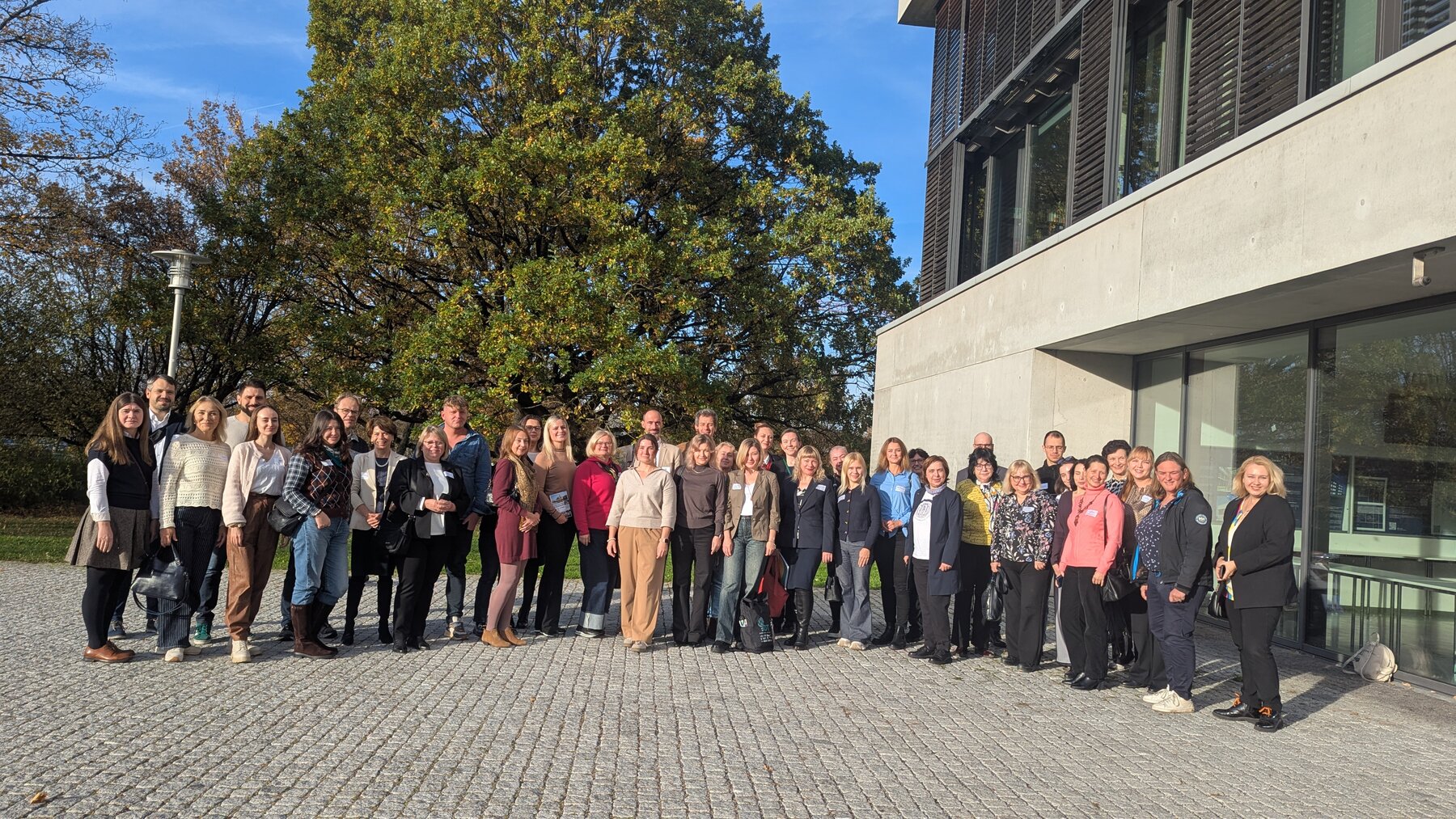
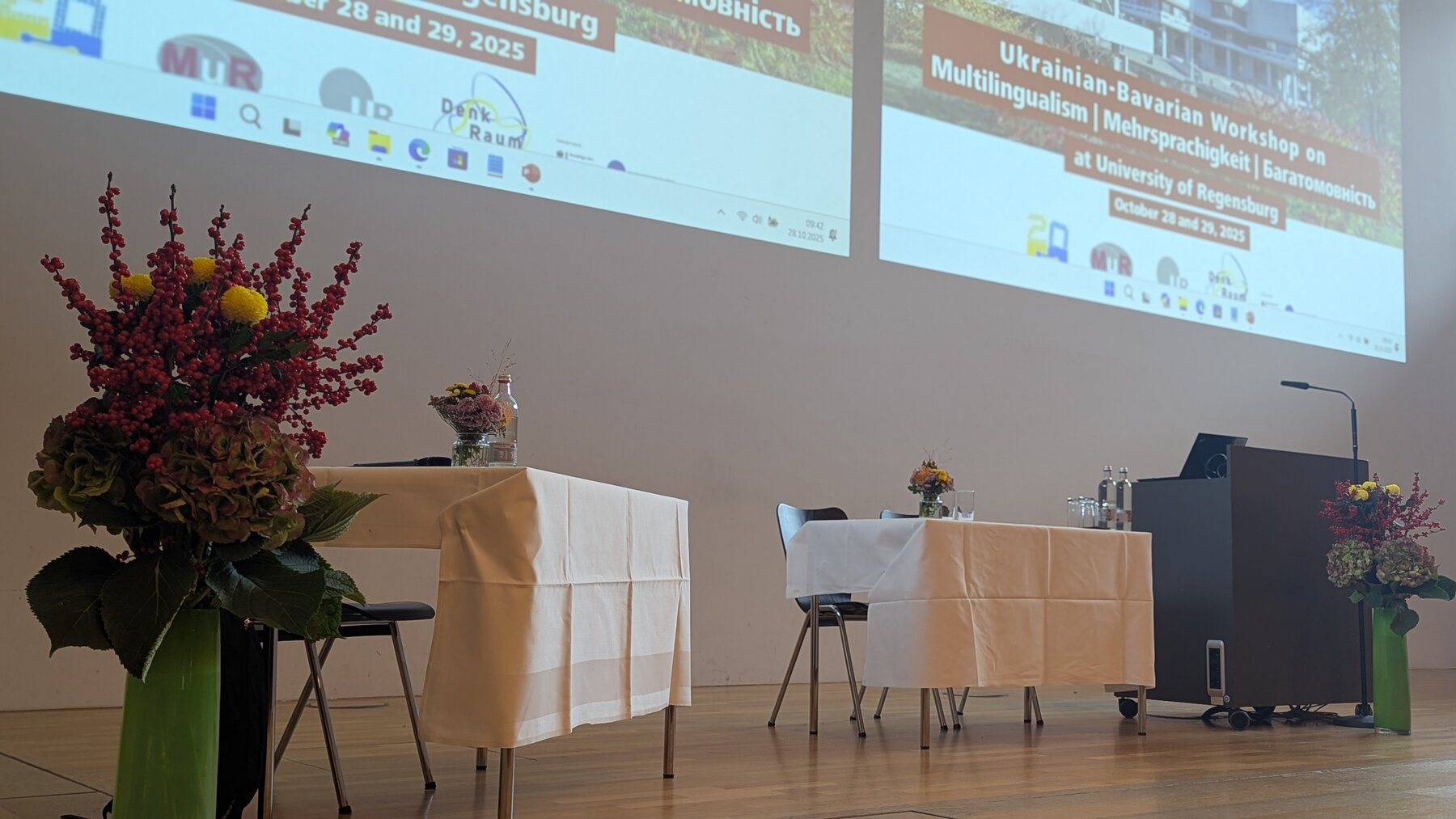
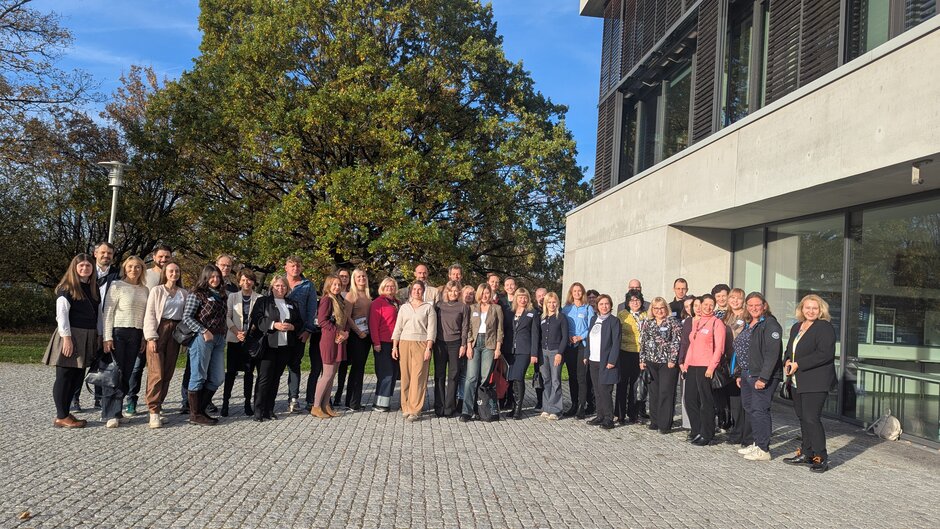
How can language build bridges, heal wounds and promote integration? These questions were the focus of the Ukrainian-Bavarian workshop, which took place on October 28 and 29, 2025 at the University of Regensburg. The two-day conference was organized by BAYHOST in cooperation with the Center for Interdisciplinary Ukrainian Studies "Denkraum Ukraine" and the Forum for Multilingualism and Regionality (FoMuR) at the University of Regensburg.
The event followed on from the conference "Cooperation with Ukraine in the Humanities" organized by BAYHOST in Budapest in 2024 and continued the dialogue which began there. This time, the main topic was multilingualism - with a particular focus on language didactics, languages of origin and the role of language in dealing with trauma and war experiences. The aim was to consolidate existing academic networks, initiate new collaborations between Bavarian and Ukrainian universities and also strengthen cooperation with neighbouring countries such as Poland, Austria and Hungary as well as with researchers from the Ukrainian diaspora.
Opening and first day of the conference
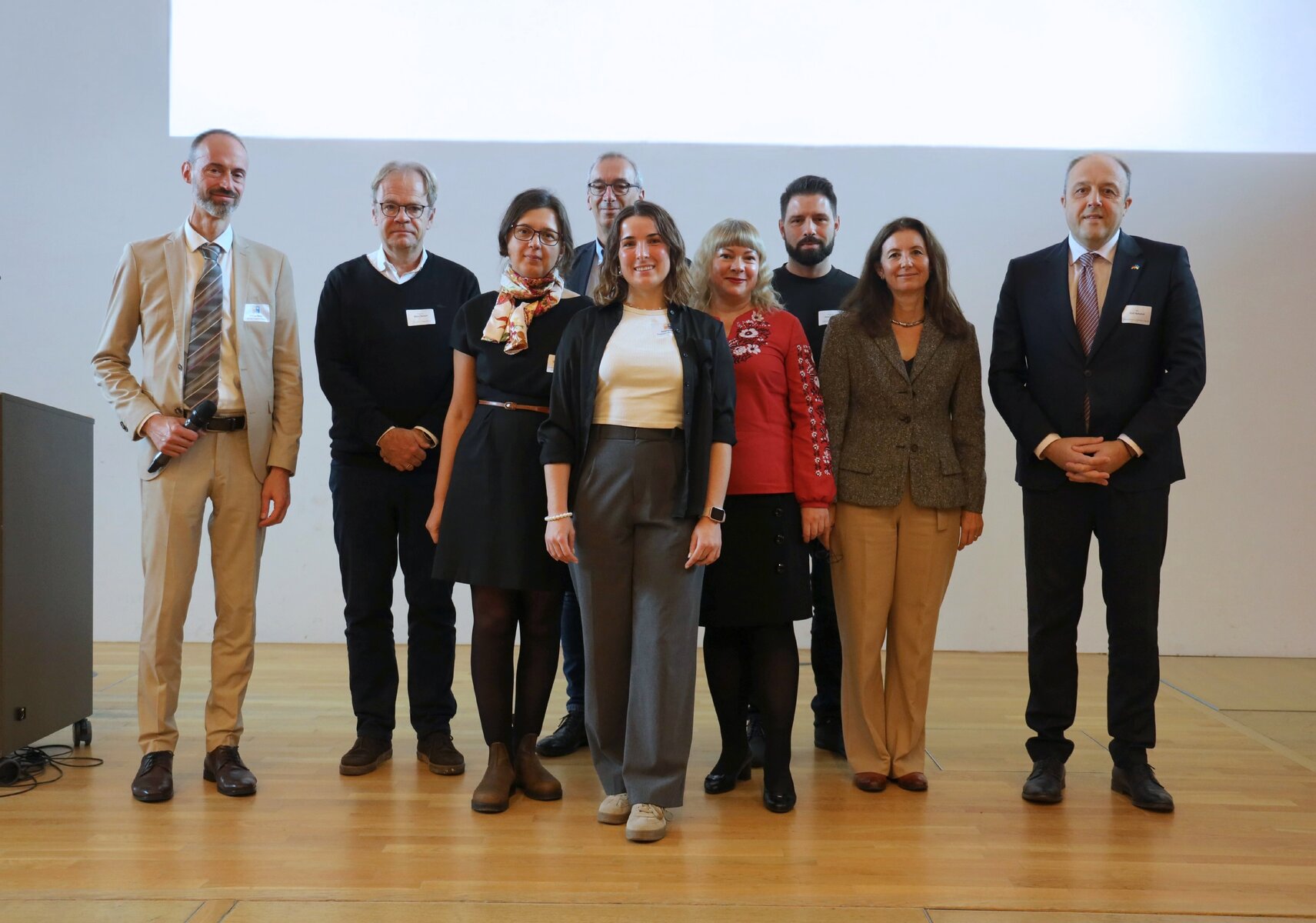
The opening of the workshop took place in the Vielberth building at the University of Regensburg. In their welcoming addresses, Prof. Dr Bernhard Dotzler, Dean of the Faculty of Languages, Literatures, and Cultures, Mr Yurii Nykytiuk, Consul General of Ukraine in Munich (external link, opens in a new window), and the hosts Prof. Dr Björn Hansen and Prof. Dr Rupert Hochholzer (Forum Multilingualism and Regionality, University of Regensburg (external link, opens in a new window)) and Prof. Dr Mirja Lecke (Co-Director of the Center "Think Space Ukraine" (external link, opens in a new window)) emphasised the importance of language and educational cooperation for European understanding.
The academic opening, moderated by Prof Dr Jonas Grünke (Chair of Multilingualism, University of Regensburg), was dedicated to fundamental questions of multilingualism and its significance for society. Grünke introduced the topic with a contribution on languages of origin and the role of language in coping with traumatic experiences.
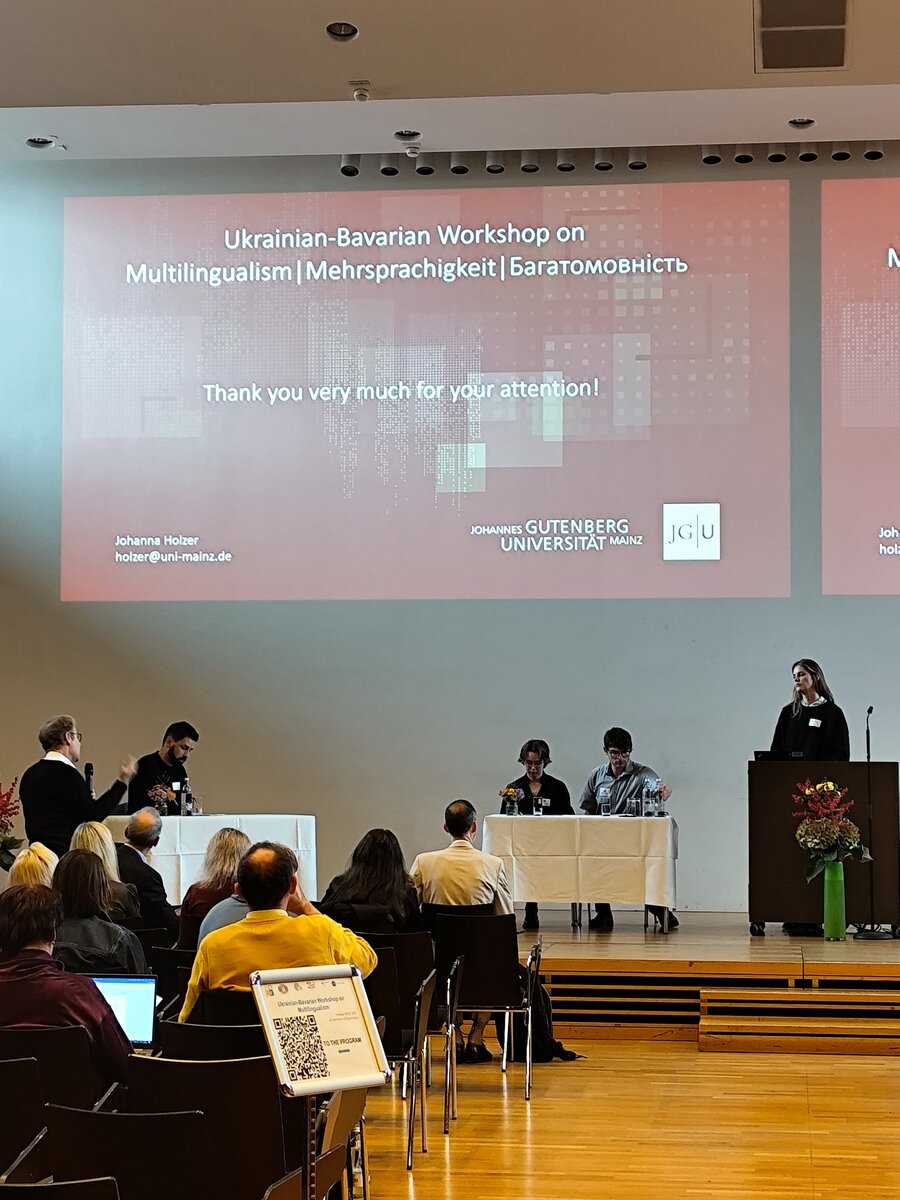
Dr Johanna Holzer (Johannes Gutenberg University Mainz) then spoke about "Forced Migration, Trauma and Multilingualism" and the linguistic reconstruction of extreme experiences. Dr Oksana Turkevych (University of Regensburg) presented her concept of "Ukrainian Heritage Language Lessons", which shows how heritage language lessons can contribute to the processing of refugee experiences. Dr Lesya Skintey (University of Innsbruck) presented empirical research on participation and second language acquisition of Ukrainian pupils in German language lessons, and Dr Natalia Marakhovska (Mariupol State University / French Research Centre for Humanities and Social Sciences, Prague) spoke about poetic approaches in the language and trauma experience of refugee communities.
In the afternoon, the 20th anniversary of BAYHOST was also celebrated. With music, short reviews and discussions about the development of the Bavarian Academic Center, it became clear how important its role is as a bridge between Bavaria and Central, Eastern and Southeastern Europe. The subsequent joint dinner in Regensburg's historic city center provided an opportunity to exchange ideas in a convivial atmosphere.
Second conference day - research, practice and joint learning
The second day of the conference deepened the discussions and combined scientific analysis with practical approaches. Two parallel sections took place in the morning. In the section moderated by BAYHOST, researchers from Ukraine, Germany, Poland and other countries presented current projects. Prof Dr Tetiana Kuznietsova (Borys Grinchenko Kyiv Metropolitan University) spoke about the change in linguistic attitudes during the war in Ukraine. Dr Natalia Shumeiko (Bratislava University of Economics and Business) presented the use of artificial intelligence for the linguistic and social integration of Ukrainian refugees, while Prof Dr Rusudan Makhachashvili (Borys Grinchenko Kyiv Metropolitan University) presented the digital lexicographic project "Glossary of War" - an example of how linguistics and digital technologies can work together to address socially relevant issues.
At the same time, a practice-oriented workshop was held by Dr Imke Hansen, who works for the human rights organisation Libereco - Partnership for Human Rights. The workshop taught methods of trauma-sensitive communication and linguistic mindfulness that are being developed in Libereco's psycho-social support programs in Ukraine. Hansen showed how psycholinguistic findings and humanitarian practice can be combined to use language as a tool for self-regulation and promoting resilience. The workshop thus ideally complemented the research presentations and emphasised the practical dimension of the topic of multilingualism.
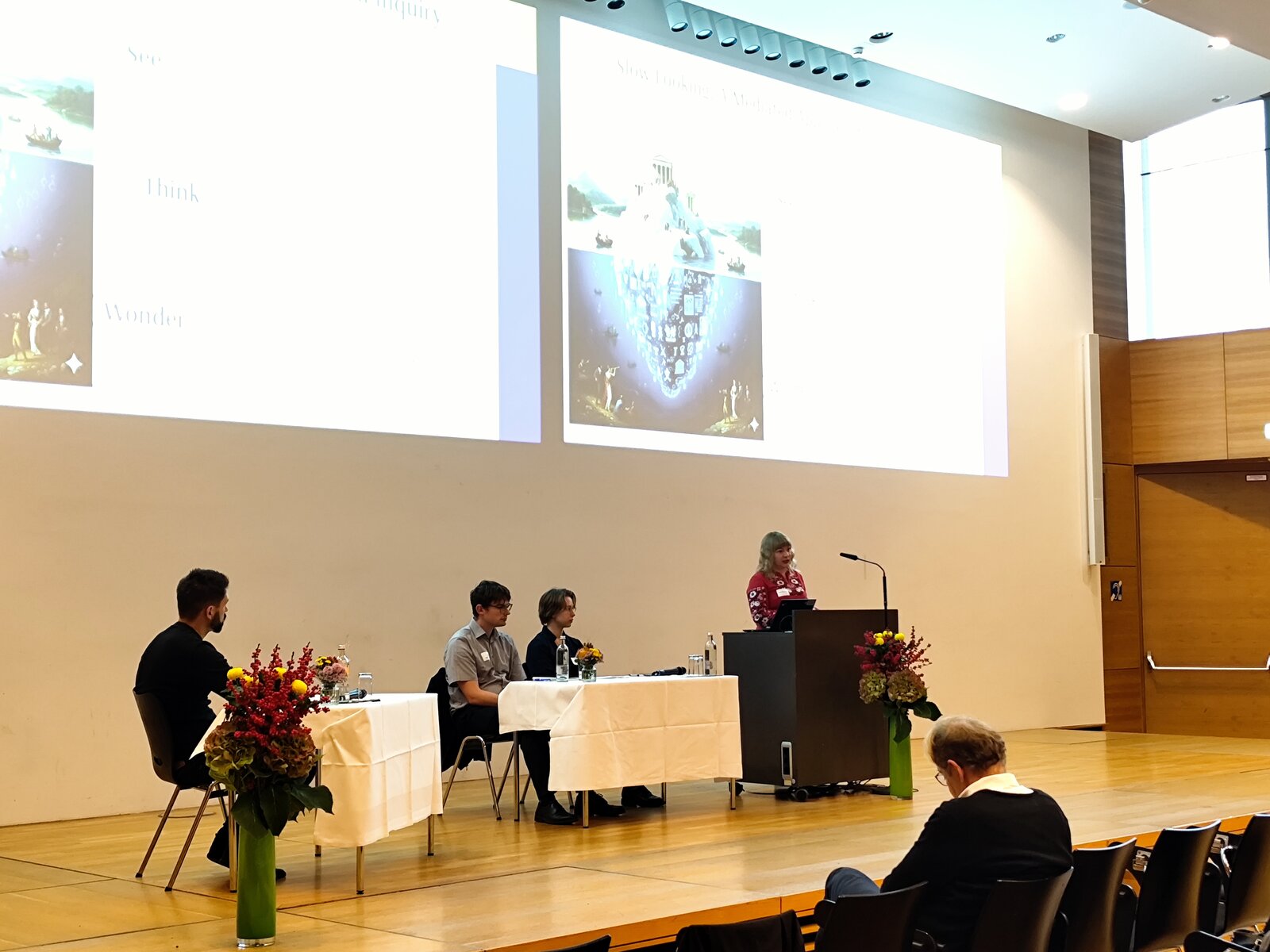
In the afternoon, contributions on the topic of language and trauma once again took center stage. PD Dr Nataliia Lazebna (Julius-Maximilians-Universität Würzburg) and students from the University of Würzburg and the Ukrainian Free University of Munich presented their project "Crafting Languages, Shaping Selves", which understands language as an expression of identity and resilience. Dr Lyudmyla Kruhlenko (Pryazovskyi State Technical University / University of Bamberg) presented a model for trauma-sensitive online learning between Ukraine and Germany, while Assoc. Prof Tetiana Krushynska (University of Jyväskylä) shed light on the challenges of bilingual medical education in Ukraine.
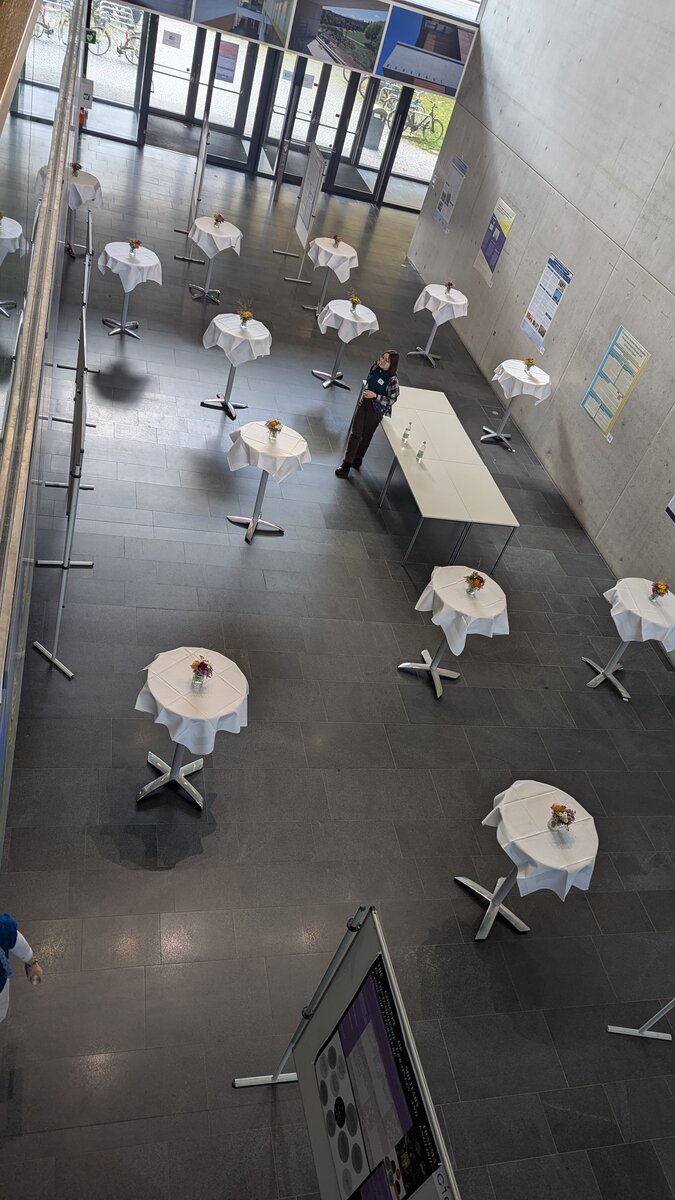
A comprehensive poster session with over 25 scientific contributions formed the finale of the workshop. Researchers from Bavaria, Ukraine, Poland, Georgia, Austria and Germany presented their projects - from new teaching concepts and examples of good practice to linguistic analyses of the Ukrainian language landscape and projects to support children and young people in the context of flight and multilingualism. André Isidro from the Bavarian Research Alliance (BayFOR) also presented funding opportunities for international research collaborations and encouraged the submission of joint project proposals.
A strong sign of scientific cooperation
The workshop in Regensburg made it clear that multilingualism extends far beyond linguistics issues: it is a central component of society integration, a medium of collective memory and an instrument of understanding across borders. For BAYHOST, it remains essential to promote Bavarian-Ukrainian cooperation and joint research on a permanent basis and to expand it to include multilateral perspectives with neighbouring countries such as Poland and Austria. It remains equally important to further strengthen scientific cooperation with Ukrainian researchers in the diaspora.